2026年4月3日
3D ACADEMY offers affordable English study programs in Cebu, Philippines – perfect for beginners, professionals, and exam takers.

3D UNIVERSAL ENGLISH INSTITUTE INC
info.3d-universal.com
8:00-17:00(Mon-Fri)
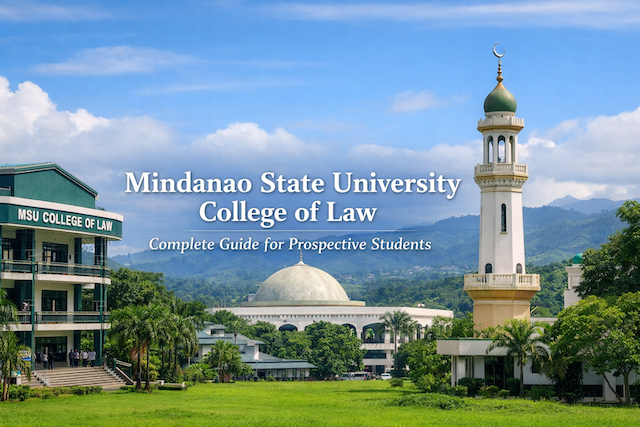
Mindanao State University College of Law: Complete Guide for Prospective Students
Contents
- Mindanao State University College of Law: Complete Guide for Prospective Students
- Introduction
- Overview of Mindanao State University College of Law
- Why Choose MSU College of Law
- Programs Offered
- Admission Requirements
- Curriculum Structure
- Teaching Approach
- Campus Life
- Facilities and Resources
- Bar Exam Performance
- Career Opportunities
- Challenges of Studying at MSU College of Law
- Tips for Prospective Students
- Conclusion
- FAQs (Frequently Asked Questions)
- What is Mindanao State University College of Law known for?
- What degree does Mindanao State University College of Law offer?
- Is Mindanao State University College of Law a good choice for aspiring lawyers?
- What are the admission requirements for Mindanao State University College of Law?
- What subjects are included in the Juris Doctor curriculum?
- Does the college help students prepare for the Bar Examination?
- What makes studying law at MSU different from studying at a private law school?
- Is law school at Mindanao State University difficult?
- What career opportunities are available after graduating from MSU College of Law?
- Who should consider applying to Mindanao State University College of Law?
Mindanao State University College of Law: Complete Guide for Prospective Students
Introduction
Mindanao State University (MSU) College of Law is one of the most respected public law schools in the Philippines, particularly in Mindanao. Established with the goal of providing accessible, high-quality legal education, the college has played a significant role in shaping legal professionals who serve both local communities and the nation at large.
Located within the MSU system—which is known for its commitment to multicultural education and peace-building—the College of Law offers a unique academic environment. It attracts students from diverse cultural, religious, and socioeconomic backgrounds, making it one of the most inclusive law schools in the country.
In this comprehensive guide, we will explore everything you need to know about MSU College of Law, including its programs, admission process, curriculum, campus life, career opportunities, and more.
Overview of Mindanao State University College of Law
The Mindanao State University system was established in 1961 to promote integration among the diverse populations of Mindanao. The College of Law was later created to support this mission by training future lawyers who can contribute to justice, governance, and peace in the region.
The MSU College of Law operates across multiple campuses, including:
-
MSU Main Campus (Marawi City)
-
MSU-Iligan Institute of Technology (IIT)
-
MSU-General Santos
-
MSU-Maguindanao
Each campus offers legal education tailored to regional needs while maintaining consistent academic standards.
Why Choose MSU College of Law
Affordable Tuition Fees
One of the biggest advantages of studying at MSU College of Law is its affordability. As a state university, MSU offers significantly lower tuition fees compared to private law schools in the Philippines. This makes it an excellent option for students who want quality legal education without incurring heavy financial burdens.
Strong Commitment to Public Service
MSU emphasizes the role of lawyers in nation-building. Many graduates go on to work in government agencies, public interest law, and non-government organizations.
Diverse Learning Environment
The university is known for its multicultural student body, including Muslims, Christians, and indigenous peoples. This diversity enriches classroom discussions and fosters a broader understanding of social and legal issues.
Regional Relevance
The curriculum often incorporates issues specific to Mindanao, such as:
-
Indigenous peoples’ rights
-
Islamic law (Shari’ah)
-
Conflict resolution and peace-building
This gives students a unique edge, especially if they plan to practice law in the region.
Programs Offered
Juris Doctor (JD) Program
The primary program offered by MSU College of Law is the Juris Doctor (JD), which is the standard law degree in the Philippines.
Key Features:
-
Duration: Typically 4 years
-
Focus: Philippine legal system, jurisprudence, and practical lawyering skills
-
Includes clinical legal education and internships
Special Focus Areas
Depending on the campus, students may have opportunities to study:
-
Shari’ah Law
-
Environmental Law
-
Human Rights Law
-
Alternative Dispute Resolution
These specialized areas are particularly relevant to the socio-political context of Mindanao.
Admission Requirements
Admission to MSU College of Law is competitive but accessible compared to top-tier private institutions.
Basic Requirements
Applicants typically need:
-
A bachelor’s degree from a recognized institution
-
Transcript of Records (TOR)
-
Certificate of Good Moral Character
-
Entrance examination results
-
Personal interview
Entrance Exam
The law school admission test generally assesses:
-
English proficiency
-
Logical reasoning
-
Reading comprehension
-
Basic analytical skills
Interview Process
Shortlisted applicants undergo an interview to evaluate:
-
Communication skills
-
Motivation to study law
-
Ethical awareness
Curriculum Structure
The Juris Doctor program at MSU College of Law follows a structured curriculum designed to prepare students for the Philippine Bar Examination.
First Year
Students are introduced to foundational subjects such as:
-
Persons and Family Relations
-
Constitutional Law I
-
Criminal Law I
-
Legal Writing
Second Year
Courses become more complex, including:
-
Obligations and Contracts
-
Constitutional Law II
-
Criminal Law II
-
Property Law
Third Year
Focus shifts toward procedural and specialized subjects:
-
Civil Procedure
-
Evidence
-
Administrative Law
-
Taxation Law
Fourth Year
Final-year students take review-oriented and practice-based courses:
-
Remedial Law Review
-
Legal Ethics
-
Practice Court (Mock Trials)
-
Clinical Legal Education
Teaching Approach
MSU College of Law adopts a mix of traditional and modern teaching methods.
Socratic Method
Professors frequently use the Socratic method to encourage critical thinking. Students are expected to:
-
Analyze cases
-
Defend their arguments
-
Engage in class discussions
Case-Based Learning
Students study landmark Philippine Supreme Court decisions to understand legal principles in real-world contexts.
Practical Training
Clinical programs allow students to:
-
Assist in legal aid services
-
Participate in mock trials
-
Work on real cases under supervision
Campus Life
Academic Environment
Law school at MSU is rigorous and demanding. Students often spend long hours reading cases, preparing for recitations, and completing assignments.
Student Organizations
There are several student groups that enhance the law school experience:
-
Law Student Government
-
Debate and Moot Court Teams
-
Legal Aid Societies
These organizations provide opportunities for leadership, networking, and skill development.
Cultural Diversity
MSU is known for its vibrant cultural environment. Students interact with peers from various backgrounds, fostering mutual respect and understanding.
Facilities and Resources
While MSU may not have the same level of infrastructure as some private universities, it provides essential resources for law students.
Law Library
-
Comprehensive collection of legal books and journals
-
Access to Philippine jurisprudence
-
Study spaces for students
Classrooms
-
Functional and conducive to learning
-
Equipped for lectures and discussions
Online Resources
Some campuses provide access to digital legal databases and online learning platforms.
Bar Exam Performance
MSU College of Law has produced successful bar passers over the years. While its passing rates may vary, the school continues to improve its performance through:
-
Enhanced review programs
-
Faculty development
-
Student support initiatives
Graduates have gone on to become:
-
Judges
-
Prosecutors
-
Government officials
-
Private practitioners
Career Opportunities
A law degree from MSU opens doors to various career paths.
Government Service
Many graduates work in:
-
Department of Justice
-
Public Attorney’s Office (PAO)
-
Local government units
Private Practice
Some choose to join law firms or establish their own practice.
Corporate Sector
Lawyers are also in demand in corporations for roles such as:
-
Legal counsel
-
Compliance officer
Academia and Research
Graduates may pursue teaching or further studies in law.
Challenges of Studying at MSU College of Law
While MSU offers many advantages, there are also challenges to consider.
Limited Resources
Compared to top private law schools, MSU may have:
-
Fewer modern facilities
-
Limited access to international legal databases
Location-Specific Concerns
Some campuses, such as Marawi, may face:
-
Security concerns (though improving)
-
Accessibility issues
Academic Pressure
Law school is inherently demanding, and MSU is no exception. Students must be prepared for:
-
Heavy reading loads
-
Frequent recitations
-
High expectations from professors
Tips for Prospective Students
Prepare Academically
Before entering law school:
-
Improve your reading comprehension
-
Practice analytical thinking
-
Strengthen your English skills
Develop Discipline
Time management is crucial. Create a study routine and stick to it.
Engage in Class
Active participation will help you understand complex legal concepts.
Build a Support Network
Form study groups and connect with classmates to share resources and insights.
Conclusion
Mindanao State University College of Law stands as a strong choice for aspiring lawyers, especially those who value affordability, diversity, and public service. While it may not have the prestige or resources of some elite institutions, it offers a solid legal education grounded in real-world issues—particularly those relevant to Mindanao.
For students who are determined, resilient, and passionate about making a difference, MSU College of Law provides the foundation needed to succeed in the legal profession. Whether you aim to serve in government, practice privately, or advocate for marginalized communities, this institution equips you with the knowledge and skills to achieve your goals.
If you are considering law school in the Philippines, MSU College of Law deserves serious consideration as a practical and meaningful path toward becoming a lawyer.
FAQs (Frequently Asked Questions)
What is Mindanao State University College of Law known for?
Mindanao State University College of Law is known for providing affordable and accessible legal education in Mindanao. As part of a public university system, it gives aspiring lawyers the opportunity to study law at a lower cost than many private institutions in the Philippines. It is also recognized for serving a diverse student population and for its relevance to the social, cultural, and legal realities of Mindanao. Many students are attracted to the school because it combines legal training with a broader mission of public service, inclusion, and regional development.
What degree does Mindanao State University College of Law offer?
The college primarily offers the Juris Doctor (JD) program, which is the standard professional law degree in the Philippines. This program is designed to prepare students for the Bar Examination and for careers in legal practice, government service, business, education, and advocacy. The JD curriculum typically takes four years to complete, depending on the student’s academic load and compliance with school requirements. It covers both foundational and advanced legal subjects, as well as practical training that helps students apply legal principles in real situations.
Is Mindanao State University College of Law a good choice for aspiring lawyers?
Yes, it can be a very good choice for aspiring lawyers, especially for those who are looking for a more affordable law school with a strong public service orientation. Students who want to practice in Mindanao or work on issues related to governance, social justice, local communities, and conflict resolution may find the school especially meaningful. Like any law school, success depends not only on the institution itself but also on the student’s effort, discipline, and long-term goals. For many students, MSU College of Law offers a solid academic foundation and a practical pathway into the legal profession.
What are the admission requirements for Mindanao State University College of Law?
Admission requirements usually include a completed bachelor’s degree, official academic records such as a Transcript of Records, and documents showing good moral character. Applicants are commonly required to take an entrance examination and may also need to attend an interview. The exact requirements can vary depending on the campus or current school policy, so applicants should always confirm the latest details directly with the university. In general, the admissions process is meant to assess whether the applicant has the academic background, communication skills, and commitment needed to handle the demands of law school.
What subjects are included in the Juris Doctor curriculum?
The Juris Doctor curriculum includes core legal subjects that are essential for future lawyers in the Philippines. These usually include Constitutional Law, Criminal Law, Civil Law subjects such as Persons and Family Relations, Obligations and Contracts, Property, Taxation, Labor Law, Commercial Law, Remedial Law, Legal Ethics, and Political Law. Students also study legal writing, legal research, and jurisprudence. In later years, the curriculum usually becomes more practice-oriented, with subjects related to court procedure, evidence, advocacy, and clinical legal education. The goal is to ensure that graduates are academically prepared and professionally competent.
Does the college help students prepare for the Bar Examination?
Yes, the law program is designed to help students build the knowledge and discipline needed for the Philippine Bar Examination. Throughout the four-year JD program, students take the major subjects commonly covered in the Bar. In the later years of study, many law schools, including public institutions like MSU, place stronger emphasis on review-oriented classes, integration of legal principles, and practical application. Students are expected to do extensive reading, class preparation, and self-review. While the school provides academic training, success in the Bar also depends heavily on the student’s consistency, study habits, and ability to manage pressure.
What makes studying law at MSU different from studying at a private law school?
One of the biggest differences is affordability. As a state university, MSU generally offers lower tuition than many private law schools. Another difference is the school’s regional and cultural context. Because MSU is deeply connected to Mindanao, students may encounter discussions and perspectives that are especially relevant to the region, such as local governance, peace-building, community issues, and legal concerns affecting diverse populations. Private law schools may sometimes offer more extensive facilities or broader alumni networks in major cities, but MSU offers a distinct advantage for students who value accessibility, diversity, and public-centered legal education.
Is law school at Mindanao State University difficult?
Yes, law school at Mindanao State University is challenging, just like law school anywhere else. Students are expected to read large volumes of cases, understand complex legal doctrines, prepare for class recitations, and perform well in written examinations. The workload can be mentally and emotionally demanding, especially for students who are adjusting to the pace and expectations of legal education. However, the difficulty is also part of the training. Law school develops analytical thinking, discipline, communication skills, and resilience. Students who are committed, organized, and willing to work consistently often find the experience difficult but rewarding.
What career opportunities are available after graduating from MSU College of Law?
Graduates of MSU College of Law can pursue many different career paths after passing the Bar Examination. Some choose private legal practice, either by joining a law firm or starting an independent practice. Others work in government offices, including prosecution, public defense, local government, and administrative agencies. A law degree is also valuable in the corporate sector, where lawyers may work in compliance, labor relations, contracts, or corporate governance. Some graduates also choose careers in teaching, policy work, non-government organizations, or research. The law degree provides flexibility and can open doors in many professional fields.
Who should consider applying to Mindanao State University College of Law?
Students who should consider applying include those who want a serious legal education but need a more affordable option than many private law schools can offer. It is also a strong choice for students who are interested in public service, regional development, and working within the diverse social realities of Mindanao. Applicants who value resilience, discipline, and meaningful community impact may find the school especially aligned with their goals. MSU College of Law is well-suited for students who are willing to work hard, adapt to the demands of legal study, and use their legal education to make a practical difference in society.

How to Register for eTravel Philippines (2025 Guide)
Step-by-step guide to completing your eTravel registration before arriving in the Philippines, with images and tips.

Night Market in Cebu – Things You Don’t Know About Cebu Life
Discover the hidden charm of Cebu’s night markets, from street food stalls to local life tips you won’t find in tourist guides.

How to Use ChatGPT for IELTS Preparation: A Complete Guide
Learn how to prepare for IELTS using ChatGPT — including strategies for Writing, Reading, Listening, Speaking, and grammar support.

How to Build a Website Without Coding Using ChatGPT
Discover how to build your own website using AI—no coding skills needed. From structure planning to SEO and design, let ChatGPT guide you.