2026年4月3日
3D ACADEMY offers affordable English study programs in Cebu, Philippines – perfect for beginners, professionals, and exam takers.

3D UNIVERSAL ENGLISH INSTITUTE INC
info.3d-universal.com
8:00-17:00(Mon-Fri)
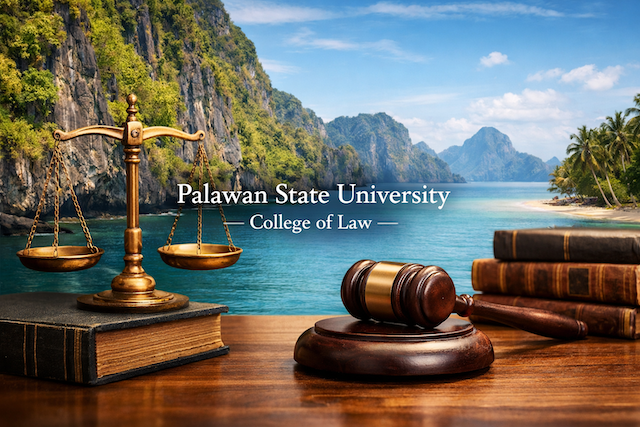
Palawan State University College of Law
Contents
- Palawan State University College of Law
- Introduction to Palawan State University College of Law
- History and Institutional Background
- Mission, Vision, and Core Values
- Academic Program: Juris Doctor (JD)
- Admission Requirements and Process
- Faculty and Academic Excellence
- Facilities and Learning Environment
- Student Life and Organizations
- Bar Examination Performance
- Career Opportunities for Graduates
- Strengths of PSU College of Law
- Challenges and Areas for Improvement
- Conclusion
- FAQs (Frequently Asked Questions)
- What is Palawan State University College of Law?
- What degree does Palawan State University College of Law offer?
- Is Palawan State University College of Law a good option for aspiring lawyers?
- What makes this law school different from schools in bigger cities?
- What are the admission requirements for Palawan State University College of Law?
- Does the school require an entrance exam?
- How long does it take to finish the Juris Doctor program?
- What subjects do students study in law school at PSU?
- Is the college suitable for working students?
- What is student life like at Palawan State University College of Law?
- Does the college focus only on classroom learning?
- Can graduates of Palawan State University College of Law take the Bar Examination?
- What career opportunities are available after graduating?
- Why do some students choose a public university law school like PSU?
Palawan State University College of Law
Introduction to Palawan State University College of Law
Palawan State University (PSU) College of Law is one of the emerging legal education institutions in the Philippines, located in the province of Palawan—often called the country’s “last ecological frontier.” While PSU itself has a long-standing reputation as a public university dedicated to academic excellence and community development, its College of Law represents a relatively newer but rapidly growing academic unit focused on producing competent, ethical, and socially responsible lawyers.
The College of Law plays a crucial role not only in providing legal education but also in addressing the legal needs of Palawan and surrounding regions. With a strong emphasis on public service, environmental law, and access to justice, PSU College of Law aligns its mission with both national legal standards and local community needs.
In this article, we explore the academic programs, curriculum, admission requirements, facilities, student life, and career prospects associated with Palawan State University College of Law.
History and Institutional Background
Palawan State University was established in 1965 and has since evolved into a comprehensive public university offering a wide range of undergraduate and graduate programs. The College of Law was later introduced as part of PSU’s expansion into professional education, aiming to provide legal training within the province rather than requiring students to relocate to major cities like Manila or Cebu.
The creation of the College of Law addressed a significant gap in legal education in Palawan. Before its establishment, aspiring law students from the province had limited access to formal legal education locally. PSU responded to this need by launching a law program that is both accessible and responsive to regional issues such as environmental protection, indigenous rights, and local governance.
Mission, Vision, and Core Values
The PSU College of Law operates under a mission to develop legal professionals who are not only knowledgeable in the law but also committed to justice, integrity, and service.
Vision
The College envisions itself as a center of excellence in legal education in the MIMAROPA region, producing lawyers who are globally competitive yet locally grounded.
Mission
- To provide high-quality legal education grounded in theory and practice
- To promote research and advocacy in areas relevant to Palawan, such as environmental law
- To serve underserved communities through legal aid and outreach programs
- To instill ethical responsibility and professionalism among future lawyers
Core Values
- Integrity
- Social responsibility
- Environmental stewardship
- Academic excellence
- Community engagement
Academic Program: Juris Doctor (JD)
The primary program offered by the PSU College of Law is the Juris Doctor (JD), which is the standard law degree in the Philippines.
Program Overview
The JD program typically spans four years and is designed to provide students with a comprehensive understanding of Philippine laws, legal principles, and jurisprudence. The curriculum follows guidelines set by the Legal Education Board (LEB), ensuring that graduates are eligible to take the Philippine Bar Examination.
Core Subjects
Students are required to complete foundational law subjects such as:
- Constitutional Law
- Civil Law (Obligations and Contracts, Property, Family Relations)
- Criminal Law
- Commercial Law
- Remedial Law
- Legal Ethics
These subjects form the backbone of legal education and are essential for bar exam preparation.
Specialized Courses
In addition to core subjects, PSU College of Law offers specialized courses that reflect the unique context of Palawan:
- Environmental Law
- Natural Resources Law
- Indigenous Peoples’ Rights Law
- Administrative Law
- International Law
These courses are particularly relevant given Palawan’s ecological importance and diverse cultural heritage.
Clinical Legal Education
The College integrates clinical legal education into its curriculum, allowing students to gain hands-on experience through:
- Legal aid clinics
- Internship programs
- Court observation
- Drafting of legal documents
This practical exposure ensures that students are not only theoretically proficient but also capable of applying the law in real-world situations.
Admission Requirements and Process
Admission to the PSU College of Law is competitive, as the institution seeks candidates who demonstrate academic capability, critical thinking, and a strong sense of ethics.
Basic Requirements
Applicants must:
- Hold a bachelor’s degree from a recognized institution
- Submit official transcripts of records
- Provide a certificate of good moral character
- Pass the law school entrance examination
Entrance Examination
The entrance exam typically assesses:
- English proficiency
- Logical reasoning
- Analytical thinking
- General knowledge
Interview Process
Shortlisted applicants may be required to attend an interview, where they are evaluated based on their motivation, communication skills, and understanding of legal education.
Additional Considerations
Some applicants may be given preference based on academic performance, relevant work experience, or demonstrated commitment to public service.
Faculty and Academic Excellence
The PSU College of Law prides itself on having a dedicated faculty composed of experienced legal practitioners, judges, and scholars.
Faculty Qualifications
Most faculty members:
- Hold Juris Doctor or Bachelor of Laws degrees
- Have passed the Philippine Bar Examination
- Possess years of legal practice or teaching experience
Teaching Approach
The College employs a combination of:
- Socratic method
- Case analysis
- Lectures and discussions
- Legal research and writing
This approach encourages critical thinking, active participation, and deep understanding of legal concepts.
Facilities and Learning Environment
While PSU is not as large as universities in metropolitan areas, it offers a supportive and focused learning environment.
Classrooms
The College provides well-maintained classrooms designed for interactive learning, including:
- Audio-visual equipment
- Comfortable seating
- Adequate lighting and ventilation
Law Library
A dedicated law library is available, featuring:
- Philippine law books and jurisprudence
- Legal journals and publications
- Access to digital legal databases
Study Areas
Students have access to quiet study spaces, allowing them to prepare for classes and exams effectively.
Student Life and Organizations
Law school is known for its rigorous demands, but PSU College of Law fosters a supportive community among students.
Student Organizations
Students can participate in various organizations such as:
- Law Student Government
- Debate and Moot Court Teams
- Legal Aid Groups
These organizations provide opportunities for leadership, advocacy, and professional development.
Academic Culture
The academic environment is characterized by:
- Collaborative learning
- Peer support
- Mentorship from faculty
Students often form study groups and engage in discussions to deepen their understanding of legal topics.
Community Engagement
The College encourages students to participate in outreach programs, including:
- Free legal consultations
- Legal literacy campaigns
- Environmental advocacy initiatives
Bar Examination Performance
Bar exam performance is a key indicator of a law school’s quality. While PSU College of Law is relatively young compared to established institutions, it has been steadily improving its performance.
Preparation Strategies
The College supports students through:
- Bar review classes
- Mock bar examinations
- Mentorship programs
These initiatives help students build confidence and competence for the national licensure exam.
Career Opportunities for Graduates
Graduates of PSU College of Law have diverse career paths available to them.
Legal Practice
Many graduates pursue careers as:
- Attorneys in private law firms
- Public prosecutors
- Public attorneys
Government Service
Opportunities also exist in government agencies such as:
- Department of Justice
- Local government units
- Environmental agencies
Corporate Sector
Some graduates enter the corporate world as:
- Legal consultants
- Compliance officers
- Corporate lawyers
Academia and Research
Graduates may also choose to:
- Teach law
- Conduct legal research
- Pursue further studies (LL.M., etc.)
Strengths of PSU College of Law
Accessibility
As a public university, PSU offers relatively affordable tuition compared to private law schools, making legal education more accessible.
Regional Relevance
The curriculum is tailored to address issues specific to Palawan, including environmental protection and indigenous rights.
Community-Oriented Approach
The College emphasizes service to the community, producing lawyers who are socially responsible.
Supportive Environment
Smaller class sizes allow for more personalized instruction and stronger student-faculty relationships.
Challenges and Areas for Improvement
Like many developing institutions, PSU College of Law faces certain challenges:
- Limited resources compared to larger universities
- Need for expanded library and digital resources
- Continued improvement in bar exam performance
However, these challenges are being addressed through ongoing development efforts and institutional support.
Conclusion
Palawan State University College of Law represents an important step forward in expanding access to legal education in the Philippines, particularly in underserved regions like Palawan. With its focus on academic excellence, community service, and environmental advocacy, the College is well-positioned to produce a new generation of lawyers who are both competent and socially conscious.
For students seeking a law school that combines affordability, relevance, and a strong sense of purpose, PSU College of Law is a compelling option. As it continues to grow and evolve, it is likely to play an increasingly significant role in shaping the legal landscape of Palawan and beyond.
FAQs (Frequently Asked Questions)
What is Palawan State University College of Law?
Palawan State University College of Law is the law school division of Palawan State University in the Philippines. It offers legal education for students who want to become lawyers while studying in Palawan rather than moving to larger cities. As part of a public university, the college is often seen as an accessible option for aspiring law students who are looking for a more affordable and community-oriented legal education. The school aims to produce graduates who are academically prepared, ethically grounded, and committed to public service.
What degree does Palawan State University College of Law offer?
The college primarily offers the Juris Doctor (JD) program, which is the standard professional law degree in the Philippines. This degree is designed to prepare students for the study of Philippine law, legal reasoning, case analysis, and bar examination readiness. The JD program usually takes four years to complete, depending on the student’s academic load and compliance with school policies. After completing the program and meeting the required qualifications, graduates may become eligible to take the Philippine Bar Examination.
Is Palawan State University College of Law a good option for aspiring lawyers?
For many students, it can be a good option, especially for those who want to study law in Palawan and prefer a public university setting. Its appeal often comes from its regional accessibility, lower tuition compared to many private institutions, and its focus on producing lawyers who can serve local communities. It may be especially attractive to students who value a legal education connected to public service, local governance, environmental concerns, and social responsibility. Whether it is the right school depends on the student’s goals, finances, learning style, and willingness to thrive in a demanding academic environment.
What makes this law school different from schools in bigger cities?
One major difference is its regional context. While larger law schools in Metro Manila or other major urban centers may have bigger facilities and broader national visibility, Palawan State University College of Law offers a learning environment rooted in the realities of Palawan. This can give students a more direct connection to issues affecting local communities, such as environmental governance, resource protection, indigenous peoples’ concerns, and public sector service. In addition, some students prefer a smaller academic community where faculty interaction and peer support may feel more personal.
What are the admission requirements for Palawan State University College of Law?
Applicants are generally expected to hold a bachelor’s degree from a recognized institution before entering law school. They are also usually required to submit academic records such as their transcript of records, along with other standard documents like proof of good moral character. In many law schools, applicants also need to take an entrance examination and sometimes attend an interview. Because admission requirements can change, students should always verify the latest requirements, deadlines, and document checklist directly with the university before applying.
Does the school require an entrance exam?
Many law schools in the Philippines, including public university law programs, use an entrance examination as part of the admissions process. This type of exam commonly measures reading comprehension, English proficiency, logical reasoning, and analytical ability. Some schools also use interviews to evaluate communication skills, seriousness of purpose, and readiness for the demands of legal education. Prospective students should prepare carefully and confirm the current admissions process with the school because examination procedures may be updated from time to time.
How long does it take to finish the Juris Doctor program?
The Juris Doctor program generally takes four years to complete under a regular full-time schedule. However, actual completion time may vary depending on factors such as the student’s subject load, academic performance, school policies, and personal circumstances. Some students may follow a more flexible path if allowed by the institution, especially if they are balancing work and study. Law school is academically intense, so students should expect a long-term commitment that requires discipline, consistency, and strong time management.
What subjects do students study in law school at PSU?
Students in a Juris Doctor program usually study core law subjects that are essential for legal education in the Philippines. These commonly include Constitutional Law, Criminal Law, Civil Law, Commercial Law, Remedial Law, Labor Law, Taxation Law, Legal Ethics, and Legal Writing. Depending on the curriculum and faculty strengths, students may also encounter subjects connected to local and regional concerns. In a place like Palawan, legal study may also be especially relevant to environmental protection, administrative governance, land issues, and community rights.
Is the college suitable for working students?
That depends on the school’s scheduling policies and the student’s personal situation. Many law students in the Philippines try to balance work and study, but law school remains highly demanding. Reading assignments are heavy, class discussions are rigorous, and examinations require deep preparation. A working student may succeed if the school offers a schedule that supports flexibility and if the student has strong discipline and realistic expectations. Anyone planning to work while studying should ask the college directly about class schedules, attendance rules, and academic load options before enrolling.
What is student life like at Palawan State University College of Law?
Student life in law school is usually challenging but meaningful. Students often spend long hours reading cases, preparing for recitations, writing legal papers, and reviewing for exams. At the same time, they may build close relationships with classmates because of the shared pressure and common goals. In a smaller academic setting, students may experience a stronger sense of community, peer support, and direct access to faculty. Law student organizations, academic activities, and service-oriented programs can also contribute to personal growth beyond the classroom.
Does the college focus only on classroom learning?
No, legal education is not limited to lectures and textbooks. A strong law program also develops practical skills such as legal research, legal writing, case analysis, argumentation, and ethical decision-making. Students may also benefit from activities such as moot court exercises, legal aid participation, internships, court observation, and community outreach, depending on what the school offers. These experiences help students understand how legal principles work in real situations and prepare them for future professional responsibilities.
Can graduates of Palawan State University College of Law take the Bar Examination?
Graduates of a properly recognized Juris Doctor program may become eligible to take the Philippine Bar Examination, subject to the rules and requirements in force at the time of graduation. Completing law school alone does not automatically make someone a lawyer. Graduates must still pass the bar exam and satisfy any other applicable requirements before they can be admitted to the practice of law. Students should always follow current regulations from the proper authorities and make sure their academic records and graduation credentials are complete.
What career opportunities are available after graduating?
Graduates may pursue many career paths. Some aim to become practicing lawyers in private firms or solo practice. Others enter government service, prosecution, public defense, compliance work, corporate legal departments, policy research, or academia. A law degree can also be useful in leadership roles in business, education, public administration, and non-government organizations. For students in Palawan, there may also be meaningful opportunities in local governance, environmental regulation, public advocacy, and community-based legal service.
Why do some students choose a public university law school like PSU?
One major reason is affordability. Public universities often offer lower tuition and fees than private law schools, which can make legal education more realistic for many families. Another reason is accessibility, especially for students who want to stay in their home province. Some students also value the mission of public institutions, which often emphasizes service, inclusion, and community development. For aspiring lawyers who want a practical and purpose-driven education, a public university law school can be a strong and meaningful choice.

How to Register for eTravel Philippines (2025 Guide)
Step-by-step guide to completing your eTravel registration before arriving in the Philippines, with images and tips.

Night Market in Cebu – Things You Don’t Know About Cebu Life
Discover the hidden charm of Cebu’s night markets, from street food stalls to local life tips you won’t find in tourist guides.

How to Use ChatGPT for IELTS Preparation: A Complete Guide
Learn how to prepare for IELTS using ChatGPT — including strategies for Writing, Reading, Listening, Speaking, and grammar support.

How to Build a Website Without Coding Using ChatGPT
Discover how to build your own website using AI—no coding skills needed. From structure planning to SEO and design, let ChatGPT guide you.