2025年11月6日
3D ACADEMY offers affordable English study programs in Cebu, Philippines – perfect for beginners, professionals, and exam takers.

3D UNIVERSAL ENGLISH INSTITUTE INC
info.3d-universal.com
8:00-17:00(Mon-Fri)
Accommodation Options for Students in Malaysia: Dorms, Apartments, and Condos
Contents
- Accommodation Options for Students in Malaysia: Dorms, Apartments, and Condos
- Understanding the Student Housing Landscape in Malaysia
- University Dormitories (Hostels)
- Private Apartments
- Condominiums (Condos)
- Homestays and Shared Houses
- How to Find Student Accommodation in Malaysia
- Key Considerations When Choosing Accommodation
- Recommended Areas for Students in Malaysia
- Tips to Save Money on Student Housing
- Conclusion
- FAQs
- What types of accommodation are available for students in Malaysia?
- How much should I budget for monthly rent?
- Which areas are popular for students?
- How do I find and verify listings safely?
- What is a typical tenancy agreement in Malaysia?
- Are utilities usually included in rent?
- What furniture and appliances should I expect?
- How can I estimate my total monthly living cost?
- Is it better to live on campus or off campus?
- What should I check during a viewing?
- How do deposits and refunds work?
- Are short-term or flexible leases available?
- How can I save money on housing without sacrificing safety?
- What cultural or lifestyle tips help with shared living?
Accommodation Options for Students in Malaysia: Dorms, Apartments, and Condos
Malaysia has become one of Asia’s most attractive destinations for international students, thanks to its high-quality education, cultural diversity, and affordable cost of living. But beyond tuition fees, one of the most important aspects of student life is accommodation. Choosing where to live will shape your daily experience, your budget, and even your academic success.
This guide explores the main accommodation options available for students in Malaysia—university dormitories, private apartments, and condominiums—and helps you decide which type suits your lifestyle and budget best.
Understanding the Student Housing Landscape in Malaysia
Malaysia offers a variety of student housing options that cater to different needs and preferences. Whether you prefer the convenience of on-campus dormitories or the privacy of a rented condo, there’s something for everyone.
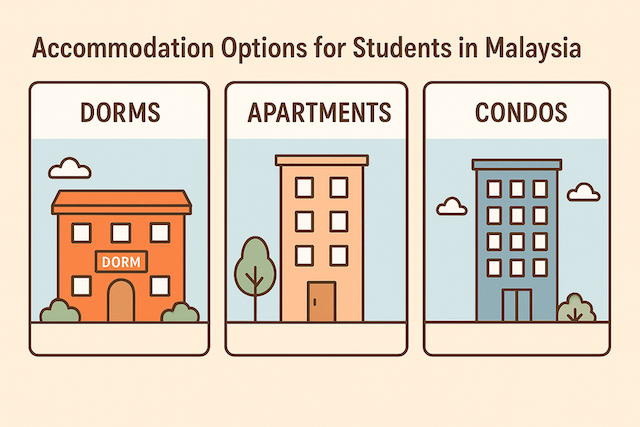
The most common types of student accommodations in Malaysia are:
-
University Dormitories / Hostels – Affordable, social, and located within or near campus.
-
Private Apartments – Suitable for students who want independence or to share with friends.
-
Condominiums (Condos) – A more comfortable, often luxurious option with modern amenities.
-
Homestays or Shared Houses – Ideal for cultural immersion or budget-conscious students.
The choice depends largely on your budget, location, and lifestyle preferences. Let’s look at each in more detail.
University Dormitories (Hostels)
Overview
University dormitories, also known as student hostels, are often managed directly by the institution. These accommodations are located on-campus or within a short walking distance, making them a convenient option for students who value proximity to classes and campus facilities.
Key Features
-
Affordability: Dorms are the cheapest form of student housing in Malaysia.
-
Community: Living with other students fosters a strong sense of community and friendship.
-
Convenience: No commuting and easy access to libraries, cafeterias, and classrooms.
-
Supervision and Security: Many universities provide 24-hour security and management staff on-site.
Typical Room Types
-
Shared Rooms: 2–4 students per room; common in public universities.
-
Single Rooms: More privacy, slightly more expensive.
-
Air-Conditioned vs. Non-Air-Conditioned: Air-conditioned rooms cost more.
Average Costs
| Type | Estimated Monthly Cost (MYR) | Notes |
|---|---|---|
| Shared Room | 150–400 | Common in public universities |
| Single Room | 400–800 | Often air-conditioned |
| Premium Dorm | 800–1200 | Includes private bathroom, better facilities |
Pros and Cons
Pros:
-
Cheapest housing option
-
Close to campus
-
Easier social integration
Cons:
-
Limited privacy
-
Shared bathrooms and kitchens
-
Strict rules (curfew, visitors, etc.)
Dormitories are a great fit for first-year students or those new to Malaysia, as they provide a safe and structured environment while you adjust to university life.
Private Apartments
Overview
Private apartments are a common choice among international students in Malaysia, especially in urban areas like Kuala Lumpur, Penang, and Johor Bahru. Apartments can range from small studio units to multi-bedroom flats shared with friends.
Key Features
-
Independence: You can cook, host friends, and manage your own schedule.
-
Privacy: Ideal for students who value personal space.
-
Flexibility: Choose your location, layout, and budget.
Typical Locations
-
Kuala Lumpur: Near universities like Taylor’s, Sunway, and Monash Malaysia.
-
Penang: Around Universiti Sains Malaysia (USM) and Georgetown area.
-
Johor Bahru: Close to EduCity and Southern campuses.
Average Costs
| City | 1-Bedroom Apartment (MYR/month) | Shared 3-Bedroom (per student) |
|---|---|---|
| Kuala Lumpur / Selangor | 1500–2500 | 700–1200 |
| Penang | 1000–2000 | 600–1000 |
| Johor Bahru | 800–1500 | 500–800 |
Additional costs include utilities (electricity, water, internet), which may add around MYR 200–300 per month.
Pros and Cons
Pros:
-
Freedom and independence
-
More privacy and comfort
-
Choose your own location
Cons:
-
Higher cost than dorms
-
Must manage utilities and maintenance
-
May require longer commute
Apartments are ideal for mature or postgraduate students, or those staying long-term in Malaysia who want to experience local city life.
Condominiums (Condos)
Overview
Condos in Malaysia offer a more upscale and modern living environment compared to dorms or basic apartments. Many international students, especially those studying at private universities, prefer condos for the facilities, security, and comfort.
Key Features
-
Amenities: Swimming pool, gym, study rooms, BBQ areas, and 24-hour security.
-
Modern Design: Fully furnished with stylish interiors.
-
Community: Many condos house both local and international students.
Average Costs
| Type | Monthly Rent (MYR) | Notes |
|---|---|---|
| Studio Unit | 1500–2500 | Perfect for singles |
| 2–3 Bedroom Condo | 2000–4000 | Share with 2–3 friends |
| Premium Condo (KL, Cyberjaya) | 4000–7000+ | Luxury amenities |
Rent varies depending on location—Kuala Lumpur and Cyberjaya are more expensive than smaller cities like Melaka or Perak.
Pros and Cons
Pros:
-
Excellent facilities and lifestyle
-
High security
-
Ideal for sharing among friends
Cons:
-
Expensive rent and utilities
-
Often far from campus (requires transport)
-
Deposit and long lease contracts
Condos are perfect for international students who want a balance of luxury and convenience, or for those staying for the entire duration of a degree program.
Overview
Some students, especially exchange students or those seeking cultural immersion, choose homestays or shared houses. These options let you live with local families or other international students, offering a more personal experience.
Average Costs
-
Homestay (with meals): MYR 800–1500/month
-
Shared house (no meals): MYR 500–1000/month
Benefits
-
Experience Malaysian culture and lifestyle firsthand
-
Improve your English or Malay through daily conversation
-
More flexibility with rental terms (monthly basis)
However, facilities may be simpler, and locations can vary widely in convenience and safety.
How to Find Student Accommodation in Malaysia
1. University Accommodation Office
Most universities have a dedicated office to help students book dorms or recommend verified private housing.
2. Online Platforms
Popular websites and apps include:
-
iBilik (for rooms and apartments)
-
Speedhome
-
Mudah.my
-
PropertyGuru Malaysia
-
Facebook Groups like “International Students in Malaysia Housing”
3. Agents or Local Contacts
Some landlords work through real estate agents who can help arrange viewings and contracts. Always verify legitimacy before paying deposits.
4. Temporary Stays
Book a short-term Airbnb or hostel for the first week until you find long-term accommodation. This helps you explore neighborhoods safely.
Key Considerations When Choosing Accommodation
Before signing a lease or paying a deposit, take note of the following factors:
1. Distance from Campus
-
Aim for housing within 20–30 minutes of your university.
-
Consider public transport accessibility (LRT, MRT, bus).
2. Safety and Security
-
Choose neighborhoods with a good reputation and 24-hour guard services if possible.
-
Avoid isolated areas.
3. Budget and Hidden Costs
-
Ask whether utilities, internet, and maintenance fees are included.
-
Be prepared to pay a 2-month deposit + 1-month advance rent.
4. Amenities
-
Look for essential amenities: Wi-Fi, air-conditioning, laundry area, and study space.
-
Condos often provide gyms and pools, but dorms may not.
5. Lease Duration
-
Most leases run 6 to 12 months.
-
Shorter stays may cost more per month.
Recommended Areas for Students in Malaysia
Kuala Lumpur and Selangor
-
Subang Jaya (Taylor’s, Sunway, Monash) – Student-friendly and vibrant.
-
Cyberjaya (MMU, Limkokwing) – High-tech area with many condos.
-
Setapak & Wangsa Maju (TAR UMT, UTM) – Budget-friendly housing.
Penang
-
Gelugor and Sungai Dua – Close to Universiti Sains Malaysia (USM).
-
Affordable apartments with easy access to eateries and transport.
Johor Bahru
-
EduCity area – Modern student town with access to several international branch campuses.
Other Cities
-
Melaka, Perak, and Sarawak offer lower living costs and quieter lifestyles for students who prefer smaller communities.
Tips to Save Money on Student Housing
-
Share accommodation with other students to divide rent and utility costs.
-
Use public transport instead of renting near the most expensive city centers.
-
Negotiate rent if you plan to stay for a full year.
-
Look for partially furnished units—buying furniture can be costly.
-
Avoid peak-season leases when new semesters start (June–September).
Conclusion
Finding the right student accommodation in Malaysia is about balancing budget, comfort, and convenience.
-
Dormitories are great for first-timers who want an affordable and social environment.
-
Private apartments offer independence and flexibility.
-
Condos provide a luxurious lifestyle with top facilities, perfect for long-term students.
-
Homestays and shared houses deliver a cultural experience at reasonable prices.
No matter which option you choose, Malaysia’s student housing scene is well-developed and diverse—designed to make your study abroad experience both comfortable and memorable.
FAQs
What types of accommodation are available for students in Malaysia?
The most common options are university dormitories (hostels), private apartments, and condominiums (condos). You can also find homestays with local families and shared houses. Dorms emphasize affordability and proximity to campus; apartments offer independence and privacy; condos add lifestyle amenities like pools, gyms, and 24/7 security. Your choice usually depends on budget, commute time, and desired comfort level.
How much should I budget for monthly rent?
Budgets vary by city and property type. As a rough guide, dorm beds can range from MYR 150–800 per month (more for single or air-conditioned rooms). Shared apartments often cost MYR 500–1,200 per person, depending on location and roommates. Studios or one-bedroom condos typically run MYR 1,500–2,500, while larger condos shared by 2–3 students may total MYR 2,000–4,000. Always add utilities and internet (often MYR 200–300 per month) unless included.
Which areas are popular for students?
In Greater Kuala Lumpur/Selangor, Subang Jaya, Sunway, and Bandar Sunway are close to Taylor’s, Sunway, and Monash Malaysia; Cyberjaya suits MMU and Limkokwing; Setapak/Wangsa Maju serves TAR UMT and nearby campuses. In Penang, Sungai Dua and Gelugor are convenient for USM. Johor Bahru’s EduCity is popular for multiple branch campuses. Prioritize a neighborhood with reliable transport, supermarkets, and well-lit streets.
How do I find and verify listings safely?
Start with your university housing office, then check reputable platforms (e.g., large property portals or well-moderated Facebook groups). Ask for recent photos or a live video tour, request a copy of the owner’s ID and property title or agent registration, and read the tenancy agreement before paying any money. Avoid sending deposits to personal accounts without documentation and insist on a written receipt for every payment.
What is a typical tenancy agreement in Malaysia?
Most student leases are 6–12 months with renewal options. Expect a security deposit (commonly two months’ rent) plus a utility or access-card deposit and the first month’s rent in advance. The contract should specify the monthly rent, included items (furnishings, parking), maintenance obligations, visitor rules, deposit refund conditions, and notice periods for termination (often 30–60 days). Read clauses on early termination and subletting carefully.
Are utilities usually included in rent?
Dorms sometimes include electricity, water, and internet in a fixed fee or credit. Private rentals vary: some “all-in” rooms include utilities, while whole-unit rentals usually require you to register and pay bills for electricity, water, gas (if any), and broadband. Air-conditioning can significantly increase electricity costs, so check meter readings and usage caps. Clarify responsibility for Wi-Fi installation and termination fees.
What furniture and appliances should I expect?
University hostels provide a bed, desk, chair, and storage; bathrooms may be shared. Apartments and condos range from unfurnished to fully furnished. A typical student-friendly furnished unit includes a bed, wardrobe, sofa, dining set, basic kitchen appliances (fridge, microwave, hob), washing machine, and often AC units. Inventory everything with photos on move-in to avoid disputes at checkout.
How can I estimate my total monthly living cost?
Add together rent, utilities, internet, transport, groceries, phone plan, and personal expenses. For many students, a simple monthly model is:
- Rent: MYR 500–2,500 (per person, depending on type/location)
- Utilities & Internet: MYR 150–300
- Transport: MYR 80–250 (public transit/ride-hailing mix)
- Groceries & meals: MYR 500–900
- Miscellaneous: MYR 150–300
Track expenses for the first two months and adjust your housing choice if needed.
Is it better to live on campus or off campus?
On campus (dorms) maximize convenience, social life, and affordability but come with rules and less privacy. Off campus (apartments/condos) offer independence, private kitchens, and better amenities, but cost more and require handling bills, repairs, and commuting. First-year students often start on campus, then move off campus with friends once they understand the city.
What should I check during a viewing?
Test air-conditioning, water pressure, hot water, and all appliances. Look for signs of leaks, mold, pests, and faulty wiring. Check mobile data reception and available broadband providers. Assess noise levels (near highways or construction). Inspect security features: access cards, CCTV, guard posts, smoke alarms, and window/door locks. Verify commute time to campus at peak hours and confirm parking or shuttle options.
How do deposits and refunds work?
Deposits are held against damage and unpaid bills. At move-in, record the condition with a dated photo/video inventory and both parties’ signatures. At move-out, the landlord can deduct for repairs beyond fair wear and tear and for outstanding utilities. Provide final bill receipts and return all keys/access cards. Refunds are commonly processed within 14–30 days if documentation is complete.
Are short-term or flexible leases available?
Short stays (1–5 months) are possible but rarer and usually pricier per month. Consider subletting a room in a shared unit (with landlord consent), serviced residences with monthly terms, or university short-term housing between semesters. If you will arrive close to orientation, book a week of temporary accommodation to view places safely before committing.
How can I save money on housing without sacrificing safety?
Share with reliable roommates, choose neighborhoods just outside premium zones but with good transit, negotiate rent for longer terms, and prefer partially furnished units to avoid large upfront costs. Use fans when possible to cut AC usage, and split broadband plans. Most importantly, never compromise on building security, lighting, and access control; a small rent saving is not worth higher risk.
Agree on quiet hours, guest policies, cleaning schedules, and utility splits in writing (even a simple roommate pact helps). Be considerate about food storage and dietary restrictions; label items in shared fridges. Respect prayer times and cultural norms, including dress in common areas when appropriate. Small courtesies—like taking turns on trash duty—keep the home harmonious.

How to Register for eTravel Philippines (2025 Guide)
Step-by-step guide to completing your eTravel registration before arriving in the Philippines, with images and tips.

Night Market in Cebu – Things You Don’t Know About Cebu Life
Discover the hidden charm of Cebu’s night markets, from street food stalls to local life tips you won’t find in tourist guides.

How to Use ChatGPT for IELTS Preparation: A Complete Guide
Learn how to prepare for IELTS using ChatGPT — including strategies for Writing, Reading, Listening, Speaking, and grammar support.

How to Build a Website Without Coding Using ChatGPT
Discover how to build your own website using AI—no coding skills needed. From structure planning to SEO and design, let ChatGPT guide you.