2025年10月3日
3D ACADEMY offers affordable English study programs in Cebu, Philippines – perfect for beginners, professionals, and exam takers.

3D UNIVERSAL ENGLISH INSTITUTE INC
info.3d-universal.com
8:00-17:00(Mon-Fri)
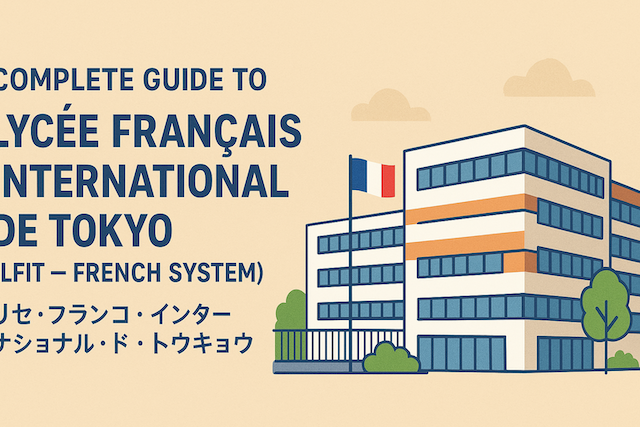
Complete Guide to Lycée Français International de Tokyo (LFIT – French System)
Contents
- Complete Guide to Lycée Français International de Tokyo (LFIT – French System)
- History and Background
- Curriculum and Academic Programs
- Accreditation and Recognition
- Student Body and Community
- Facilities
- Extracurricular Activities
- Language Support
- University Placement and Alumni Success
- Admissions Process
- Tuition and Fees
- School Culture and Values
- Location and Accessibility
- Conclusion
- FAQs
- What curriculum does the Lycée Français International de Tokyo (LFIT) follow?
- Which languages are taught and what is the language of instruction?
- Does LFIT accept students who are not native French speakers?
- What are the grade levels and age placement guidelines?
- What is the French Baccalauréat and where is it recognized?
- How does assessment and reporting work?
- What student support services are available?
- What extracurricular activities and sports are offered?
- What are typical school hours and the annual calendar?
- How does admissions work and when should families apply?
- What should families know about tuition and additional costs?
- Is there a school bus or transportation option?
- Does the school require uniforms and what is the dress code?
- How are lunch and nutrition handled on campus?
- What technology and digital learning tools are used?
- How does the school communicate with families?
- Can students transfer to or from other school systems?
- How does the school promote well-being and inclusion?
- How are arts and cultural activities integrated?
- What guidance is available for university and career planning?
- How can families learn more or arrange a visit?
Complete Guide to Lycée Français International de Tokyo (LFIT – French System)
The Lycée Français International de Tokyo (LFIT) is one of the most established and prestigious international schools in Japan, offering a complete French curriculum under the supervision of the French Ministry of Education. Located in the Takinogawa district of northern Tokyo, LFIT serves a diverse student population of over 1,500 students from nursery through high school. It provides an authentic French educational experience while also integrating Japanese and international perspectives, making it an ideal choice for expatriate families and globally minded students.
History and Background
LFIT was originally founded in 1967 as the French School of Tokyo, with the mission of offering French-speaking families abroad an education consistent with that of schools in France. Over the decades, the school has expanded significantly, and in 2012 it moved to a modern, purpose-built campus in Kita-ku. Today, LFIT belongs to the AEFE network (Agence pour l’Enseignement Français à l’Étranger), which connects more than 500 French international schools worldwide. This ensures academic consistency and high teaching standards aligned with French national guidelines.
Curriculum and Academic Programs
The school follows the French national curriculum from preschool through lycée (high school). This framework ensures that students receive the same rigorous education as their peers in France, allowing for smooth reintegration should they return home or transfer to another French international school abroad.
-
Preschool (Maternelle): A holistic program focusing on socialization, creativity, motor skills, and language acquisition. Children typically enter at age 3.
-
Elementary School (École Primaire): Covers foundational learning in reading, writing, mathematics, science, history, and introduction to foreign languages.
-
Middle School (Collège): Students study a wide range of subjects including French literature, mathematics, science, technology, geography, and civic education. English is compulsory, and Japanese is often introduced as well.
-
High School (Lycée): Prepares students for the French Baccalauréat, a globally recognized diploma. The lycée offers scientific, literary, and economic/social streams, as well as the possibility of bilingual tracks.
One of LFIT’s strengths is its multilingual emphasis. While French is the primary language of instruction, students also receive strong instruction in English and Japanese, with opportunities to pursue higher-level proficiency certifications.
Accreditation and Recognition
As part of the AEFE network, LFIT is fully accredited by the French Ministry of Education. Its diploma, the French Baccalauréat, is highly respected worldwide and opens doors to top universities in France, Europe, North America, and Asia. Additionally, LFIT’s emphasis on English and Japanese equips graduates with multilingual skills that are increasingly valuable in global academic and professional settings.
Student Body and Community
The school hosts approximately 1,500 students from over 50 nationalities. Roughly half of the students are French nationals, while the rest come from mixed French-Japanese families or other international backgrounds. This diversity enriches the school’s cultural atmosphere, exposing students to a variety of worldviews.
The parent community plays an active role through the Parent-Teacher Association and other initiatives, organizing cultural events, school fairs, and activities that strengthen ties between families and the institution.
Facilities
The Takinogawa campus, inaugurated in 2012, is designed to support a modern and holistic education. Key features include:
-
Spacious classrooms with digital teaching tools
-
Science and computer laboratories
-
A large library and media center
-
Music rooms and art studios
-
Indoor gymnasium and outdoor sports fields
-
A swimming pool
-
A cafeteria offering balanced meals
These facilities support both academic learning and extracurricular activities, encouraging students to develop in all areas of life.
Extracurricular Activities
LFIT offers a wide variety of extracurricular programs designed to foster creativity, leadership, and teamwork. Students can join clubs in music, drama, debate, science, robotics, and cultural exchange. Sports are also a key component, with opportunities to play basketball, football (soccer), swimming, athletics, and martial arts.
Additionally, LFIT organizes cultural activities connected to French traditions and Japanese society, including art exhibitions, theater performances, and participation in Tokyo’s international cultural scene.
Language Support
For non-native French speakers, LFIT provides FLE (Français Langue Étrangère) support classes. These programs help students integrate into the French curriculum while gradually improving their language skills. Similarly, additional English and Japanese classes are available depending on the student’s background and goals.
University Placement and Alumni Success
Graduates of LFIT go on to prestigious universities around the world. Many pursue higher education in France at institutions such as Sciences Po, Sorbonne University, or engineering grandes écoles. Others continue their studies in the UK, USA, Canada, and Japan, benefiting from the global recognition of the French Baccalauréat and their trilingual education.
The school maintains an active alumni network, helping students transition smoothly into their post-secondary paths and stay connected with peers worldwide.
Admissions Process
Admission to LFIT is open to students of all nationalities, though priority is often given to French-speaking families. The application process typically requires:
-
Online application form
-
Previous school records and transcripts
-
Language proficiency assessment (for non-French speakers)
-
Interview (in some cases)
Because of the school’s popularity, spaces can be competitive, especially in certain grade levels. Families are advised to apply well in advance.
Tuition and Fees
As with most international schools in Tokyo, tuition fees at LFIT are significant but reflect the quality of education provided. Costs vary depending on grade level, and additional expenses may include registration fees, extracurricular activities, meals, and school trips. Compared to other top-tier international schools in Tokyo, LFIT’s fees are within a similar range, though financial aid options may be limited.
School Culture and Values
LFIT emphasizes academic excellence, cultural openness, and mutual respect. Students are encouraged to become responsible, independent thinkers while appreciating both French and Japanese traditions. The multicultural environment fosters tolerance, empathy, and global citizenship, preparing graduates for success in an interconnected world.
Location and Accessibility
LFIT is located in Takinogawa, Kita-ku, in northern Tokyo. The campus is easily accessible via public transportation, with several train and bus lines nearby. Families living in central Tokyo or northern suburbs often find it particularly convenient.
Conclusion
The Lycée Français International de Tokyo (LFIT) offers a truly global education anchored in the French academic tradition while embracing Japan’s cultural richness. Its rigorous curriculum, multilingual approach, modern facilities, and vibrant community make it one of the most sought-after international schools in Tokyo. For families seeking continuity with the French education system or a high-quality, internationally recognized program, LFIT stands as an excellent choice.
FAQs
What curriculum does the Lycée Français International de Tokyo (LFIT) follow?
LFIT follows the French national curriculum from preschool through lycée (high school). Instruction is aligned with the programs and progression set by the French Ministry of Education, ensuring continuity with schools in France and other AEFE-network schools worldwide. Students develop core competencies in French language and literature, mathematics, sciences, humanities, arts, technology, and civic education. As students progress, they encounter interdisciplinary projects, research tasks, and guided independent work that prepare them for the rigorous final examinations of the French Baccalauréat.
Which languages are taught and what is the language of instruction?
French is the primary language of instruction across the school. English is taught as a compulsory foreign language, and Japanese is widely offered as either a language of the host country or as an additional foreign language. Depending on the grade level, students may access advanced tracks, bilingual options, or reinforced language groups. The school encourages multilingualism, with an emphasis on building strong academic literacy in French while steadily developing communicative and academic skills in English and Japanese.
Does LFIT accept students who are not native French speakers?
Yes. LFIT welcomes students from diverse linguistic backgrounds. Non-native French speakers may be placed in Français Langue Étrangère (FLE) support, a structured onboarding path that scaffolds French acquisition while allowing students to participate in mainstream classes as appropriate. The goal is to promote integration into the French curriculum without compromising academic progress, typically through targeted small-group instruction, language goals, and periodic assessment of readiness for progressively higher levels of linguistic autonomy.
What are the grade levels and age placement guidelines?
LFIT offers a continuum from the French preschool (maternelle) through elementary (école), lower secondary (collège), and upper secondary (lycée). Placement is typically based on age as of a reference date and prior school records. For students transferring from non-French systems, the admissions team evaluates transcripts, language proficiency, and school reports to determine the most appropriate placement, ensuring both academic continuity and social-emotional readiness.
What is the French Baccalauréat and where is it recognized?
The French Baccalauréat is a comprehensive upper-secondary diploma recognized by universities worldwide. It assesses mastery across a combination of core and specialty subjects through continuous assessment and final exams, including oral components. Graduates use the Baccalauréat to apply to universities in France (including selective programs), across Europe, North America, Asia, and beyond. The diploma’s rigorous academic and analytical orientation supports competitive applications and successful transitions to higher education.
How does assessment and reporting work?
Assessment follows French national guidelines and uses a mix of formative and summative tools. Students receive feedback through classroom-based observation, quizzes, projects, research assignments, and periodic examinations. Report cards highlight progress against curricular objectives and competencies. In secondary school, ongoing evaluations contribute to grade averages, and families receive regular communication through digital platforms and scheduled conferences to discuss progress and goals.
What student support services are available?
LFIT generally provides a layered approach to student support. Language support (FLE) assists non-francophone students. Learning support may include accommodations, targeted interventions, or individualized strategies proposed by teachers and support staff. Pastoral care and guidance counseling are typically available, especially in secondary school, where students receive advice on course selection, well-being, and university orientation. For highly specialized needs, families may be asked to share external assessments so the school can determine feasible supports within its educational framework.
What extracurricular activities and sports are offered?
Extracurricular life at LFIT is active and varied. Depending on the year, offerings commonly include team sports (such as football, basketball, volleyball, and athletics), swimming, music ensembles, choir, theater, art clubs, robotics, debate, Model United Nations, and cultural or service clubs. Activities aim to build leadership, collaboration, and creativity, and many programs culminate in performances, tournaments, exhibitions, or showcases that involve families and the broader community.
What are typical school hours and the annual calendar?
Daily schedules differ by division. Younger students have age-appropriate timetables with built-in breaks, while secondary students follow a period-based schedule across subject areas. The school year generally runs from late summer or early autumn to late spring or early summer, with breaks that usually include autumn holidays, winter vacation, and spring holidays. Families receive detailed calendars each year to plan travel, enrollment procedures, and co-curricular commitments.
How does admissions work and when should families apply?
Admission is open to all nationalities. Families usually submit an online application with school records, identity documents, and language information. When relevant, an interview or placement test may be requested to evaluate readiness, especially for students entering secondary school or those coming from non-French systems. Spaces in certain grade levels can be limited; early applications are recommended. Admissions decisions consider academic history, language profile, and the ability of the school to meet the student’s educational needs.
What should families know about tuition and additional costs?
As with most international schools, tuition varies by grade level. In addition to tuition, families should anticipate fees related to registration, materials, transportation (if used), lunch services, and optional activities such as clubs, trips, or exams. Because fees may be updated annually, families are encouraged to review official fee schedules and payment policies during the application process and to plan for potential incidental expenses across the school year.
Is there a school bus or transportation option?
Many families commute via public transport, given Tokyo’s extensive network. Some international schools in Tokyo also coordinate private bus routes through third-party providers if demand and logistics allow. Availability and coverage can change over time; families typically confirm current options, routes, and costs with the school or approved vendors prior to enrollment. Regardless of the chosen mode, safety and punctuality are emphasized for arrivals and dismissals.
Does the school require uniforms and what is the dress code?
Dress expectations vary by division and school policy. Some French schools abroad adopt a smart-casual dress code, while others have partial uniform items (such as sports kits). Families should consult the current student handbook for details on acceptable attire, PE requirements, footwear, and guidelines for seasonal changes. Clear dress expectations help maintain a respectful and focused learning environment.
How are lunch and nutrition handled on campus?
The campus typically offers cafeteria services that emphasize balanced meals suitable for different age groups. Younger children eat under supervision, and older students have scheduled lunch periods. Families can expect rotating menus, vegetarian options where feasible, and transparency about ingredients. If a student has allergies or dietary restrictions, parents should inform the school so appropriate precautions and alternatives can be arranged according to health and safety policies.
What technology and digital learning tools are used?
Classrooms are generally equipped with modern teaching tools, and students use age-appropriate devices and platforms for research, assignments, and communication. In secondary school, learning management systems facilitate course materials, homework submission, and grade tracking. Digital citizenship—covering online safety, academic integrity, and responsible use—is embedded in the curriculum so students learn to use technology thoughtfully and ethically.
How does the school communicate with families?
Families receive regular updates through newsletters, learning portals, and email. Parent-teacher meetings are scheduled to discuss progress, and additional conferences may be arranged as needed. The school calendar highlights key academic dates, performances, and community events. The parent association often serves as a bridge between families and the school, helping newcomers integrate and providing opportunities to get involved in community projects and cultural initiatives.
Can students transfer to or from other school systems?
Yes. One of the strengths of the French system is the ease of transfer within the AEFE network worldwide. Students arriving from non-French systems can transition with support, particularly in language and subject alignment. When transferring out, the school provides transcripts and relevant documentation so students can enroll in other international or local systems. In the lycée years, transfer timing should be planned carefully to align with course sequences and Baccalauréat requirements.
How does the school promote well-being and inclusion?
LFIT emphasizes respect, inclusion, and a safe learning climate. Classroom routines, advisory systems, and whole-school initiatives foster positive behavior and social-emotional growth. Anti-bullying policies outline prevention, reporting, and response procedures. Teachers and staff are trained to monitor student well-being and to collaborate with families when concerns arise. The school’s multicultural environment also offers students daily practice in empathy, cross-cultural communication, and global citizenship.
How are arts and cultural activities integrated?
Arts education is a core component of the French curriculum. Students engage with visual arts, music, and drama through classes, clubs, and events. Cultural programming often includes exhibitions, concerts, theater productions, and interdisciplinary projects tied to literature, history, or civic themes. The school celebrates both French traditions and Japan’s rich cultural heritage, helping students connect learning across languages, disciplines, and contexts.
What guidance is available for university and career planning?
In secondary school, students access academic advising for course selection and Baccalauréat pathways. University counseling typically supports applications to French universities and écoles, as well as institutions in the UK, US, Canada, Japan, and beyond. Counselors help with timelines, essays or personal statements, standardized testing (if applicable), and scholarship research. Workshops and information sessions guide families through admissions processes across different systems.
How can families learn more or arrange a visit?
Prospective families usually begin by reviewing official admissions pages, whether to check entry requirements, fees, or language pathways. Many schools host open days, virtual briefings, or campus tours by appointment. Families are encouraged to prepare recent report cards, language records, and questions about placement, support, transportation, and activities. A visit provides valuable insight into the learning environment, community culture, and day-to-day routines, supporting confident and well-informed enrollment decisions.

How to Register for eTravel Philippines (2025 Guide)
Step-by-step guide to completing your eTravel registration before arriving in the Philippines, with images and tips.

Night Market in Cebu – Things You Don’t Know About Cebu Life
Discover the hidden charm of Cebu’s night markets, from street food stalls to local life tips you won’t find in tourist guides.

How to Use ChatGPT for IELTS Preparation: A Complete Guide
Learn how to prepare for IELTS using ChatGPT — including strategies for Writing, Reading, Listening, Speaking, and grammar support.

How to Build a Website Without Coding Using ChatGPT
Discover how to build your own website using AI—no coding skills needed. From structure planning to SEO and design, let ChatGPT guide you.