2025年12月23日
3D ACADEMY offers affordable English study programs in Cebu, Philippines – perfect for beginners, professionals, and exam takers.

3D UNIVERSAL ENGLISH INSTITUTE INC
info.3d-universal.com
8:00-17:00(Mon-Fri)
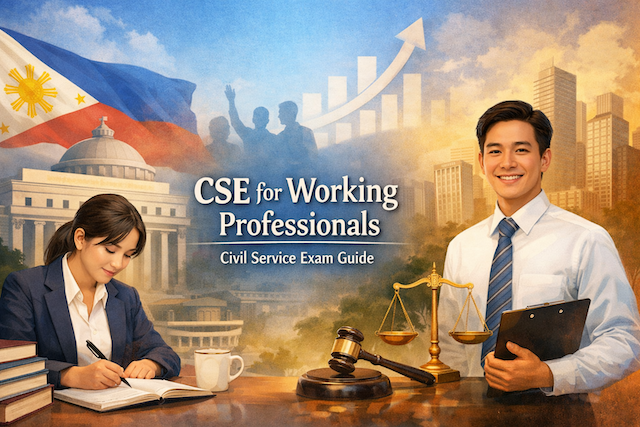
CSE for Working Professionals: Civil Service Exam Guide
Contents
- CSE for Working Professionals: Civil Service Exam Guide
- Understanding the Civil Service Exam from a Working Professional’s Perspective
- Common Challenges Faced by Working Professionals
- Setting a Realistic Study Goal and Timeline
- Creating a Study Schedule That Fits a Work Routine
- Choosing the Right Review Materials
- Focusing on High-Yield Exam Topics
- Integrating Study into Daily Work Life
- Managing Fatigue and Avoiding Burnout
- Building Confidence Despite Limited Study Time
- Handling Setbacks and Missed Study Days
- Preparing for Exam Day While Working Full-Time
- Final Thoughts: Passing the CSE as a Working Professional Is Achievable
- Frequently Asked Questions (FAQs)
- How long should a working professional prepare for the Civil Service Exam (CSE)?
- How many hours per day do I need to study if I have a full-time job?
- When is the best time to study: before work or after work?
- What should I prioritize if I have very limited study time?
- Is it better to use one reviewer book or multiple sources?
- How do I stay consistent when my work schedule changes?
- How can I study during commuting or short breaks at work?
- I feel too tired after work to study. What should I do?
- How do I know if I am improving?
- Should I take full mock exams even if I am busy?
- What is the best strategy for the last two weeks before the exam?
- How do I avoid burnout while working and preparing for the CSE?
- What if I miss several days of studying because of work or family issues?
CSE for Working Professionals: Civil Service Exam Guide
Preparing for the Civil Service Exam (CSE) while holding a full-time or part-time job is a real challenge. Unlike full-time students, working professionals must juggle work responsibilities, family commitments, and limited personal time—all while preparing for a competitive national examination. However, thousands of examinees successfully pass the CSE every year despite working long hours. The key lies in strategy, discipline, and realistic planning.
This guide is specifically designed for working professionals who want to pass the Civil Service Exam without sacrificing their job performance or personal well-being. It covers practical study strategies, time management techniques, realistic schedules, and mindset shifts that fit a working adult’s lifestyle.
Understanding the Civil Service Exam from a Working Professional’s Perspective
The Civil Service Exam tests a broad range of skills rather than specialized knowledge. These include verbal ability, numerical reasoning, logical thinking, clerical operations, and general information. For working professionals, this is both a challenge and an advantage.
Many test areas reflect skills already used in the workplace, such as reading comprehension, basic math, problem-solving, and time management. The main difficulty is not the content itself but finding enough time and mental energy to review consistently.
Recognizing this early helps you approach preparation more efficiently. Instead of trying to study like a full-time student, you should leverage your existing skills and focus on structured, high-impact review sessions.
Common Challenges Faced by Working Professionals
Working professionals face unique obstacles when preparing for the CSE.
The most common challenge is lack of time. After a full workday, energy levels are often low, making it hard to focus on studying. Irregular work schedules, overtime, and commuting further reduce available study hours.
Mental fatigue is another issue. Even if time is available, the brain may already be exhausted from meetings, deadlines, or physically demanding work. This makes long study sessions unrealistic.
Finally, many working professionals struggle with guilt or pressure—feeling torn between work responsibilities, family obligations, and exam preparation. Without proper planning, this emotional strain can lead to burnout or inconsistent study habits.
Acknowledging these challenges is important because it allows you to build a realistic and sustainable study plan.
Setting a Realistic Study Goal and Timeline
One of the biggest mistakes working professionals make is setting unrealistic study expectations. You do not need to study for several hours every day to pass the Civil Service Exam.
A realistic approach is to aim for consistency rather than volume. Even 60 to 90 minutes of focused study on weekdays, combined with slightly longer sessions on weekends, can be enough if maintained over several months.
Ideally, working professionals should begin preparing at least three to six months before the exam. This allows sufficient time to review all subject areas gradually without cramming.
Your goal should not be perfection but mastery of fundamental concepts. The Civil Service Exam rewards clarity, speed, and accuracy more than advanced or obscure knowledge.
Creating a Study Schedule That Fits a Work Routine
An effective study schedule for working professionals must align with daily energy patterns.
Some people focus better early in the morning before work, when the mind is fresh and distractions are minimal. Others prefer studying at night once work tasks are finished. There is no universal rule—what matters is choosing a time you can consistently commit to.
Weekdays should be reserved for lighter tasks such as reviewing vocabulary, practicing math drills, or reading short passages. Weekends can be used for mock exams, longer practice sets, and reviewing weak areas.
It is also helpful to break study time into shorter blocks, such as 25 to 45 minutes, followed by short breaks. This prevents mental exhaustion and improves retention.
Choosing the Right Review Materials
Working professionals should prioritize quality over quantity when it comes to review materials.
A single comprehensive reviewer is often better than juggling multiple books. Choose materials that include practice questions, explanations, and timed exercises. This allows you to simulate exam conditions without wasting time searching for additional resources.
Online resources can also be useful, especially for short study sessions. Mobile-friendly quizzes, flashcards, and practice tests allow you to study during breaks, commutes, or waiting periods.
Avoid overly academic or lengthy materials that require extended reading sessions. The goal is efficient learning, not exhaustive coverage.
Focusing on High-Yield Exam Topics
Since time is limited, working professionals should focus on high-yield topics—areas that frequently appear in the exam and offer the greatest return on effort.
In verbal ability, this includes reading comprehension, basic grammar rules, and common vocabulary. In numerical ability, focus on basic arithmetic, fractions, percentages, ratios, and word problems. Logical reasoning often includes patterns, sequences, and basic problem-solving.
General information should be reviewed strategically. Instead of memorizing everything, focus on Philippine government basics, current events, and commonly tested facts.
Practicing time-bound questions in these areas improves both speed and confidence, which are critical for exam day.
Integrating Study into Daily Work Life
One advantage working professionals have is access to real-life situations that mirror exam skills.
Reading emails, reports, or documents can double as reading comprehension practice if done mindfully. Basic calculations at work can reinforce numerical skills. Even organizing tasks or solving workplace problems strengthens logical reasoning.
You can also use small pockets of time during the day. Short breaks, lunch periods, or commute time can be used for flashcards, vocabulary review, or quick quizzes.
By integrating study into daily routines, exam preparation becomes less overwhelming and more sustainable.
Managing Fatigue and Avoiding Burnout
Burnout is a serious risk for working professionals preparing for major exams. Ignoring physical and mental health can lead to declining performance at both work and study.
Adequate sleep is non-negotiable. Studying late into the night at the expense of rest often leads to poor retention and increased stress. Regular exercise, even light activities like walking, can improve concentration and mood.
It is also important to schedule rest days. Taking one day a week off from studying helps reset your mind and prevents long-term exhaustion.
Listening to your body and adjusting your schedule when needed is not a sign of weakness—it is a strategy for long-term success.
Building Confidence Despite Limited Study Time
Many working professionals doubt themselves because they cannot study as much as full-time examinees. However, confidence is built through smart preparation, not sheer volume.
Tracking progress helps. Keep a simple record of completed topics, practice scores, and areas of improvement. Seeing progress over time reinforces motivation.
Mock exams are especially valuable. Taking full-length practice tests under timed conditions helps you measure readiness and reduces exam anxiety.
Remember that many working professionals bring maturity, discipline, and real-world experience into the exam—advantages that should not be underestimated.
Handling Setbacks and Missed Study Days
Missed study days are inevitable for working professionals. Work emergencies, family responsibilities, or health issues can disrupt even the best plans.
The key is not to panic or quit. Missing a day or even a week does not mean failure. Simply resume your schedule as soon as possible without trying to “overcorrect” by cramming.
Flexibility is essential. Adjust your timeline if necessary, but stay committed to your overall goal. Consistency over months matters far more than perfection over days.
Preparing for Exam Day While Working Full-Time
As exam day approaches, working professionals should gradually shift focus from learning new material to reinforcing what they already know.
The final two weeks should be dedicated to practice exams, reviewing mistakes, and strengthening weak areas. Avoid overloading yourself with new topics at this stage.
If possible, request a day off before the exam. Use this time to rest, organize requirements, and mentally prepare. Entering the exam well-rested is far more valuable than squeezing in extra study hours.
Final Thoughts: Passing the CSE as a Working Professional Is Achievable
Passing the Civil Service Exam while working is challenging, but it is entirely achievable with the right approach. The most successful working professionals are not those who study the longest, but those who study the smartest.
By setting realistic goals, creating a flexible schedule, focusing on high-yield topics, and protecting your well-being, you can prepare effectively without sacrificing your career or personal life.
The Civil Service Exam is not a test of how much free time you have—it is a test of discipline, strategy, and perseverance. With consistent effort and the right mindset, working professionals can and do succeed.
Frequently Asked Questions (FAQs)
How long should a working professional prepare for the Civil Service Exam (CSE)?
Most working professionals do best with a 3 to 6 month preparation timeline. This range is long enough to cover all major topics without cramming, and short enough to stay motivated. If you can study consistently for 60 to 90 minutes on weekdays and add longer sessions on weekends, you can build strong test readiness within this period. If your schedule is unpredictable (frequent overtime, shifting hours, or travel), start earlier so missed study days do not cause stress. The key is not the number of months alone, but the total number of focused study sessions you complete and how well you review your mistakes.
How many hours per day do I need to study if I have a full-time job?
You do not need to study for several hours daily to pass. For many working professionals, 45 to 90 minutes on weekdays is realistic and effective. What matters is focus and repetition. A short session with practice questions and review of incorrect answers often beats a long session of passive reading. If you are exhausted after work, try “micro-sessions” such as 15 minutes of vocabulary, 15 minutes of math drills, or one reading comprehension passage. On weekends, aim for 2 to 4 hours split into blocks with breaks, especially for mock exams and deep review.
When is the best time to study: before work or after work?
The best time is the one you can maintain consistently, but many working professionals benefit from studying before work because the mind is usually fresher and distractions are lower. Even 30 to 60 minutes in the morning can create steady progress. If mornings are not possible, after-work sessions can still work well if you keep them short, structured, and focused on practice. Some people also succeed with a hybrid approach: light review on weekdays (before or after work) and heavier sessions on weekends. Test both for one week and keep the schedule that feels sustainable.
What should I prioritize if I have very limited study time?
If your study time is tight, prioritize high-yield areas and timed practice. Focus on reading comprehension, basic grammar, vocabulary, and common math topics such as fractions, percentages, ratios, and word problems. Add logical reasoning patterns and basic problem-solving sets. Instead of trying to cover everything in general information, focus on practical and commonly tested topics such as basic government concepts and current events. Most importantly, do practice questions regularly and review explanations for mistakes, because improvement often comes from understanding why an answer is wrong.
Is it better to use one reviewer book or multiple sources?
For working professionals, one high-quality reviewer plus targeted practice sources is usually best. Using too many books can waste time and create confusion. Choose a reviewer that matches the CSE format, includes clear explanations, and provides plenty of practice sets. If you need extra practice, add one more resource that fills gaps, such as a vocabulary app, math drill worksheets, or online mock tests. The goal is to reduce decision fatigue and keep your study routine simple: learn, practice, review mistakes, repeat.
How do I stay consistent when my work schedule changes?
Build a flexible plan with “minimum” and “bonus” targets. Your minimum target might be 20 to 30 minutes of study on busy days (for example, vocabulary drills or short quizzes). Your bonus target might be 60 to 90 minutes on normal days. When your work schedule becomes heavy, aim for the minimum target so you do not break the habit. Then, when time returns, increase to the bonus sessions. Consistency is easier when you lower expectations during busy periods rather than quitting completely.
How can I study during commuting or short breaks at work?
Use mobile-friendly materials and small tasks that do not require long focus. Vocabulary flashcards, quick grammar checks, short math drills, and short reading passages work well. You can also review a list of common mistakes you have made in practice tests. If you commute by public transport, timed quizzes can be effective. If you drive, use audio-style review such as listening to summaries or explaining concepts out loud (without distractions). The goal is to turn idle time into low-stress repetition, not to force heavy learning when you are tired.
I feel too tired after work to study. What should I do?
First, accept that fatigue is normal. Instead of pushing long sessions, switch to short, low-resistance study. Do 15 to 20 minutes of easy review, such as vocabulary or basic math drills, then stop. This keeps momentum without draining you. Also look at your energy habits: sleep, hydration, and meals strongly affect focus. If possible, study before work, or take a short rest after work (such as a 20-minute power nap) before studying. Consistency with short sessions often beats forcing long sessions that lead to burnout.
How do I know if I am improving?
Track your scores and your error patterns. Improvement is not only a higher score; it is also fewer repeated mistakes and faster completion time. Keep a simple log of practice results, such as your score, time spent, and the topics you missed. Then review those same topics again within a week. If your scores remain flat, check whether you are only answering questions without reviewing explanations. Most score increases happen when you analyze wrong answers and learn the rule or concept behind them.
Should I take full mock exams even if I am busy?
Yes, mock exams are extremely important, especially for working professionals, because they train time management and reduce test-day anxiety. If you cannot do a full mock exam often, do it at least a few times before the test. You can also simulate the exam by doing one section at a time on different days, then combining your results. After each mock exam, spend time reviewing mistakes. The review process is where your brain builds stronger patterns, and it helps you avoid repeating the same errors on the actual exam.
What is the best strategy for the last two weeks before the exam?
In the final two weeks, shift from learning new topics to strengthening your foundation. Focus on timed practice sets, mock exams, and reviewing weak areas. Create a short “mistake list” of recurring errors and review it repeatedly. Avoid heavy all-night study sessions, because they usually reduce performance. If possible, schedule lighter workdays or take leave close to the exam to rest. A calm, well-rested mind performs better than an exhausted one with a few extra hours of review.
How do I avoid burnout while working and preparing for the CSE?
Burnout prevention starts with realistic goals. Plan rest days, keep weekday sessions manageable, and prioritize sleep. Use study blocks with breaks, and rotate subjects to avoid boredom. If stress rises, reduce study time slightly but protect consistency. Also remember that your job performance matters; a sustainable plan is better than an extreme plan. Many working professionals succeed by studying steadily over time rather than pushing themselves aggressively for a short period.
What if I miss several days of studying because of work or family issues?
Do not panic and do not attempt to “punish” yourself with extreme catch-up sessions. Simply restart with a smaller session and rebuild your rhythm. Review a familiar topic first to regain confidence, then return to your schedule. If you missed a full week, adjust your plan by prioritizing high-yield topics and adding an extra practice set on weekends. Progress depends more on returning quickly than on never missing a day. Resilience is part of what makes working professionals strong examinees.
Civil Service Exam Philippines: Complete Preparation and Passing Guide

How to Register for eTravel Philippines (2025 Guide)
Step-by-step guide to completing your eTravel registration before arriving in the Philippines, with images and tips.

Night Market in Cebu – Things You Don’t Know About Cebu Life
Discover the hidden charm of Cebu’s night markets, from street food stalls to local life tips you won’t find in tourist guides.

How to Use ChatGPT for IELTS Preparation: A Complete Guide
Learn how to prepare for IELTS using ChatGPT — including strategies for Writing, Reading, Listening, Speaking, and grammar support.

How to Build a Website Without Coding Using ChatGPT
Discover how to build your own website using AI—no coding skills needed. From structure planning to SEO and design, let ChatGPT guide you.