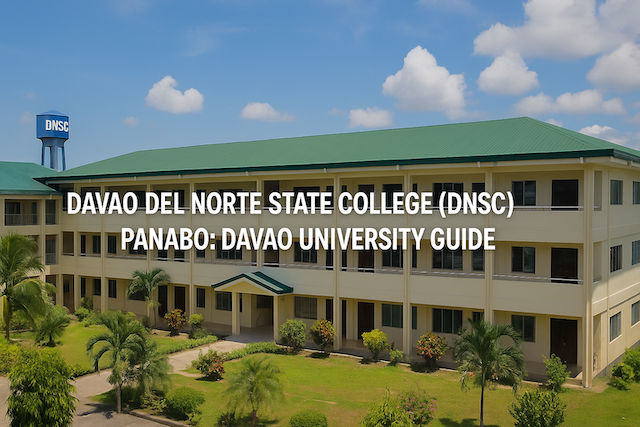
Davao del Norte State College (DNSC) – Panabo: Davao University Guide
Davao del Norte State College (DNSC) is one of the most respected state-funded higher education institutions in the Davao Region, particularly known for its strong academic foundation, community-driven programs, and expertise in environmental and marine sciences. Located in Panabo City—a rapidly developing urban hub between Davao City and Tagum—DNSC serves as a leading educational destination for students who seek quality, affordable, and socially relevant higher education.
This comprehensive guide provides an in-depth look into the college’s academic offerings, campus environment, student life, admission process, career pathways, and practical insights for future students and their families. Whether you are planning to enroll or simply exploring universities in Davao Region, this guide will help you understand what makes DNSC a standout choice.
Overview of Davao del Norte State College (DNSC)
Established in 1995, DNSC originated to address the educational needs of coastal and rural communities in Davao del Norte. Over the years, it has become a center of excellence specializing in fisheries, marine biodiversity, environmental science, and public administration, while also expanding into business, education, and information technology.
DNSC is recognized for its:
-
Strong research culture, especially in marine and environmental sciences
-
Community outreach programs benefiting local fisherfolk and indigenous communities
-
Affordable tuition fees due to government subsidies and free higher education programs
-
Safe and accessible campus within Panabo City
The college is committed to producing graduates who possess both academic competence and social consciousness, aligned with the needs of local and national development.
Location and Campus Environment
DNSC is located in Barangay New Pandan, Panabo City. Its location provides the perfect balance of:
-
Urban accessibility – close to transport terminals, shopping centers, and business establishments
-
Natural learning environment – proximity to coastal areas and research sites important for marine and environmental programs
The campus is moderately sized and designed to create a conducive environment for learning, research, and community engagement. Key facilities include:
-
Science and Research Laboratories
-
ICT and Computer Centers
-
Academic and Administrative Buildings
-
Library and Learning Resource Center
-
Fishery and Aquatic Research Stations
-
Open grounds and multipurpose halls
Students appreciate the peaceful atmosphere, supportive faculty, and practical experience integrated into most degree programs.
Academic Programs Offered
DNSC offers a variety of undergraduate and graduate programs tailored to the development needs of Davao del Norte and Mindanao as a whole. While known for its fisheries and environmental studies, it has broadened its offerings to include business, education, and technology.
Undergraduate Programs
Popular programs include:
-
BS in Fisheries – A flagship program covering aquatic ecology, fish culture, aquaculture systems, and fisheries management.
-
BS in Marine Biology – Focused on biodiversity, marine ecosystems, and conservation.
-
BS in Environmental Science – Studies environmental management, sustainability, and ecological assessment.
-
BS in Information Technology – Covers programming, networking, and system development.
-
BS in Public Administration – Designed for future public service leaders and administrators.
-
BS in Social Work – Emphasizes community welfare, development work, and social services.
-
BS in Business Administration – With tracks such as Marketing and Financial Management.
Graduate Programs
DNSC offers selected master’s programs that support academic growth and professional development:
-
Master in Public Administration (MPA)
-
Master of Science in Marine Biodiversity
-
Master of Science in Environmental Studies
These graduate programs prepare students for leadership roles in government, research, and environmental institutions.
Strengths and Unique Features of DNSC
DNSC stands out among state colleges in Mindanao for several reasons:
1. Expertise in Marine and Environmental Sciences
DNSC’s research contributions are well-recognized nationwide. Students often participate in real-world fieldwork, biodiversity assessments, and conservation projects.
2. Affordability Through Government Subsidies
As a state college, tuition fees are significantly lower than private institutions. With the implementation of Universal Access to Quality Tertiary Education, many students pay minimal to zero tuition.
3. Community Engagement and Development Programs
From coastal resource management to livelihood programs for fisherfolk, DNSC is deeply involved in community empowerment.
4. Strong Industry and Government Partnerships
The college collaborates with LGUs, DENR, BFAR, NGOs, and private institutions, providing students with more internship and research opportunities.
5. Location Advantage
Panabo City’s accessibility makes DNSC a practical choice for students coming from Davao City, Tagum City, Carmen, and nearby towns.
Student Life at DNSC
Life at DNSC blends academic rigor with cultural, athletic, and social experiences.
Organizations and Clubs
Students can join various groups such as:
-
Environmental and Marine Conservation Clubs
-
Academic Societies (IT, Business, Biology, Social Work)
-
Performing Arts Groups
-
Sports Teams
-
Student Government
Campus Culture
DNSC promotes discipline, respect, and responsibility. The community is friendly, with faculty members known for being approachable and supportive.
Events and Activities
The school hosts scientific conventions, environmental awareness activities, intramurals, cultural events, and leadership workshops.
Admission Process: How to Apply
The admission process is straightforward and student-friendly.
1. Entrance Requirements
Applicants must submit:
-
High school report card (Form 138)
-
Good moral certificate
-
Birth certificate
-
2×2 or passport-sized photos
-
Other program-specific requirements (if any)
2. Entrance Examination
Most programs require passing the DNSC admission test. Some science programs may have additional requirements or interviews.
3. Enrollment Steps
After passing the exam, students proceed with:
-
Program selection
-
Assessment of fees (if applicable)
-
Submission of final documents
-
Class registration and orientation
DNSC also accommodates transferees and second-degree applicants, following evaluation of credentials.
Tuition, Scholarships, and Financial Assistance
Because DNSC is a state-run institution, eligible Filipino students can study tuition-free under the RA 10931 program. However, minimal fees may still apply for miscellaneous services.
Available Scholarships
-
Academic scholarships for honor graduates
-
CHED scholarships
-
Local government scholarships
-
Private-sponsored scholarships
-
Research assistantships (for qualified students)
Many students significantly reduce or completely eliminate educational expenses through these programs.
Career Opportunities for Graduates
Graduates of DNSC enjoy strong employability due to the institution’s reputable programs and hands-on training.
Fisheries and Marine Science Graduates
-
Marine biologists
-
Fisheries technicians
-
Aquaculture farm managers
-
Environmental advocates
-
Research assistants and scientists
-
Government positions in BFAR, DENR, LGUs
IT Graduates
Business and Public Administration Graduates
Social Work Graduates
DNSC graduates contribute significantly to both local and national development sectors.
Why Choose DNSC in Panabo?
Students choose DNSC for its:
-
Highly relevant degree programs
-
Affordable quality education
-
Strong research and community service ethos
-
Accessible location in a growing city
-
Supportive academic environment
-
Opportunities for fieldwork and hands-on experience
For families in Davao del Norte and nearby areas, DNSC is a reliable and practical option that offers both academic excellence and real-world learning.
Final Thoughts
Davao del Norte State College (DNSC) in Panabo City remains one of the region’s top institutions for fisheries, marine science, environmental studies, and public administration. Its commitment to community development, sustainability, and accessible education makes it a preferred choice for students who want meaningful academic pathways and career-ready skills.
If you’re planning to study in the Davao Region and want a balance of affordability, quality, and purpose-driven learning, DNSC is an excellent institution to consider.
FAQs (Frequently Asked Questions)
Where is Davao del Norte State College (DNSC) located?
Davao del Norte State College (DNSC) is located in Barangay New Pandan, Panabo City, in the province of Davao del Norte, Mindanao, Philippines. The campus is accessible from major routes connecting Davao City and Tagum City, making it convenient for students from nearby municipalities such as Carmen, Sto. Tomas, and other towns in the province. Public transportation like jeepneys, buses, and multicabs usually pass near the campus, and Panabo’s city proper is just a short ride away, providing access to shops, banks, and other daily necessities.
What programs and courses does DNSC offer?
DNSC offers a wide range of undergraduate and selected graduate programs. Among its flagship offerings are Bachelor of Science in Fisheries, Bachelor of Science in Marine Biology, and Bachelor of Science in Environmental Science, all of which emphasize marine and environmental studies. The college also runs programs in Information Technology, Business Administration, Public Administration, Social Work, and related fields. On the graduate level, it offers programs such as Master in Public Administration and specialized degrees in marine biodiversity and environmental studies. Program availability may change over time, so it is best to check the latest official list from the college.
Is DNSC a public or private institution, and how much is the tuition?
Davao del Norte State College is a public, state-funded higher education institution. As a state college in the Philippines, it participates in the government’s Universal Access to Quality Tertiary Education Act (RA 10931). This means that qualified Filipino students enrolled in approved programs typically enjoy free tuition and other school fees. However, students may still need to pay minimal charges for certain miscellaneous items, ID cards, uniforms, and personal learning materials. For international students or special programs, different fee structures may apply, so it is important to consult the registrar or official admissions office for updated information.
What are the admission requirements for new students?
For incoming first-year students, standard admission requirements usually include a duly accomplished application form, original or certified true copy of the high school report card (Form 138), certificate of good moral character, birth certificate, and recent ID photos. Applicants may also be asked to take an entrance examination and, for some programs, attend an interview or undergo additional screening. Transferees and second-degree applicants need to submit their transcript of records and course descriptions for evaluation. Because requirements may be updated from time to time, applicants should always verify the exact list of documents and procedures with DNSC’s admissions office or official website.
Does DNSC offer scholarships or financial assistance?
Yes. In addition to the national government’s free tuition program for eligible Filipino students, DNSC students may qualify for various scholarships and financial assistance schemes. These may include academic scholarships for honor graduates, grants from the Commission on Higher Education (CHED), local government unit (LGU) scholarships, and assistance from private donors or partner organizations. Some students may also receive stipends or allowances through specific research projects, extension programs, or government-funded initiatives. Availability, requirements, and benefits can vary, so students are encouraged to inquire at the scholarship or student affairs office for the most up-to-date opportunities.
What is student life like at DNSC?
Student life at DNSC combines academic work with opportunities for leadership, creativity, and community involvement. There are student organizations focused on environmental conservation, marine sciences, academic disciplines, sports, and the arts. The student government organizes activities such as orientations, leadership trainings, cultural events, and campus-wide celebrations. DNSC also conducts seminars, research colloquia, and extension activities where students can engage with communities and government agencies. The campus environment is generally relaxed and community-oriented, with faculty members who are approachable and supportive of students’ academic and personal development.
What career opportunities do DNSC graduates have?
Graduates from DNSC are prepared for a variety of career paths depending on their program. Fisheries, marine biology, and environmental science graduates often work as fisheries technicians, marine biologists, aquaculture farm managers, research assistants, and environmental specialists in agencies such as BFAR, DENR, LGUs, NGOs, and private companies. Information Technology graduates can pursue roles in software development, technical support, and networking. Business, public administration, and social work graduates commonly enter government service, corporate roles, community development work, and the non-profit sector. Many graduates also continue to postgraduate studies or participate in professional trainings to advance their careers.
Is DNSC a good option for students from outside Panabo City?
Yes, DNSC is a practical and attractive option for students from outside Panabo City, particularly from nearby areas such as Davao City, Tagum, and other municipalities in Davao del Norte. The campus location along a major corridor of the Davao Region makes commuting feasible for many students. For those coming from more distant areas, boarding houses, dormitories, and rented rooms are usually available in and around Panabo City at different price points. Because DNSC is a state college with subsidized education and strong specialization in marine and environmental fields, it is often chosen by students who want quality training without the high costs associated with big private universities.
Does DNSC have research and community extension programs?
DNSC is highly active in research and extension, particularly in fields related to fisheries, marine biodiversity, environmental management, and community development. Faculty members and students regularly participate in studies about coastal resource management, sustainable aquaculture, climate resilience, and biodiversity conservation. The college partners with local government units, national agencies, and NGOs to implement extension projects that support fisherfolk, coastal communities, and other marginalized sectors. Students often gain hands-on experience through these projects, allowing them to apply classroom knowledge to real-world challenges and strengthen their skills in research, communication, and community engagement.
How can I get updated information about DNSC?
For the most accurate and updated information about admission schedules, course offerings, fees, and campus announcements, it is best to refer to DNSC’s official communication channels. These typically include the official website, verified social media pages, and direct contact with the registrar or admissions office via phone or email. Since policies, program details, and requirements may change over time, relying on unofficial or outdated sources can lead to confusion. Prospective students and parents are encouraged to double-check important details directly with the college before making final plans or submissions.