2026年4月3日
3D ACADEMY offers affordable English study programs in Cebu, Philippines – perfect for beginners, professionals, and exam takers.

3D UNIVERSAL ENGLISH INSTITUTE INC
info.3d-universal.com
8:00-17:00(Mon-Fri)
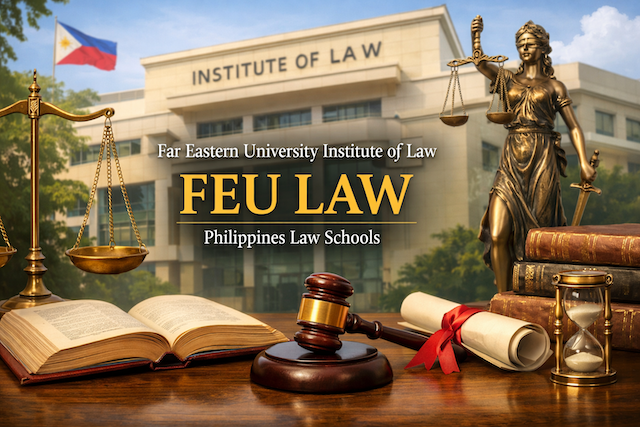
Far Eastern University Institute of Law (FEU Law): Philippines Law Schools
Contents
- Far Eastern University Institute of Law (FEU Law): Philippines Law Schools
- Introduction to Far Eastern University Institute of Law
- Historical Background and Establishment
- Vision, Mission, and Core Values
- Academic Programs Offered
- Curriculum Design and Teaching Approach
- Faculty and Academic Leadership
- Bar Examination Performance and Academic Outcomes
- Student Life and Learning Environment
- Facilities and Campus Resources
- Admission Requirements and Student Profile
- Tuition, Scholarships, and Financial Support
- Career Paths and Alumni Development
- Community Engagement and Legal Aid
- Why Choose FEU Law?
- Conclusion
- FAQs (Frequently Asked Questions)
- What is Far Eastern University Institute of Law (FEU Law)?
- Where is FEU Law located, and why does the location matter for law students?
- What degree program does FEU Law offer?
- How long does it typically take to complete the JD program at FEU Law?
- Does FEU Law support working students?
- What is FEU Law’s teaching style?
- What kinds of skills can students expect to develop at FEU Law?
- How does FEU Law help students prepare for the Philippine Bar Examination?
- Is FEU Law a good choice if I want to work in corporate law or compliance?
- Is FEU Law a good choice if I want to become a litigator?
- What student organizations and extracurricular activities are common in law school, and does FEU Law have them?
- What facilities and learning resources should I expect as a law student at FEU Law?
- How can I apply to FEU Law, and what are the typical requirements?
- Does FEU Law offer scholarships or financial assistance?
- What should I consider before choosing FEU Law over other Philippines law schools?
- What is the best way to get the most accurate, updated information about FEU Law?
Far Eastern University Institute of Law (FEU Law): Philippines Law Schools
Introduction to Far Eastern University Institute of Law
Far Eastern University Institute of Law (FEU Law) is one of the newer but rapidly developing law schools in the Philippines. Established to respond to the growing demand for competent, ethical, and socially responsive lawyers, FEU Law combines the long academic tradition of Far Eastern University with a modern, practice-oriented legal education. Since its founding, FEU Law has positioned itself as an institution that bridges theory and real-world legal practice, preparing students not only for the Philippine Bar Examination but also for meaningful careers in law, governance, business, and public service.
Located in the heart of Manila, FEU Law benefits from its proximity to courts, government offices, law firms, and corporate headquarters. This strategic location enhances experiential learning and allows students to engage directly with the country’s legal and regulatory environment. Despite being younger than many established law schools, FEU Law has steadily gained recognition for its innovative curriculum, faculty composition, and student-centered approach.
Historical Background and Establishment
FEU Law was formally established in 2015 as part of Far Eastern University’s commitment to expanding its professional education offerings. FEU itself was founded in 1928 and has long been known for programs in business, education, medicine, and the sciences. The creation of the Institute of Law marked a significant milestone, as it extended FEU’s academic influence into legal education.
From its inception, FEU Law aimed to differentiate itself from traditional law schools by adopting a curriculum aligned with contemporary legal challenges. Rather than focusing solely on doctrinal instruction, the Institute emphasized legal skills training, ethical formation, and interdisciplinary learning. This vision aligned well with reforms in Philippine legal education, particularly the Supreme Court’s shift toward outcome-based education and the introduction of the bar examinations with practical components.
Vision, Mission, and Core Values
FEU Law’s vision centers on producing competent, ethical, and socially engaged lawyers who contribute to nation-building and global legal practice. Its mission emphasizes excellence in legal education, integrity in professional conduct, and service to the community.
Core values at FEU Law are consistent with FEU’s broader institutional principles, including fortitude, excellence, and uprightness. These values are integrated into academic instruction, student activities, and community outreach programs. The Institute places particular importance on ethical lawyering, encouraging students to view the practice of law as both a profession and a public trust.
Academic Programs Offered
FEU Law primarily offers the Juris Doctor (JD) program, which complies with the legal education standards set by the Legal Education Board (LEB) of the Philippines. The JD program is designed to be completed in four years, with options that accommodate working students through evening and weekend classes.
The curriculum covers all core bar subjects, including Constitutional Law, Civil Law, Criminal Law, Commercial Law, Political Law, Labor Law, Taxation Law, Remedial Law, and Legal Ethics. In addition to these traditional subjects, FEU Law integrates specialized courses that reflect emerging legal fields such as technology law, data privacy, environmental law, and alternative dispute resolution.
Elective offerings allow students to tailor their studies based on career interests, whether in litigation, corporate practice, public interest law, or academia. The program also emphasizes legal writing, advocacy, and research throughout all years of study.
Curriculum Design and Teaching Approach
One of FEU Law’s defining features is its outcome-based and skills-oriented curriculum. Classes are structured to encourage critical thinking, case analysis, and practical application of legal principles. Professors often use a combination of the Socratic method, problem-based learning, and simulation exercises.
Moot courts, mock trials, contract drafting workshops, and negotiation exercises are integrated into the academic program. These activities help students develop courtroom confidence, analytical reasoning, and professional communication skills early in their legal education.
Technology also plays a role in FEU Law’s teaching approach. Digital legal research tools, online learning platforms, and hybrid class formats are used to enhance accessibility and learning efficiency. This modern approach appeals particularly to students who value flexibility and innovation in education.
Faculty and Academic Leadership
FEU Law’s faculty is composed of experienced legal practitioners, judges, former government officials, and respected legal scholars. This diverse faculty composition ensures that students gain insights not only into legal theory but also into real-world practice.
Many professors actively practice law or serve in the judiciary, regulatory agencies, or corporate legal departments. Their practical experience enriches classroom discussions and provides students with up-to-date perspectives on legal trends, procedural developments, and professional expectations.
The Institute’s leadership is focused on continuous improvement, faculty development, and alignment with national and international standards in legal education. Guest lectures, judicial forums, and industry partnerships further strengthen the academic environment.
Bar Examination Performance and Academic Outcomes
As a relatively young law school, FEU Law does not yet have the long historical bar performance record of older institutions. However, its graduates have consistently demonstrated improving results in the Philippine Bar Examination, reflecting the effectiveness of its curriculum and academic support systems.
FEU Law places strong emphasis on bar readiness through review classes, mock bar exams, and academic mentoring. The Institute continuously evaluates bar performance trends to refine teaching strategies and strengthen student preparation. Over time, FEU Law aims to establish a solid reputation as a reliable producer of competent and bar-ready lawyers.
Student Life and Learning Environment
Student life at FEU Law is dynamic and supportive. The Institute encourages holistic development through student organizations, academic societies, and advocacy groups. These organizations focus on areas such as legal aid, human rights, environmental protection, and corporate law.
FEU Law also supports moot court teams and debate societies, providing students with opportunities to compete in local and international competitions. These activities help students build confidence, teamwork skills, and professional networks.
The learning environment emphasizes collaboration rather than competition. Small class sizes allow for meaningful interaction between students and faculty, fostering mentorship and academic guidance. This supportive culture is especially beneficial for first-generation law students and working professionals balancing multiple responsibilities.
Facilities and Campus Resources
FEU Law is housed within the FEU campus in Manila, offering access to modern classrooms, a comprehensive law library, and study spaces designed for intensive legal research. The law library provides both print and digital resources, including Philippine jurisprudence, statutes, and international legal materials.
Students also benefit from FEU’s broader campus facilities, such as research centers, student support services, and technology infrastructure. Accessibility to nearby courts, government agencies, and legal institutions further enhances experiential learning opportunities.
Admission Requirements and Student Profile
Admission to FEU Law requires a bachelor’s degree from a recognized institution and compliance with Legal Education Board requirements. Applicants typically undergo an admission process that may include document evaluation, interviews, and entrance assessments.
FEU Law attracts a diverse student population, including fresh graduates, working professionals, public servants, and career shifters. This diversity enriches classroom discussions and exposes students to varied perspectives on legal issues.
The Institute is known for being relatively accessible compared to some highly selective law schools, while still maintaining rigorous academic standards. This balance makes FEU Law an attractive option for students seeking quality legal education with inclusive admission policies.
Tuition, Scholarships, and Financial Support
Tuition fees at FEU Law are generally considered competitive within the landscape of private law schools in Metro Manila. The Institute offers various scholarship and financial assistance programs based on academic merit, financial need, and special qualifications.
Scholarships may be available for top-performing students, alumni of FEU undergraduate programs, and individuals with outstanding leadership or service records. These financial support options help make legal education more accessible to deserving students.
Career Paths and Alumni Development
Graduates of FEU Law pursue a wide range of career paths. Many enter litigation, corporate law, and government service, while others work in compliance, policy analysis, academia, and non-governmental organizations. The Institute’s practical training and ethical focus prepare graduates for diverse professional environments.
FEU Law supports career development through internships, clerkships, and professional networking events. Partnerships with law firms, courts, and government agencies provide students with exposure to real legal work even before graduation.
Although still building its alumni network, FEU Law actively engages its graduates in mentoring programs and institutional development initiatives. Over time, this growing alumni base is expected to further strengthen the school’s reputation and professional connections.
Community Engagement and Legal Aid
Community service is a key component of FEU Law’s educational philosophy. The Institute encourages students to participate in legal aid clinics, outreach programs, and public education initiatives. These activities allow students to apply their legal knowledge while serving marginalized communities.
Through legal aid and advocacy work, FEU Law reinforces the idea that law is a tool for social justice and public service. This commitment aligns with national efforts to improve access to justice in the Philippines.
Why Choose FEU Law?
FEU Law stands out as a modern, student-centered law school that emphasizes practical skills, ethical formation, and accessibility. Its relatively young status allows it to innovate and adapt quickly to changes in legal education and professional practice.
For students seeking a law school that balances academic rigor with real-world relevance, FEU Law offers a compelling option. Its supportive learning environment, experienced faculty, and commitment to continuous improvement make it an increasingly attractive choice among Philippines law schools.
Conclusion
Far Eastern University Institute of Law represents a new generation of legal education in the Philippines. While it may not yet have the historical prestige of older institutions, its forward-looking curriculum, practical training focus, and ethical foundation position it well for long-term growth and recognition.
As legal education continues to evolve, FEU Law is poised to play an important role in shaping future Filipino lawyers who are competent, socially responsible, and ready to meet the demands of an increasingly complex legal landscape.
FAQs (Frequently Asked Questions)
What is Far Eastern University Institute of Law (FEU Law)?
Far Eastern University Institute of Law (FEU Law) is the law school of Far Eastern University in Manila, Philippines. It offers a Juris Doctor (JD) program designed to prepare students for the Philippine Bar Examination and for legal careers in litigation, corporate practice, government, compliance, and public interest work. FEU Law is known for a modern approach that blends foundational legal doctrine with skills training such as legal writing, advocacy, and practical problem-solving.
Where is FEU Law located, and why does the location matter for law students?
FEU Law is located within the Far Eastern University campus in Manila. Studying in Manila can be advantageous because students are close to major courts, government agencies, regulatory bodies, and many law firms. This proximity can support internships, clerkships, court observation, and networking opportunities. Being in an urban center also helps students stay connected to developments in policy, jurisprudence, and legal practice.
What degree program does FEU Law offer?
FEU Law primarily offers the Juris Doctor (JD) degree, which is the standard professional law degree required to take the Philippine Bar Examination. The JD curriculum includes bar subjects such as Constitutional Law, Civil Law, Criminal Law, Remedial Law, Commercial Law, Labor Law, Taxation, Legal Ethics, and Legal Research and Writing. Students may also have access to electives that reflect current legal needs, depending on offerings for a given academic year.
How long does it typically take to complete the JD program at FEU Law?
The JD program in the Philippines is commonly designed as a four-year course of study, although actual completion time can vary depending on a student’s schedule, course load, academic standing, and personal circumstances. Some students take a standard full load each term, while others—especially working students—may take a reduced load if the school’s scheduling options allow it.
Does FEU Law support working students?
Many Philippine law schools, including newer institutions, often provide class schedules that can accommodate working students, such as evening or weekend classes, subject to availability and institutional policy. If you are employed full-time, it is important to confirm the latest class schedules, attendance rules, and academic workload expectations directly with FEU Law so you can plan realistically for readings, recitations, examinations, and group requirements.
What is FEU Law’s teaching style?
Law school teaching styles commonly include case-based discussions, recitations, problem-solving exercises, and the Socratic method. FEU Law is often described as aligned with a practice-oriented approach, meaning students can expect training that strengthens legal reasoning, writing, and argumentation alongside doctrinal learning. The exact classroom experience may differ by professor and subject, so it helps to talk to current students or attend orientation events if available.
What kinds of skills can students expect to develop at FEU Law?
Beyond memorizing legal rules, law students are expected to build skills in legal research, legal writing, case briefing, statutory interpretation, and oral advocacy. Many programs also include activities like moot court, mock trial exercises, drafting workshops, and negotiation practice. These skills help students perform better in law school assessments, prepare for the bar exam’s practical demands, and transition into professional work after graduation.
How does FEU Law help students prepare for the Philippine Bar Examination?
Bar preparation typically involves a strong foundation in core subjects, continuous practice in answering bar-type questions, and structured review strategies. Law schools may provide review sessions, mock bar exams, and academic support programs to help students identify weak areas and build exam stamina. If you are choosing FEU Law with bar readiness in mind, ask about review initiatives, mentorship systems, and how the school tracks outcomes to improve preparation year after year.
Is FEU Law a good choice if I want to work in corporate law or compliance?
FEU Law can be a suitable option for students interested in corporate law, compliance, and business-related practice because Manila offers exposure to corporate headquarters, banks, and regulatory agencies. Corporate-focused students should look for opportunities to take commercial law electives, join business law organizations, and pursue internships in legal departments or firms handling corporate work. Developing drafting skills and familiarity with regulations can be especially valuable for compliance careers.
Is FEU Law a good choice if I want to become a litigator?
A future litigator benefits from strong training in Remedial Law, Criminal Procedure, Evidence, and advocacy skills. Students can strengthen litigation readiness by participating in moot court, mock trial programs, and legal aid work that involves client interviewing and case preparation. If you are litigation-focused, ask about opportunities to observe court proceedings, connect with practitioners, and practice oral arguments under faculty coaching.
What student organizations and extracurricular activities are common in law school, and does FEU Law have them?
Most law schools encourage student engagement through organizations focused on advocacy, legal aid, academic interests, and professional development. Common activities include debate, moot court, community outreach, and law journal or writing initiatives. Availability and intensity vary by school and year, so prospective students should check FEU Law’s current student organizations and activities to see what matches their interests and career goals.
What facilities and learning resources should I expect as a law student at FEU Law?
Law students generally need access to a reliable law library, updated legal references, and comfortable study spaces. Digital resources for jurisprudence and statutes are also important for efficient research. Because resources can change over time, it is best to confirm FEU Law’s current library holdings, online database access, study areas, and policies on borrowing and remote access, especially if you plan to study off-campus frequently.
How can I apply to FEU Law, and what are the typical requirements?
Applicants generally need a bachelor’s degree and must submit academic records and other documents required by the school and relevant regulatory standards. The admissions process may include an entrance assessment and an interview, depending on the school’s policies. Requirements can change, so you should verify the latest admissions steps, deadlines, and document checklists directly with FEU Law’s admissions office or official channels.
Does FEU Law offer scholarships or financial assistance?
Many private universities provide scholarship programs based on merit, need, or specific qualifications, and some offer discounts for alumni or high-performing students. Availability, coverage, and renewal rules differ widely. If cost is a major consideration, ask FEU Law about scholarship categories, application timelines, required grades for retention, and any installment payment options.
What should I consider before choosing FEU Law over other Philippines law schools?
When comparing law schools, consider curriculum structure, faculty background, teaching approach, bar preparation support, schedule flexibility, tuition and financial aid, campus resources, and your daily commute. Also consider your learning style: some students thrive in highly competitive environments, while others do better with a supportive culture and structured mentoring. Visiting the campus, attending briefings, and speaking with current students can help you decide if FEU Law fits your needs.
What is the best way to get the most accurate, updated information about FEU Law?
The most reliable sources are FEU Law’s official announcements, admissions office communications, and current academic bulletins. Because policies on admissions, tuition, schedules, and course offerings can change, prospective students should confirm details directly with the school. If you are evaluating multiple options, create a simple checklist of priorities—such as schedule, cost, and bar support—and compare each law school using the same criteria.
Law Schools in Manila: Top Universities for Aspiring Lawyers in the Philippines
Top Law Schools in the Philippines (Bar Exam Performance 2025)

How to Register for eTravel Philippines (2025 Guide)
Step-by-step guide to completing your eTravel registration before arriving in the Philippines, with images and tips.

Night Market in Cebu – Things You Don’t Know About Cebu Life
Discover the hidden charm of Cebu’s night markets, from street food stalls to local life tips you won’t find in tourist guides.

How to Use ChatGPT for IELTS Preparation: A Complete Guide
Learn how to prepare for IELTS using ChatGPT — including strategies for Writing, Reading, Listening, Speaking, and grammar support.

How to Build a Website Without Coding Using ChatGPT
Discover how to build your own website using AI—no coding skills needed. From structure planning to SEO and design, let ChatGPT guide you.