2026年4月3日
3D ACADEMY offers affordable English study programs in Cebu, Philippines – perfect for beginners, professionals, and exam takers.

3D UNIVERSAL ENGLISH INSTITUTE INC
info.3d-universal.com
8:00-17:00(Mon-Fri)
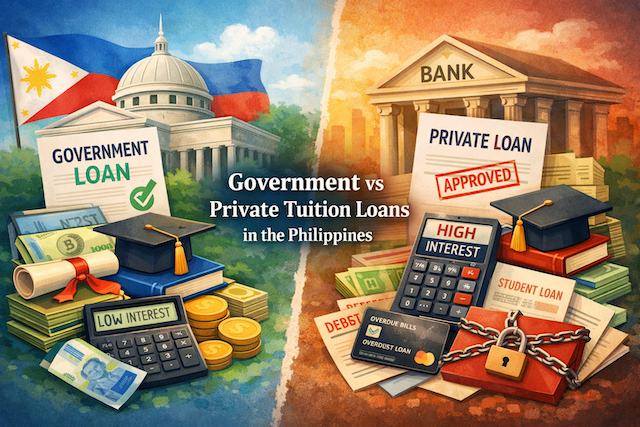
Government vs Private Tuition Loans in the Philippines
Contents
- Government vs Private Tuition Loans in the Philippines
- Understanding Tuition Loans in the Philippine Education System
- Overview of Government Tuition Loan Programs in the Philippines
- Key Features of Government Tuition Loans
- Overview of Private Tuition Loans in the Philippines
- Key Features of Private Tuition Loans
- Eligibility Requirements: Government vs Private Tuition Loans
- Interest Rates and Total Cost Comparison
- Repayment Terms and Flexibility
- Risks and Consequences of Default
- Which Option Is Better for Students?
- Combining Government and Private Options
- Long-Term Financial Impact on Graduates
- Final Thoughts: Choosing the Right Tuition Loan in the Philippines
Government vs Private Tuition Loans in the Philippines
Paying for higher education in the Philippines has become a growing challenge for many families as tuition fees continue to rise across both private and public institutions. While scholarships and grants remain ideal options, they are often limited and highly competitive. As a result, tuition loans have become an increasingly important financing tool for students and parents.
In the Philippines, tuition loans generally fall into two major categories: government-backed education loans and private tuition loans offered by banks, financing companies, and fintech platforms. Each option has its own advantages, limitations, eligibility rules, and long-term implications.
This in-depth guide compares government and private tuition loans in the Philippines, helping students and families make informed decisions based on affordability, flexibility, and financial risk.
Understanding Tuition Loans in the Philippine Education System
Tuition loans are structured financial assistance programs that allow students to pay school fees upfront and repay the amount over time, usually with interest. These loans can cover tuition fees, miscellaneous fees, and in some cases, related education expenses such as books or living costs.
Unlike scholarships, tuition loans must be repaid, making it crucial to understand the full cost, repayment terms, and consequences of default before applying.
In the Philippine context, tuition loans are especially relevant because many universities require partial or full payment before enrollment, placing pressure on families with limited cash flow.
Overview of Government Tuition Loan Programs in the Philippines
Government tuition loans are designed to promote access to education, particularly for low- and middle-income Filipinos. These programs are typically subsidized, regulated, and aligned with national education goals.
Common Government Education Loan Providers
Government-backed tuition loans in the Philippines are offered through agencies such as:
-
Government Service Insurance System (GSIS)
-
Social Security System (SSS)
-
Commission on Higher Education (CHED)
-
LandBank of the Philippines
-
Development Bank of the Philippines (DBP)
Most of these programs are targeted at specific groups, such as government employees, private sector workers, or students enrolled in priority courses.
Key Features of Government Tuition Loans
Government tuition loans generally emphasize affordability and social protection. While access may be more limited, these loans often offer safer long-term repayment conditions.
Lower Interest Rates
One of the biggest advantages of government tuition loans is their relatively low interest rates. Since these programs are subsidized or non-profit in nature, interest rates are typically lower than those of private lenders.
Longer Repayment Periods
Government loans often provide longer repayment tenures, sometimes extending several years after graduation. This reduces monthly payment pressure and allows borrowers to stabilize their income before full repayment begins.
Income-Based or Payroll-Deducted Repayment
Many government loans, especially those offered through GSIS and SSS, allow repayment via salary deduction or flexible amortization schedules. This minimizes the risk of missed payments.
Limited Coverage and Strict Eligibility
The main drawback of government tuition loans is limited accessibility. Eligibility is often restricted to:
-
Government employees or their dependents
-
Active SSS or GSIS members
-
Students enrolled in accredited or priority programs
-
Applicants meeting income or employment requirements
Approval processes may also be slower due to administrative checks.
Overview of Private Tuition Loans in the Philippines
Private tuition loans are offered by commercial banks, financing companies, and education-focused fintech platforms. These loans are typically more accessible and faster to process but may come with higher costs.
Common Private Tuition Loan Providers
Private tuition loans in the Philippines are offered by:
-
Commercial banks
-
Non-bank financial institutions
-
Education financing platforms
-
Installment-based tuition partners of universities
These loans are widely used by students in private universities and colleges, especially when immediate payment is required.
Key Features of Private Tuition Loans
Private tuition loans focus on convenience, speed, and flexibility, often catering to students who do not qualify for government assistance.
Faster Approval and Disbursement
Private lenders usually offer quicker application processes, with approvals sometimes granted within days. This is particularly helpful for students facing enrollment deadlines.
Broader Eligibility Criteria
Private tuition loans are generally more inclusive, allowing applications from:
-
Students without government employment ties
-
Parents or guardians as co-borrowers
-
Self-employed individuals
-
International or returning Filipino students (in some cases)
Flexible Payment Structures
Some private lenders offer customized payment plans, such as monthly or semester-based installments, aligned with academic calendars.
Higher Interest Rates and Fees
The primary downside of private tuition loans is cost. Interest rates are typically higher than government loans, and additional fees such as processing charges, penalties, or service fees may apply.
Eligibility Requirements: Government vs Private Tuition Loans
Eligibility criteria differ significantly between government and private lenders, influencing who can realistically access each option.
Government Loan Eligibility
Government tuition loans usually require:
-
Active membership in GSIS or SSS
-
Minimum contribution periods
-
Proof of employment or income
-
Enrollment in accredited schools
-
Compliance with age and residency requirements
Students who do not meet these criteria may be automatically disqualified.
Private Loan Eligibility
Private tuition loans often require:
-
Proof of enrollment or acceptance
-
Valid identification
-
Proof of income from borrower or co-borrower
-
Credit or payment history (depending on lender)
While more flexible, approval may still depend on the borrower’s financial profile.
Interest Rates and Total Cost Comparison
Understanding the total cost of borrowing is essential when comparing tuition loans.
Government Loan Cost Structure
Government tuition loans generally feature:
-
Lower interest rates
-
Minimal processing fees
-
Grace periods before repayment
-
Less aggressive penalty structures
These factors result in lower long-term repayment amounts.
Private Loan Cost Structure
Private tuition loans may include:
-
Higher interest rates
-
Service or facilitation fees
-
Shorter repayment periods
-
Steeper penalties for late payment
While manageable in the short term, these costs can accumulate significantly over time.
Repayment Terms and Flexibility
Repayment flexibility is a key consideration for students who may not immediately secure stable employment after graduation.
Government Loan Repayment
Government loans often provide:
-
Grace periods after graduation
-
Income-adjusted repayment options
-
Automatic salary deductions
-
Leniency in case of financial hardship
These features reduce default risk and financial stress.
Private Loan Repayment
Private lenders may offer:
-
Fixed monthly installments
-
Shorter grace periods or none at all
-
Limited restructuring options
Missed payments can quickly lead to penalties or credit issues.
Risks and Consequences of Default
Defaulting on a tuition loan can have serious consequences, regardless of the lender.
Government Loan Default Risks
Defaulting on government loans may result in:
-
Salary deduction enforcement
-
Impact on future government benefits
-
Legal action in prolonged cases
However, restructuring options are often available before severe penalties apply.
Private Loan Default Risks
Private loan defaults may lead to:
-
Accumulated penalties and interest
-
Negative credit records
-
Legal collection efforts
-
Difficulty securing future loans
Private lenders are typically less forgiving when payments are missed.
Which Option Is Better for Students?
The choice between government and private tuition loans depends on individual circumstances rather than a universal best option.
Government Loans Are Better If:
-
You or your parents are GSIS or SSS members
-
You qualify for subsidized programs
-
You prefer lower long-term costs
-
You can wait for longer approval timelines
Private Loans Are Better If:
-
You need fast approval
-
You do not meet government eligibility requirements
-
Your school partners with a private financing provider
-
You can manage higher interest rates responsibly
Combining Government and Private Options
Some families choose to combine financing sources, using government loans for base tuition and private loans or installment plans to cover remaining balances. This hybrid approach can reduce overall interest costs while maintaining enrollment flexibility.
However, borrowers must carefully track repayment schedules to avoid overlapping financial strain.
Long-Term Financial Impact on Graduates
Education loans should be evaluated not only for immediate affordability but also for long-term financial health. Excessive debt can delay milestones such as:
-
Starting a business
-
Purchasing a home
-
Supporting family members
-
Continuing postgraduate education
Government loans generally pose lower long-term financial risk, while private loans require stricter budgeting discipline after graduation.
Final Thoughts: Choosing the Right Tuition Loan in the Philippines
Government and private tuition loans in the Philippines serve different needs and financial realities. Government loans prioritize accessibility and long-term affordability but are limited by eligibility requirements. Private tuition loans offer speed and flexibility but at a higher financial cost.
Before applying, students and families should carefully assess total repayment amounts, income stability, and alternative funding options such as scholarships or installment plans. A well-chosen tuition loan can make higher education achievable without compromising long-term financial security.
By understanding the differences between government and private tuition loans, Filipino students can make informed decisions that support both their academic goals and future financial well-being.

How to Register for eTravel Philippines (2025 Guide)
Step-by-step guide to completing your eTravel registration before arriving in the Philippines, with images and tips.

Night Market in Cebu – Things You Don’t Know About Cebu Life
Discover the hidden charm of Cebu’s night markets, from street food stalls to local life tips you won’t find in tourist guides.

How to Use ChatGPT for IELTS Preparation: A Complete Guide
Learn how to prepare for IELTS using ChatGPT — including strategies for Writing, Reading, Listening, Speaking, and grammar support.

How to Build a Website Without Coding Using ChatGPT
Discover how to build your own website using AI—no coding skills needed. From structure planning to SEO and design, let ChatGPT guide you.