2025年12月13日
3D ACADEMY offers affordable English study programs in Cebu, Philippines – perfect for beginners, professionals, and exam takers.

3D UNIVERSAL ENGLISH INSTITUTE INC
info.3d-universal.com
8:00-17:00(Mon-Fri)
Holy Cross of Davao College (HCDC) Guide
Contents
- Holy Cross of Davao College (HCDC) Guide
- Overview of Holy Cross of Davao College
- Location and Campus Environment
- Academic Programs Offered
- Student Life and Campus Culture
- Facilities and Resources
- Admission Requirements and Process
- Tuition Fees and Financial Assistance
- International Partnerships and Recognition
- Community Engagement and Social Responsibility
- Why Choose Holy Cross of Davao College?
- Conclusion
- FAQs
- What makes Holy Cross of Davao College (HCDC) distinct among Davao schools?
- Which academic levels and programs are available?
- Does HCDC have graduate programs?
- How competitive is admission and what are the usual requirements?
- Are international students welcome? What documents are commonly needed?
- What is the typical cost of study and are scholarships available?
- What kind of learning resources and facilities can students expect?
- How does HCDC support student wellness, safety, and spiritual life?
- What is student life like outside the classroom?
- Does HCDC offer internships, practicum, or industry linkages?
- How does HCDC integrate community service and social responsibility?
- What are the housing options near campus?
- How do students commute to and from HCDC?
- What technology and digital learning practices are used?
- How can parents and guardians stay involved?
- What career outcomes do graduates typically pursue?
- How can I prepare a strong application?
- Where can I find the most current official information?
Holy Cross of Davao College (HCDC) Guide
Overview of Holy Cross of Davao College
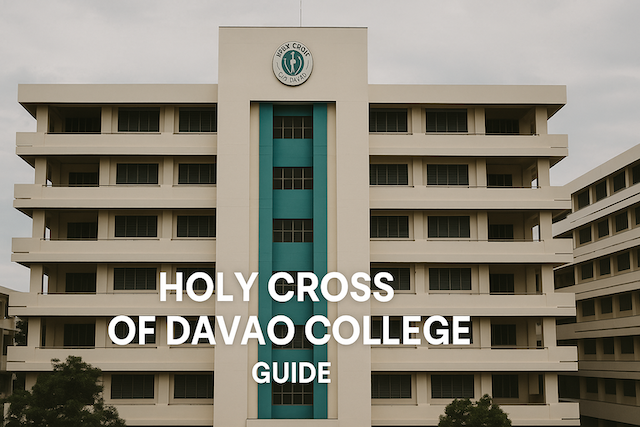
Holy Cross of Davao College (HCDC) is one of the most respected and long-standing educational institutions in Mindanao, located in the heart of Davao City. Established in 1951 by the Congregation of the Foreign Mission Society of Quebec (PME Fathers), it has grown into a leading institution for higher learning with a strong commitment to Catholic education and community service. The college is known for producing graduates who are not only academically competent but also socially responsible and morally grounded.
HCDC offers a wide range of academic programs from basic education to graduate studies, serving thousands of students from across the Philippines and abroad. The institution emphasizes holistic education, combining intellectual growth with values formation, leadership, and service.
The college’s motto, “In Cruce Salus” (“In the Cross is Salvation”), reflects its strong Catholic foundation and its mission to shape students into professionals with compassion and integrity.
Location and Campus Environment
Holy Cross of Davao College is strategically located along Sta. Ana Avenue, Davao City — a central and easily accessible area from major transportation routes. Its location provides a safe and conducive learning environment, with nearby amenities such as cafes, bookstores, dormitories, and student housing.
The campus has modern academic buildings, computer and science laboratories, a well-equipped library, and recreational facilities. It maintains a balance between urban accessibility and a peaceful learning atmosphere. The college also has designated spaces for religious and cultural activities, reflecting its spiritual and community-oriented character.
Davao City, known for being one of the safest and cleanest cities in the Philippines, offers a comfortable lifestyle for both local and international students. With its affordable living costs and student-friendly environment, studying at HCDC allows learners to focus on education without unnecessary financial strain.
Academic Programs Offered
HCDC offers a comprehensive selection of programs under several colleges, providing education that meets both national and international standards.
Basic Education Department
-
Preschool, Elementary, and Junior High School programs focus on foundational academic and moral formation.
-
The Senior High School program offers tracks such as:
-
Academic Track (STEM, ABM, HUMSS, GAS)
-
Technical-Vocational-Livelihood (TVL) Track
-
Arts and Design Track
-
Sports Track
-
College Department
Holy Cross of Davao College offers various undergraduate degrees under its main colleges:
-
College of Business and Management – BS in Business Administration, BS in Accountancy, BS in Entrepreneurship, and BS in Tourism Management.
-
College of Arts and Sciences – BA in Communication, BA in Psychology, BS in Social Work, BS in Criminology, and related programs.
-
College of Education – BSEd, BEEd, and specialized courses in Early Childhood Education and Physical Education.
-
College of Engineering and Architecture – BS in Civil Engineering, BS in Electrical Engineering, and BS in Architecture.
-
College of Maritime Education – Offers programs like BS in Marine Transportation and BS in Marine Engineering, accredited by the Maritime Industry Authority (MARINA).
-
College of Computer Studies – BS in Information Technology, BS in Computer Science, and BS in Information Systems.
Graduate School
The Graduate School offers Master’s degrees in Education, Business Administration, and Theology. These programs are designed to develop advanced skills and leadership competencies among professionals and educators.
Student Life and Campus Culture
Student life at HCDC is vibrant and deeply rooted in the college’s mission to nurture both intellect and character. The school encourages active participation in various organizations, clubs, and societies that promote leadership, creativity, and social involvement.
Students can join academic clubs, cultural groups, student councils, and community outreach organizations. The Supreme Student Government (SSG) acts as the main representative body for students, fostering engagement between the administration and the student body.
The college also hosts annual events such as:
-
Foundation Anniversary
-
Intramurals and Sports Festivals
-
Cultural Presentations and Talent Competitions
-
Religious Celebrations and Outreach Programs
These activities create a well-rounded college experience that blends academics with personal growth, social responsibility, and cultural awareness.
Facilities and Resources
HCDC continuously upgrades its facilities to provide students with modern tools for learning and research. Some key facilities include:
-
Libraries and Learning Resource Centers – Equipped with digital databases, journals, and study areas.
-
Computer and Science Laboratories – Support hands-on learning and experimentation.
-
Maritime Training Facilities – Include simulators and shipboard training equipment.
-
Chapel and Religious Centers – Spaces for prayer, reflection, and worship.
-
Gymnasium and Sports Complex – Host to physical education classes, tournaments, and events.
-
Student Lounges and Study Spaces – Designed for collaboration and relaxation between classes.
Wi-Fi access is available throughout the campus, ensuring students can connect for research and online coursework.
Admission Requirements and Process
For Filipino Students
-
Online or On-Campus Application Form
-
Report Card / Transcript of Records
-
Certificate of Good Moral Character
-
Birth Certificate (PSA)
-
2×2 ID Photos
-
Entrance Exam (for selected programs)
-
Interview (if required)
For International Students
-
Duly Accomplished Application Form
-
Passport Copy and Visa Requirements
-
Transcript of Records authenticated by the Philippine Embassy
-
Certificate of English Proficiency (if applicable)
-
Medical Certificate
-
Notice of Acceptance (NOA) issued by HCDC
The admissions process is straightforward, and the college provides assistance for foreign students in securing the necessary documents and accommodations.
Tuition Fees and Financial Assistance
Holy Cross of Davao College is known for its affordable tuition fees compared to private universities in larger cities like Manila. Annual tuition typically ranges between ₱35,000 to ₱60,000, depending on the program and year level.
The college offers several scholarship programs and financial aid:
-
Academic Scholarships for top-performing students
-
Athletic Scholarships for outstanding athletes
-
Parish-based and Community Scholarships
-
Government-supported programs such as TES (Tertiary Education Subsidy) and CHED Scholarships
These programs ensure that education remains accessible to deserving students regardless of financial background.
International Partnerships and Recognition
HCDC maintains academic linkages with both local and international institutions to enhance its curriculum and provide global exposure to students. Its Maritime Education Department is particularly recognized for complying with international maritime standards.
Additionally, the college collaborates with government agencies, industries, and NGOs for research, internships, and community projects. Its graduates are well-regarded in Davao and across the Philippines for their discipline, skills, and ethical conduct.
Community Engagement and Social Responsibility
True to its Catholic identity, Holy Cross of Davao College integrates community service into its academic programs. Students regularly participate in outreach projects, environmental campaigns, and social development initiatives in underserved communities.
The Community Extension Services (CES) office oversees projects that promote volunteerism, leadership, and compassion. This approach reinforces the college’s vision of forming socially aware graduates who contribute positively to society.
Why Choose Holy Cross of Davao College?
Here are key reasons why HCDC stands out:
-
Strong Catholic Values – Emphasis on faith, service, and character formation.
-
Affordable Quality Education – Accessible tuition without compromising standards.
-
Wide Range of Programs – From maritime studies to business and education.
-
Community-Centered Learning – Focus on real-world service and development.
-
Safe and Strategic Location – Situated in Davao City, a hub for education and business.
-
Supportive Environment – Faculty and staff dedicated to student success.
-
Proven Track Record – Decades of academic excellence and professional success of alumni.
Conclusion
Holy Cross of Davao College continues to uphold its tradition of excellence in education, faith, and service. As one of the most reputable institutions in Davao City, it offers students not just a degree, but a transformative experience that molds them into responsible citizens and capable professionals.
For students seeking a balance of academic rigor, spiritual growth, and community engagement, HCDC remains a top choice in Mindanao. With its holistic education and supportive environment, it continues to live up to its mission: to form men and women for others, inspired by the Cross.
FAQs
What makes Holy Cross of Davao College (HCDC) distinct among Davao schools?
HCDC blends quality academics with a Catholic, service-oriented mission. The college emphasizes character formation, community engagement, and practical skills alongside classroom learning. Students typically experience small-to-moderate class sizes, approachable faculty, and a campus culture that values integrity, responsibility, and social involvement. This holistic approach helps graduates build not only employable skills but also a strong ethical compass.
Which academic levels and programs are available?
HCDC commonly offers basic education (including Senior High School tracks such as STEM, ABM, HUMSS, GAS, and TVL) and a range of undergraduate degrees in areas like business, education, arts and sciences, information technology, criminology, engineering, architecture, tourism, and maritime studies. Some programs may have selective admission processes or additional requirements due to laboratory, licensure, or practicum components.
Does HCDC have graduate programs?
Yes. HCDC typically offers graduate-level study in fields such as education and business administration. Graduate programs focus on advanced professional practice, leadership, and research-informed decision-making. Working professionals often appreciate flexible scheduling, applied coursework, and mentorship from experienced faculty members.
How competitive is admission and what are the usual requirements?
Admissions competitiveness varies by program. In general, applicants submit an application form, prior academic records, proof of good moral character, identification documents, ID photos, and sometimes take entrance tests or interviews. Programs with licensure or technical demands (e.g., engineering, maritime, accountancy, or teacher education) may have higher grade thresholds or additional screening to ensure academic readiness.
Are international students welcome? What documents are commonly needed?
HCDC accepts international applicants who complete standard academic requirements, provide passport and visa documents, and—when applicable—evidence of English proficiency and authenticated transcripts. Once admitted, international students usually receive a Notice of Acceptance and guidance regarding student visa processing, housing suggestions, and orientation to campus life and local culture.
What is the typical cost of study and are scholarships available?
Tuition and fees vary by program and year level, but HCDC is known for being comparatively affordable among private institutions. Financial assistance can include academic scholarships, need-based aid, athletic grants, and government-supported programs where eligible. Applicants should watch for application windows, maintain required GPAs, and comply with renewal rules to keep awards.
What kind of learning resources and facilities can students expect?
Students can expect access to libraries and learning resource centers, computer and science labs, program-specific facilities (e.g., simulators for maritime), classrooms equipped for active learning, and spaces for worship, counseling, and student advising. Wi-Fi, study lounges, and group work areas help support research, collaboration, and blended learning approaches.
How does HCDC support student wellness, safety, and spiritual life?
HCDC’s campus culture integrates pastoral care, guidance and counseling, and values formation. Through campus ministry, retreats, and liturgical activities, students find space for reflection and community. As part of Davao City’s generally safety-conscious environment, the school implements identification, security checkpoints, and discipline policies. Wellness seminars and referrals support mental health and healthy lifestyles.
What is student life like outside the classroom?
Student life is vibrant, with organizations spanning academics, arts, culture, athletics, publication, and student governance. Annual traditions—such as intramurals, foundation events, and outreach—foster school spirit and leadership. Co-curricular and community immersion activities complement coursework, strengthening teamwork, communication, and real-world problem-solving.
Does HCDC offer internships, practicum, or industry linkages?
Most professional programs include on-the-job training, practicum, or internships with partner institutions and local industries. Career offices or program chairs help match students to placements, prepare documents, and monitor progress. These experiences build résumés, develop networks, and often lead to employment opportunities after graduation.
Service-learning is a core feature of HCDC’s identity. Through community extension offices and program-based initiatives, students engage in education drives, livelihood projects, environmental efforts, and disaster response. Courses may embed reflection activities, allowing learners to connect academic theory to ethical action and civic participation.
What are the housing options near campus?
The campus sits in an accessible part of Davao City with nearby dorms, boarding houses, and rental apartments. Costs vary by room type and amenities. Students should evaluate safety, proximity to campus and transport, curfew rules, internet reliability, and total monthly costs (including utilities). First-year and international students often benefit from recommendations provided by the school or upperclassmen.
How do students commute to and from HCDC?
Davao City’s transport mix includes jeepneys, buses, taxis, and ride-hailing services. Many students choose routes that minimize transfers and avoid peak congestion where possible. Those with early labs or late classes plan ahead for transport availability and budget. Bike and pedestrian safety practices are encouraged around busy intersections.
What technology and digital learning practices are used?
HCDC programs typically blend face-to-face instruction with digital tools such as learning management systems, e-libraries, online submissions, and video-conference support for consultations. Students should maintain a reliable device, follow digital conduct guidelines, and back up files regularly to handle research, lab reports, and collaborative projects.
How can parents and guardians stay involved?
Parents can track academic progress through official grade releases, parent consultations, and school communications. For Senior High School and first-year college students, coordination with advisers can be helpful during transitions. Families also support students by discussing schedules, budgeting, and well-being, particularly during demanding exam or practicum periods.
What career outcomes do graduates typically pursue?
Outcomes reflect program strengths: teachers and school leaders, business and finance professionals, IT specialists, engineers and architects, maritime officers and engineers, tourism and hospitality staff, social workers, communicators, and public service personnel. Licensure programs guide students through review strategies and ethical practice standards to improve board performance and employability.
How can I prepare a strong application?
Start early: gather documents, check program-specific criteria, and note entrance exams or interviews. Write a concise personal statement where required, emphasizing motivation and fit. If shifting tracks (e.g., from HUMSS to engineering), consider bridging or refresher work. Finally, verify deadlines, fees, and scholarship windows to avoid last-minute issues.
Where can I find the most current official information?
Because policies, fees, schedules, and program lineups can change, applicants should always confirm details directly with HCDC’s official admissions channels. Contact the registrar or college offices, review updated announcements, and follow official pages for timelines on enrollment, scholarship applications, and entrance testing.
Top 100 Universities in the Philippines (2025 Ranking Guide)
Davao University Guide: Top Schools, Programs, and Student Life in Mindanao’s Education Hub

How to Register for eTravel Philippines (2025 Guide)
Step-by-step guide to completing your eTravel registration before arriving in the Philippines, with images and tips.

Night Market in Cebu – Things You Don’t Know About Cebu Life
Discover the hidden charm of Cebu’s night markets, from street food stalls to local life tips you won’t find in tourist guides.

How to Use ChatGPT for IELTS Preparation: A Complete Guide
Learn how to prepare for IELTS using ChatGPT — including strategies for Writing, Reading, Listening, Speaking, and grammar support.

How to Build a Website Without Coding Using ChatGPT
Discover how to build your own website using AI—no coding skills needed. From structure planning to SEO and design, let ChatGPT guide you.