2025年11月6日
3D ACADEMY offers affordable English study programs in Cebu, Philippines – perfect for beginners, professionals, and exam takers.

3D UNIVERSAL ENGLISH INSTITUTE INC
info.3d-universal.com
8:00-17:00(Mon-Fri)
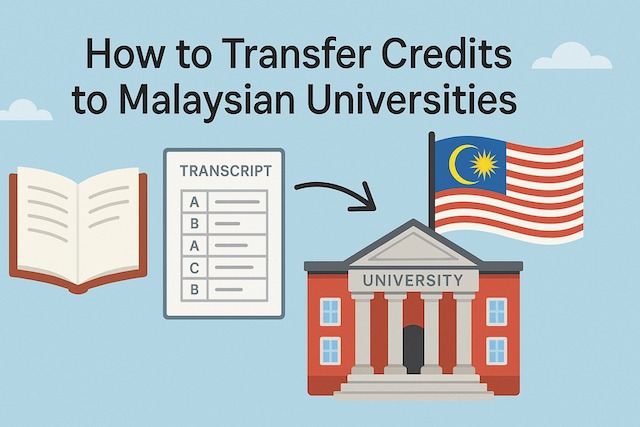
How to Transfer Credits to Malaysian Universities
Contents
- How to Transfer Credits to Malaysian Universities
- Understanding Credit Transfer in Malaysia
- Benefits of Credit Transfer
- Common Types of Credit Transfer Pathways
- Eligibility Requirements for Credit Transfer
- Required Documents for Credit Transfer Application
- Step-by-Step Process to Transfer Credits to a Malaysian University
- Universities in Malaysia with Strong Credit Transfer Systems
- Factors Affecting Credit Transfer Approval
- How Many Credits Can Be Transferred?
- Tips for a Successful Credit Transfer
- Challenges Students Might Face
- Alternatives to Credit Transfer
- Example: 2+1 Program in Malaysia
- Conclusion
- What is credit transfer in Malaysian universities?
- Who is eligible to transfer credits?
- How many credits can I transfer?
- What documents do I need?
- How long does the evaluation take?
- How do universities judge equivalency?
- Will my grades transfer to my CGPA?
- Can I transfer credits from diplomas, foundations, or TVET?
- What about international systems (ECTS, US credit hours)?
- Can work experience count (APEL/RPL)?
- Are there modules that rarely transfer?
- Do I need English-language proof again?
- What fees apply to credit transfer?
- Will transferring delay my graduation?
- Can I transfer while on a student visa?
- What strengthens my application?
- What if a module is denied?
- When should I apply?
- What are common mistakes to avoid?
- How do I get an official study plan?
How to Transfer Credits to Malaysian Universities
Transferring academic credits to Malaysian universities can be a rewarding pathway for students who have already completed part of their studies elsewhere. Whether you are moving from another Malaysian institution or transferring from abroad, understanding the process, eligibility, and requirements can make your transition smoother. This comprehensive guide explains everything you need to know about credit transfers in Malaysia — from procedures to tips for success.
Understanding Credit Transfer in Malaysia
Credit transfer allows students to carry over completed coursework and academic credits from one institution to another. This means you can avoid retaking subjects you’ve already passed, saving both time and money.
In Malaysia, the credit transfer process is regulated by the Malaysian Qualifications Agency (MQA), which ensures academic quality and comparability across higher education institutions. The MQA framework allows universities to assess and recognize prior learning and achievements.
There are generally two types of credit transfer arrangements:
-
Local Credit Transfer: Moving credits between Malaysian universities or colleges.
-
International Credit Transfer: Transferring credits from foreign universities to Malaysian institutions.
Benefits of Credit Transfer
Credit transfer programs are increasingly popular among international students for several reasons:
-
Shorter Study Duration: Students can complete degrees faster by avoiding repeated coursework.
-
Reduced Tuition Fees: Transferring credits can lower overall tuition costs by reducing semesters.
-
Flexibility: Students can change universities, programs, or even countries while continuing their studies.
-
Global Exposure: For students in twinning or articulation programs, studying in multiple countries enhances cross-cultural experience.
Common Types of Credit Transfer Pathways
There are three main credit transfer mechanisms commonly used in Malaysia:
1. Advanced Standing Admission
In this arrangement, students receive direct entry into a higher year (e.g., Year 2) based on previous study. The university evaluates transcripts and course equivalency before approving advanced standing.
2. Credit Transfer Program
This formal arrangement allows students to transfer a set number of credits from one institution to another. It often involves bilateral agreements between universities, such as:
-
2+1 Program (2 years in home country + 1 year in Malaysia)
-
1+2 Program (1 year in home country + 2 years in Malaysia)
3. Articulation Agreements
These are formal partnerships between institutions that pre-define how credits will be transferred. For example, many Malaysian universities have articulation agreements with community colleges or universities in countries like the UK, Australia, and China.
Eligibility Requirements for Credit Transfer
Each university has its own admission policy, but most Malaysian universities follow similar general eligibility criteria:
-
The previous institution must be recognized and accredited by the appropriate authority (e.g., MQA, or equivalent in other countries).
-
The student must have achieved a minimum grade, often a C or higher, in transferable subjects.
-
The course content and learning outcomes must be equivalent to those offered by the Malaysian university.
-
The student must meet entry requirements of the program they are transferring into.
-
Some institutions limit the maximum credits transferable (usually 50% of the total program credits).
Required Documents for Credit Transfer Application
To apply for credit transfer, students typically need to submit the following documents:
-
Official Academic Transcript from the previous institution.
-
Course Syllabi or Descriptions, showing topics covered, credit hours, and assessments.
-
Institutional Accreditation Proof, if applicable.
-
Certificate of Completion or Enrollment Letter.
-
Copy of Passport or ID for international students.
-
Application Form for Credit Transfer, provided by the receiving university.
Some universities may also request:
-
A portfolio of work for design or arts-related programs.
-
Recommendation letters from faculty members.
Step-by-Step Process to Transfer Credits to a Malaysian University
Step 1: Research and Shortlist Universities
Identify Malaysian universities that accept credit transfers. Institutions like Taylor’s University, Sunway University, Monash University Malaysia, and Asia Pacific University (APU) have established transfer systems with partner universities abroad.
Step 2: Review Program Compatibility
Check if the curriculum of your current program aligns with your target Malaysian university’s program. Look at course outlines, duration, and credit hours.
Step 3: Prepare Supporting Documents
Gather all transcripts, syllabi, and accreditation documents. Ensure they are in English or officially translated.
Step 4: Submit Credit Evaluation Request
Apply for credit evaluation directly through the university’s admission office or online application portal. Pay any applicable evaluation fees.
Step 5: Await Evaluation Results
The academic department or registrar will assess the equivalency of your courses. This can take from 2 to 8 weeks depending on the institution.
Step 6: Receive Credit Transfer Offer
You’ll receive an official credit transfer evaluation result, listing the courses and credits approved for transfer.
Step 7: Accept Offer and Enroll
Once you accept the offer, you’ll receive an updated study plan and can proceed with visa application and enrollment procedures.
Universities in Malaysia with Strong Credit Transfer Systems
Many Malaysian universities are well known for flexible credit transfer options, especially those with international partnerships. Examples include:
| University | Notable Transfer Features |
|---|---|
| Taylor’s University | 2+1 and 1+2 programs with UK and Australian universities. |
| Sunway University | Partnerships with Lancaster University (UK) for validated programs. |
| Monash University Malaysia | Seamless transfer to Monash Australia campus. |
| Asia Pacific University (APU) | Credit transfer pathways in IT and engineering fields. |
| University of Nottingham Malaysia | Aligned curriculum with UK campus for direct transfers. |
| Curtin University Malaysia | Students can transfer between Malaysia and Perth campus. |
Factors Affecting Credit Transfer Approval
Credit transfer is not automatic. The university evaluates each case based on academic compatibility and institutional policy. Factors influencing approval include:
-
Course Content Similarity: Must match at least 70–80% with the receiving course.
-
Accreditation of the Previous Institution: Only recognized institutions are accepted.
-
Credit Hour Differences: Courses with significantly fewer hours may not qualify.
-
Grades Achieved: Failing or low-pass grades are typically non-transferable.
-
Program Duration: Total credit hours and study duration must meet Malaysian standards.
How Many Credits Can Be Transferred?
The Malaysian Qualifications Agency (MQA) generally allows students to transfer up to 50% of total program credits. For example, if a degree requires 120 credits, a student may transfer up to 60 credits.
However, universities can apply flexibility under MQA’s Accreditation of Prior Experiential Learning (APEL) scheme for mature students or professionals, recognizing learning from work experience.
Tips for a Successful Credit Transfer
-
Start Early: Begin researching credit transfer options at least 6 months before applying.
-
Contact the Admissions Office: Confirm if your institution and program are recognized for transfer.
-
Compare Course Outlines: Ensure learning outcomes align with your target program.
-
Maintain Strong Grades: Higher grades improve the likelihood of credit approval.
-
Keep Documentation Organized: Having complete syllabi and transcripts expedites the process.
-
Understand Visa Requirements: If transferring internationally, coordinate visa application timing with credit evaluation.
Challenges Students Might Face
Despite its benefits, credit transfer can come with challenges:
-
Course Mismatch: Not all courses will align perfectly, resulting in some credits being rejected.
-
Processing Time: Evaluation can delay admission decisions.
-
Policy Differences: Universities have unique limits or restrictions on transferable credits.
-
Tuition Adjustment: Some transferred courses may not reduce total tuition if you still must meet minimum study periods.
Alternatives to Credit Transfer
If direct credit transfer is not possible, consider alternative options:
-
Top-Up Programs: Designed for diploma or associate degree holders to complete a bachelor’s degree.
-
Twinning Programs: Jointly structured programs allowing study across two institutions.
-
Advanced Standing Placement: Entering into a later stage of a program based on prior study or experience.
Example: 2+1 Program in Malaysia
A 2+1 program is one of the most popular arrangements. For instance, a student studying Business in their home country can complete 2 years there and transfer to Malaysia for the final year. Universities like APU, Taylor’s, and Sunway provide these programs in partnership with UK and Australian universities.
This pathway allows international exposure while reducing overall costs compared to studying entirely abroad.
Conclusion
Transferring credits to a Malaysian university offers flexibility, affordability, and a pathway to international education. With Malaysia’s growing global reputation for higher education, students can benefit from quality programs recognized worldwide.
By preparing well—researching target universities, ensuring documentation accuracy, and aligning course content—you can make a smooth and successful transition into the Malaysian higher education system.
What is credit transfer in Malaysian universities?
Credit transfer is the formal recognition of coursework you have already completed at another accredited institution. Approved credits replace equivalent modules in your new program so you do not repeat similar learning. You still must satisfy residency rules (the minimum number of credits taken at the receiving university) and all graduation requirements.
Who is eligible to transfer credits?
Eligibility typically requires prior study at a recognized and accredited institution; passing grades (often C or better, or a minimum CGPA); and close equivalence between your previous modules and the target university’s syllabi and learning outcomes. Programs with professional accreditation (e.g., engineering, nursing) may impose stricter criteria.
How many credits can I transfer?
Most Malaysian universities cap transfer at up to 50% of the total program credits. Some programs set lower limits or require a certain number of advanced (upper-level) credits to be completed in-house. Always confirm the program’s residency requirement and whether final-year capstone modules must be taken at the receiving institution.
What documents do I need?
- Official transcripts (with grading scale or GPA legend)
- Detailed syllabi or course outlines (topics, hours, assessments, references)
- Proof of institutional/program accreditation (if requested)
- Copy of passport/ID and prior qualifications (e.g., diploma, certificate)
- Completed credit transfer/advanced standing form
How long does the evaluation take?
Typical timelines range from 2–8 weeks after you submit complete documents and pay any evaluation fee. Complex cases (e.g., multiple institutions or older syllabi) may take longer. Missing syllabi are the most common cause of delays.
How do universities judge equivalency?
Academic departments compare learning outcomes, contact hours/credit weight, depth, assessments, and prerequisite chains. A common threshold is 70–80% content overlap. If a module is broader at the receiving university, you may receive partial credit or be asked to complete a bridging module.
Will my grades transfer to my CGPA?
Usually, credits transfer as credit earned without affecting your new CGPA, though policies vary. Some institutions post “T” (transfer) on your record; others may convert grades only for scholarship decisions. Ask whether transferred grades appear on the transcript or are excluded from GPA calculations.
Can I transfer credits from diplomas, foundations, or TVET?
Yes, if the prior qualification is accredited and the modules match the degree curriculum. Many universities offer articulated “top-up” pathways from diploma to bachelor’s degrees. Foundation studies may grant exemptions for first-year core or electives, especially within the same university group.
What about international systems (ECTS, US credit hours)?
Universities will convert your credits. As a rough guide, 2 ECTS ≈ 1 Malaysian credit (varies by institution), and 1 US semester credit ≈ 1 Malaysian credit if contact hours align. Provide official definitions from your previous institution to help evaluators convert correctly.
Can work experience count (APEL/RPL)?
Many institutions consider Accreditation of Prior Experiential Learning (APEL/RPL) for mature applicants. You may submit a portfolio, employer attestations, and evidence of competencies. Outcomes can include module exemptions or entry into a later study stage, subject to program limits.
Are there modules that rarely transfer?
Final-year projects, dissertations, clinical/practicum placements, and capstones usually must be completed at the receiving university. Highly institution-specific modules, lab-heavy courses with unique equipment, or ethics/regulatory units tied to Malaysian context may also be non-transferable.
Do I need English-language proof again?
If your prior study was taught and assessed in English, some universities waive fresh test scores. Otherwise, you may need IELTS/TOEFL/MUET that meets the program’s band requirements. Keep in mind that professional programs can impose higher minimums.
What fees apply to credit transfer?
Expect an evaluation fee per application and, in some cases, per module mapped. Tuition is then charged only for modules you take at the receiving university. However, residency rules may limit how much your overall cost drops.
Will transferring delay my graduation?
Usually transfer shortens study time, but not always. If key modules are offered once per year or prerequisites do not align, you might need an extra semester. Ask for an individualized study plan that sequences prerequisites and required intakes.
Can I transfer while on a student visa?
International students must coordinate offer issuance, acceptance, and visa processes (including potential pass cancellation/reissuance) to avoid gaps in legal status. Start applications early and follow the receiving university’s guidance on timing and documentation.
What strengthens my application?
- Complete, official syllabi with weekly topics and assessment breakdowns
- Clear grading scales and credit definitions from your prior institution
- Consistent passes (preferably above the minimum grade threshold)
- Early communication with the faculty credit evaluator
What if a module is denied?
You can accept partial credit, take a challenge exam (if offered), submit additional evidence, or enroll in a bridging module. Some universities allow appeals within a set window—follow the formal process and provide stronger alignment proof.
When should I apply?
Begin 6–9 months before your intended intake. This leaves time for mapping, appeal (if needed), and visa processing. Late submissions risk missing modules that run only in specific semesters.
What are common mistakes to avoid?
- Submitting transcripts without detailed syllabi
- Assuming partner lists are exhaustive—many cases are assessed individually
- Ignoring residency and capstone rules
- Overlooking timetable clashes and once-a-year offerings
How do I get an official study plan?
After evaluation, request a written exemption list and a revised degree map indicating remaining credits, prerequisites, and expected graduation term. Confirm whether any conditions (e.g., minimum grade in a bridging course) apply before enrollment.

How to Register for eTravel Philippines (2025 Guide)
Step-by-step guide to completing your eTravel registration before arriving in the Philippines, with images and tips.

Night Market in Cebu – Things You Don’t Know About Cebu Life
Discover the hidden charm of Cebu’s night markets, from street food stalls to local life tips you won’t find in tourist guides.

How to Use ChatGPT for IELTS Preparation: A Complete Guide
Learn how to prepare for IELTS using ChatGPT — including strategies for Writing, Reading, Listening, Speaking, and grammar support.

How to Build a Website Without Coding Using ChatGPT
Discover how to build your own website using AI—no coding skills needed. From structure planning to SEO and design, let ChatGPT guide you.