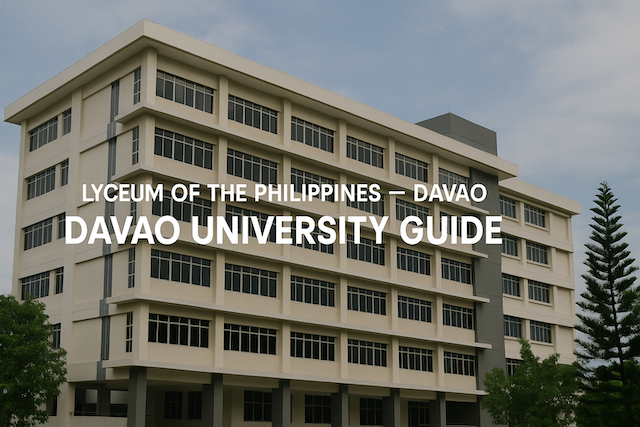
Lyceum of the Philippines – Davao: Davao University Guide
Lyceum of the Philippines – Davao (LPD) is one of the newer yet rapidly rising higher education institutions in Mindanao, bringing the legacy of the Lyceum of the Philippines University (LPU) system to Davao City. Known for its strong academic foundations, industry-aligned programs, and disciplined campus culture, the institution is becoming a preferred choice for students seeking high-quality education with a global outlook. This comprehensive guide explores everything prospective students and parents need to know about Lyceum of the Philippines – Davao, including its academic offerings, campus environment, student life, admission process, and why it stands out among universities in the region.
Overview of Lyceum of the Philippines – Davao
Lyceum of the Philippines – Davao is part of the prestigious LPU network, which has campuses in Manila, Batangas, Laguna, and Cavite. Founded on principles instilled by Dr. José P. Laurel, LPU’s mission is to provide excellent education, leadership training, and character development grounded in integrity and patriotism. The Davao campus continues this tradition, offering modern facilities, industry-responsive programs, and an environment that prepares students for both local and global opportunities.
LPD distinguishes itself through strong partnerships with industries, a curriculum aligned with international standards, and a commitment to producing graduates who are not only job-ready but also ethical and globally competitive.
Academic Programs Offered
Lyceum of the Philippines – Davao offers programs designed to address the growing needs of industries in the Philippines and abroad. These programs are structured to combine theoretical knowledge with practical training, internships, and exposure to real-world work environments.
College of International Tourism and Hospitality Management
This is one of LPU’s strongest academic pillars, known across the country for producing top-performing graduates. Programs typically include:
Students have access to simulated hotel facilities, training kitchens, and partnerships with leading hotels and tourism-related companies.
College of Business and Accountancy
The Business College provides foundational and advanced knowledge in business operations and management. Courses may include:
These programs develop students’ leadership, analytical, and entrepreneurial skills essential for the modern business landscape.
College of Computer Studies
With the increasing demand for tech professionals, LPD offers programs such as:
The curriculum integrates programming, system development, cybersecurity, and emerging technologies.
College of Engineering
Although still expanding, LPD’s engineering department may include:
Students are trained with strong fundamentals, technical skills, and practical lab work.
Senior High School Department
The SHS department supports students transitioning into higher education with strands such as:
This ensures that graduates are well-prepared for their chosen college programs.
Campus Facilities and Learning Environment
Lyceum of the Philippines – Davao is designed as a modern institution with facilities that support high-quality instruction and holistic development.
State-of-the-Art Classrooms
Classrooms are equipped with multimedia tools and are built to enhance interactive learning.
Simulation Laboratories
Especially for hospitality and tourism students, LPD features:
These facilities mimic real workplace environments.
Computer and Engineering Laboratories
Technology and engineering students gain hands-on experience through specialized labs equipped with modern instruments, software, and tools.
Library and Learning Commons
The campus library provides physical and digital resources, collaborative spaces, and research support tools.
Student Activity Center
LPD encourages student life through active clubs, organizations, and leadership groups. Facilities for cultural activities, student governance, and events enrich campus life.
Student Life at Lyceum of the Philippines – Davao
Life at LPD is vibrant, disciplined, and academically stimulating. Students are immersed in an environment that values character development, professionalism, and community involvement.
Culture of Discipline and Integrity
The Lyceum system is known for producing responsible and ethical graduates. Campus policies encourage discipline, orderliness, and respect.
Students can join various organizations, including:
These activities develop leadership skills and widen students’ social networks.
Internship and Industry Connections
LPD’s strong network allows students to secure internships with reputable companies. Tourism and hospitality students, in particular, benefit from tie-ups with hotels, resorts, restaurants, and travel agencies both locally and internationally.
Admission Requirements
Admission procedures at Lyceum of the Philippines – Davao are straightforward. While exact requirements may vary per program or school year, the general process is as follows:
Basic Requirements for Freshmen
-
Accomplished application form
-
Report card (Form 138)
-
Birth certificate (PSA)
-
Good moral certificate
-
2×2 or passport-sized photos
-
Entrance exam (if applicable)
For Transferees
For Senior High School Applicants
LPD may also conduct interviews or placement assessments depending on program requirements.
Tuition Fees and Scholarship Opportunities
Tuition fees at LPD vary based on program and year level. Hospitality, tourism, and engineering may have higher fees due to laboratory components. However, Lyceum offers financial assistance programs such as:
Merit Scholarships
Awarded to academically excellent students, often based on entrance exam results or previous academic performance.
Government Scholarships
Such as CHED programs, TES, and other regional grants.
Discounts
Sibling discounts, cash payment discounts, and alumni-related incentives.
LPD aims to support deserving students and ensure education remains accessible.
Why Choose Lyceum of the Philippines – Davao?
LPD stands out among universities in Davao for several reasons:
Strong Academic Reputation
The LPU system is known nationally for producing competent professionals in hospitality, tourism, business, and law.
Industry-Aligned Programs
Curricula are updated to match global standards and emerging workforce needs.
Modern Campus Infrastructure
Simulation labs, multimedia classrooms, and hands-on training environments enhance learning.
Focus on Discipline and Values
LPD commits to shaping students’ character, professionalism, and work ethic.
Global Outlook
Through partner institutions and international internship pathways, students gain opportunities beyond the Philippines.
Career Opportunities for Graduates
Graduates of Lyceum of the Philippines – Davao are prepared for careers in various fields, including:
Hospitality and Tourism
-
Hotel management
-
Travel consultancy
-
Airline services
-
Event planning
Business and Accountancy
-
Corporate management
-
Financial analysis
-
Accounting and auditing
-
Entrepreneurship
IT and Engineering
LPD graduates are known to be job-ready, adaptable, and strong communicators.
Conclusion
Lyceum of the Philippines – Davao offers a balanced blend of academic excellence, practical training, and character development. As part of the respected LPU network, the institution provides students with opportunities that extend beyond the classroom and into real industry experiences. Whether one aims to pursue a career in hospitality, business, engineering, or technology, LPD serves as an excellent choice for education in Davao City.
If you’re looking for a university that combines discipline, global standards, and a modern learning environment, Lyceum of the Philippines – Davao is a compelling option in Mindanao.
FAQs (Frequently Asked Questions)
What is Lyceum of the Philippines – Davao known for?
Lyceum of the Philippines – Davao (LPD) is known for offering industry-aligned programs, strong hospitality and tourism education, and a disciplined learning environment under the reputable Lyceum of the Philippines University system. It emphasizes academic excellence, character formation, and practical training that prepares students for both local and international careers.
Where is Lyceum of the Philippines – Davao located?
Lyceum of the Philippines – Davao is located in Davao City, one of the major urban centers in Mindanao. The campus is accessible via public and private transportation, making it convenient for students coming from different parts of the city and nearby areas. Exact address and directions may be confirmed through the school’s official website or admission office.
What academic programs are offered at LPD?
LPD typically offers programs in Hospitality Management, Tourism Management, Business Administration, Accountancy, Information Technology, Computer Science, and selected Engineering programs, along with Senior High School strands such as STEM, ABM, HUMSS, and related TVL tracks. Specific courses may change over time, so applicants should always check the latest official list of programs before applying.
Does Lyceum of the Philippines – Davao have a Senior High School program?
Yes. LPD usually offers a Senior High School department with strands that prepare students for college, including STEM for science and engineering fields, ABM for business-related courses, HUMSS for humanities and social sciences, and TVL tracks especially suited for hospitality and tourism. These strands are designed to match the programs available at the college level.
What facilities can students expect on campus?
Students at LPD can expect modern classrooms, simulation laboratories for hospitality and tourism, computer laboratories, engineering labs, a library or learning resource center, and dedicated spaces for student activities. Hospitality and tourism students often benefit from mock hotel rooms, training kitchens, and front office simulations, while IT and engineering students use specialized technical labs and software tools.
How is student life at Lyceum of the Philippines – Davao?
Student life at LPD is a mix of academic focus, discipline, and vibrant extracurricular involvement. Students can join academic organizations, cultural and performing groups, sports teams, and student councils. Events such as intramurals, seminars, industry talks, and community extension programs help students develop leadership, teamwork, and social responsibility.
What are the general admission requirements for freshmen?
For college freshmen, common requirements include a completed application form, senior high school report card (Form 138), birth certificate from the PSA, a certificate of good moral character, and ID photos. Some programs may require entrance exams, interviews, or additional documents. International or foreign applicants may have extra requirements related to visas and language proficiency.
Are transferees accepted at LPD?
Yes, transferees are generally accepted, subject to program capacity and academic evaluation. Transferee applicants typically need to submit their transcript of records, transfer credentials, course descriptions for credit evaluation, a certificate of good moral character, and other standard admission documents. Some programs may impose a minimum grade requirement for credited subjects.
How much is the tuition fee at Lyceum of the Philippines – Davao?
Tuition fees at LPD vary depending on the program, year level, and number of units enrolled. Programs with laboratory subjects, such as hospitality, tourism, IT, and engineering, may have additional fees. The most accurate and updated tuition information is available through the school’s official channels, such as the registrar, admissions office, or website. Many students find it helpful to request a sample assessment of fees for one semester.
Does LPD offer scholarships or financial assistance?
Yes. Lyceum of the Philippines – Davao may offer merit-based scholarships for academically outstanding students, as well as financial aid programs and discounts. These can include academic scholarships, government-sponsored grants, sibling discounts, and incentives for early or full cash payment. Requirements and coverage differ by scholarship type, so applicants should inquire directly with the scholarships or student affairs office.
Are there internship and industry partnership opportunities?
LPD places strong emphasis on practical training and industry linkages. Hospitality and tourism students often complete internships in hotels, resorts, restaurants, and travel agencies, while business, IT, and engineering students may be placed in companies relevant to their field. These partnerships help students gain real-world experience, build professional networks, and improve their employability after graduation.
What kind of careers can LPD graduates pursue?
Graduates of Lyceum of the Philippines – Davao can pursue a wide range of careers. Hospitality and tourism graduates can work in hotels, airlines, cruise ships, events management, and travel agencies. Business graduates may enter corporate roles, finance, marketing, or start their own businesses. IT graduates can become programmers, system analysts, or network administrators, while engineering graduates may work in construction, manufacturing, design, and technical services. The school’s emphasis on professionalism and practical training prepares students to adapt to different roles in local and international job markets.
How can I apply to Lyceum of the Philippines – Davao?
Prospective students can usually apply by filling out an online or on-campus application form, submitting required documents, and paying the application or entrance exam fee if applicable. After evaluation, successful applicants receive an admission notice and instructions for enrollment. Since procedures may change each school year, it is important to follow current guidelines posted by the admissions or registrar’s office and to observe deadlines for applications and enrollment.
Is Lyceum of the Philippines – Davao a good choice for international students?
LPD can be a good option for international students who want to study in Davao City under a well-known Philippine university system with a global outlook. The school’s English-medium instruction, hospitality and tourism focus, and growing international connections can be attractive for foreign learners. However, international students should consider visa requirements, living costs, language support, and cultural adjustment when deciding to enroll.