2025年12月13日
3D ACADEMY offers affordable English study programs in Cebu, Philippines – perfect for beginners, professionals, and exam takers.

3D UNIVERSAL ENGLISH INSTITUTE INC
info.3d-universal.com
8:00-17:00(Mon-Fri)
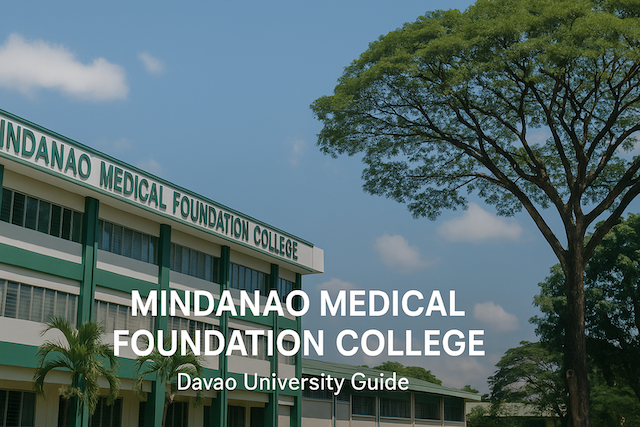
Mindanao Medical Foundation College: Davao University Guide
Contents
- Mindanao Medical Foundation College: Davao University Guide
- Overview of Mindanao Medical Foundation College
- Academic Programs Offered
- Campus Facilities
- Admission Requirements and Process
- Tuition Fees and Scholarship Options
- Student Life at MMFC
- Clinical Training and Internship
- Career Opportunities for Graduates
- Why Choose Mindanao Medical Foundation College?
- Conclusion
- FAQs (Frequently Asked Questions)
- Where is Mindanao Medical Foundation College located in Davao City?
- What medical and allied health programs does MMFC offer?
- Is Mindanao Medical Foundation College a good choice for Nursing students?
- What are the admission requirements for new college freshmen?
- How much is the tuition fee at Mindanao Medical Foundation College?
- Are there scholarships or financial assistance programs available?
- What kind of facilities can students expect on campus?
- Does MMFC provide clinical affiliation and internship opportunities?
- Is MMFC suitable for students from outside Davao or from other countries?
- What career opportunities are available to MMFC graduates?
Mindanao Medical Foundation College: Davao University Guide
Mindanao Medical Foundation College (MMFC) is one of Davao City’s reputable institutions offering health-related programs designed to prepare students for professional careers in the medical and allied health fields. Known for its strong curriculum, experienced faculty, and personalized learning environment, MMFC has attracted students from across Mindanao who aspire to enter healthcare professions. This comprehensive guide explores everything future students need to know—from academic programs and campus facilities to admission procedures, student life, and career opportunities.
Overview of Mindanao Medical Foundation College
Mindanao Medical Foundation College was established to provide accessible and quality education in the medical sciences. Over the years, the school has expanded its program offerings and strengthened its academic standards, making it a competitive choice for students interested in healthcare careers.
The college is particularly known for its Nursing, Midwifery, Pharmacy, and Medical Technology programs. MMFC also focuses on community-based learning and hands-on training, ensuring students gain the practical competencies required in modern healthcare practice.
Located in Davao City, the institution offers an ideal environment for students who want a balance of academic focus and urban convenience. With affordable living costs, accessible transportation, and a safe community, Davao City is one of the best places in the Philippines for medical education.
Academic Programs Offered
Mindanao Medical Foundation College provides a variety of medical and allied health programs. These courses are designed to meet national and international standards, enabling graduates to pursue opportunities both locally and abroad.
Bachelor of Science in Nursing (BSN)
The Nursing program is one of MMFC’s flagship courses. It follows a competency-based curriculum that integrates classroom instruction, laboratory practice, and clinical rotations in partner hospitals. Students learn essential skills such as patient assessment, health education, emergency care, and leadership in clinical settings.
Graduates are qualified to take the Philippine Nurse Licensure Examination and may pursue careers in hospitals, community clinics, research, and even overseas healthcare institutions.
Bachelor of Science in Medical Technology (MedTech)
MMFC’s MedTech program trains students to become medical laboratory scientists capable of performing diagnostic procedures critical in disease detection and treatment. Coursework includes clinical chemistry, microbiology, parasitology, immunology, and hematology.
Clinical internship is conducted in accredited laboratories, giving students real-world experience with diagnostic equipment and testing procedures.
Bachelor of Science in Pharmacy
This program equips students with knowledge in drug formulation, pharmacology, pharmaceutical chemistry, and medication therapy management. Students undergo laboratory work and internship placements in pharmacies, pharmaceutical companies, and hospitals.
Graduates are eligible for the Pharmacist Licensure Examination.
Midwifery Program
The Midwifery course provides training in maternal and newborn care. Students learn essential skills such as prenatal assessment, birthing assistance, postnatal care, and reproductive health education. Graduates can take the Midwifery Licensure Examination and pursue careers in birthing centers, community health clinics, or hospitals.
Campus Facilities
Mindanao Medical Foundation College offers a range of facilities designed to support the academic and practical training of students in the health sciences. Although not as large as universities, MMFC prioritizes functionality and accessibility.
Science and Skills Laboratories
The college maintains specialized laboratories for Nursing, Medical Technology, and Pharmacy students. These include:
-
Nursing Skills Lab equipped with mannequins, hospital beds, and medical instruments
-
Pharmacy Laboratory for compounding, drug formulation, and analytical chemistry
-
Diagnostic Labs for microbiology, hematology, and clinical chemistry training
These facilities help students develop technical competencies before entering clinical practice.
Library and Learning Resource Center
The campus library contains textbooks, journals, reference materials, and digital resources focused on health and medical subjects. It serves as a quiet space for research, study, and group work. Online journal access may also be available depending on school subscriptions.
Computer Laboratories
IT-equipped rooms are used for computer-based training, research activities, and skills development. Students can access computers for creating reports, browsing academic resources, or participating in online learning modules.
Student Lounge and Common Areas
MMFC provides common areas where students can relax, meet with peers, or engage in extracurricular activities. These spaces promote collaboration and healthy social interaction.
Admission Requirements and Process
Applying to Mindanao Medical Foundation College is straightforward, but requirements vary depending on the applicant’s status.
Basic Admission Requirements
(For incoming freshmen)
-
Accomplished application form
-
Form 138 (High School Report Card) or SHS Transcript
-
Birth Certificate (PSA)
-
Certificate of Good Moral Character
-
2×2 or 1×1 ID photos
-
Entrance examination (if required by the program)
For Transferees
-
Honorable Dismissal / Transfer Credentials
-
Transcript of Records (TOR) or Certified True Copy
-
Evaluation of credited subjects
-
Application form and ID photos
For Second-Coursers
-
College diploma
-
Transcript of Records
-
Other standard requirements
Admission Process
-
Submit Application – Either online (if available) or onsite through the registrar’s office.
-
Document Screening – The staff reviews and verifies submitted credentials.
-
Entrance Exam or Interview – Some programs may require an assessment.
-
Enrollment and Payment – Once accepted, students proceed with subject enrollment and payment of fees.
Tuition Fees and Scholarship Options
MMFC is known for offering affordable tuition rates compared to larger private institutions. Exact costs vary by program, but medical and health-related courses typically involve laboratory fees and additional training expenses.
Scholarship Opportunities
The school may offer scholarships or discounts such as:
-
Academic scholarships for high-performing students
-
Financial assistance for deserving students
-
Discounts for siblings enrolled in MMFC
-
Government programs like TES or CHED Scholarships (subject to availability)
Students are encouraged to inquire directly with the school’s scholarship office for updated requirements and availability.
Student Life at MMFC
Studying at Mindanao Medical Foundation College goes beyond academics. The school promotes a supportive and community-oriented environment.
Student Organizations
MMFC hosts several student clubs and academic organizations, such as:
-
Nursing student associations
-
MedTech societies
-
Pharmacy student councils
-
Cultural, arts, and sports groups
These organizations help students develop leadership skills and build connections within the healthcare education community.
Events and Activities
The school conducts various events throughout the year, including:
-
Orientation programs
-
Medical missions and community outreach
-
Seminars and workshops on healthcare topics
-
Sports festivals and cultural celebrations
Participation enhances student engagement and enriches their academic journey.
Clinical Training and Internship
One of the strengths of MMFC is its commitment to practical learning. Students from Nursing, MedTech, Midwifery, and Pharmacy undergo clinical rotations or internships at partner hospitals, laboratories, and healthcare institutions.
Interns gain hands-on experience in:
-
Patient care
-
Laboratory diagnostics
-
Medication dispensing
-
Health education
-
Emergency response
These experiences prepare students for licensure exams and professional work environments.
Career Opportunities for Graduates
Graduates of Mindanao Medical Foundation College have a wide range of career options.
Nursing Graduates
-
Staff Nurse
-
Community Health Nurse
-
Emergency Nurse
-
School Nurse
-
Overseas healthcare worker
Medical Technology Graduates
-
Clinical Laboratory Scientist
-
Diagnostic Lab Technician
-
Research Assistant
-
Blood Bank Technologist
Pharmacy Graduates
-
Pharmacist (community or hospital)
-
Pharmaceutical sales or manufacturing
-
Clinical pharmacy assistant
Midwifery Graduates
-
Licensed Midwife
-
Birthing Center Specialist
-
Community Health Worker
MMFC alumni pursue careers both in the Philippines and abroad. The school’s focus on competency-based learning ensures students are well-prepared for professional practice.
Why Choose Mindanao Medical Foundation College?
Students may choose MMFC for many reasons:
-
Specialized focus on health-related programs
-
Experienced and supportive faculty
-
Affordable tuition compared to larger private universities
-
Hands-on practical learning
-
Strong community involvement
-
Accessible location in Davao City
For aspiring healthcare professionals, MMFC provides an excellent environment to build foundational knowledge and real-world skills.
Conclusion
Mindanao Medical Foundation College stands out as a dedicated institution for medical and allied health education in Davao City. With strong academic programs, practical training opportunities, and a supportive learning environment, the college helps students prepare for rewarding careers in the healthcare sector. Whether you aim to become a nurse, medical technologist, pharmacist, or midwife, MMFC offers the training and guidance needed to achieve your professional goals.
FAQs (Frequently Asked Questions)
Where is Mindanao Medical Foundation College located in Davao City?
Mindanao Medical Foundation College (MMFC) is located in Davao City, one of the largest and safest cities in the Philippines.
The campus is generally accessible by public transportation such as jeepneys, taxis, and ride-hailing services.
Because it is situated in a busy but student-friendly area, you can easily find convenience stores, boarding houses, and food options nearby.
For the exact address and directions, it is best to check the school’s official page or contact the registrar’s office before visiting.
What medical and allied health programs does MMFC offer?
MMFC focuses mainly on health-related programs. Typical offerings include Bachelor of Science in Nursing, Bachelor of Science in Medical Technology,
Bachelor of Science in Pharmacy, and Midwifery programs. Some short courses or certificate programs in health or caregiving may also be available,
depending on the current school year. Since program offerings can change, you should verify the latest list of courses directly from the college before applying.
Is Mindanao Medical Foundation College a good choice for Nursing students?
Yes, MMFC is known as a solid option for students who want to pursue a Nursing degree in Davao City.
The curriculum usually combines classroom lectures, skills laboratory sessions, and clinical duties in partner hospitals and health centers.
Students gain experience in areas such as medical-surgical nursing, community health, maternal and child care, and emergency care.
While performance may vary by batch, many graduates sit for the Nurse Licensure Examination and aim for local or overseas employment after graduation.
What are the admission requirements for new college freshmen?
For incoming freshmen, common admission requirements include a completed application form, high school report card or senior high school records,
a PSA birth certificate, certificate of good moral character, and ID photos.
Some programs may require additional documents or an entrance examination and interview.
International or foreign students might need to submit passport copies, student visa documents, and other immigration-related papers.
Always confirm with the registrar or admissions office for the most updated and detailed list.
How much is the tuition fee at Mindanao Medical Foundation College?
Tuition fees at MMFC are generally more affordable compared with bigger private universities, but costs still depend on the program and year level.
Laboratory-based courses like Nursing, Medical Technology, and Pharmacy usually have additional fees for lab use, uniforms, and clinical duties.
There may also be miscellaneous charges such as registration, library, and student activity fees.
Since tuition changes from time to time, the most accurate way to know the total cost is to request a current assessment from the accounting or registrar’s office.
Are there scholarships or financial assistance programs available?
MMFC may offer scholarships and financial assistance depending on budget and policies for the school year.
These can include academic scholarships for honor students, discounts for siblings enrolled at the school, and possible grants linked to government programs such as TES or CHED scholarships.
Some scholarships may cover only tuition, while others offer partial discounts on fees.
Each program usually has specific criteria such as grade requirements, income brackets, or service obligations, so it is best to inquire early at the scholarship or student affairs office.
What kind of facilities can students expect on campus?
Students at MMFC typically have access to specialized skills laboratories for Nursing, Pharmacy, and Medical Technology, equipped with basic training models, instruments, and equipment.
There is a library or learning resource center with medical and health science references, as well as computer laboratories for research and digital learning.
Common areas, canteens, and student lounges provide spaces for studying, relaxing, and meeting classmates.
Facilities may be updated or expanded over time, so new students should check for recent improvements during campus visits or orientations.
Does MMFC provide clinical affiliation and internship opportunities?
Yes. Clinical exposure is a key part of medical and allied health education at Mindanao Medical Foundation College.
The school partners with hospitals, clinics, laboratories, and community health centers where students complete their required practicum or internship hours.
Nursing students participate in ward duties and community immersions, Medical Technology students train in diagnostic laboratories,
Pharmacy students gain experience in dispensing and medication counseling, and Midwifery students assist in maternal and newborn care.
These affiliations are important for building competence and confidence before graduation and licensure examinations.
Is MMFC suitable for students from outside Davao or from other countries?
MMFC welcomes students from other cities, provinces, and even other countries, especially those interested in health-related programs.
Davao City’s relatively low cost of living and reputation for safety make it attractive for non-local students.
However, students from outside Davao need to arrange their own housing, budget for daily expenses, and adapt to the local culture and environment.
Foreign students should also prepare additional documents for visas and clear communication with the international or registrar’s office.
What career opportunities are available to MMFC graduates?
Graduates of Mindanao Medical Foundation College can work in hospitals, diagnostic laboratories, pharmacies, community health centers, and other healthcare facilities.
Nursing graduates may become staff nurses, community health nurses, or pursue overseas employment.
Medical Technology graduates can work as medical laboratory scientists or pursue research roles.
Pharmacy graduates may work in community or hospital pharmacies, pharmaceutical companies, or regulatory agencies.
Midwifery graduates may serve in birthing homes, rural health units, and maternal care facilities.
Many alumni also choose to continue their studies, specialize further, or work abroad after gaining experience.
Davao University Guide
Davao Province All Universities Lists
Philippines University Guide

How to Register for eTravel Philippines (2025 Guide)
Step-by-step guide to completing your eTravel registration before arriving in the Philippines, with images and tips.

Night Market in Cebu – Things You Don’t Know About Cebu Life
Discover the hidden charm of Cebu’s night markets, from street food stalls to local life tips you won’t find in tourist guides.

How to Use ChatGPT for IELTS Preparation: A Complete Guide
Learn how to prepare for IELTS using ChatGPT — including strategies for Writing, Reading, Listening, Speaking, and grammar support.

How to Build a Website Without Coding Using ChatGPT
Discover how to build your own website using AI—no coding skills needed. From structure planning to SEO and design, let ChatGPT guide you.