
FAQs (Frequently Asked Questions)
When should I take the NMAT if I want to enroll in medical school this year?
You should take the NMAT as early as possible within the testing cycle that aligns with your target medical school’s application period. In general, many applicants aiming to enroll in the next academic year take the NMAT during the earlier testing windows so they can receive their score before deadlines. Ideally, you want enough buffer time for score release, document preparation, interviews, and possible retakes. If your target schools accept applications before NMAT results are released, you can start preparing requirements early and submit the score once available. The safest strategy is to map your school deadlines first, then choose an NMAT date at least two to three months before those deadlines to reduce pressure.
How long does it take for NMAT results to come out after the exam?
NMAT results are not released immediately after testing. Typically, examinees wait several weeks before official results become available through their NMAT account. Because score reporting takes time, you should avoid scheduling your NMAT too close to medical school deadlines. If you take the test late in a cycle and your score release overlaps with deadlines, you may be forced to apply with limited options or miss a school’s submission window entirely. To stay safe, plan your exam date with the assumption that results may take more than a month, and build extra time for downloading score reports or resolving any account issues.
Can I apply to medical schools before my NMAT score is released?
Yes, in many cases you can begin your medical school application even if your NMAT score has not been released yet. Some schools allow applicants to submit most requirements first and follow up with the NMAT score report once it becomes available. This is helpful if your target schools have early deadlines or if you want to secure an earlier interview schedule. However, policies vary by institution. The best approach is to prepare everything you can in advance—transcripts, recommendation letters, and personal statements—so that once your NMAT results are out, you can submit quickly without rushing.
What documents should I prepare while waiting for NMAT results?
While waiting for results, you can prepare the documents that most medical schools commonly request. These often include your transcript of records, proof of degree completion or expected graduation, recommendation letters, application forms, and personal statements. Some schools may also request a certificate of good moral character, identification documents, or additional forms for scholarships. Preparing these early is a smart timeline move because it reduces stress when NMAT results arrive. It also allows you to apply quickly, which can be important for schools that evaluate applicants on a rolling basis or schedule interviews in batches.
How do I choose the best NMAT testing window for my goals?
Choosing the best NMAT testing window depends on your readiness, your academic calendar, and the application deadlines of your preferred medical schools. If you are still completing core science subjects, you may benefit from a later exam date to allow more review time. If your target schools have early admissions timelines, an earlier testing window may be better even if it means preparing sooner. Consider your strongest and weakest sections, and choose a date that gives you enough time to build skills in both mental ability and academic proficiency. Also consider whether you may want a retake, since retake timing depends on the next available cycle.
What NMAT percentile do I need to get accepted into medical school?
The required NMAT percentile varies by medical school, and some schools are significantly more competitive than others. Many institutions set a minimum cutoff, and meeting that cutoff is usually necessary but not always sufficient for admission. Strong applicants often aim above the minimum to increase interview chances and overall competitiveness. If you are targeting top programs, you may need a higher percentile, especially if your academic record is average. Because requirements can differ, it is important to check each school’s published guidelines and set a personal score target that gives you a safety margin rather than aiming exactly at the minimum.
If my NMAT score is low, should I retake the exam or apply anyway?
This depends on your target schools, your application timeline, and how far your score is from typical cutoffs. If your percentile does not meet minimum requirements, retaking is usually necessary. If your score meets minimums but is not competitive, you can still apply to schools where your percentile is within range, especially if you have strong grades, strong recommendations, or relevant experience. However, if you are aiming for highly competitive schools, a retake may significantly improve your chances. Retaking also requires time for preparation and waiting for the next testing cycle, so you should decide early to avoid delaying enrollment.
How many times can I take the NMAT, and how does it affect my timeline?
Most applicants treat the NMAT as an exam that can be retaken if needed, but retaking affects your timeline because it ties you to the next available test window and score release schedule. If you take the NMAT late and then decide to retake, you may run out of time to submit the improved score for the same application cycle. A practical timeline strategy is to take the NMAT early enough that you still have a retake option without missing medical school deadlines. Retakes can be useful for improving competitiveness, but they require disciplined planning, since you must re-register, prepare again, and wait for the new official results.
How long is an NMAT score valid, and will schools accept an older score?
NMAT scores generally have a validity period, but acceptance of older scores may depend on a school’s policy. Some schools accept scores within a set number of years, while others prefer recent results. If you are applying after a gap year, make sure your NMAT score will still be within the acceptable timeframe for your target schools. Even if your score is still technically valid, a newer score might strengthen your application if you can improve your percentile. From a timeline perspective, it is best to verify score validity early so you do not discover late in the application season that you need to retake the exam.
What should I do after I receive my NMAT results?
Once results are released, download or save your official score report and immediately compare your percentile to the cutoffs and typical ranges of your target medical schools. If your score is strong, finalize and submit applications as early as possible. If your score is borderline, consider applying to a wider range of schools and strengthening other parts of your application. If your score is below requirements, decide quickly whether you will retake and whether you should shift your enrollment plan to the next cycle. Acting fast after score release is a key timeline advantage because interview slots and application batches may be competitive.
How does the NMAT timeline connect to interviews and acceptance decisions?
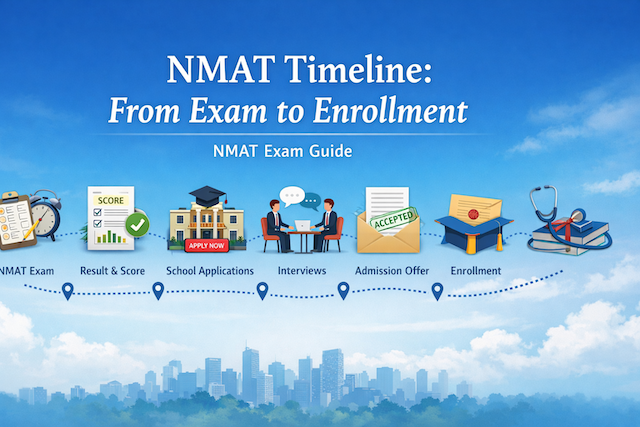
After submitting applications, schools may schedule interviews, screening exams, or additional evaluations depending on their admissions process. Applicants who complete requirements early often receive earlier interview invitations and may have more scheduling flexibility. Acceptance decisions can be released in waves or on fixed dates, and you may be asked to confirm your slot by paying a reservation fee. Because these steps happen after your NMAT score is submitted, your overall timeline should account for interview preparation, travel or online scheduling, and financial planning for reservation and enrollment fees. Planning ahead helps you respond quickly when schools contact you.
What happens if I miss an NMAT registration deadline or medical school application deadline?
Missing a deadline can significantly delay your path to enrollment. If you miss NMAT registration, you may have to wait for the next testing cycle, which can shift your application schedule and reduce your school options. If you miss a medical school application deadline, you may lose the chance to apply for that intake year entirely. To avoid this, create a master calendar that includes NMAT registration dates, test dates, expected score release windows, and each medical school’s submission deadlines. A timeline-based plan is one of the most effective ways to prevent avoidable setbacks.
NMAT Study Guide: Complete Preparation Guide for Medical School in the Philippines