2025年12月23日
3D ACADEMY offers affordable English study programs in Cebu, Philippines – perfect for beginners, professionals, and exam takers.

3D UNIVERSAL ENGLISH INSTITUTE INC
info.3d-universal.com
8:00-17:00(Mon-Fri)
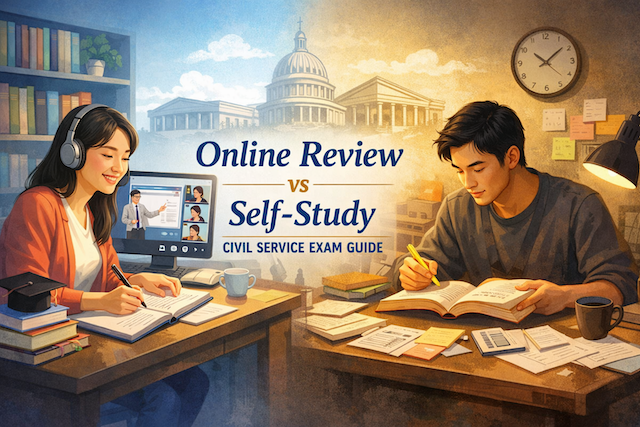
Online Review vs Self-Study Comparison: Civil Service Exam Guide
Contents
- Online Review vs Self-Study Comparison: Civil Service Exam Guide
- Understanding the Civil Service Exam Preparation Challenge
- What Is Online Review for the Civil Service Exam?
- What Is Self-Study for the Civil Service Exam?
- Comparison Overview: Online Review vs Self-Study
- Learning Structure and Organization
- Quality of Instruction and Explanation
- Flexibility and Time Management
- Motivation and Accountability
- Practice Tests and Exam Simulation
- Cost and Budget Considerations
- Suitability Based on Examinee Profile
- Common Myths About Online Review and Self-Study
- Choosing the Right Approach for You
- Final Thoughts: Online Review vs Self-Study
- FAQs (Frequently Asked Questions)
- Is an online review course better than self-study for the Civil Service Exam?
- Who should choose self-study over online review?
- Who benefits most from online review programs?
- Can I pass the Civil Service Exam with zero budget using self-study?
- How do I know if an online review course is worth paying for?
- What are the biggest risks of self-study?
- What are the biggest risks of online review?
- Is it okay to combine online review and self-study?
- How many hours should I study if I choose self-study?
- How should I measure progress in online review vs self-study?
- What study routine works best regardless of method?
- What should I do if I keep scoring low in mock exams?
Online Review vs Self-Study Comparison: Civil Service Exam Guide
Preparing for the Civil Service Exam (CSE) is a serious commitment. Whether you are a first-time test taker, a working professional, or someone returning to academics after many years, one of the biggest decisions you will face is choosing between online review programs and self-study.
Both approaches can lead to success, and thousands of passers have proven that there is no single “correct” way to prepare. However, the best option depends on your learning style, schedule, budget, and discipline level. This guide provides an in-depth, practical comparison of online review vs self-study to help you make an informed decision and maximize your chances of passing the Civil Service Exam.
Understanding the Civil Service Exam Preparation Challenge
The Civil Service Exam covers a wide range of subjects, including:
-
Verbal ability
-
Numerical ability
-
Logical reasoning
-
General information
-
Clerical operations
-
Abstract reasoning
For many examinees, the challenge is not just the difficulty of the topics but also time management, consistency, and confidence. How you prepare matters just as much as what you study.
Choosing the right preparation method can determine whether your review process feels structured and manageable—or overwhelming and confusing.
What Is Online Review for the Civil Service Exam?
Online review programs are structured preparation courses delivered digitally. These programs are typically offered by review centers and educators specializing in Civil Service Exam preparation.
Key Features of Online Review
-
Pre-recorded or live video lectures
-
Structured lesson plans and schedules
-
Downloadable review materials
-
Practice tests and mock exams
-
Progress tracking and assessments
-
Instructor support or Q&A sessions
Online reviews aim to replicate the guidance of a traditional review center while offering flexibility for students who cannot attend in-person classes.
What Is Self-Study for the Civil Service Exam?
Self-study means preparing independently, without enrolling in any formal review program. You design your own study plan, choose your own materials, and evaluate your own progress.
Common Self-Study Resources
-
Official Civil Service Commission (CSC) guides
-
Review books and test manuals
-
Free online resources and practice tests
-
YouTube tutorials and educational blogs
-
Personal notes and flashcards
Self-study relies heavily on self-discipline, motivation, and organization.
Comparison Overview: Online Review vs Self-Study
Before diving deeper, here is a high-level comparison:
| Aspect | Online Review | Self-Study |
|---|---|---|
| Structure | Highly structured | Fully flexible |
| Guidance | Instructor-led | Self-directed |
| Cost | Moderate to high | Low to free |
| Flexibility | Moderate to high | Very high |
| Accountability | Built-in | Self-imposed |
| Learning Pace | Set or semi-flexible | Fully adjustable |
Each option has strengths and limitations, which we will explore in detail.
Learning Structure and Organization
Online Review: Guided and Systematic
Online review programs follow a clear roadmap. Topics are arranged logically, ensuring you cover all exam areas before test day. This structure is especially helpful for:
-
Beginners with no academic background in exam topics
-
Examinees who feel overwhelmed by too many resources
-
Those who prefer step-by-step guidance
You do not need to guess what to study next—the program does it for you.
Self-Study: Complete Freedom (and Responsibility)
Self-study allows you to design your own structure, but this freedom comes with responsibility. You must:
-
Identify all exam topics
-
Decide the order of study
-
Allocate time properly
-
Monitor your own progress
For disciplined learners, this can be empowering. For others, it can lead to missed topics or poor time allocation.
Quality of Instruction and Explanation
Online Review: Expert-Led Teaching
One of the biggest advantages of online review is access to experienced instructors who:
-
Explain complex topics clearly
-
Share exam strategies and shortcuts
-
Highlight commonly tested areas
-
Answer questions and clarify doubts
This guidance can significantly reduce confusion, especially in subjects like numerical ability and logical reasoning.
Self-Study: Depends on Your Resources
In self-study, the quality of instruction depends entirely on the materials you choose. While many books and free resources are excellent, some may:
-
Be outdated
-
Lack clear explanations
-
Focus on irrelevant topics
You also miss the chance to ask questions directly unless you seek help through forums or social groups.
Flexibility and Time Management
Online Review: Flexible but Structured
Online review programs offer flexibility, especially with recorded lectures. However, they often follow a recommended schedule.
This is ideal for:
-
Working professionals with limited study hours
-
Examinees who need routine and consistency
The structure helps prevent procrastination.
Self-Study: Maximum Flexibility
Self-study gives you full control over your schedule. You can study anytime, anywhere, and for as long—or as short—as you want.
This works best if:
-
You have irregular work hours
-
You prefer short, frequent study sessions
-
You already know which topics need more attention
The downside is that flexibility can easily turn into inconsistency.
Motivation and Accountability
Online Review: Built-In Accountability
Online review programs naturally create accountability through:
-
Set schedules
-
Weekly lessons or tasks
-
Progress tracking
-
Peer groups or online communities
Knowing that you are enrolled in a program often motivates you to stay consistent.
Self-Study: Self-Driven Discipline
With self-study, motivation must come entirely from within. There are no deadlines, reminders, or instructors checking your progress.
This approach suits:
-
Highly disciplined individuals
-
Those with strong internal motivation
-
Examinees who enjoy independent learning
For others, it can be difficult to stay committed long-term.
Practice Tests and Exam Simulation
Online Review: Integrated Practice
Most online review programs include:
-
Topic-based quizzes
-
Full-length mock exams
-
Timed practice tests
-
Performance analysis
These tools help you understand your strengths, weaknesses, and readiness for the actual exam.
Self-Study: Requires Extra Effort
Self-study candidates must actively look for practice tests. While many are available online or in books, you must:
-
Select reliable sources
-
Time yourself manually
-
Analyze results independently
This is doable but requires extra effort and discipline.
Cost and Budget Considerations
Online Review: Higher Investment
Online review programs typically involve:
-
Enrollment fees
-
Optional materials or upgrades
While more expensive, many examinees see this as an investment in guidance and efficiency.
Self-Study: Budget-Friendly
Self-study can be extremely affordable. Many successful passers relied on:
-
Free online resources
-
Second-hand review books
-
Publicly available practice tests
If budget is a major concern, self-study is often the more practical choice.
Suitability Based on Examinee Profile
Online Review Is Best For:
-
First-time test takers
-
Examinees with weak academic foundations
-
Working professionals needing structure
-
Those who struggle with self-discipline
Self-Study Is Best For:
-
Repeat takers familiar with the exam
-
Highly motivated and disciplined learners
-
Examinees with strong reading comprehension
-
Those with limited budgets
Common Myths About Online Review and Self-Study
Myth 1: Online Review Guarantees Passing
No program can guarantee success. Passing depends on consistent effort, practice, and understanding, regardless of the method.
Myth 2: Self-Study Is Inferior
Many Civil Service Exam passers succeeded through self-study. The method is effective when done correctly.
Myth 3: You Must Choose Only One
Some of the most successful examinees use a hybrid approach—self-study combined with selected online review materials or mock exams.
Choosing the Right Approach for You
Ask yourself these questions honestly:
-
Do I need guidance or can I learn independently?
-
How disciplined am I with self-study?
-
Can I afford an online review program?
-
Do I learn better through videos or reading?
-
How much time do I have each week?
Your answers will point you toward the best option—or a combination of both.
Final Thoughts: Online Review vs Self-Study
There is no universal winner in the online review vs self-study debate for the Civil Service Exam. Both paths can lead to success when used correctly.
-
Online review provides structure, guidance, and accountability.
-
Self-study offers flexibility, affordability, and independence.
The most important factor is not the method, but consistent, focused preparation aligned with your personal learning style and circumstances.
Whichever path you choose, commit to it fully, practice regularly, and stay confident. Passing the Civil Service Exam is achievable—with the right strategy and determination.
FAQs (Frequently Asked Questions)
Is an online review course better than self-study for the Civil Service Exam?
An online review course is not automatically better, but it can be more effective for people who need structure, clear guidance, and accountability. Online review programs usually provide a study plan, video lessons, drills, and mock exams, which can reduce guesswork and help you stay consistent. Self-study can be just as effective if you are disciplined, organized, and able to find reliable materials. The “better” choice depends on your learning style, schedule, budget, and ability to follow a plan without external pressure.
Who should choose self-study over online review?
Self-study is a strong option if you learn well independently, prefer reading over watching lectures, and can maintain a steady routine. It also suits examinees with tight budgets, repeat takers who already understand the exam format, and those who have flexible strategies for improving weak areas. If you can build a realistic schedule, track your progress honestly, and practice with timed mock exams, self-study can lead to excellent results without paying for a course.
Who benefits most from online review programs?
Online review programs are especially helpful for first-time test takers, examinees who feel overwhelmed by the wide coverage of topics, and people who struggle with math, logic, or test-taking strategies. Working professionals also benefit because guided schedules reduce decision fatigue: you simply follow the plan each day. If you need explanations, step-by-step solutions, and curated practice sets, online review can help you progress faster and avoid wasting time on low-quality resources.
Can I pass the Civil Service Exam with zero budget using self-study?
Yes, it is possible, but it requires careful resource selection and a strong routine. Many free materials exist, but quality varies, so focus on reputable sources, basic textbooks, and consistent practice tests. To succeed on a zero budget, you must create your own system: weekly topic coverage, daily drills, and regular full-length mock exams. You will also need to evaluate your mistakes critically and adjust your approach over time. The key is not the cost, but the consistency and quality of your practice.
How do I know if an online review course is worth paying for?
An online review course is worth paying for if it saves you time, reduces confusion, and increases your consistency. Look for programs that provide updated materials, clear coverage of exam domains, frequent practice tests, explanations for answers, and some form of support or Q&A. If a course only offers generic handouts without feedback or strong practice tools, it may not be worth the fee. Compare what you get with what you can realistically build on your own.
What are the biggest risks of self-study?
The biggest risks are lack of structure, inconsistent study habits, and incomplete topic coverage. Some self-study examinees spend too much time collecting resources instead of practicing. Others focus on favorite topics and avoid weak areas, which lowers overall performance. Another risk is relying on unreliable practice questions that do not match the exam style. To reduce these risks, build a simple study plan, use timed practice, and track your scores and mistake patterns weekly.
What are the biggest risks of online review?
The biggest risk is assuming that enrollment equals preparation. Some examinees watch videos passively without doing drills or mock exams, which reduces retention. Another risk is schedule mismatch: if you fall behind in lessons, you may feel discouraged. There is also the risk of choosing a low-quality program that does not match the exam style. To avoid these issues, actively practice after every lesson, keep a strict weekly timetable, and choose a program with strong feedback and exam-like drills.
Is it okay to combine online review and self-study?
Yes, combining both is often the most practical strategy. You can use online review for structured lessons, explanations, and mock exams, then use self-study to reinforce weak areas with extra drills and reading. This hybrid approach is ideal if you want guidance but also want flexibility. Many successful examinees rely on an online course for the “framework” while using self-study methods like flashcards, error logs, and daily timed quizzes for mastery.
How many hours should I study if I choose self-study?
Study hours depend on your baseline skills and available time, but consistency matters more than long sessions. Many examinees do well with 1 to 2 hours daily over several weeks, while others need 3 to 4 hours daily if they are starting from scratch. For self-study, aim for a balanced routine: concept learning, practice questions, and weekly full-length mock exams. If you are busy, even 45 to 60 minutes daily can work if it includes timed drills and mistake review.
How should I measure progress in online review vs self-study?
In online review, use the program’s quizzes and mock exams, but also track your own results in a notebook or spreadsheet. In self-study, you must create a measurement system: weekly timed tests, a score tracker, and an error log. For both methods, progress is not just higher scores, but fewer repeated mistakes, faster solving speed, and better accuracy under time pressure. Measure progress by topic: verbal, numerical, logic, and clerical operations.
What study routine works best regardless of method?
A reliable routine includes three parts: learning, drilling, and reviewing mistakes. Start with a focused topic for the day, then answer practice questions immediately to apply what you learned. After that, review wrong answers and write short notes on why you missed them. Every week, take at least one timed mock exam to train stamina and pacing. This routine works for both online review and self-study because it builds understanding, accuracy, and test-day readiness.
What should I do if I keep scoring low in mock exams?
First, identify whether your problem is knowledge, speed, or anxiety. If you miss many questions in one topic, return to fundamentals and do targeted drills. If you understand concepts but run out of time, train with shorter timed sets and learn basic shortcuts. If anxiety affects performance, simulate the test environment regularly and practice calm pacing. Low scores are useful if you treat them as data. Adjust your plan weekly based on mistake patterns instead of repeating the same routine.
Civil Service Exam Philippines: Complete Preparation and Passing Guide

How to Register for eTravel Philippines (2025 Guide)
Step-by-step guide to completing your eTravel registration before arriving in the Philippines, with images and tips.

Night Market in Cebu – Things You Don’t Know About Cebu Life
Discover the hidden charm of Cebu’s night markets, from street food stalls to local life tips you won’t find in tourist guides.

How to Use ChatGPT for IELTS Preparation: A Complete Guide
Learn how to prepare for IELTS using ChatGPT — including strategies for Writing, Reading, Listening, Speaking, and grammar support.

How to Build a Website Without Coding Using ChatGPT
Discover how to build your own website using AI—no coding skills needed. From structure planning to SEO and design, let ChatGPT guide you.