2025年12月26日
3D ACADEMY offers affordable English study programs in Cebu, Philippines – perfect for beginners, professionals, and exam takers.

3D UNIVERSAL ENGLISH INSTITUTE INC
info.3d-universal.com
8:00-17:00(Mon-Fri)
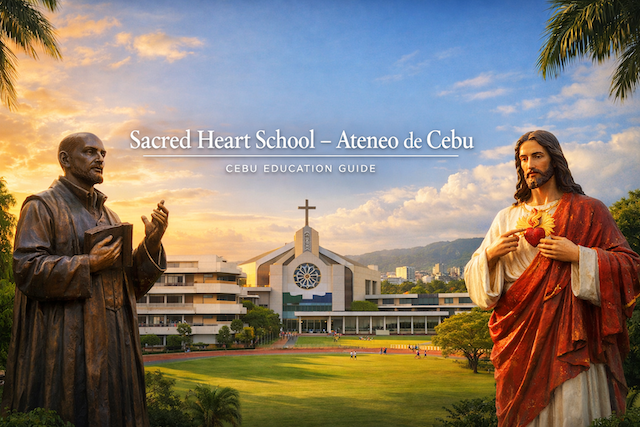
Sacred Heart School – Ateneo de Cebu: Cebu Education Guide
Contents
- Sacred Heart School – Ateneo de Cebu: Cebu Education Guide
- Overview of Sacred Heart School – Ateneo de Cebu
- Jesuit Education and School Philosophy
- Grade Levels and Academic Structure
- Curriculum Standards and Academic Excellence
- Campus, Facilities, and Learning Environment
- Student Life, Clubs, and Extracurricular Activities
- Values Formation, Retreats, and Outreach Programs
- Admission Process and Requirements
- Tuition Fees and School Expenses
- School Culture and Discipline
- Location and Accessibility
- Why Choose Sacred Heart School – Ateneo de Cebu
- Conclusion: Is Ateneo de Cebu the Right School for Your Child?
- FAQs (Frequently Asked Questions)
- Is Sacred Heart School – Ateneo de Cebu a fully integrated K–12 school?
- Where is Ateneo de Cebu located, and is it convenient for families living in Cebu City?
- What kind of education philosophy does Ateneo de Cebu follow?
- Is Ateneo de Cebu suitable for non-Catholic or international families?
- How competitive is admission, and what does the application process usually include?
- What Senior High School strands are commonly available at Ateneo de Cebu?
- How strong is the academic workload, and what type of student succeeds there?
- What extracurricular activities can students join?
- Does the school offer financial aid or scholarships?
- What should parents consider before choosing Ateneo de Cebu?
Sacred Heart School – Ateneo de Cebu: Cebu Education Guide
Overview of Sacred Heart School – Ateneo de Cebu
Sacred Heart School – Ateneo de Cebu (commonly known as Ateneo de Cebu) is one of the most prestigious and well-established private schools in Cebu City. Founded in 1933 by the Society of Jesus (Jesuits), the school has built a strong reputation for academic excellence, character formation, and holistic education grounded in Catholic and Jesuit values.
Located in Canduman, Mandaue City, Ateneo de Cebu serves students from Kindergarten through Senior High School, offering a complete K–12 integrated education system. The school attracts both Filipino families and expatriate families who are looking for a rigorous academic environment combined with strong moral and leadership development.
Ateneo de Cebu is widely recognized as one of the top preparatory schools in the Visayas, with graduates consistently accepted into leading universities in the Philippines and abroad.
Jesuit Education and School Philosophy
At the core of Ateneo de Cebu’s identity is Jesuit education, which emphasizes forming individuals who are:
-
Academically competent
-
Morally grounded
-
Socially responsible
-
Spiritually mature
The school follows the Jesuit ideal of “men and women for others”, encouraging students to use their talents not only for personal success but also for service to society.
Education at Ateneo de Cebu goes beyond textbooks and examinations. Students are guided to develop:
-
Critical thinking skills
-
Leadership qualities
-
Social awareness
-
A sense of justice and compassion
This philosophy is embedded across academic programs, extracurricular activities, retreats, outreach programs, and daily school life.
Grade Levels and Academic Structure
Sacred Heart School – Ateneo de Cebu offers a fully integrated K–12 curriculum, structured as follows:
Kindergarten and Grade School
The Grade School Department focuses on building strong foundations in:
-
English and Filipino
-
Mathematics
-
Science
-
Social Studies
-
Religious Education
Special emphasis is placed on:
-
Reading proficiency
-
Communication skills
-
Values education
-
Study habits and discipline
Classes are structured to support both academic growth and social development, helping younger students adjust smoothly to formal schooling.
Junior High School
The Junior High School (Grades 7–10) curriculum becomes more rigorous and structured, preparing students for higher-level academic work. Core subjects include:
-
Advanced Mathematics
-
Integrated Sciences
-
Literature and Writing
-
Philippine and World History
-
Technology and Computer Studies
Students are encouraged to think independently, engage in discussions, and participate actively in school life through clubs, organizations, and leadership roles.
Senior High School
Ateneo de Cebu offers a comprehensive Senior High School (Grades 11–12) program aligned with the Philippine K–12 system. Available academic strands typically include:
-
STEM (Science, Technology, Engineering, Mathematics)
-
ABM (Accountancy, Business, and Management)
-
HUMSS (Humanities and Social Sciences)
Senior High School students experience:
-
Research-focused coursework
-
Project-based learning
-
College preparation programs
-
Career guidance and mentoring
Graduates are well-prepared for local and international universities, as well as for leadership roles in various fields.
Curriculum Standards and Academic Excellence
Ateneo de Cebu follows the Department of Education (DepEd) curriculum, enhanced by Jesuit academic standards. The school is known for its:
-
High academic expectations
-
Structured assessment systems
-
Well-trained faculty members
Teachers at Ateneo de Cebu undergo continuous professional development, ensuring that teaching methods remain effective, relevant, and student-centered.
English is used as the primary medium of instruction, making the school suitable for students who aim to pursue higher education in English-speaking environments.
Campus, Facilities, and Learning Environment
The Ateneo de Cebu campus in Canduman is one of the largest and most well-equipped school campuses in Cebu. It offers a safe, spacious, and well-organized learning environment.
Key facilities include:
-
Modern classrooms with multimedia equipment
-
Science and computer laboratories
-
A well-stocked library and learning resource center
-
Sports complexes, courts, and open fields
-
Auditoriums and performance spaces
-
Chapels and prayer areas
The campus is designed to support both academic learning and extracurricular development, providing students with ample space for sports, arts, and community activities.
Student Life, Clubs, and Extracurricular Activities
Student life at Ateneo de Cebu is active and well-rounded. The school believes that education should include opportunities beyond the classroom.
Students can participate in:
-
Academic clubs (science, math, debate, robotics)
-
Arts and cultural organizations (music, theater, visual arts)
-
Sports teams (basketball, football, swimming, athletics)
-
Student government and leadership councils
Through these activities, students develop teamwork, leadership skills, time management, and confidence.
Values Formation, Retreats, and Outreach Programs
Values education is a defining feature of Ateneo de Cebu. Religious and moral formation is integrated into daily school life.
Key components include:
-
Regular religion classes
-
School-wide Masses and liturgical celebrations
-
Annual retreats appropriate to each grade level
-
Community outreach and social involvement programs
Students participate in outreach activities that allow them to engage with marginalized communities, reinforcing the Jesuit mission of service and social justice.
Admission Process and Requirements
Admission to Sacred Heart School – Ateneo de Cebu is competitive due to high demand and limited slots.
The general admission process includes:
-
Submission of academic records and school documents
-
Entrance examinations
-
Interviews (for certain grade levels)
-
Assessment of academic readiness and values alignment
Early application is strongly recommended, especially for Kindergarten, Grade 1, and Senior High School entry.
Tuition Fees and School Expenses
As a private Jesuit institution, Ateneo de Cebu’s tuition fees are higher than public schools but considered reasonable for the quality of education offered.
Tuition varies depending on:
-
Grade level
-
Academic year
-
Additional fees (laboratory, technology, activities)
Families should expect separate charges for:
-
Uniforms
-
Books and learning materials
-
School activities and programs
The school occasionally offers financial assistance or scholarships based on merit or need, subject to availability.
School Culture and Discipline
Ateneo de Cebu is known for its structured yet supportive school culture. Discipline is firm but formative, aiming to guide students toward self-discipline rather than punishment.
The school promotes:
-
Respect for teachers and peers
-
Academic honesty
-
Responsible behavior
-
Personal accountability
Parents are encouraged to work closely with the school to support students’ academic and personal development.
Location and Accessibility
The campus is located in Canduman, Mandaue City, making it accessible from:
-
Cebu City
-
Mandaue City
-
Lapu-Lapu City
Many families choose to live nearby or arrange private transportation. School bus services and private shuttle options are commonly used by students commuting from different parts of Metro Cebu.
Why Choose Sacred Heart School – Ateneo de Cebu
Families choose Ateneo de Cebu for several reasons:
-
Strong academic reputation
-
Jesuit values and character formation
-
Complete K–12 integrated education
-
Excellent facilities and campus environment
-
Proven track record of university placement
The school is especially suitable for families seeking a balance between academic excellence, moral development, and leadership training.
Conclusion: Is Ateneo de Cebu the Right School for Your Child?
Sacred Heart School – Ateneo de Cebu stands as one of the leading K–12 institutions in Cebu, offering a holistic and values-driven education rooted in Jesuit tradition. With its strong academics, structured character formation, and supportive learning environment, the school prepares students not only for college but also for life beyond the classroom.
For families who value academic rigor, leadership development, and a faith-based educational foundation, Ateneo de Cebu remains one of the top choices in the Cebu education landscape.
FAQs (Frequently Asked Questions)
Is Sacred Heart School – Ateneo de Cebu a fully integrated K–12 school?
Yes. Sacred Heart School – Ateneo de Cebu (often called Ateneo de Cebu) offers an integrated K–12 pathway, typically covering Kindergarten through Senior High School on one system. This structure is helpful for families who prefer long-term continuity in academic standards, school culture, and values formation. Students can progress from early education to higher grade levels with consistent expectations in learning, discipline, and student support. That said, entry points can still be competitive at any level, so it’s best to plan applications early even if your child is entering midstream (for example, Grade 4 or Grade 7). For families relocating to Cebu, an integrated K–12 school can also reduce the stress of school transitions because academic requirements, calendars, and school policies remain more consistent across departments.
Where is Ateneo de Cebu located, and is it convenient for families living in Cebu City?
The campus is located in Canduman, Mandaue City. This is generally convenient for families living in northern Cebu City, Mandaue, and parts of Lapu-Lapu City, although daily travel time will depend heavily on traffic patterns and your exact location. For many households, the main challenge is rush-hour congestion, so families often choose to adjust schedules, use private shuttles, or explore school transport options if available. If you are deciding where to live, it helps to test a commute during typical drop-off and pick-up times. Some parents also plan their residence around access to main roads leading to Mandaue to make daily routines easier.
What kind of education philosophy does Ateneo de Cebu follow?
Ateneo de Cebu is a Jesuit Catholic school, and its educational philosophy typically emphasizes the formation of the whole person. This usually includes strong academics, character development, leadership training, spiritual growth, and a commitment to service. In practical terms, many students experience a learning environment that encourages critical thinking, disciplined study habits, and participation in activities beyond the classroom. Jesuit education is often associated with forming students who aim to contribute to society, not only to succeed individually. For parents, this means the school experience often includes retreats, values education, and outreach programs alongside traditional academic instruction.
Is Ateneo de Cebu suitable for non-Catholic or international families?
Many Catholic private schools in Cebu welcome students from different backgrounds, and Ateneo de Cebu is generally considered open to diverse families who respect the school’s mission and community norms. Non-Catholic students may still be expected to participate in certain school-wide activities such as assemblies, values programs, or cultural events, though specific requirements can vary by department and year level. For international or expatriate families, the school’s English-based academic environment can be an advantage, especially for children who plan to pursue higher education in English. The most important fit factors are often the family’s comfort with a faith-based setting and the student’s readiness for a structured academic culture.
How competitive is admission, and what does the application process usually include?
Admission can be competitive because demand is high and available slots are limited. Most established private schools use a structured process that may include an application form, submission of academic records, entrance testing, and sometimes interviews or assessments depending on grade level. In many cases, the school also evaluates readiness in academics and behavior to ensure the student can thrive in the environment. For families coming from overseas or transferring from another city, it’s wise to prepare documents early and communicate clearly about your child’s academic history. If you are applying for key entry points such as Kindergarten, Grade 1, Grade 7, or Grade 11, you should expect higher competition compared with other transfer levels.
What Senior High School strands are commonly available at Ateneo de Cebu?
Many K–12 schools in the Philippines offer strands such as STEM, ABM, and HUMSS, and Ateneo de Cebu is commonly associated with college-preparatory offerings aligned with DepEd requirements. The best strand for your child depends on strengths and goals: STEM is often chosen by students aiming for engineering, medicine, or tech-related paths; ABM is popular for business, finance, and entrepreneurship; HUMSS fits students interested in social sciences, communication, law, education, or public service. If your child is undecided, you can evaluate subject preferences, academic performance, and long-term interests. Schools also often provide guidance programs to help students choose an appropriate track.
How strong is the academic workload, and what type of student succeeds there?
Ateneo de Cebu is widely viewed as academically rigorous. Students who do well are typically those who can manage time, handle regular assessments, and maintain steady study habits. A supportive home environment also matters, especially in earlier years when students are still developing independence. Success is not only about high grades; participation, responsibility, and maturity are often part of the school culture. If your child is transferring from a less demanding system, expect an adjustment period. Many families manage this transition by building a consistent routine, using teacher feedback early, and encouraging the student to join clubs or activities that help them feel connected to the campus community.
What extracurricular activities can students join?
Students often have access to a wide range of extracurricular options, including academic clubs, performing arts, sports programs, student leadership organizations, and special interest groups. These activities are not only “extras” but are commonly treated as an important part of holistic development. Participation can help students build confidence, teamwork skills, and leadership experience. For parents, it’s helpful to consider how extracurricular schedules affect daily logistics, especially if your child joins activities that require after-school practices or weekend events. A balanced plan usually works best: one or two major commitments alongside academics is often more sustainable than trying to join too many organizations at once.
Does the school offer financial aid or scholarships?
Some private schools offer scholarships or financial assistance, but availability and criteria vary by year and program. Assistance may be merit-based, need-based, or tied to specific areas such as academics, leadership, or special achievements. If you are considering financial support, it’s best to check application windows and required documents early, because scholarship timelines may not match standard admissions timelines. Even without full scholarships, families sometimes plan for total annual costs by accounting for tuition plus other expenses such as books, uniforms, transportation, and activity fees. A clear budget plan can reduce surprises during enrollment.
What should parents consider before choosing Ateneo de Cebu?
Start by evaluating fit in three areas: academic readiness, family logistics, and values alignment. Academically, consider whether your child is comfortable with structured learning and consistent expectations. Logistically, think about commute time, daily schedules, and the practicality of after-school activities. In terms of values, reflect on whether your family is comfortable with a Jesuit Catholic environment that includes religious and service-oriented programs. If possible, attend orientations or campus visits, review department-specific policies, and ask about support systems for new students. When the student, parents, and school expectations match well, the overall experience is usually more positive and stable over the long term.

How to Register for eTravel Philippines (2025 Guide)
Step-by-step guide to completing your eTravel registration before arriving in the Philippines, with images and tips.

Night Market in Cebu – Things You Don’t Know About Cebu Life
Discover the hidden charm of Cebu’s night markets, from street food stalls to local life tips you won’t find in tourist guides.

How to Use ChatGPT for IELTS Preparation: A Complete Guide
Learn how to prepare for IELTS using ChatGPT — including strategies for Writing, Reading, Listening, Speaking, and grammar support.

How to Build a Website Without Coding Using ChatGPT
Discover how to build your own website using AI—no coding skills needed. From structure planning to SEO and design, let ChatGPT guide you.