2026年4月3日
3D ACADEMY offers affordable English study programs in Cebu, Philippines – perfect for beginners, professionals, and exam takers.

3D UNIVERSAL ENGLISH INSTITUTE INC
info.3d-universal.com
8:00-17:00(Mon-Fri)
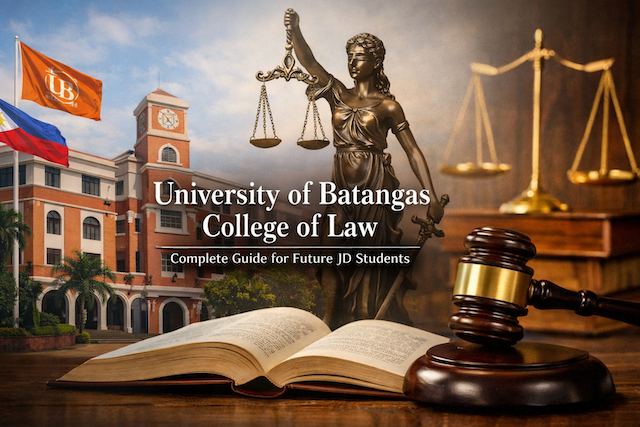
University of Batangas College of Law: Complete Guide for Future JD Students
Contents
- University of Batangas College of Law: Complete Guide for Future JD Students
- Overview: What Makes UB College of Law Worth Considering
- A Brief History and the School’s Role in Batangas
- Campuses: Batangas City and Lipa Options
- The Juris Doctor Program: What You’re Actually Signing Up For
- Academics and Learning Style: Recitations, Case Reading, and Exams
- Facilities and Student Support: Libraries, Study Spaces, and Access
- Admissions: Typical Requirements and How to Prepare
- Tuition and Costs: What to Ask and How to Budget
- Partnerships and Professional Exposure
- Who Thrives at UB College of Law
- How to Decide: A Simple Evaluation Framework
- Next Steps: How to Start Your UB Law Journey
- FAQs (Frequently Asked Questions)
- Is the University of Batangas College of Law a good option if I want to study law outside Metro Manila?
- Does UB offer the Juris Doctor (JD) program, and what does “JD” mean in the Philippines?
- What is the difference between the UB Batangas Campus and the UB Lipa Campus for law students?
- Can working professionals realistically succeed at UB College of Law?
- What admissions requirements should I prepare for UB College of Law?
- Do I need a specific pre-law course to apply to UB College of Law?
- How much does law school cost at UB, and what other expenses should I expect?
- What should I expect academically in my first year at UB College of Law?
- Does UB have library resources and study support for law students?
- How can I evaluate whether UB College of Law is the right fit before enrolling?
University of Batangas College of Law: Complete Guide for Future JD Students
Overview: What Makes UB College of Law Worth Considering
The University of Batangas (UB) College of Law is widely recognized in the province for opening doors to legal education without requiring students to relocate to Metro Manila. UB’s law program has a long track record in Batangas and is positioned as a practical option for aspiring lawyers who want a community-based law school experience while still working toward the Juris Doctor (JD) degree. UB operates its law program primarily through the Batangas Campus (often associated with the “Hilltop” area in Batangas City) and also offers law education through the Lipa Campus, providing more access points within the province. :contentReference[oaicite:0]{index=0}
If you’re comparing law schools, UB is a good candidate if you value (1) access and proximity in Batangas, (2) a curriculum aligned with the JD program structure recognized by the Philippine Legal Education Board (LEB), and (3) a school setting that accommodates many working students. UB also highlights its historical mission of making legal education more accessible to students who may not have the means to pursue a law degree in Manila. :contentReference[oaicite:1]{index=1}
A Brief History and the School’s Role in Batangas
UB states that its College of Law was established in 1949, making it the first law school in the province of Batangas. This matters because a law school’s institutional memory can shape its culture: older programs often develop stable academic routines, alumni networks, and a clearer identity in the local legal community. UB connects its founding to a commitment by the institution’s founders to provide access to “affordable quality legal education” for students who might otherwise struggle to study law in Manila. :contentReference[oaicite:2]{index=2}
UB also documents program transitions that mirror national legal education reforms. For example, UB notes that the Batangas Campus shifted from the Doctor of Jurisprudence to the Juris Doctor program, and that the Lipa Campus JD program received recognition from the Legal Education Board. These details are useful when you’re confirming whether a campus-based program is authorized to confer the JD degree and whether its program structure follows the current JD framework. :contentReference[oaicite:3]{index=3}
Campuses: Batangas City and Lipa Options
UB Batangas Campus (College of Law)
UB’s Batangas Campus College of Law is often viewed as the “main” or legacy base of the program, given the historical establishment of the law school in the province. If you prefer a more established campus environment with a long-running law school presence, this is likely the default option to examine first. :contentReference[oaicite:4]{index=4}
UB Lipa Campus (College of Law / JD Program)
UB’s Lipa Campus expanded access to legal education in the province. UB notes that the opening of the law school in Lipa gave wider access to legal education, and that the Legal Education Board granted recognition to the UB Lipa Campus JD program. For students living closer to Lipa City or nearby municipalities, this can significantly reduce commuting time and make evening/weekend routines more sustainable. :contentReference[oaicite:5]{index=5}
When choosing between campuses, think about your daily reality more than the “name” of the campus. The best campus is often the one you can consistently show up for—especially in law school, where attendance, recitations, and exam performance are closely tied to routine and stamina.
The Juris Doctor Program: What You’re Actually Signing Up For
UB offers the Juris Doctor (JD) program under its College of Law. In the Philippines, the JD is the professional law degree that prepares graduates for the bar and for legal careers across litigation, corporate practice, government service, public interest work, and more. UB’s official pages position the JD as the core offering of the College of Law across campuses. :contentReference[oaicite:6]{index=6}
Most Philippine JD programs are structured around a combination of foundational “bar subjects,” skills training (legal writing, research, advocacy), and electives. As you evaluate UB, your goal is to verify that the academic experience you want is available: schedules that fit working students, strong preparation routines for major bar subjects, and adequate academic support (library access, research resources, mentoring). UB’s law-school ecosystem includes a law library setup referenced for the Lipa campus, which is particularly relevant if you expect to do a lot of research and case reading on campus. :contentReference[oaicite:7]{index=7}
Academics and Learning Style: Recitations, Case Reading, and Exams
Law school in the Philippines is typically built around a high-reading workload and Socratic-style recitations. Even if two schools have similar subject lists, the lived experience can differ dramatically based on faculty style, assessment methods, and classroom culture. In practical terms, you should expect:
- Heavy weekly reading of cases, statutes, and commentary, often assigned per class meeting.
- Recitations where you explain doctrines, analyze fact patterns, and defend answers under questioning.
- Long-form exams (often essay-based) that test how you apply rules to complex scenarios.
- Legal writing and research tasks that build professional competence beyond memorization.
To decide if UB is the right fit, ask targeted questions during your inquiry: How often are recitations held? Are exams mostly essays, or a mix? What academic support exists for first-year students adjusting to the reading load? Even one conversation with current students (or alumni) can give you a clearer picture than brochures alone.
Facilities and Student Support: Libraries, Study Spaces, and Access
Access to legal materials is not a “nice-to-have” in law school; it is survival. UB’s Lipa campus library resources include a dedicated law library setup (as referenced in a campus library page), which signals that law students have an identified research environment. If you plan to study on campus, confirm the law library hours, whether there are quiet zones, and what online databases or e-resources are available through the school. :contentReference[oaicite:8]{index=8}
Beyond the library, ask about:
- Class schedules (weekday evening, weekend, hybrid options if any)
- Enrollment and document processing timelines
- Scholarships or discounts, and the academic requirements to maintain them
UB also maintains an Admissions and Scholarships Office that handles initial evaluation and reception of documents and promotes scholarships for qualified students. If you are cost-sensitive, start your inquiry here early rather than waiting until you are about to enroll. :contentReference[oaicite:9]{index=9}
Admissions: Typical Requirements and How to Prepare
Law school admissions can look simple on paper—submit documents, pass an interview—but preparation matters. UB’s official admissions office page emphasizes document evaluation and reasonable requirements anchored on institutional policy, and UB law applicants should expect to submit standard academic and personal documents through the admissions process. :contentReference[oaicite:10]{index=10}
Because document requirements can change year to year (and may vary slightly by campus), treat the following as a practical checklist rather than a final official list:
- Completed application form
- Official transcript of records from your pre-law degree
- Identification photos and government-issued documents (commonly requested in PH school admissions)
- Interview (often with the College of Law leadership or admissions committee)
How to strengthen your application:
- Clean up your academic narrative. If your grades are uneven, be ready to explain your growth and discipline now.
- Show realistic time management. Many applicants underestimate law school time demands; explain your schedule plan.
- Prepare for the interview. Expect questions about why law, why UB, and how you will handle readings and recitations.
To avoid delays, contact UB through the Admissions and Scholarships Office early and confirm (1) the campus you are applying to, (2) submission deadlines, and (3) whether there are campus-specific steps. :contentReference[oaicite:11]{index=11}
Tuition and Costs: What to Ask and How to Budget
Tuition in Philippine law schools can vary significantly depending on the institution and whether fees are published publicly. UB may not always present a full tuition table on every public page, so the smartest approach is to request the latest official assessment from UB during your inquiry (and ask what miscellaneous fees are typically included).
Budgeting for law school should include more than tuition:
- Books and codals (which can be costly, especially in first year)
- Printing and supplies (case digests, reviewers, annotations)
- Transportation and meals (commuting adds up quickly)
- Bar review and application expenses later on
If finances are tight, ask UB about scholarships or payment terms through the Admissions and Scholarships Office and clarify the requirements to qualify and maintain any financial support. :contentReference[oaicite:12]{index=12}
Partnerships and Professional Exposure
UB’s JD program page for the Lipa Campus references a school partnership involving the University of Batangas and the University of Santo Tomas (UST) connected to legal education (noted as a “school partnership for Master of Laws program” on the JD program page). Partnerships can matter because they sometimes lead to faculty exchanges, joint events, or clearer pathways to postgraduate study. If you are thinking long-term—JD now, specialization or graduate studies later—ask what opportunities are active and what students can realistically access. :contentReference[oaicite:13]{index=13}
Who Thrives at UB College of Law
While any motivated student can succeed, UB can be especially attractive for:
- Batangas-based students who want to build a legal career in the province or nearby regions.
- Working professionals who need a campus option that supports consistent attendance without relocating.
- Students seeking a practical path into law with a community-rooted school environment.
That said, your success will still depend heavily on your daily systems: reading habits, outlining, practice exams, and the discipline to show up prepared for recitations.
How to Decide: A Simple Evaluation Framework
If you are currently comparing multiple law schools, use this framework to evaluate UB:
- Access and sustainability: Can you attend consistently for 4+ years without burning out from commuting?
- Academic fit: Do the faculty style and assessment methods match how you learn and perform?
- Support systems: Are library access, research resources, and administrative processes reliable?
- Financial realism: Can you fund the full journey including books and review costs, not just tuition?
- Career alignment: Does studying in Batangas support your intended practice location and network?
Then do one high-impact action: visit the campus (or request a guided inquiry), ask for the latest admissions steps and fee assessments, and talk to at least one current student about the weekly routine.
Next Steps: How to Start Your UB Law Journey
To move forward efficiently:
- Choose your campus (Batangas City or Lipa) based on location and lifestyle sustainability. :contentReference[oaicite:14]{index=14}
- Contact the Admissions and Scholarships Office to confirm the latest application requirements, deadlines, and scholarship options. :contentReference[oaicite:15]{index=15}
- Prepare your documents early (especially your transcript of records) to avoid last-minute delays.
- Set expectations with your family/employer if you will work while studying—law school is a long-term commitment.
- Build your pre-law routine now: daily reading blocks, note-taking habits, and writing practice.
UB College of Law’s long-standing presence in Batangas and its multi-campus access model can be a strong fit if you want a JD path grounded in the province. The key is to align your campus choice and schedule with the reality of law school demands—and to start with accurate, updated admissions and cost information directly from UB’s official offices. :contentReference[oaicite:16]{index=16}
FAQs (Frequently Asked Questions)
Is the University of Batangas College of Law a good option if I want to study law outside Metro Manila?
Yes. UB College of Law is often considered a practical choice for students who want to earn a Juris Doctor (JD) degree while staying in Batangas or nearby areas. Studying closer to home can reduce living expenses and commuting stress, which matters because law school requires consistent attendance, heavy weekly readings, and regular recitations. Many students also prefer building professional networks in the province where they plan to practice later. The best way to confirm fit is to compare campus location, schedules, faculty style, and your personal routine.
Does UB offer the Juris Doctor (JD) program, and what does “JD” mean in the Philippines?
UB offers the Juris Doctor (JD) program through its College of Law. In the Philippines, the JD is the professional law degree that prepares graduates for the bar examination and legal practice. The JD curriculum typically includes foundational “bar subjects” (like Constitutional Law, Civil Law, Criminal Law, Remedial Law, Commercial Law, and Legal Ethics), plus legal research, legal writing, and practice-oriented training. While subject titles may look similar across law schools, the workload, teaching style, and assessment methods can vary significantly.
What is the difference between the UB Batangas Campus and the UB Lipa Campus for law students?
The main difference is location and the day-to-day practicality of attending classes. UB has law education associated with both Batangas City and Lipa, which can help students choose the campus that best matches their residence or work location. If you live closer to Lipa, studying there can reduce travel time and make evening classes more sustainable. If you prefer the legacy environment tied to UB’s longer history in the province, you may consider the Batangas Campus. Always verify current class schedules, enrollment processes, and campus-specific policies before deciding.
Can working professionals realistically succeed at UB College of Law?
Many working students pursue law in provincial schools because relocating is not realistic. Success is possible, but it depends on your schedule discipline. Expect reading assignments that can take hours per subject each week, plus preparation for recitations and written exams. Working students typically succeed when they set fixed weekly reading blocks, protect weekends for catch-up, and communicate clearly with employers and family about time constraints. Before enrolling, ask about typical class times, exam schedules, and whether there are policies that support working students.
What admissions requirements should I prepare for UB College of Law?
Admissions requirements can change by year and may differ slightly by campus, so you should confirm the latest list directly with UB. In general, Philippine law school applications usually require an application form, transcript of records from your pre-law degree, identification documents, and sometimes an interview. Some schools also have entrance assessments or internal screening procedures. A good strategy is to prepare your documents early (especially official transcripts), keep multiple copies, and confirm deadlines well in advance to avoid processing delays.
Do I need a specific pre-law course to apply to UB College of Law?
In the Philippines, applicants to a JD program generally come from many undergraduate backgrounds, not just political science or legal management. What matters most is that you completed an undergraduate degree and can handle intensive reading and analytical writing. Students from business, education, psychology, engineering, nursing, and other fields can succeed in law school if they build strong study habits. If you feel uncertain, start preparing early by improving reading comprehension, writing structured answers, and practicing issue-spotting in simple case scenarios.
How much does law school cost at UB, and what other expenses should I expect?
Tuition and fees may not always be fully published in a single public source, so request an official and updated assessment from UB. Beyond tuition, budget for books and codals, printing and supplies, transportation, meals, and occasional academic requirements (like mock trials or seminars). Later in the journey, bar-related expenses can become significant. If cost is a major concern, ask about scholarships, discounts, payment terms, and the academic requirements for maintaining financial assistance.
What should I expect academically in my first year at UB College of Law?
First year is usually the biggest adjustment. You can expect heavy case reading, frequent recitations, and long-form examinations that test how you apply legal rules to facts. Many students struggle not because they are “not smart enough,” but because they underestimate the time required to read and digest materials. A strong first-year approach is to read ahead, create short case digests, outline doctrines weekly, and practice writing structured exam answers. Consider forming a small study group only if it increases discipline and doesn’t become a distraction.
Does UB have library resources and study support for law students?
Access to legal materials is essential for law school performance. UB has referenced law library resources (particularly noted for the Lipa campus), and students should confirm library hours, available references, and whether there are digital resources or subscriptions that support research. In addition to the library, ask what academic support exists—such as mentoring, review sessions, or skills training in legal writing. Your ability to research and read efficiently often becomes a major competitive advantage over time.
How can I evaluate whether UB College of Law is the right fit before enrolling?
Start by evaluating sustainability: can you attend consistently for several years without burning out due to commuting or work conflicts? Next, check academic fit by asking about recitation frequency, exam style, and class schedule patterns. Then consider resources: library access, administrative responsiveness, and student support systems. Finally, think about career alignment: if you plan to practice in Batangas or nearby regions, studying locally can help you build a relevant professional network. If possible, talk to a current student about their weekly routine to get a realistic view of expectations.

How to Register for eTravel Philippines (2025 Guide)
Step-by-step guide to completing your eTravel registration before arriving in the Philippines, with images and tips.

Night Market in Cebu – Things You Don’t Know About Cebu Life
Discover the hidden charm of Cebu’s night markets, from street food stalls to local life tips you won’t find in tourist guides.

How to Use ChatGPT for IELTS Preparation: A Complete Guide
Learn how to prepare for IELTS using ChatGPT — including strategies for Writing, Reading, Listening, Speaking, and grammar support.

How to Build a Website Without Coding Using ChatGPT
Discover how to build your own website using AI—no coding skills needed. From structure planning to SEO and design, let ChatGPT guide you.