2026年4月3日
3D ACADEMY offers affordable English study programs in Cebu, Philippines – perfect for beginners, professionals, and exam takers.

3D UNIVERSAL ENGLISH INSTITUTE INC
info.3d-universal.com
8:00-17:00(Mon-Fri)
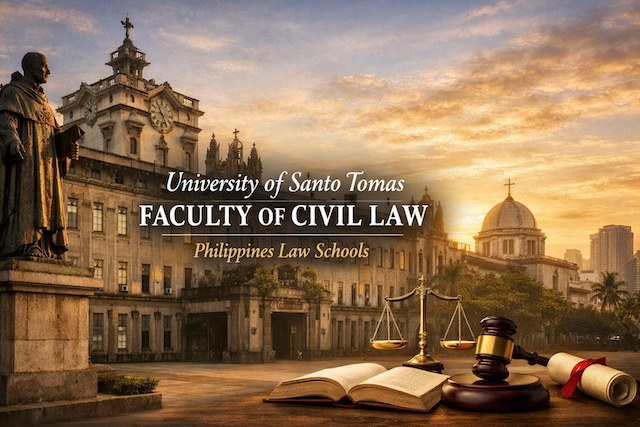
University of Santo Tomas (UST) Faculty of Civil Law: Philippines Law Schools
Contents
- University of Santo Tomas (UST) Faculty of Civil Law: Philippines Law Schools
- Overview of the University of Santo Tomas Faculty of Civil Law
- Historical Background and Legacy
- Academic Philosophy and Teaching Approach
- Juris Doctor Program Structure
- Bar Examination Performance and Reputation
- Faculty and Legal Scholars
- Campus Environment and Student Life
- Admission Requirements and Selectivity
- Catholic Identity and Ethical Formation
- Career Paths and Alumni Network
- Comparison with Other Top Philippine Law Schools
- Strengths of UST Faculty of Civil Law
- Challenges and Considerations
- Conclusion
- FAQs (Frequently Asked Questions)
- Is the University of Santo Tomas (UST) Faculty of Civil Law the oldest law school in the Philippines?
- Where is UST Faculty of Civil Law located?
- What degree does UST Law offer?
- How long does it usually take to finish the JD program at UST Law?
- What subjects are emphasized at UST Faculty of Civil Law?
- Is UST Law considered one of the top law schools in the Philippines?
- How difficult is admission to UST Faculty of Civil Law?
- Does UST Law have strict retention or academic policies?
- What is the teaching style at UST Faculty of Civil Law?
- Does UST Law help students prepare for the Bar Examination?
- What kind of students usually do well at UST Law?
- Is UST Law a good choice for students who want to become litigators?
- Can UST Law graduates work in corporate law and business-focused roles?
- Does UST Faculty of Civil Law offer opportunities for extracurricular involvement?
- How important is the alumni network of UST Law?
- Does UST Law have a particular values or ethics focus?
- What should applicants consider before choosing UST Faculty of Civil Law?
University of Santo Tomas (UST) Faculty of Civil Law: Philippines Law Schools
Overview of the University of Santo Tomas Faculty of Civil Law
The University of Santo Tomas (UST) Faculty of Civil Law is the oldest law school in the Philippines and one of the most historically significant legal institutions in Asia. Founded in 1734, the Faculty of Civil Law has played a central role in shaping Philippine jurisprudence for nearly three centuries. Many of the country’s most influential jurists, lawmakers, Supreme Court justices, and legal scholars trace their roots to UST.
Located within the University of Santo Tomas campus in Sampaloc, Manila, the Faculty of Civil Law is deeply integrated into the country’s legal, political, and academic traditions. Its long-standing emphasis on classical legal education, ethical formation, and Bar Examination performance has cemented its reputation as one of the Big Four Philippine law schools, alongside UP, Ateneo, and San Beda.
UST Law is particularly known for its strong grounding in civil law, constitutional law, and Catholic social teachings, producing graduates who are not only technically proficient but also ethically grounded.
Historical Background and Legacy
The Faculty of Civil Law was established under Spanish colonial rule, originally focusing on Roman and Canon Law. Over time, it evolved to incorporate American legal traditions, reflecting the hybrid legal system of the Philippines.
UST Law has been instrumental in:
-
Educating lawyers during Spanish, American, Japanese, and post-independence eras
-
Producing framers of the 1935, 1973, and 1987 Philippine Constitutions
-
Shaping legal thought in both private and public law sectors
The school’s longevity gives it a unique institutional memory unmatched by any other Philippine law school. This historical depth continues to influence its conservative yet rigorous academic approach.
Academic Philosophy and Teaching Approach
The UST Faculty of Civil Law follows a traditional, discipline-oriented legal education model, emphasizing:
-
Mastery of legal principles
-
Extensive case reading
-
Doctrinal clarity
-
Ethical responsibility
Classes are generally professor-centered, with structured lectures supplemented by Socratic questioning. Students are expected to demonstrate strong memorization skills, analytical reasoning, and consistency across all subjects.
Unlike some newer or more liberal law programs, UST Law places heavy importance on foundational subjects before allowing students to move into advanced electives. This approach ensures graduates possess a solid legal base applicable to litigation, corporate practice, government service, and academia.
Juris Doctor Program Structure
UST offers a Juris Doctor (JD) program, typically completed in four years. The curriculum follows the guidelines of the Legal Education Board (LEB) while maintaining the school’s distinctive academic rigor.
Core Subjects
The JD curriculum includes:
-
Civil Law (Persons, Property, Obligations and Contracts, Succession)
-
Criminal Law
-
Constitutional Law
-
Political Law
-
Commercial Law
-
Remedial Law
-
Labor Law
-
Taxation Law
-
Legal Ethics
-
Legal Research and Writing
Civil Law subjects are particularly emphasized, often requiring multiple semesters of intensive study.
Advanced Courses and Practice Preparation
In the later years, students take:
-
Trial Advocacy
-
Legal Forms
-
Law Practice Management
-
Clinical Legal Education Program (CLEP)
-
Bar-oriented review subjects
UST Law integrates Bar Examination preparation into its upper-year curriculum, aligning assessments with Bar-style questions and issues.
Bar Examination Performance and Reputation
UST Faculty of Civil Law has consistently produced:
-
High Bar passing rates
-
Multiple Bar topnotchers
-
Strong overall institutional rankings
While year-to-year performance fluctuates depending on national trends, UST Law remains a reliable Bar-performing school, particularly noted for its consistency rather than extreme spikes.
Its graduates are known for:
-
Strong doctrinal command
-
Excellent writing under pressure
-
Deep familiarity with jurisprudence
These qualities make UST Law alumni highly competitive in both private law firms and public institutions.
Faculty and Legal Scholars
UST Law boasts a distinguished roster of:
-
Supreme Court justices (current and retired)
-
Court of Appeals justices
-
Prominent litigators
-
Constitutionalists
-
Legal philosophers
Faculty members are often:
-
Active practitioners
-
Authors of leading law textbooks
-
Bar reviewers and examiners
-
Legal consultants to government agencies
This blend of academic and practical experience ensures students receive instruction grounded in real-world legal practice.
Campus Environment and Student Life
The UST campus is one of the largest and most historic university campuses in Asia. Law students benefit from:
-
Dedicated law buildings
-
Extensive law libraries
-
Access to UST’s central library system
-
Proximity to courts, government offices, and legal institutions in Manila
Student life at UST Law is known to be academically intense. The workload is heavy, examinations are frequent, and retention policies are strictly enforced.
However, students also participate in:
-
Moot court competitions
-
Legal aid clinics
-
Student law organizations
-
Religious and community outreach programs
The environment fosters resilience, discipline, and long-term professional endurance.
Admission Requirements and Selectivity
Admission to UST Faculty of Civil Law is highly competitive.
Requirements Typically Include:
-
Bachelor’s degree from a recognized institution
-
UST Law Entrance Examination
-
Panel interview
-
Strong academic records
-
Character and moral evaluation
UST Law is known for its strict retention policies, particularly during the first and second years. Students who fail to meet academic standards may be required to shift or leave the program.
This selectivity contributes to the school’s strong Bar performance and professional reputation.
Catholic Identity and Ethical Formation
As a Pontifical and Catholic university, UST integrates moral theology and ethics into its legal education. While the law curriculum remains secular and professional, students are encouraged to:
-
Understand law in relation to social justice
-
Respect human dignity
-
Consider moral implications of legal practice
This ethical orientation is particularly valued in fields such as:
-
Public service
-
Judiciary
-
Human rights law
-
Family and succession law
UST Law graduates are often recognized for their principled approach to legal practice.
Career Paths and Alumni Network
Graduates of UST Faculty of Civil Law pursue diverse career paths, including:
-
Litigation and private practice
-
Corporate and commercial law
-
Judiciary and prosecution
-
Government and public policy
-
Legal academia
-
International organizations
UST has one of the largest law alumni networks in the Philippines, offering graduates access to:
-
Mentorship
-
Career opportunities
-
Professional referrals
-
Judicial and governmental connections
The “Thomasian” identity carries significant weight within Philippine legal circles.
Comparison with Other Top Philippine Law Schools
When compared to other elite law schools:
-
UP Law is known for academic freedom and policy-oriented thinking
-
Ateneo Law emphasizes leadership, social justice, and international exposure
-
San Beda Law is famous for aggressive Bar review culture
-
UST Law stands out for tradition, doctrinal strength, and ethical grounding
Students who thrive in structured, rigorous, and historically rooted environments often find UST Law to be an excellent fit.
Strengths of UST Faculty of Civil Law
Key strengths include:
-
Unmatched historical legacy
-
Strong civil law foundation
-
Consistent Bar Examination performance
-
Highly experienced faculty
-
Extensive alumni influence
-
Ethical and values-based education
These strengths make UST Law a dependable choice for students aiming for long-term legal careers in the Philippines.
Challenges and Considerations
Prospective students should also consider:
-
High academic pressure
-
Strict grading and retention
-
Less flexible curriculum compared to some schools
-
Heavy emphasis on memorization and doctrine
UST Law is best suited for students who are disciplined, resilient, and committed to traditional legal education.
Conclusion
The University of Santo Tomas Faculty of Civil Law remains one of the most prestigious and influential law schools in the Philippines. Its centuries-old tradition, combined with rigorous academics and ethical formation, continues to produce lawyers who shape Philippine law and society.
For aspiring lawyers seeking a deeply rooted, discipline-driven, and Bar-focused legal education, UST Faculty of Civil Law stands as a timeless and respected institution within Philippine legal education.
FAQs (Frequently Asked Questions)
Is the University of Santo Tomas (UST) Faculty of Civil Law the oldest law school in the Philippines?
Yes. UST Faculty of Civil Law is widely recognized as the oldest law school in the Philippines and one of the oldest in Asia. Its long institutional history is often highlighted as a defining feature of the program. For many applicants, this legacy signals stability, strong traditions in legal education, and a long track record of producing influential lawyers, judges, and public officials.
Where is UST Faculty of Civil Law located?
UST Faculty of Civil Law is located inside the University of Santo Tomas campus in Sampaloc, Manila. Because it is in Metro Manila, students generally have access to courts, law offices, government agencies, and professional events that may support internships, networking, and exposure to real legal practice while studying.
What degree does UST Law offer?
UST Law offers a Juris Doctor (JD) program. The JD is the standard professional degree required to qualify for the Philippine Bar Examination, provided that all academic and practical requirements are completed under the rules of legal education in the Philippines.
How long does it usually take to finish the JD program at UST Law?
The JD program typically takes four years for full-time students, assuming they follow the prescribed curriculum and successfully complete required subjects each semester. The timeline can be longer if a student has a reduced load, fails certain subjects, or needs to repeat courses due to academic policies.
What subjects are emphasized at UST Faculty of Civil Law?
UST Law is known for its strong foundation in civil law subjects, including Persons and Family Relations, Property, Obligations and Contracts, and Succession. Like other Philippine law schools, it also covers Political Law, Criminal Law, Remedial Law, Commercial Law, Labor Law, Taxation, Legal Ethics, and practical courses such as legal writing and advocacy.
Is UST Law considered one of the top law schools in the Philippines?
UST Faculty of Civil Law is commonly included in discussions of leading Philippine law schools due to its historical importance, large alumni network, and consistent presence in the legal profession. Applicants often compare it with other well-known institutions such as UP, Ateneo, and San Beda, depending on learning style, location, and professional goals.
How difficult is admission to UST Faculty of Civil Law?
Admission is competitive. Applicants are typically evaluated through an entrance examination and an interview process, along with academic records and other requirements. Because law school is demanding, UST also considers whether an applicant can handle intensive reading, writing, and examination performance over several years.
Does UST Law have strict retention or academic policies?
UST Law is known for maintaining rigorous academic standards. Like many traditional law schools, it may apply retention policies that require students to meet minimum grade thresholds to continue. This structure can be challenging, but it also creates an environment where students develop discipline, consistent study habits, and strong doctrinal mastery.
What is the teaching style at UST Faculty of Civil Law?
Many students describe UST Law as having a structured and professor-led approach, often combining lectures with recitation and case-based questioning. Students are expected to read assigned cases and materials before class and to respond clearly under time pressure. This environment tends to reward preparation, precision, and the ability to explain legal doctrines logically.
Does UST Law help students prepare for the Bar Examination?
UST Law’s curriculum generally builds toward Bar readiness by strengthening core subjects and training students to analyze issues using jurisprudence and statutory law. Upper-year courses often focus on integrating topics and improving exam performance. Many students also join review programs and structured study groups to enhance Bar preparation.
What kind of students usually do well at UST Law?
Students who perform well at UST Law are typically consistent, resilient, and comfortable with structured academic environments. Because the workload can be heavy, students who succeed often have strong time management skills, effective reading strategies, and the ability to keep up with weekly requirements without falling behind.
Is UST Law a good choice for students who want to become litigators?
Yes. The program’s strong emphasis on remedial law, legal writing, and doctrinal clarity can be useful for litigation. Students who actively develop advocacy skills through moot court, practice exercises, and internships can graduate with a foundation suited to courtroom work, including civil and criminal practice.
Can UST Law graduates work in corporate law and business-focused roles?
Yes. UST Law includes commercial law, taxation, labor law, and related subjects that support corporate practice. Graduates often enter law firms, in-house legal departments, compliance roles, and business-related legal work. Career outcomes depend on grades, internships, networks, and post-graduation Bar performance.
Does UST Faculty of Civil Law offer opportunities for extracurricular involvement?
Many law students participate in organizations that support advocacy training, legal scholarship, community service, and professional development. Activities may include moot court, debate, legal aid or outreach initiatives, and academic forums. Joining student organizations can also help students build networks and develop practical skills.
How important is the alumni network of UST Law?
UST has one of the largest and most established alumni communities in Philippine legal circles. A strong alumni network can be valuable for mentorship, career referrals, and professional credibility. That said, students still need to build competence through academics, internships, and real skills to fully benefit from networking opportunities.
Does UST Law have a particular values or ethics focus?
UST is a Catholic university, and ethical formation is often emphasized alongside professional legal training. While the JD curriculum is rooted in Philippine law and legal standards, many students appreciate the broader focus on responsibility, integrity, and social impact. This perspective can be especially meaningful for students who plan to work in public service or advocacy.
What should applicants consider before choosing UST Faculty of Civil Law?
Applicants should consider learning style, tolerance for academic pressure, commuting and living arrangements in Manila, and long-term goals such as litigation, corporate practice, government work, or academia. UST Law can be an excellent fit for students who want tradition, structure, and doctrinal rigor, but it may feel intense for those seeking a more flexible academic model.
Law Schools in Manila: Top Universities for Aspiring Lawyers in the Philippines
Top Law Schools in the Philippines (Bar Exam Performance 2025)

How to Register for eTravel Philippines (2025 Guide)
Step-by-step guide to completing your eTravel registration before arriving in the Philippines, with images and tips.

Night Market in Cebu – Things You Don’t Know About Cebu Life
Discover the hidden charm of Cebu’s night markets, from street food stalls to local life tips you won’t find in tourist guides.

How to Use ChatGPT for IELTS Preparation: A Complete Guide
Learn how to prepare for IELTS using ChatGPT — including strategies for Writing, Reading, Listening, Speaking, and grammar support.

How to Build a Website Without Coding Using ChatGPT
Discover how to build your own website using AI—no coding skills needed. From structure planning to SEO and design, let ChatGPT guide you.