2026年4月5日
3D ACADEMY offers affordable English study programs in Cebu, Philippines – perfect for beginners, professionals, and exam takers.

3D UNIVERSAL ENGLISH INSTITUTE INC
info.3d-universal.com
8:00-17:00(Mon-Fri)
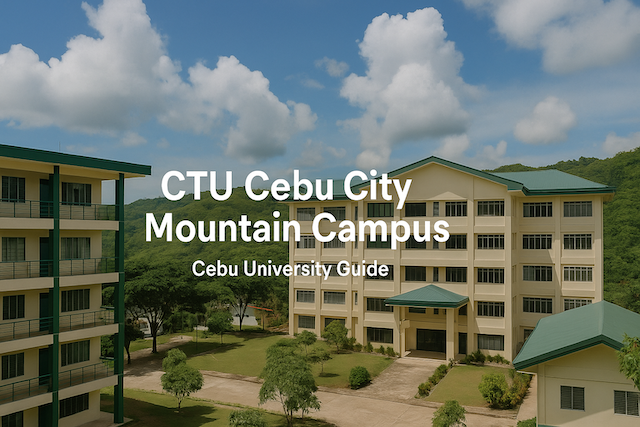
CTU Cebu City Mountain Campus: Cebu University Guide
Contents
- CTU Cebu City Mountain Campus: Cebu University Guide
- Overview of CTU Cebu City Mountain Campus
- Academic Programs Offered
- Campus Location and Atmosphere
- Facilities and Learning Resources
- Admission Requirements and Process
- Tuition, Scholarships, and Financial Aid
- Student Life and Community Involvement
- Why Choose CTU Cebu City Mountain Campus?
- Tips for Prospective Students
- Contact Information
- FAQs (Frequently Asked Questions)
- Where is CTU Cebu City Mountain Campus located?
- What degree programs are offered at CTU Cebu City Mountain Campus?
- Is CTU Cebu City Mountain Campus good for agriculture and environmental studies?
- How do I get admitted as a new student?
- Can transferees and second coursers enroll in this campus?
- Is tuition free at CTU Cebu City Mountain Campus?
- What scholarship opportunities are available?
- Does the campus have dormitories or housing options?
- How do students usually travel to the Mountain Campus?
- What is campus life like at CTU Cebu City Mountain Campus?
- What facilities and laboratories are available for students?
- Who is CTU Cebu City Mountain Campus best suited for?
- How can I get updated information about programs and requirements?
CTU Cebu City Mountain Campus: Cebu University Guide
Overview of CTU Cebu City Mountain Campus
Cebu Technological University (CTU) Cebu City Mountain Campus is one of CTU’s specialized satellite campuses, serving students in upland barangays and nearby municipalities. Known for its strong focus on agriculture, environmental sciences, technology, and community extension, the Mountain Campus provides higher education access to areas that traditionally had limited academic opportunities.
Situated in the elevated parts of Cebu City, this campus offers a more rural, nature-oriented environment while still being within reach of the urban center. Its combination of practical, field-based learning and industry-aligned programs makes it an important academic hub in Cebu’s upland districts.
This guide covers the programs, campus life, admissions, facilities, and reasons why the CTU Mountain Campus could be the right choice for you.
Academic Programs Offered
CTU Cebu City Mountain Campus offers a range of undergraduate and graduate programs focused on agricultural sciences, environmental studies, engineering technologies, and teacher education. These programs are designed to support local industries, sustainable development, and rural community needs.
Agriculture and Environmental Programs
-
Bachelor of Science in Agriculture (BSA)
Specializations may include Animal Science, Crop Science, and Agricultural Extension, depending on faculty availability. -
Bachelor of Science in Forestry (BSF)
A program focused on forest resource management, climate resilience, and biodiversity conservation. -
Bachelor of Science in Environmental Science (BSES)
Ideal for students interested in sustainability, waste management, and resource protection.
Engineering and Technology Programs
-
Bachelor of Science in Industrial Technology (BSIT)
Common specializations include Electrical Technology, Automotive Technology, and Drafting Technology. -
Bachelor of Science in Industrial Engineering (BSIE)
Exercises students in systems optimization, process improvement, and operations management.
Education Programs
-
Bachelor of Secondary Education (BSEd)
Majors often include Science, Math, English, or Social Studies. -
Bachelor of Elementary Education (BEEd)
Designed for aspiring K–6 teachers in Cebu or other regions.
Graduate Studies
Depending on the academic year and staffing, the campus may offer:
-
Master of Agricultural Development
-
Master of Science in Education
-
Master of Science in Environmental Resource Management
Graduate offerings vary, and applicants should confirm availability with the campus registrar.
Campus Location and Atmosphere
The Mountain Campus is located in one of Cebu City’s elevated rural districts, surrounded by greenery, farmlands, and community settlements. Students experience a peaceful learning environment, cooler temperatures compared to the city center, and closer access to agricultural and environmental field sites.
What Makes the Campus Unique?
-
Close proximity to farms and forest areas allows for hands-on fieldwork.
-
Smaller class sizes create a strong sense of community.
-
Ideal for students who prefer a nature-connected and less urbanized lifestyle.
-
Opportunities for extension services and community development activities.
Because of its location, students may need to commute via motorcycle (habal-habal), jeepney, or school-provided transport options depending on their barangay.
Facilities and Learning Resources
While smaller than CTU’s main campuses, the Mountain Campus has essential facilities designed to support its specialized programs.
Academic and Laboratory Facilities
-
Agriculture and Forestry Laboratories for crop production, soil science, animal husbandry, and forest management.
-
Computer Laboratories equipped with standard software and internet access.
-
Science Laboratories for environmental science, chemistry, and biology.
-
Workshop Rooms for Industrial Technology programs.
Campus Amenities
-
Library and quiet study spaces
-
Student activity center
-
Multi-purpose hall
-
Outdoor spaces for fieldwork and agricultural projects
-
Wi-Fi zones in main academic buildings
The campus continues to upgrade its facilities in line with CTU’s status as a state university with multiple campuses across Cebu.
Admission Requirements and Process
Admission to CTU Cebu City Mountain Campus follows the general CTU system-wide admission procedure. Requirements may vary slightly depending on the program.
General Requirements for Freshmen
-
Accomplished CTU Admission Form
-
High school report card (Form 138)
-
PSA Birth Certificate
-
2×2 or passport-size ID photos
-
Certificate of Good Moral Character
-
Entrance exam results (if required for the academic year)
For some programs such as Education or Industrial Engineering, additional criteria like minimum grades or qualifying exams may apply.
Requirements for Transferees
-
Transcript of Records (TOR) or grading sheets
-
Honorable Dismissal
-
Course description for subject evaluation
-
Admission interview or bridging subjects (depending on program)
Requirements for Graduate Studies
-
Undergraduate TOR
-
Recommendation letters
-
Statement of purpose
-
Interview with program chair
-
Any additional requirements depending on the graduate program
Tuition, Scholarships, and Financial Aid
As a state university, CTU offers highly affordable tuition rates. Most students pay minimal fees due to national subsidies.
Tuition and Fees
-
Undergraduate tuition is typically free under the Universal Access to Quality Tertiary Education Act.
-
Miscellaneous fees are generally low and may include student development, laboratory fees, and ID processing.
Scholarship Opportunities
Students may apply for:
-
CHED scholarships
-
TES (Tertiary Education Subsidy)
-
DOST scholarships (for science and engineering fields)
-
CTU institutional scholarships
-
Local government scholarships (barangay, municipal, or provincial)
Scholarship slots can be limited, so early application is recommended.
Student Life and Community Involvement
The Mountain Campus provides a vibrant student environment built around community engagement, practical learning, and outdoor activities.
Clubs and Organizations
Common organizations include:
-
Agriculture and Forestry Student Associations
-
Environmental Clubs
-
Education and Teacher Training Societies
-
Engineering and Technology Organizations
-
Campus Journalism and Arts Groups
-
Student Government (SSG/CSG)
These groups organize seminars, outreach activities, and campus events that strengthen leadership skills and professional development.
Fieldwork and Extension Programs
Students at the Mountain Campus often take part in:
-
Agricultural demonstration projects
-
Reforestation and environmental restoration initiatives
-
Livelihood training programs in nearby barangays
-
Disaster risk reduction activities
-
Community research projects
This integration of community service with academic work is one of the campus’s defining strengths.
Why Choose CTU Cebu City Mountain Campus?
This campus is an excellent choice if you’re seeking:
-
A nature-centered learning environment
-
Strong agriculture, forestry, environmental, or industrial technology programs
-
Affordable tuition with scholarship opportunities
-
Community-focused education
-
A quieter and less crowded academic setting
-
Personalized instruction due to smaller campus size
It’s particularly ideal for students who want practical, field-based training that directly supports local development and sustainability.
Tips for Prospective Students
-
Visit the campus if possible to get a feel for the environment.
-
Prepare for travel time—upland travel can be longer than typical city commutes.
-
Check program availability yearly, as offerings can shift based on staffing or demand.
-
Apply for scholarships early, especially government-funded ones.
-
Engage in fieldwork opportunities to maximize practical experience.
Contact Information
Since contact details are occasionally updated, prospective students should refer to the official Cebu Technological University channels:
-
Official CTU Website
-
CTU Cebu City Campus Facebook Page
-
Campus Registrar or Admissions Office
Campus-specific email addresses and phone lines vary, so it’s best to check the latest postings.
FAQs (Frequently Asked Questions)
Where is CTU Cebu City Mountain Campus located?
CTU Cebu City Mountain Campus is situated in one of the upland areas of Cebu City, surrounded by farmlands, greenery, and rural communities. It is still part of Cebu City but lies away from the dense urban center. Because of its elevated setting, the campus enjoys a cooler climate and a quieter, more nature-oriented environment, which is ideal for agriculture and environmental-related studies.
What degree programs are offered at CTU Cebu City Mountain Campus?
The campus focuses on programs that support rural development and sustainable industries. Typical offerings include degrees in Agriculture, Forestry, Environmental Science, Industrial Technology, Industrial Engineering, and Education (Elementary and Secondary). In some academic years, selected graduate programs related to agriculture, education, or environmental management may also be available, depending on faculty and institutional planning.
Is CTU Cebu City Mountain Campus good for agriculture and environmental studies?
Yes. CTU Cebu City Mountain Campus is particularly well suited for students interested in agriculture, forestry, and environmental science. Its upland location provides direct access to fields, farms, and forested areas where students can conduct experiments, implement demonstration projects, and participate in reforestation and conservation work. This setting creates a strong blend of classroom learning and real-world application.
How do I get admitted as a new student?
To apply as a freshman, you generally need to complete the CTU admission form, submit your high school report card, PSA birth certificate, certificate of good moral character, and ID photos. Some programs or academic years may require an entrance examination or interview. It is important to regularly check CTU’s official announcements or contact the registrar for the latest admission guidelines and schedules.
Can transferees and second coursers enroll in this campus?
Yes, transferees and second coursers are usually accepted, subject to screening. They typically need to submit their Transcript of Records, Honorable Dismissal, and course descriptions for evaluation of credited subjects. Some programs may require an interview, bridging courses, or a minimum general weighted average. Because policies can change, it is best to confirm the current requirements with the campus admissions staff.
Is tuition free at CTU Cebu City Mountain Campus?
As part of a Philippine state university, CTU generally offers free tuition for qualifying undergraduate students under the Universal Access to Quality Tertiary Education Act. However, students may still pay certain minimal miscellaneous fees such as student services, laboratory usage, and ID issuance. The exact amounts and policies can vary by semester, so students should always verify the latest fee structure with the cashier or registrar.
What scholarship opportunities are available?
Students may apply for national, institutional, and local scholarships. These can include CHED scholarship programs, the Tertiary Education Subsidy (TES), DOST scholarships for science and technology-related fields, CTU institutional grants, and financial support from local government units. Scholarship slots are limited and competitive, so applicants are advised to prepare requirements early and monitor announcements on official CTU channels and bulletin boards.
Does the campus have dormitories or housing options?
On-campus dormitory availability can vary by year. Some students stay in boarding houses or rented rooms in nearby barangays, while others commute from their homes in Cebu City or neighboring towns. Because the campus is in an upland area, it is important to consider daily travel time and transportation choices when deciding whether to live near the campus or commute from the lowlands.
How do students usually travel to the Mountain Campus?
Students commonly reach the campus by a combination of jeepneys, buses, and motorcycle taxis (habal-habal), depending on their starting point. In some cases, there may be designated routes or local transport options that pass near the campus. During the rainy season, travel time may increase, so students should plan for extra time and always prioritize safety when commuting to and from the university.
What is campus life like at CTU Cebu City Mountain Campus?
Campus life is community-oriented and closely tied to the surrounding rural environment. Students often join organizations related to agriculture, forestry, education, engineering, environmental advocacy, and student government. Activities include seminars, skills training, research presentations, community outreach, and extension projects in nearby barangays. Because the campus is smaller than big city universities, it tends to foster close relationships between students, faculty, and staff.
What facilities and laboratories are available for students?
The campus typically provides lecture rooms, agriculture and forestry laboratories, science laboratories, computer labs, and workshops for industrial technology students. There is also a library or learning resource center, multipurpose areas, and outdoor spaces used for fieldwork, crop trials, or environmental projects. Facilities continue to be upgraded over time, so new students can expect ongoing improvements to learning spaces and equipment.
Who is CTU Cebu City Mountain Campus best suited for?
This campus is ideal for students who are comfortable in a rural or semi-rural environment and who value hands-on, community-based learning. It is especially suited for those interested in agriculture, forestry, environmental science, industrial technology, or education with a strong focus on public service. If you prefer a quieter, nature-rich setting over a congested city campus and want your studies to directly impact local communities, this campus can be an excellent match.
How can I get updated information about programs and requirements?
Because academic offerings and policies can change, the most reliable sources are CTU’s official website, the CTU Cebu City or Mountain Campus social media pages, and direct inquiries to the registrar or admissions office. Prospective and current students should regularly check these channels for announcements regarding admissions, enrollment schedules, scholarships, class updates, and any changes to program availability or requirements.
Cebu Technological University (CTU) Guide: Courses, Campuses, and Admissions

How to Register for eTravel Philippines (2025 Guide)
Step-by-step guide to completing your eTravel registration before arriving in the Philippines, with images and tips.

Night Market in Cebu – Things You Don’t Know About Cebu Life
Discover the hidden charm of Cebu’s night markets, from street food stalls to local life tips you won’t find in tourist guides.

How to Use ChatGPT for IELTS Preparation: A Complete Guide
Learn how to prepare for IELTS using ChatGPT — including strategies for Writing, Reading, Listening, Speaking, and grammar support.

How to Build a Website Without Coding Using ChatGPT
Discover how to build your own website using AI—no coding skills needed. From structure planning to SEO and design, let ChatGPT guide you.