2026年4月5日
3D ACADEMY offers affordable English study programs in Cebu, Philippines – perfect for beginners, professionals, and exam takers.

3D UNIVERSAL ENGLISH INSTITUTE INC
info.3d-universal.com
8:00-17:00(Mon-Fri)
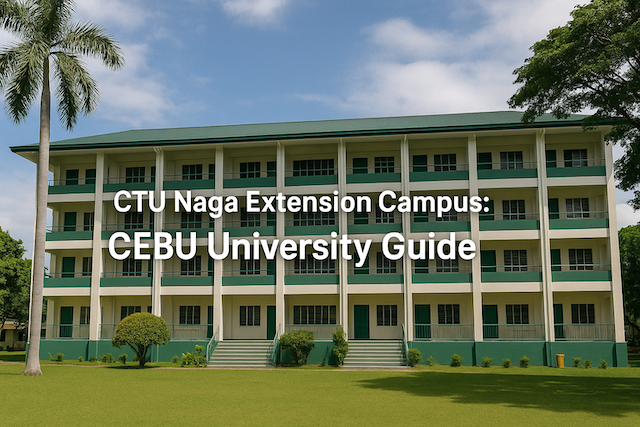
CTU Naga Extension Campus: Cebu University Guide
Contents
- CTU Naga Extension Campus: Cebu University Guide
- Introduction to CTU Naga Extension Campus
- Academic Programs Offered
- Admissions Guide
- Campus Facilities and Learning Environment
- Student Life at CTU Naga Extension Campus
- Living Near CTU Naga Extension Campus
- Why Study at CTU Naga Extension Campus?
- Tips for Future Students
- Conclusion
- FAQs (Frequently Asked Questions)
- Where is CTU Naga Extension Campus located?
- What programs are offered at CTU Naga Extension Campus?
- How do I apply for admission to CTU Naga Extension Campus?
- Is there an entrance exam for new students?
- How much is the tuition at CTU Naga Extension Campus?
- Are scholarships and financial assistance available?
- What facilities can students expect on campus?
- Is CTU Naga Extension Campus a good choice for students from South Cebu?
- What language is used for instruction?
- Are there dormitories or boarding houses near the campus?
- Can I work part-time while studying at CTU Naga Extension Campus?
- What are the career opportunities after graduating from CTU Naga Extension Campus?
CTU Naga Extension Campus: Cebu University Guide
Introduction to CTU Naga Extension Campus
Cebu Technological University (CTU) Naga Extension Campus is one of the growing academic units under the CTU network in Cebu Province. Located in the rapidly developing city of Naga in southern Cebu, the extension campus provides accessible, industry-aligned education to students from Naga, Minglanilla, San Fernando, Carcar, and other areas in South Cebu.
As an extension campus, its goal is to bring high-quality public tertiary education closer to communities, especially for students who may find it challenging to travel to Cebu City or Argao for their studies. CTU Naga Extension Campus follows the academic standards of CTU and offers programs oriented toward technology, engineering, teacher education, and community development.
This guide provides a full overview of the campus—covering programs, admissions, facilities, student life, and practical tips for future students.
Academic Programs Offered
While program offerings may expand over the years, CTU Naga Extension Campus typically delivers courses aligned with CTU’s priority fields such as applied sciences, engineering technology, and education. Common offerings associated with CTU extension campuses include:
Engineering and Technology Programs
These programs are ideal for students aiming to enter technical industries or pursue engineering licensure exams.
-
Bachelor of Science in Industrial Technology (BSIT)
-
Bachelor of Science in Electrical Technology
-
Bachelor of Science in Electronics Technology
-
Bachelor of Science in Mechanical Technology
These courses provide hands-on laboratory experience and industry exposure designed to meet the demands of Cebu’s manufacturing and industrial sectors, especially in the south.
Education Programs
Teacher education remains one of the most in-demand courses in public universities.
-
Bachelor of Secondary Education (BSED)
-
Bachelor of Technical-Vocational Teacher Education (BTVTED)
Students are trained in pedagogy, curriculum design, and teaching competencies aligned with the Philippine Professional Standards for Teachers (PPST).
Community-Oriented and Skills Programs
CTU Naga Extension Campus may also offer TESDA-aligned short courses and training programs such as:
-
Automotive Servicing
-
Electrical Installation and Maintenance
-
Welding and Fabrication
-
ICT Skills Training
These allow students and local residents to gain employable skills quickly and affordably.
Admissions Guide
CTU Naga Extension Campus follows the CTU System’s admission procedures.
Who Can Apply?
-
Senior high school graduates (Grade 12)
-
ALS passers with eligibility for college
-
Transferees and second-degree applicants
-
Returning students (subject to evaluation)
Admission Requirements
Typical requirements include:
-
Accomplished CTU Online Admission Form
-
PSA Birth Certificate
-
Form 138 / Senior High School Card
-
Good Moral Certificate
-
2×2 ID photos
-
Additional requirements for specific programs (e.g., assessment for technology courses)
Entrance Exam
Depending on the academic year, CTU may or may not administer an entrance exam. If implemented, the CTU Admission Test evaluates:
-
English comprehension
-
Math and quantitative reasoning
-
Science fundamentals
-
Analytical skills
Some extension campuses may waive exams based on government directives for state universities.
Enrollment Procedure
-
Fill out the CTU online application form.
-
Submit scanned requirements through the portal.
-
Wait for evaluation and admission confirmation.
-
Proceed to on-site or online enrollment validation.
-
Claim class schedule and attend orientation.
Tuition and Fees
CTU is a state university covered under the Free Higher Education Act (RA 10931).
This means:
-
Tuition is free for eligible students.
-
Minimal miscellaneous fees may apply depending on the program.
TESDA short courses may come with subsidized or minimal fees.
Campus Facilities and Learning Environment
CTU Naga Extension Campus continues to improve its facilities as enrollment grows. While smaller than CTU Naga Main or CTU Argao, the extension campus offers essential amenities for an effective learning environment.
Academic Facilities
-
Classrooms with audio-visual support
-
Laboratories for technology and vocational subjects
-
Computer rooms with internet access
-
Practical training workshops
These facilities support technical and engineering courses, enabling students to acquire industry-standard skills.
Student Support Services
-
Registrar and enrollment office
-
Guidance and counseling services
-
Student organization support
-
Scholarship assistance
Students may also apply for national scholarships such as CHED UniFAST, DOST-SEI, and LGU-funded programs.
Community-Oriented Space
As an extension campus, CTU Naga often engages with the local community through:
-
Skills training
-
Outreach programs
-
Research initiatives for local development
These create opportunities for students to gain practical exposure and serve the community.
Student Life at CTU Naga Extension Campus
Life at CTU Naga combines the atmosphere of a small community college with the standards of a large state university.
A Closer, More Personal Learning Environment
One major advantage of studying in an extension campus is the smaller class size. Students often experience:
-
Closer interaction with instructors
-
More personalized academic guidance
-
Easier access to student services
Active Student Organizations
Common student groups include:
-
Technology and engineering clubs
-
Education student associations
-
Campus journalism groups
-
Community service organizations
These help students build leadership and teamwork skills.
Affordable Student Life
Naga City is more affordable than Cebu City. Students benefit from:
-
Lower rent
-
Cheaper food options
-
Small transportation expenses
Many students commute from nearby towns using jeepneys, buses, or motorcycles.
Events and Academic Activities
The campus hosts:
-
General assemblies
-
Skills training workshops
-
Seminars and symposiums
-
Foundation Day celebrations
-
Sports activities
These foster campus spirit and contribute to a well-rounded university experience.
Living Near CTU Naga Extension Campus
The campus is easily accessible from various parts of South Cebu.
Transportation
Naga is located along the Cebu South National Highway, making travel convenient.
Common transport options:
-
Jeepneys (routes from Cebu City to Carcar)
-
Buses (Ceres and other southbound routes)
-
Tricycles and habal-habal within Naga
From Cebu City, travel typically takes 45–60 minutes depending on traffic.
Housing Options
Students can choose from:
-
Dormitories in Naga proper
-
Boarding houses
-
Apartments shared with classmates
-
Staying at home (common for local students)
Rental costs are generally lower than in Metro Cebu.
Nearby Establishments
Around Naga City, students can find:
-
Supermarkets
-
Fast-food chains and carinderias
-
Malls (SM Seaside is accessible by bus; Gaisano Naga for daily needs)
-
Pharmacies
-
Banks and remittance centers
Everything a student needs for daily living is close by.
Why Study at CTU Naga Extension Campus?
There are several compelling reasons why students choose this campus:
1. Free Tuition at a State University
Because CTU is part of the SUC system, students receive quality education without expensive tuition fees.
2. Industry-Relevant Programs
Technical and teacher education programs are aligned with in-demand careers in Cebu.
3. Convenient Location for South Cebu Students
Students from Naga, San Fernando, Minglanilla, and Carcar can attend classes without long travel.
4. Strong CTU Brand and Network
A degree from CTU is recognized throughout the Philippines, especially in engineering, technology, and technical-vocational fields.
5. Community-Focused Learning
Extension campuses strengthen local development through research and service, giving students real-life experience.
Tips for Future Students
-
Prepare early during admission season as slots can be competitive.
-
Check program availability yearly since extension campuses may update offerings.
-
Join student organizations to build networks and improve your resume.
-
Use scholarships, grants, and allowances available to CTU students.
-
Expect a hands-on learning style, especially for technology courses.
Conclusion
CTU Naga Extension Campus provides accessible, affordable, and relevant higher education for students in South Cebu. With its growing academic programs, supportive learning environment, and strong connection to the CTU system, it is an excellent choice for students seeking practical and career-oriented training. Whether you are planning to pursue engineering technology, teacher education, or vocational skills, CTU Naga Extension Campus offers a promising pathway toward professional success.
FAQs (Frequently Asked Questions)
Where is CTU Naga Extension Campus located?
CTU Naga Extension Campus is located in the city of Naga in southern Cebu, along the Cebu South corridor.
It mainly serves students from Naga, Minglanilla, San Fernando, Carcar, and other nearby towns in South Cebu.
The campus is accessible via the national highway, with regular jeepneys and buses passing through the area,
making it convenient for daily commuters.
What programs are offered at CTU Naga Extension Campus?
The campus typically offers programs aligned with Cebu Technological University’s strengths in technology,
engineering, and teacher education. These may include Industrial Technology and other technology-focused courses,
as well as education-related programs such as secondary education or technical-vocational teacher education.
Short-term skills training and TESDA-aligned programs may also be available depending on the semester and resources.
How do I apply for admission to CTU Naga Extension Campus?
Applicants usually start by filling out the CTU online application form during the announced admission period.
You will then upload required documents such as your Form 138 or Senior High School Card, PSA Birth Certificate,
Certificate of Good Moral Character, and ID photos. After evaluation, you will receive an admission decision and
instructions on how to complete enrollment on-site or online.
Is there an entrance exam for new students?
The requirement for an entrance exam depends on the policies for a given academic year. In some years, CTU may
administer an admission test that measures English, Math, Science, and reasoning skills. In other years, exams may
be waived or modified based on national guidelines for state universities. It is important to check CTU’s latest
announcements or contact the campus directly for updated requirements.
How much is the tuition at CTU Naga Extension Campus?
CTU is a state university and is generally covered by the government’s Free Higher Education policy for qualified
students. This means that tuition fees are typically free for eligible Filipino undergraduates. However, students
may still need to pay minimal miscellaneous or laboratory fees, as well as personal expenses for projects,
transportation, and daily living.
Are scholarships and financial assistance available?
Yes. Aside from the free tuition policy, students may apply for various scholarship programs such as CHED UniFAST,
LGU-funded educational assistance, and private or industry-sponsored scholarships. Some students may also qualify
for academic, athletic, or leadership grants. It is advisable to visit the scholarship or registrar’s office and
monitor official announcements for calls for applications and deadlines.
What facilities can students expect on campus?
CTU Naga Extension Campus provides essential facilities for learning, including classrooms, basic laboratories for
technology and vocational courses, computer rooms, and workshop or training spaces where applicable.
Student-support services such as a registrar office, guidance services, and organization support are also available.
Facilities may be simpler than those at main campuses but are steadily improving as the extension campus grows.
Is CTU Naga Extension Campus a good choice for students from South Cebu?
Yes. One of the biggest advantages of CTU Naga Extension Campus is accessibility. Students from Naga and nearby
towns can attend college without relocating to Cebu City, which reduces living costs and daily travel time.
The campus offers practical, industry-relevant programs under the CTU brand while allowing students to remain close
to their families and communities.
What language is used for instruction?
Most degree-level classes are conducted in English, especially in professional and technical courses, in line with
Philippine higher education standards. However, instructors may also use Filipino or Cebuano to clarify concepts,
particularly in discussions, orientations, or community-related activities. This mix helps students adjust while
still building strong academic English skills.
Are there dormitories or boarding houses near the campus?
While CTU Naga Extension Campus may not operate its own large dormitory, there are various boarding houses, rooms
for rent, and apartments within Naga and nearby barangays. Many students either share rental units with classmates
or commute daily from home. Since Naga is less expensive than Cebu City, housing and food options are generally
more budget-friendly for students.
Can I work part-time while studying at CTU Naga Extension Campus?
Some students take on part-time work, especially in nearby businesses, small shops, or online freelance jobs.
However, it is important to prioritize academic responsibilities and choose work arrangements that do not conflict
with class schedules and major requirements. Students are encouraged to manage their time carefully and consult
advisers if they are unsure about balancing work and study.
What are the career opportunities after graduating from CTU Naga Extension Campus?
Graduates can pursue careers in various fields, depending on their program. Technology and industrial graduates
may work in manufacturing, maintenance, construction, or technical services. Education graduates can become
teachers, trainers, or facilitators in schools and training centers. Short-course and skills-training completers
can seek employment locally or abroad, or even start small enterprises using the competencies they gained.
Cebu Technological University (CTU) Guide: Courses, Campuses, and Admissions
Cebu University Guide: Top Universities and Programs for Local and International Students
Philippines University Guide: Top Universities, Admissions, Scholarships, and Student Life

How to Register for eTravel Philippines (2025 Guide)
Step-by-step guide to completing your eTravel registration before arriving in the Philippines, with images and tips.

Night Market in Cebu – Things You Don’t Know About Cebu Life
Discover the hidden charm of Cebu’s night markets, from street food stalls to local life tips you won’t find in tourist guides.

How to Use ChatGPT for IELTS Preparation: A Complete Guide
Learn how to prepare for IELTS using ChatGPT — including strategies for Writing, Reading, Listening, Speaking, and grammar support.

How to Build a Website Without Coding Using ChatGPT
Discover how to build your own website using AI—no coding skills needed. From structure planning to SEO and design, let ChatGPT guide you.