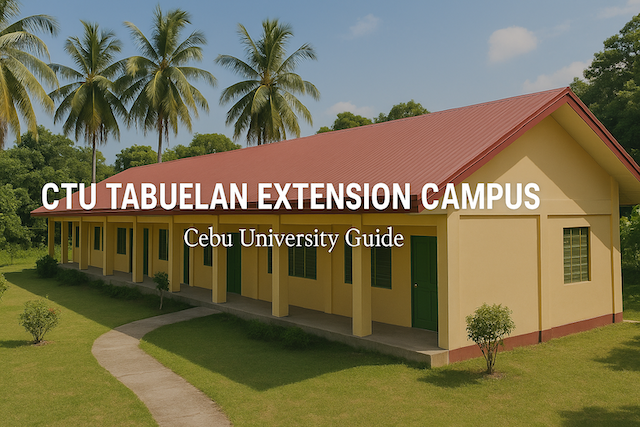
CTU Tabuelan Extension Campus: Cebu University Guide
Overview of CTU Tabuelan Extension Campus
Cebu Technological University (CTU) Tabuelan Extension Campus is one of the university’s growing satellite institutions serving the northwestern side of Cebu Province. Designed to expand access to state-funded higher education, the Tabuelan Extension Campus provides local students—especially those from rural coastal and upland barangays—affordable and career-oriented academic programs without the need to travel far to Cebu City or other major towns.
Located in the peaceful municipality of Tabuelan, known for its white-sand beaches, relaxed rural lifestyle, and strong agricultural and marine-based economy, the campus supports CTU’s mandate to offer technology-driven, community-focused education. Students here enjoy a more intimate academic environment, smaller class sizes, and opportunities to engage directly with local industries.
This guide explains everything you need to know about the CTU Tabuelan Extension Campus, including its programs, facilities, admission process, student life, and what makes this campus a meaningful choice for aspiring college students in northern Cebu.
Location and Accessibility
CTU Tabuelan Extension Campus is situated within the municipality of Tabuelan in northwestern Cebu. The area is known for being quiet, safe, and community-centered—ideal for students who prefer a non-urban learning environment.
Travel time from Cebu City typically ranges from 3.5 to 4 hours by bus or private vehicle. The most common route is via the North Bus Terminal through the towns of Balamban and Tuburan or Medellin, depending on road conditions and preferred travel time.
Transportation options include:
-
Ceres Bus routes from Cebu City to Tabuelan (limited schedules)
-
V-hire from SM City Cebu or North Bus Terminal
-
Motorcycles (habal-habal) for last-mile access to the campus
-
Private vehicles for greater convenience
Because the campus serves local municipalities such as Tabuelan, Tuburan, and nearby northern towns, many students commute daily, while others stay in nearby boarding houses.
Academic Programs Offered
While program offerings may evolve over time, CTU Tabuelan Extension Campus typically focuses on courses that support local economic development and technical professions. Programs may include:
Bachelor of Science in Industrial Technology (BSIT)
With majors such as:
This program trains students for technical and skilled industries, with hands-on learning and laboratory-based instruction.
Bachelor of Science in Hospitality Management (BSHM)
A popular course in tourism-driven municipalities, this program prepares students for careers in hotels, resorts, food service, and travel services. Students learn culinary skills, front office management, housekeeping, and hospitality operations.
Bachelor of Elementary Education (BEEd)
This program develops future educators equipped to teach in public and private elementary schools, contributing to the educational development of the region.
Diploma and Certificate Programs
Depending on demand and faculty availability, the campus may offer shorter skill-based programs such as:
-
Automotive Servicing
-
Electrical Installation and Maintenance
-
Computer Systems Servicing
-
Cookery or Bread and Pastry
These programs help students gain employable skills in a shorter period—useful for those who want to work sooner or transition into full bachelor’s programs later.
Campus Facilities
As an extension campus, CTU Tabuelan is smaller compared to major CTU campuses, but it continues improving its facilities to provide quality education. You can expect:
Classrooms and Learning Spaces
Well-ventilated classrooms, multimedia-equipped lecture rooms, and dedicated spaces for laboratory sessions.
Technical and Vocational Laboratories
Labs for:
These allow students to practice competencies required in their chosen fields.
Library and Study Areas
A modest but growing collection of books, references, and digital materials supports academic requirements. Students also have access to CTU’s online learning portal.
Administrative Offices
Including registrar services, cashier’s office for payments, guidance, and student services.
Outdoor Spaces
Since the campus sits in a serene area, students enjoy open grounds, shaded spaces, and areas for student gatherings and events.
Student Life and Campus Culture
While smaller in scale, CTU Tabuelan Extension Campus offers a vibrant student community shaped by collaboration, service, and local culture.
Student Organizations
Clubs may include:
-
Student Government (SG)
-
Program-specific organizations
-
Journalism and publication teams
-
Arts, music, and cultural groups
-
Community outreach volunteer groups
These organizations help students build leadership skills and form strong peer networks.
Events and Activities
Campus life includes:
-
College intramurals
-
Skills competitions (TESDA-based or tech competitions)
-
Community extension activities
-
Recognition ceremonies and academic showcases
These events reflect CTU’s mission to develop well-rounded graduates.
Since Tabuelan is a rural municipality, students often participate in community-based projects such as:
-
Coastal clean-ups
-
Agricultural support programs
-
Literacy and tutoring missions
-
Local tourism promotion activities
This integration strengthens the relationship between the university and the local community.
Admission Requirements
Admission procedures at CTU Tabuelan follow the same general guidelines as other CTU campuses. Requirements typically include:
For New Freshmen
-
Completed CTU admission form (available on-site or online)
-
Form 138 (Report Card)
-
PSA Birth Certificate
-
Good Moral Certificate
-
2×2 or passport-sized photos
-
Entrance exam or interview (depending on program availability)
For Transferees
For Returning Students
Tuition and Fees
As a state university, CTU offers free tuition for qualified Filipino students under the Universal Access to Quality Tertiary Education Act (RA 10931). Students may still pay minimal miscellaneous fees unless covered by student grants.
Why Choose CTU Tabuelan Extension Campus?
CTU Tabuelan may be a smaller campus, but it offers several advantages:
1. Affordable, Accessible Higher Education
Students in remote areas do not need to move to Cebu City or spend heavily on private education.
2. Strong Focus on Technical and Community-Relevant Programs
Courses match the needs of local industries, increasing employability.
3. Calm and Safe Learning Environment
Ideal for students who prefer a less chaotic environment and want to focus on their studies.
Students engage in local projects, gaining real-world experience.
5. Part of the CTU System
As an official CTU satellite campus, students have access to university-wide:
Future Development and Outlook
CTU continues to expand its facilities and programs across all extension campuses. For Tabuelan, planned improvements may include:
-
More laboratory facilities
-
Additional bachelor’s programs
-
Stronger partnerships with LGUs and local industries
-
Campus expansion to accommodate more students
As education demand grows in northern Cebu, the CTU Tabuelan Extension Campus is expected to play an even larger role in shaping skilled professionals in the region.
FAQs (Frequently Asked Questions)
Where is CTU Tabuelan Extension Campus located?
CTU Tabuelan Extension Campus is located in the municipality of Tabuelan in northwestern Cebu Province.
It primarily serves students from Tabuelan and nearby towns who want access to state-funded higher education
without relocating to Cebu City. The campus is set in a quiet, rural environment that is conducive to focused study.
What academic programs are offered at CTU Tabuelan Extension Campus?
The campus typically offers technology- and community-oriented programs such as Bachelor of Science in Industrial
Technology (with various majors), Bachelor of Science in Hospitality Management, and education-related courses like
Bachelor of Elementary Education. In addition, there may be short-term diploma and certificate programs in areas such
as automotive servicing, electrical installation, computer systems servicing, or food preparation, depending on demand.
Is tuition free at CTU Tabuelan Extension Campus?
Yes, as part of the Cebu Technological University system, qualified Filipino students may enjoy free tuition under the
Universal Access to Quality Tertiary Education Act (RA 10931). However, students may still need to pay certain
miscellaneous fees unless these are covered by scholarships or government subsidies. It is always best to confirm the
latest fee structure with the campus registrar or cashier.
How do I apply for admission to CTU Tabuelan Extension Campus?
Prospective students usually begin by securing and completing the official CTU admission form, either on campus or
through the main CTU channels. Requirements generally include a Form 138 (Report Card) for senior high graduates,
PSA birth certificate, certificate of good moral character, and ID photos. Some programs may require an entrance exam
or interview. Transferees need a Transcript of Records and an Honorable Dismissal from their previous school.
What are the transportation options to reach the campus?
Most students travel by bus or van from Cebu City or nearby municipalities. From Cebu City, they typically take a bus
from the North Bus Terminal heading toward Tabuelan or a nearby route, then transfer to local transport such as
habal-habal (motorcycle) for the final leg. Students living within Tabuelan or neighboring towns often commute daily
using local jeepneys, tricycles, or motorcycles.
Does CTU Tabuelan Extension Campus have dormitories or on-campus housing?
As an extension campus, on-campus dormitory facilities may be limited or unavailable. Many students instead stay in
nearby boarding houses, rented rooms, or family homes within the municipality. It is common to find affordable
accommodations close to the campus, and new students often ask senior students or campus staff for recommendations.
What facilities are available for students?
The campus generally provides classrooms, basic laboratories for industrial technology and hospitality courses, a small
library or learning resource center, and administrative offices such as the registrar and student affairs. There are
also open spaces for gatherings, sports, or student events. As the campus grows, facilities continue to be upgraded to
support more programs and practical training needs.
Are there student organizations and activities at CTU Tabuelan?
Yes. Students can join the campus Student Government, program-based organizations, cultural and arts groups, and
community extension clubs. Activities may include intramural games, academic contests, outreach projects, seminars,
and campus celebrations. These organizations help students develop leadership skills, teamwork, and confidence while
building strong social connections.
Can I work part-time while studying at CTU Tabuelan Extension Campus?
Many students from nearby barangays help with family businesses, farms, or local jobs while studying. Part-time work is
possible as long as it does not conflict with class schedules and academic performance. The campus may occasionally
offer student assistant opportunities or link students with local government or industry partners for internships and
on-the-job training, but availability varies by semester.
Are scholarships or financial assistance programs available?
In addition to free tuition for qualified students, CTU campuses may offer scholarships from government agencies,
local government units (LGUs), and private partners. These may cover allowances, books, or remaining fees. Students
are encouraged to inquire at the campus scholarship or student affairs office about current grants, requirements, and
application timelines and to prepare documents early.
What career opportunities can graduates expect after studying at CTU Tabuelan?
Graduates of industrial technology programs can pursue careers in technical fields such as automotive service,
electrical and electronics work, maintenance, and related industries, locally or abroad. Hospitality management
graduates may work in hotels, resorts, restaurants, or tourism services, which are strong sectors in Cebu. Education
graduates can become teachers or pursue further studies and licensure. Skill-based program completers may start small
businesses, join the local workforce, or use their credentials as a stepping stone to full degree programs.
The campus regularly participates in community-based initiatives such as coastal clean-ups, livelihood training,
education and literacy projects, and local tourism or agricultural support programs. Faculty and students collaborate
with LGUs, barangays, and partner organizations to design activities that respond to local needs. This approach helps
students gain real-world experience while allowing the campus to contribute to the social and economic development of
Tabuelan and surrounding areas.