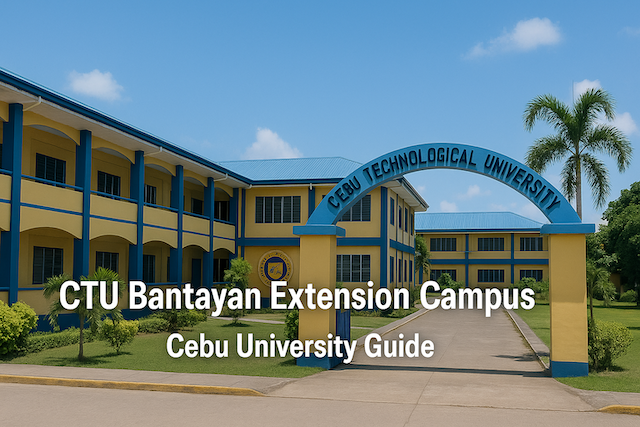
CTU Bantayan Extension Campus: Cebu University Guide
Overview of CTU Bantayan Extension Campus
Cebu Technological University (CTU) Bantayan Extension Campus is one of the northernmost academic sites of CTU, serving the students of Bantayan Island and nearby communities. As an institution committed to improving access to higher education in remote island areas, the campus provides a strategic learning environment where quality education meets local industry needs.
Bantayan Island, known for its tourism, fisheries, and emerging entrepreneurship sector, provides a unique backdrop for students pursuing technology, education, business, agriculture, and community development–aligned programs. CTU Bantayan supports this ecosystem with relevant academic programs, research initiatives, and community-driven projects tailored for island development.
This guide provides a comprehensive look into CTU Bantayan Extension Campus, including its academic offerings, facilities, student life, admission essentials, and campus advantages for incoming students.
Academic Programs Offered
The campus provides a selection of undergraduate programs aligned with the island’s economic activities and CTU’s focus on technology and applied sciences. Program availability may vary, but the following fields are commonly offered or supported:
Technology and Industrial Programs
-
Bachelor of Industrial Technology (BIT)
Specializations may include Automotive, Electrical, Food Technology, or related fields depending on campus demand. These programs provide technical skills crucial for local industries and tourism-related services.
Education Programs
Business and Management Programs
-
Bachelor of Science in Hospitality Management (BSHM)
Given Bantayan’s strong tourism sector, Hospitality Management is a popular choice among students who aim to work in hotels, resorts, or start tourism-related ventures.
-
Bachelor of Science in Entrepreneurship (BSE)
Supporting local economic growth, this program equips students with skills to establish and operate small to medium enterprises.
Agriculture and Environmental Programs
-
Bachelor of Science in Agriculture (BSA)
Agriculture remains a foundational livelihood in the region. This program focuses on modern farming practices, crop science, and sustainable resource management.
Short-Term and Certificate Courses
CTU Bantayan also offers short-term trainings and TESDA-aligned certificate programs in areas like:
These programs cater to out-of-school youth, working adults, and community members seeking skills development.
Campus Facilities
Though an extension campus, CTU Bantayan has steadily developed its infrastructure to support academic and extracurricular activities.
Classrooms and Learning Spaces
The campus features standard and specialized classrooms equipped with audio-visual tools. Lecture rooms are conducive to small-to-medium class sizes, allowing professors to provide more personalized learning support.
Laboratories
Depending on program needs, the campus may offer specialized labs such as:
-
Computer laboratories
-
Food technology labs
-
Agriculture and crop science demo farms
-
Hospitality training rooms (e.g., mock hotel rooms or kitchen areas)
These facilities enhance practical learning required for technical and applied sciences programs.
Library and Learning Resources
A campus library with textbooks, digital references, and review materials supports academic research. Students may also access CTU’s digital library services and online portals for e-learning.
Student Services
Services typically include:
Student support is a key focus, especially for those coming from different parts of Bantayan Island or nearby towns.
Outdoor and Community Areas
With its island setting, the campus often integrates outdoor spaces for agriculture-related activities, environmental programs, and student gatherings. Nearby facilities allow for fieldwork and immersion programs.
Student Life at CTU Bantayan
CTU Bantayan fosters a close-knit and supportive learning community. Students often engage in academic, cultural, and outreach activities tied to local development.
Active Student Organizations
Students participate in recognized organizations such as:
-
Supreme Student Government (SSG)
-
Academic clubs (Education Club, Hospitality Club, Agriculture Club, etc.)
-
Sports teams
-
Arts and culture groups
These groups help students build leadership and teamwork skills.
Community Extension and Research
Bantayan’s social and environmental needs influence many campus extension programs, including:
-
Coastal clean-ups
-
Livelihood training for fisherfolk and women’s groups
-
Sustainable tourism workshops
-
Disaster preparedness training
Research initiatives may focus on fisheries, agriculture, tourism sustainability, and climate resilience.
Island-Based Learning Experience
Studying on Bantayan Island offers unique opportunities such as:
-
Fieldwork at resorts, marine areas, and farms
-
Community immersion in rural settings
-
Tourism and hospitality experiential training
-
Eco-sustainability projects
This environment blends academic learning with real-world applications.
Admission Requirements
Admission requirements may vary depending on the program, but common requirements include:
For Incoming Freshmen
Some programs with higher demand may have additional screening or orientation requirements.
For Transferees
-
Honorable Dismissal / Transfer Credentials
-
Transcript of Records (TOR) or Certified True Copy of Grades
-
Course description for credit evaluation
For Second-Degree / Returning Students
Additional documents may be requested depending on academic status.
Enrollment Procedure
The typical steps include:
-
Prepare requirements
-
Submit documents to the registrar
-
Attend evaluation and advising
-
Proceed with enrollment confirmation
-
Claim class schedules
The campus occasionally accepts online applications during specific periods.
Scholarships and Financial Assistance
Students may apply for various scholarship programs such as:
-
CHED Scholarships
-
Tertiary Education Subsidy (TES)
-
Local Government Unit (LGU) Scholarships
-
CTU Institutional Scholarships
-
Private grants and sponsorships
The campus scholarship office guides students through eligibility, requirements, and deadlines.
Why Choose CTU Bantayan Extension Campus
1. Affordable, High-Quality Education
As a state university, CTU provides cost-effective academic programs accredited at national standards.
2. Convenient Access for Island Students
The campus enables students from Bantayan, Madridejos, and Santa Fe to pursue higher education without relocating to mainland Cebu.
3. Programs Aligned with Local Jobs
Hospitality, entrepreneurship, agriculture, and technology courses directly support island industries.
Students participate in extension activities that make a real impact on local livelihood and sustainability.
5. Strong Support for Skill Development
Short-term TESDA-style courses help students build practical skills quickly, increasing employability.
6. Safe and Peaceful Island Environment
The relaxed atmosphere of Bantayan Island provides a conducive learning environment away from city distractions.
Campus Location and Accessibility
CTU Bantayan Extension Campus is situated on Bantayan Island, accessible via:
-
Bus from Cebu North Bus Terminal to Hagnaya Port
-
Ferry from Hagnaya to Bantayan Island (Sta. Fe Port)
-
Local transport such as tricycles, jeepneys, or motorcycles
The scenic travel and island-friendly transport system are part of the overall study experience.
Tips for Future Students
-
Check program availability early, as course offerings may vary each semester.
-
Secure ferry schedules if commuting or traveling from mainland Cebu.
-
Apply for scholarships as early as possible to maximize financial support.
-
Consider joining organizations to build connections and gain campus experience.
-
Engage in community programs to enrich your resume and practical skills.
Conclusion
CTU Bantayan Extension Campus stands as an essential educational institution supporting the island communities of northern Cebu. With its combination of accessible programs, community-focused activities, and island-based learning opportunities, it offers students a meaningful and practical path toward higher education.
Whether you aim to pursue a degree in hospitality, education, agriculture, or technology, CTU Bantayan provides a supportive, affordable, and relevant academic environment tailored to real island needs.
FAQs (Frequently Asked Questions)
Q1. What is CTU Bantayan Extension Campus and who is it for?
CTU Bantayan Extension Campus is an island-based campus of Cebu Technological University serving students from Bantayan Island and nearby municipalities such as Santa Fe and Madridejos. It mainly caters to students who want access to affordable, state-university education without relocating to mainland Cebu. The campus is particularly suitable for those interested in programs related to education, agriculture, hospitality, entrepreneurship, and applied technology that match the economic activities of Bantayan Island. Since specific offerings and services may change, applicants should always refer to CTU’s official announcements and the campus registrar for the most up-to-date information.
Q2. What degree programs are usually offered at CTU Bantayan Extension Campus?
The campus typically offers a mix of teacher education, technology, agriculture, and business-related programs aligned with local needs. These may include degrees in elementary and secondary education, hospitality or tourism-related courses, industrial technology, agriculture, and entrepreneurship or business programs. Some offerings may be shared with or supervised by other CTU campuses as part of the university system. Because program line-ups can be updated based on demand, accreditation, and resources, students are strongly encouraged to verify the current list of courses directly with CTU Bantayan or through the official CTU website before applying.
Q3. Does CTU Bantayan Extension Campus offer short-term or certificate courses?
In addition to regular degree programs, the campus may support short-term and skills-based courses, often in partnership with TESDA-style training programs or community extension initiatives. These can include areas like housekeeping, bread and pastry production, basic computer skills, or technical trades relevant to local industries. Such programs are designed to help out-of-school youth, working adults, and community members gain employable skills in a shorter time. Since availability is often project-based or scheduled in specific batches, interested learners should inquire with the campus extension office or training coordinator for updated schedules and admission requirements.
Q4. How can I apply for admission as a new freshman?
Prospective freshmen generally need to secure and complete the official CTU application or pre-enrollment form. Common documentary requirements include a high school report card (Form 138 or its K–12 equivalent), a birth certificate from the Philippine Statistics Authority (PSA), a certificate of good moral character, and recent ID photos. Some programs may also require an entrance exam, interview, or orientation session. Because policies can change from year to year, applicants should follow the most recent admission guidelines published by CTU and confirm exact steps with the CTU Bantayan registrar or admission office.
Q5. What are the requirements and process for transferees or second-degree students?
Transferees are usually asked to submit an Honorable Dismissal or Transfer Credential from their previous school, along with an official Transcript of Records (TOR) or certified true copy of grades. The campus may also require course descriptions for credit evaluation, especially if you wish to have specific subjects credited to your new program. Second-degree or returning students may be subject to additional evaluation based on previous academic performance and curriculum changes. Because each case can be different, it is best to consult directly with the registrar to understand credit transfer policies, residency requirements, and program-specific guidelines.
Q6. How much are the tuition and fees at CTU Bantayan Extension Campus?
As part of a state university, CTU generally offers highly affordable or subsidized tuition, particularly for qualified Filipino students covered under existing government programs. Students may still need to pay certain miscellaneous, laboratory, or student-service fees depending on their course and year level. The exact amount can change based on national policies, institutional decisions, and program requirements. For the most accurate breakdown of tuition and other school fees, applicants and enrolled students should request an updated schedule of fees from the CTU Bantayan cashier or finance office.
Q7. Are scholarships or financial assistance programs available?
Yes, many CTU students may qualify for scholarships and grants from government agencies, the university itself, local government units (LGUs), or private sponsors. These can include CHED scholarships, Tertiary Education Subsidy (TES), municipal or provincial scholarships, and merit-based or need-based assistance. Availability and criteria differ from one program to another, and application periods may be limited. Students should regularly check official announcements, bulletin boards, and CTU’s online channels, and consult the campus scholarship coordinator to learn which financial aid options are currently open and how to apply.
Q8. What is student life like at CTU Bantayan Extension Campus?
Student life is generally close-knit and community-oriented due to the campus’s island setting and relatively smaller population compared to large city universities. Learners can join organizations such as student councils, academic clubs, and interest-based groups in sports, culture, or community service. Many activities are tied to local development, including coastal clean-ups, livelihood trainings, tourism support projects, or environmental campaigns. While social and extracurricular offerings may not be as extensive as those in big urban campuses, the environment encourages strong peer relationships, leadership growth, and immersion in real community issues.
Q9. Where is the campus located and how do I get there?
CTU Bantayan Extension Campus is located on Bantayan Island in northern Cebu. From Cebu City, travelers usually take a bus or van from the Cebu North Bus Terminal to Hagnaya Port in San Remigio, then board a ferry bound for Bantayan Island (typically arriving in Santa Fe Port). From the port, local transportation such as tricycles, jeepneys, or motorcycles for hire can bring students to the campus. Because transport schedules can change seasonally or due to weather conditions, it is advisable to confirm current bus and ferry schedules before traveling, especially during peak seasons or typhoon months.
Q10. What facilities and services does CTU Bantayan Extension Campus provide?
The campus is continuously developing its facilities to support instruction and student services, but the typical set-up includes classrooms, small laboratories, and basic library resources. Depending on the current program offerings and funding, students may have access to computer labs, skills training rooms, or agriculture and hospitality-related facilities. Support services such as guidance and counseling, registrar assistance, and student affairs support are usually available on campus or through coordination with other CTU units. Because facility upgrades are ongoing and may differ per academic year, prospective students should visit the campus or contact officials for the latest updates.
Q11. How can I get official and updated information about CTU Bantayan?
For accurate and up-to-date information, the best sources are CTU’s official communication channels and campus offices. Students should rely on the official CTU website, verified social media pages, and announcements made by the CTU Bantayan administration or registrar. When in doubt about admission schedules, course offerings, scholarships, or fees, it is always recommended to contact the campus directly via official email, phone, or on-site inquiries. Third-party blogs and guides can be helpful for general orientation, but they should not replace official university information when making final decisions.