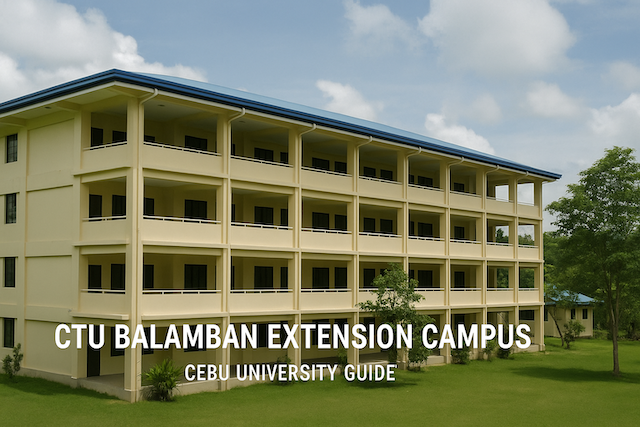
CTU Balamban Extension Campus: Cebu University Guide
The Cebu Technological University (CTU) Balamban Extension Campus serves as one of the northern-western educational hubs of CTU, offering accessible higher education to students living in Balamban, Asturias, and nearby mountain barangays. Known for its science-driven and community-oriented programs, the CTU Balamban Extension Campus supports local development through technology, engineering education, and skills training aligned with Cebu’s growing industries.
This comprehensive guide covers its academic offerings, facilities, student life, admission process, and what to expect if you plan to study at CTU Balamban Extension Campus.
Overview of CTU Balamban Extension Campus
CTU Balamban Extension Campus operates under the larger Cebu Technological University system, one of the leading state universities in the Visayas. The campus extends CTU’s mandate by providing affordable and high-quality education in rural and developing areas.
Located in Balamban, a first-class municipality on the western coast of Cebu, the campus supports students who prefer to study closer to home, especially those who cannot commute daily to Cebu City or distant CTU campuses.
Key characteristics of the campus include:
-
Focus on technical-vocational and applied sciences
-
Programs aligned with local industries (shipbuilding, agriculture, fisheries, small business)
-
A community-centered approach to learning
-
Strong partnerships with LGUs, local employers, and industry players
CTU Balamban is continually developing its academic offerings, making it an ideal option for students wanting quality education without high tuition costs.
Location and Accessibility
Balamban is a fast-growing municipality located along the Trans Central Highway, roughly 1.5–2 hours away from Cebu City. Home to the well-known West Cebu Industrial Park (WCIP) and major shipbuilding companies, the town has become a center of industry and trade in western Cebu.
The CTU Balamban Extension Campus is typically accessible through:
-
Balamban proper via multicabs and motorcycle taxis
-
Asturias and neighboring towns through local jeepneys
-
TCH (Transcentral Highway) for students traveling from Cebu City
Although smaller than CTU’s major campuses, the Balamban Extension Campus offers a peaceful and semi-rural learning environment ideal for focused study.
Academic Programs Offered
While the exact program list may change depending on CTU system updates or CHED accreditation cycles, extension campuses generally offer a mix of undergraduate degrees, certificate programs, and technical-vocational training in collaboration with TESDA or LGUs.
Programs commonly associated with CTU Balamban Extension Campus include:
Undergraduate Degree Programs
These programs are typically aligned with local needs:
-
Bachelor of Science in Industrial Technology (BSIT)
Specializations may include:
-
Automotive Technology
-
Electrical Technology
-
Electronics Technology
-
Mechanical Technology
-
Bachelor of Science in Agriculture (BSA)
With focuses in crop production, animal production, and agri-entrepreneurship
-
Bachelor of Science in Fisheries (BSFi)
Ideal for students from coastal barangays and nearby towns
-
Bachelor of Technology and Livelihood Education (BTLEd)
Often designed for future educators and TESDA trainers
Technical-Vocational Programs
Through TESDA-aligned offerings:
These are popular among working adults and out-of-school youth seeking employable skills.
Short Courses and Community Training
CTU Balamban also conducts:
-
LGU-requested training programs (e.g., livelihood workshops)
-
Digital literacy programs
-
Agriculture modernization seminars
-
Fisheries enhancement training
These are part of CTU’s commitment to community development.
Facilities and Campus Resources
Although CTU Balamban Extension Campus is still developing its infrastructure, it provides essential facilities for students to support learning and practical skill development. Typical facilities include:
Academic Buildings
Laboratories
-
Industrial technology laboratory
-
Welding laboratory (for SMAW)
-
Agriculture laboratory areas
-
Computing laboratory (depending on current resources available)
Library and Learning Resource Center
-
Physical collections such as textbooks, manuals, and reference materials
-
Online learning portals supported by the CTU system
-
Spaces for quiet study
Outdoor and Community Spaces
-
Open grounds for assemblies
-
Agricultural plots for fieldwork
-
Multipurpose areas for campus events
Internet and Digital Learning
While connectivity may vary by building, CTU supports blended learning and provides access to digital academic resources.
Student Life at CTU Balamban Extension Campus
Studying at CTU Balamban offers a tight-knit community experience where students and faculty work closely together. Here’s what student life typically looks like:
Students often participate in community activities, outreach programs, agricultural work, and hands-on training relevant to local industries.
Student Organizations
Depending on the academic year, organizations may include:
-
Program-based student societies
-
Supreme Student Government (SSG)
-
Community extension volunteer groups
-
Campus ministry or faith-based groups
These organizations help build leadership, teamwork, and communication skills.
Campus Events
Annual events may include:
-
College intramurals
-
CTU Foundation Day celebrations
-
Recognition and graduation ceremonies
-
Program-specific exhibitions (e.g., agriculture fairs, tech demonstrations)
Affordable Education
As a CTU extension campus, tuition fees are free under the Universal Access to Quality Tertiary Education Act, making it accessible even for low-income families.
Admission Requirements and Process
If you plan to apply to CTU Balamban Extension Campus, here’s what you need to know.
General Admission Requirements
These typically include:
-
Completed Senior High School education
-
Form 138 (Report Card) or SHS certificate
-
PSA Birth Certificate
-
Certificate of Good Moral Character
-
2×2 ID photos
-
Filled-out CTU admission form
Some programs may require additional documents such as medical certificates or skills assessment.
Admission Process
Step 1: Application Submission
Applicants submit their requirements either:
-
On-site at the campus registrar, or
-
Through the CTU online admissions portal (availability varies by year)
Step 2: Screening
The registrar reviews the completeness of documents. For specialized programs, interviews or additional tests may be required.
Step 3: Enrollment
Once accepted, students proceed with:
Step 4: Start of Classes
CTU typically follows a semester-based academic calendar.
Career Opportunities for Graduates
Graduates from CTU Balamban are equipped with practical skills suited to industries in western and central Cebu. Common opportunities include:
For BS Industrial Technology Graduates
-
Technicians in automotive, electronics, or electrical fields
-
Industrial maintenance staff
-
Skilled workers for manufacturing industries
For Agriculture Graduates
For Fisheries Graduates
Technical-Vocational Graduates
The proximity of Balamban to WCIP gives graduates an advantage, as many companies seek skilled workers.
Why Choose CTU Balamban Extension Campus?
1. Affordable Education
As a public institution, tuition is free. Students pay only minimal mandatory fees.
2. Programs Aligned with Local Opportunities
The campus focuses on industries that matter to the local economy—agriculture, fisheries, and industrial technology.
Its programs are designed to uplift rural and coastal communities through skills development and applied sciences.
4. Accessible for Rural Students
Students living far from major cities can enjoy quality education close to home.
5. Practical, Hands-On Learning
Training programs ensure you gain real-life skills needed in Cebu’s industries.
Tips for Incoming Students
-
Check the latest program offerings at the campus before applying, as extension campuses update their list regularly.
-
Prepare for hands-on activities, especially if enrolling in tech-voc or agriculture programs.
-
Attend orientation events to understand campus rules, faculty, and available resources.
-
Get involved in student organizations to build networks and improve leadership skills.
-
Consider local internships at Balamban-based companies or LGU offices for added experience.
Final Thoughts
CTU Balamban Extension Campus plays an important role in delivering affordable and quality education to communities in western Cebu. Whether you’re pursuing a degree, technical certification, or livelihood training, the campus offers practical pathways to employment and personal growth.
If you’re looking for a school that combines community values, industry-relevant programs, and accessible learning, CTU Balamban Extension Campus is an excellent choice within the CTU system.
FAQs (Frequently Asked Questions)
This FAQ section provides practical, student-focused answers about CTU Balamban Extension Campus, including its programs, admissions, fees, facilities, and campus life. It is designed to help future students and parents understand what to expect before enrolling.
Where is CTU Balamban Extension Campus located?
CTU Balamban Extension Campus is located in the municipality of Balamban on the western side of Cebu Province. It is accessible via the Transcentral Highway from Cebu City and by local public transportation from neighboring towns such as Asturias and adjacent mountain barangays. The campus serves students who want to study closer to home without traveling daily to Cebu City or larger urban centers.
What programs are offered at CTU Balamban Extension Campus?
The campus usually offers a mix of undergraduate degree programs and technical-vocational qualifications aligned with local industry needs. Common programs include Bachelor of Science in Industrial Technology, Bachelor of Science in Agriculture, Bachelor of Science in Fisheries, and sometimes teacher-education or livelihood-related programs. In addition, TESDA-aligned short courses such as welding, electrical installation, automotive servicing, and food processing may be available, especially for working adults and out-of-school youth.
Is tuition free at CTU Balamban Extension Campus?
As part of the Cebu Technological University system, CTU Balamban Extension Campus generally benefits from the Universal Access to Quality Tertiary Education Act. This means tuition for qualified undergraduate students is typically free. However, students may still need to pay minimal mandatory fees such as student organization dues, ID fees, or small laboratory and miscellaneous charges. It is best to confirm the latest fee structure with the campus registrar or official CTU announcements.
Who can apply to CTU Balamban Extension Campus?
The campus primarily accepts graduates of Senior High School who meet the basic admission requirements. It is ideal for students from Balamban, Asturias, and neighboring areas who want access to affordable higher education. Working students, out-of-school youth, and adults may also apply for technical-vocational programs and short courses, depending on the schedules and available slots. Requirements may differ slightly for each program, so applicants should check with the campus for updated guidelines.
What are the basic admission requirements?
Typical admission requirements include a completed Senior High School report card or certificate, a PSA-issued birth certificate, a Certificate of Good Moral Character, recent ID photos, and a filled-out CTU application or enrollment form. Some programs may request additional documents such as medical certificates or proof of prior training for technical courses. International or transfer students, if accepted, may have extra documentation requirements such as credentials evaluation.
How do I apply or enroll at CTU Balamban Extension Campus?
Applicants usually begin by visiting the campus registrar or official CTU online channels to check current programs and schedules. After preparing all required documents, they submit their application either in person or online, depending on the system in place for that academic year. Once the application is evaluated and accepted, students proceed with subject advising, payment of required fees, and official enrollment. Orientation sessions often follow to introduce students to campus policies and services.
What facilities are available for students?
CTU Balamban Extension Campus typically offers standard classrooms, basic laboratories for industrial technology and agriculture-related subjects, and a small library or learning resource center. There may be specialized areas for welding, electrical work, or agricultural fieldwork, depending on the current program offerings. The campus also provides open grounds for events and activities, and some form of internet access for digital learning. As an extension campus, facilities may be simpler than larger institutions but are focused on practical, hands-on training.
What is student life like at CTU Balamban Extension Campus?
Student life is generally community-oriented and closely tied to local development. Because the campus is smaller, students often know their classmates and instructors personally, creating a supportive environment. Various student organizations, such as program-based associations or student government, may organize events, outreach programs, and skills competitions. Campus activities like intramurals, recognition ceremonies, and community extension projects provide opportunities for leadership, teamwork, and social involvement.
Are there scholarship or financial assistance options?
In addition to free tuition for qualified students, CTU campuses may participate in national and local scholarship programs. These can include government-funded scholarships, local government support, and private or sectoral grants. Some students also benefit from academic scholarships or allowances tied to performance or financial need. Availability can change every academic year, so it is important to regularly check with the campus scholarship office, registrar, or guidance office for updated information.
What career opportunities are available after graduating?
Graduates from CTU Balamban Extension Campus often find opportunities in industries relevant to their field of study. Industrial technology graduates can work as technicians, machine operators, or maintenance personnel in manufacturing, shipbuilding, and related sectors. Agriculture and fisheries graduates may work as farm technicians, hatchery workers, agri-enterprise staff, or local extension workers. Technical-vocational graduates can qualify for jobs as welders, electricians, mechanics, or skilled workers both locally and abroad, especially in industries present in Balamban and nearby areas.
Does the campus offer short courses for non-degree learners?
Yes, extension campuses like CTU Balamban often conduct short-term technical and livelihood courses for community members who are not seeking a full degree. These may include TESDA-aligned qualifications in welding, electrical installation, food processing, automotive servicing, and similar trades. The campus may also host digital literacy workshops, agricultural seminars, and fisheries improvement training in partnership with local government units, industries, or community organizations. Schedules are typically announced ahead of time through campus or LGU channels.
Why should I choose CTU Balamban Extension Campus over a larger city campus?
CTU Balamban Extension Campus is an excellent choice if you prefer a quieter, more affordable, and community-based learning environment. It allows you to stay close to family while accessing quality public higher education that is aligned with local industries and employment opportunities. The campus emphasizes hands-on skills, practical training, and community service, which can be especially valuable if you aim to work in agriculture, fisheries, industrial trades, or local enterprises in western Cebu and beyond.
Cebu Technological University (CTU) Guide: Courses, Campuses, and Admissions