2026年4月5日
3D ACADEMY offers affordable English study programs in Cebu, Philippines – perfect for beginners, professionals, and exam takers.

3D UNIVERSAL ENGLISH INSTITUTE INC
info.3d-universal.com
8:00-17:00(Mon-Fri)
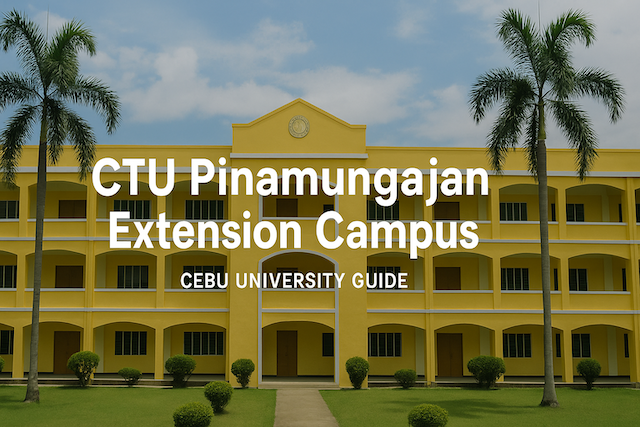
CTU Pinamungajan Extension Campus: Cebu University Guide
Contents
- CTU Pinamungajan Extension Campus: Cebu University Guide
- Overview of CTU Pinamungajan Extension Campus
- Location and Local Context
- Academic Programs Offered
- Admission Requirements
- Campus Facilities
- Student Life and Activities
- Tuition and Financial Assistance
- Faculty and Academic Quality
- Partnership with Local Industries and LGU
- Why Choose CTU Pinamungajan Extension Campus
- How to Get to the Campus
- Contact Information
- FAQs (Frequently Asked Questions)
- What is CTU Pinamungajan Extension Campus and how is it related to the CTU system?
- What programs are usually offered at CTU Pinamungajan Extension Campus?
- Is tuition free at CTU Pinamungajan Extension Campus?
- Who can apply for admission and what are the basic requirements?
- Does the campus require an entrance exam or interview?
- What is student life like at CTU Pinamungajan Extension Campus?
- Are there dormitories or housing options near the campus?
- What kind of facilities can students expect at the campus?
- How does CTU Pinamungajan support practical training and community engagement?
- How can I get more updated information about CTU Pinamungajan Extension Campus?
- Is CTU Pinamungajan Extension Campus a good choice if I want to study near home?
CTU Pinamungajan Extension Campus: Cebu University Guide
Overview of CTU Pinamungajan Extension Campus
The CTU Pinamungajan Extension Campus is one of the growing satellite campuses of Cebu Technological University (CTU), located in the southwestern municipality of Pinamungajan. As part of CTU’s mandate to bring affordable, high-quality education to various areas of Cebu Province, this extension campus provides academic opportunities to students in rural and coastal communities who might otherwise need to travel far to pursue higher education.
True to CTU’s culture as a state university and a leading institution in technology, applied sciences, agriculture, and community development, the Pinamungajan Extension Campus is designed to support local industries and empower students through relevant, practical, and accessible degree programs. Whether you are planning to enroll in a CTU campus near your hometown or looking for specific programs offered in the southwest area of Cebu, this guide will give you a full overview of what to expect from CTU Pinamungajan Extension Campus.
Location and Local Context
Pinamungajan is located mid-southwest on Cebu Island, bordered by Toledo City, Aloguinsan, and the Tañon Strait. Known for caves, waterfalls, eco-tourism, and agricultural lands, the municipality benefits from CTU’s presence because the university supports local development initiatives.
The CTU Pinamungajan Extension Campus is positioned to serve students coming from both central and southern barangays. This makes it highly accessible for residents who prefer studying near home while still receiving state-funded education through CTU.
Academic Programs Offered
As an extension campus, program offerings typically depend on faculty availability and local demand. While offerings may vary each academic year, CTU Pinamungajan generally focuses on fields aligned with regional development goals.
Common offerings at CTU extension campuses include:
-
Bachelor of Science in Industrial Technology (BSIT)
-
Bachelor of Science in Hospitality Management (BSHM)
-
Bachelor of Science in Agriculture (BSA)
-
Bachelor of Technology and Livelihood Education (BTLED)
-
Diploma and Certificate Programs in Technology and Trades
-
Teacher Education Courses (partial completion or full program, depending on faculty allocation)
For exact and updated offerings, students should check CTU’s official announcements or contact the main or parent campus that administers Pinamungajan Extension.
Admission Requirements
Admission procedures for the Pinamungajan Extension Campus follow the CTU System guidelines. Generally, applicants must prepare:
For Incoming First-Year College Students
-
Accomplished CTU Online Admission Form
-
Original Senior High School Report Card (Form 138)
-
PSA Birth Certificate
-
2×2 ID photos
-
Certificate of Good Moral Character
-
Entrance exam results (if required for the program)
For Transferees
-
Transcript of Records or Certified Copy of Grades
-
Honorable Dismissal
-
Good Moral Certificate
-
Course description for credit evaluation
For Second-Degree Applicants or ALS Passers
Applicants with nontraditional qualifications may also be admitted following CTU’s standard evaluation and bridging procedures.
Campus Facilities
Even as an extension campus, CTU Pinamungajan provides the essential facilities students need for academic growth:
-
Classroom Buildings: Basic, functional rooms equipped for lectures.
-
Computer and Technology Laboratories: For practical coursework in IT and industrial technology.
-
Hospitality or Tourism Labs: For BSHM students (availability varies by semester).
-
Agriculture Demonstration Areas: For applied agricultural training.
-
Library and Study Spaces: To support research and coursework needs.
-
Multipurpose Grounds: Used for assemblies, student events, and cultural activities.
Facilities may still be expanding as the campus continues to develop.
Student Life and Activities
Life at the CTU Pinamungajan Extension Campus is community-driven and closely connected to local culture. Students often join academic clubs, community service programs, campus events, and municipal activities.
Typical student activities include:
-
Academic competitions
-
Leadership training and seminars
-
Cultural and sports events
-
Community extension and outreach work
-
Campus organizations related to program fields
Because of CTU’s strong culture of service and innovation, students are encouraged to engage in real-world projects that support the town’s development.
Tuition and Financial Assistance
As a public university under the CTU System, the campus is covered by the Universal Access to Quality Tertiary Education Act (RA 10931). This means:
-
No tuition and miscellaneous fees for qualified students in undergraduate programs.
-
TES, TDP, and other CHED scholarships may be available for eligible students.
-
Local government scholarships may also support Pinamungajan residents.
-
Minimal school-related expenses may apply (ID, uniform, laboratory materials, etc.).
This makes CTU one of the most affordable higher-education options in Cebu Province.
Faculty and Academic Quality
CTU ensures that each campus, including Pinamungajan Extension, is staffed with competent educators who are trained in their respective fields—technology, engineering, agriculture, education, or hospitality. Faculty members often come from CTU’s nearby parent campuses or from Pinamungajan’s professional community.
Many CTU faculty undergo continuing professional development, research involvement, and collaboration with government agencies to maintain education quality.
Partnership with Local Industries and LGU
A key advantage of CTU Pinamungajan is its alignment with community and industry needs. The campus collaborates with:
-
Local government units (LGUs)
-
Agricultural and fishery groups
-
Tourism and hospitality establishments
-
Technical and vocational sectors
-
Community livelihood organizations
-
Government agencies like TESDA, DTI, and DA
These partnerships allow students to benefit from hands-on training, extension work, internships, and community-based research.
Why Choose CTU Pinamungajan Extension Campus
Students choose this campus because it offers several advantages:
-
Affordable education with no tuition fees
-
Close-to-home access for Pinamungajan students
-
Programs tailored to local and regional development
-
Opportunities for community engagement and applied learning
-
Part of a respected state university system in Cebu
For students who prefer practical, career-oriented programs in a supportive local environment, this extension campus is an ideal choice.
How to Get to the Campus
Pinamungajan is reachable through public transportation from major points in Cebu Province:
-
From Cebu City: Bus or V-hire from Cebu South Bus Terminal passing Toledo or Naga–Pinamungajan route
-
From Toledo City: Jeepney or bus directly to Pinamungajan town
-
From Aloguinsan or Balamban: Inter-municipal jeepneys
The exact campus location can be confirmed via the LGU Pinamungajan office or CTU’s official pages.
Contact Information
Since extension campuses may not have dedicated websites, inquiries are usually addressed through CTU’s main channels or the supervising campus.
-
CTU Main Campus – Cebu City
-
LGU Pinamungajan (for local coordination)
-
CTU official Facebook pages or registrar contacts
For the most accurate details, students should check updates released before each semester.
FAQs (Frequently Asked Questions)
CTU Pinamungajan Extension Campus is a satellite campus of Cebu Technological University (CTU), a public state university in Cebu.
It operates under the policies, academic standards, and quality assurance of the CTU system.
That means students enrolled in Pinamungajan are officially CTU students, follow CTU curricula, and receive diplomas or certificates issued by the university.
The campus mainly serves learners from Pinamungajan and nearby municipalities in southwest Cebu.
What programs are usually offered at CTU Pinamungajan Extension Campus?
Program offerings at CTU Pinamungajan may change depending on local demand, faculty availability, and CHED approval.
Typically, extension campuses prioritize practical and community-responsive courses such as technology, industrial fields, agriculture, hospitality management, or education-related programs.
Some campuses also offer ladderized, diploma, or certificate programs.
For the most accurate list of active courses for the coming school year, applicants should refer to CTU’s official announcements or inquire directly with the campus or its supervising CTU unit.
Is tuition free at CTU Pinamungajan Extension Campus?
Yes, qualified undergraduate students at CTU Pinamungajan Extension Campus generally enjoy free tuition and miscellaneous fees under the Universal Access to Quality Tertiary Education Act (RA 10931).
However, students should still budget for personal expenses such as uniforms, learning materials, photocopying, projects, IDs, and transportation.
Some specialized courses may also require modest laboratory or activity-related costs.
For scholarships and stipends, students can explore government programs like TES, TDP, and LGU-sponsored financial aid, when available.
Who can apply for admission and what are the basic requirements?
Any high school graduate, Senior High School graduate, or ALS passer who meets CTU’s minimum qualifications can apply for admission, subject to program-specific requirements.
Common documents include a completed CTU application form, Senior High School card (Form 138) or equivalent, PSA birth certificate, certificate of good moral character, and ID photos.
Transferees and second-degree takers must usually submit their Transcript of Records, Honorable Dismissal, and course descriptions for evaluation and crediting.
Does the campus require an entrance exam or interview?
Entrance exams, interviews, or placement tests may be required depending on CTU system policies and the specific program.
Some courses with high demand or specialized competencies may have their own screening processes.
Because guidelines can change by academic year, it is important to check the latest admission notices posted by CTU or to contact the campus directly.
Applicants are encouraged to apply early and follow instructions carefully to avoid missing important steps.
What is student life like at CTU Pinamungajan Extension Campus?
Student life at CTU Pinamungajan is typically close-knit and community-oriented.
Because it is an extension campus, class sizes may be smaller, which can create a more familiar environment between students and faculty.
Student organizations, academic clubs, sports activities, and community outreach programs are often active.
Learners also participate in municipal events, environmental projects, and extension activities that align with CTU’s thrusts in community development and applied research.
Are there dormitories or housing options near the campus?
CTU Pinamungajan Extension Campus may not always have on-campus dormitories, as facilities differ from one campus to another.
Most students typically commute from their homes within Pinamungajan or nearby towns, or they rent boarding houses and shared rooms close to the campus.
New students are advised to ask upperclassmen, local residents, or the LGU for recommended lodging options and to visit potential boarding houses personally to check safety, distance, and costs.
What kind of facilities can students expect at the campus?
As an extension campus, CTU Pinamungajan focuses on providing essential academic facilities first.
These usually include classrooms, basic laboratories (such as computer or skills labs), a small library or learning resource area, and multipurpose spaces for activities.
Where available, program-specific facilities like agriculture plots or hospitality labs may be used for hands-on training.
Infrastructure is often upgraded over time, so new facilities may be added as the campus grows and receives additional resources.
How does CTU Pinamungajan support practical training and community engagement?
CTU Pinamungajan Extension Campus often works closely with the local government unit, industries, and community organizations.
Students may join immersion projects, on-the-job training, extension services, and research activities related to agriculture, tourism, livelihood, or local enterprises.
This community-embedded approach allows learners to apply classroom knowledge to real-life situations, build networks, and gain experience that can support future employment or entrepreneurship.
How can I get more updated information about CTU Pinamungajan Extension Campus?
Because extension campuses constantly evolve, the most reliable way to get updated information is to follow CTU’s official channels.
You can check the main CTU website, official CTU or campus Facebook pages, and announcements from the CTU Main Campus in Cebu City or the supervising CTU campus.
You may also contact the LGU Pinamungajan or the campus office directly through posted phone numbers or email.
Visiting the campus in person is helpful if you want to verify requirements, facilities, or enrollment schedules.
Is CTU Pinamungajan Extension Campus a good choice if I want to study near home?
Yes, CTU Pinamungajan Extension Campus is an excellent choice for students who want to pursue higher education without moving far from home.
It offers the advantages of a state university—such as free tuition, recognized programs, and qualified faculty—while being situated within or near your local community.
If your priority is affordability, accessibility, and practical, community-responsive education, this campus is a strong and realistic option to consider.
Cebu Technological University (CTU) Guide: Courses, Campuses, and Admissions

How to Register for eTravel Philippines (2025 Guide)
Step-by-step guide to completing your eTravel registration before arriving in the Philippines, with images and tips.

Night Market in Cebu – Things You Don’t Know About Cebu Life
Discover the hidden charm of Cebu’s night markets, from street food stalls to local life tips you won’t find in tourist guides.

How to Use ChatGPT for IELTS Preparation: A Complete Guide
Learn how to prepare for IELTS using ChatGPT — including strategies for Writing, Reading, Listening, Speaking, and grammar support.

How to Build a Website Without Coding Using ChatGPT
Discover how to build your own website using AI—no coding skills needed. From structure planning to SEO and design, let ChatGPT guide you.