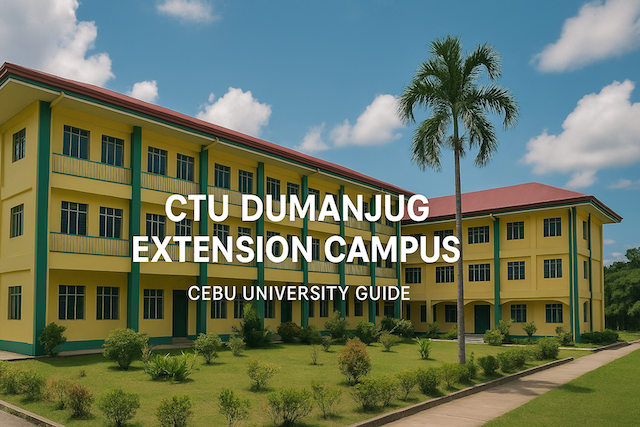
CTU Dumanjug Extension Campus: Cebu University Guide
Cebu Technological University (CTU) Dumanjug Extension Campus serves as an important academic hub for students in southwestern Cebu, particularly those who want access to quality, industry-aligned education without traveling far to major city centers. As part of the CTU system—a leading state university known for engineering, agriculture, education, and technology programs—the Dumanjug Extension Campus plays a vital role in providing accessible and affordable higher education to local communities.
This comprehensive guide covers everything you need to know about CTU Dumanjug Extension Campus, including its programs, admission process, facilities, student life, and tips for new enrollees.
Overview of CTU Dumanjug Extension Campus
CTU Dumanjug Extension Campus operates under the supervision of CTU Moalboal Campus, offering selected programs that align with regional workforce needs. The campus caters primarily to students from Dumanjug, Ronda, Barili, Alcantara, and nearby municipalities, making it a practical choice for learners seeking accessible yet reputable education.
The campus provides a balance of theoretical instruction and practical application, emphasizing community development, local industry support, and skill-based training. While smaller than main campuses, CTU Dumanjug Extension offers a supportive environment with manageable class sizes and close faculty-student interaction.
Location and Accessibility
Dumanjug is strategically located along the southwestern coastal road of Cebu. The CTU extension campus is accessible via:
-
Ceres buses running between Cebu City and southwestern towns
-
Local jeepneys connecting nearby municipalities
-
Habal-habal or motorcycle taxis for last-mile transport
Travel time from Cebu City typically ranges from 2.5 to 3 hours depending on traffic. The peaceful environment of Dumanjug makes it ideal for students who prefer a quiet academic atmosphere.
Academic Programs Offered
The specific programs offered may vary depending on the academic year, but CTU Dumanjug Extension Campus commonly provides courses in education, technology, agriculture, and community development. Programs are typically aligned with the offerings of the supervising campus.
Popular Programs Include:
-
Bachelor of Elementary Education (BEEd)
-
Bachelor of Secondary Education (BSEd) – often with majors like English, Mathematics, or Science
-
BS in Industrial Technology (BSIT) – with specializations depending on faculty availability
-
Agriculture-related technical and vocational programs
-
Short-term certificate and skills-based training programs
The campus focuses on producing graduates who can contribute to local industries, public schools, and community initiatives. The availability of TESDA-aligned trainings is an added advantage for students interested in practical skills development.
Admission Requirements and Process
Since CTU is a public state university, tuition for undergraduate programs is free under the Universal Access to Quality Tertiary Education Act (RA 10931). Students only cover minimal miscellaneous fees.
Basic Admission Requirements:
-
Accomplished CTU application form
-
Form 138 (Report Card) for senior high school graduates
-
PSA Birth Certificate
-
Certificate of Good Moral Character
-
2×2 or passport-size photos
-
For transfers: Transcript of Records (TOR) or Certified True Copy and Honorable Dismissal
Admission Steps:
-
Pre-registration or Online Application
CTU campuses often announce schedules via official Facebook pages or local barangay channels.
-
Submission of Documents
Applicants submit documents to the registrar or campus officer.
-
Screening and Evaluation
Some programs may require interviews or additional assessments.
-
Enrollment
Once accepted, students proceed to enrollment and orientation.
Because the extension campus follows guidelines from its mother campus, timelines and requirements may slightly vary, so applicants should check official announcements regularly.
Campus Facilities
Although smaller in scale, CTU Dumanjug Extension Campus provides the essential facilities needed for a functional and supportive learning environment.
Key Facilities Include:
-
Classrooms equipped with basic multimedia tools
-
Computer laboratory for IT-related subjects
-
Workshop rooms for Industrial Technology training
-
Library or resource section with textbooks and digital references
-
Administrative offices including registrar, cashier, and faculty offices
-
Open spaces and study areas for group work and outdoor learning activities
The campus continually upgrades facilities as demand increases, especially with the growing population of students in southwestern Cebu.
Student Life and Campus Environment
Student life at CTU Dumanjug Extension Campus is community-centered, friendly, and collaborative. Students often come from nearby towns, creating a close-knit environment. The campus supports extracurricular organizations that foster leadership, creativity, and community engagement.
Common Student Organizations:
-
Education societies
-
Technology and skills clubs
-
Student Government (SG)
-
Cultural and performing arts groups
-
Sports teams for inter-campus competitions
Events like campus festivals, sports meets, and community outreach projects keep student life vibrant despite the campus’s small size.
Training, Research, and Community Extension
Since CTU is a state university with mandates for community engagement, the Dumanjug Extension Campus participates in:
-
Livelihood training programs for local residents
-
Seminars and workshops related to agriculture, education, and sustainability
-
Research activities conducted by faculty and senior students
-
TESDA-aligned vocational trainings
-
Partnership projects with LGUs, NGOs, and DepEd schools
These initiatives help students gain practical experience while giving back to the local community.
Why Choose CTU Dumanjug Extension Campus?
1. Free Tuition and Affordable Costs
Students only need to pay minimal fees, making it an excellent option for budget-conscious families.
2. Accessible to Southwestern Cebu Residents
Avoid the long commute to Cebu City while still getting a quality education from a recognized state institution.
Courses are aligned with local industry needs, increasing employability after graduation.
4. Small Campus Advantage
More personalized attention from instructors and a closer student community.
5. Strong CTU Reputation
Graduates benefit from the credibility of the CTU system, widely recognized in engineering, education, technology, and agriculture.
Tips for Applicants and New Students
-
Follow official Facebook updates for admission schedules and announcements.
-
Prepare documents early, especially birth certificates and good moral certificates.
-
Visit the campus beforehand to familiarize yourself with the environment and transportation routes.
-
Apply for scholarships or allowances offered by CHED, LGUs, and private groups.
-
Join organizations to build networks and develop soft skills.
-
Take advantage of workshops and seminars for added credentials.
Future Development Plans
CTU continues to expand extension campuses across Cebu to bring higher education closer to underserved communities. CTU Dumanjug Extension Campus is expected to grow in terms of:
-
Improved facilities
-
More program offerings
-
Increased faculty specialization
-
Stronger industry partnerships
-
Expanded community outreach
These developments aim to enhance learning quality and broaden opportunities for students in the region.
Conclusion
CTU Dumanjug Extension Campus plays a vital role in making quality education accessible to southwestern Cebu. By offering affordable, relevant, and community-oriented programs, the campus provides students with a strong foundation for future careers in education, technology, agriculture, and public service.
Whether you’re from Dumanjug or a nearby municipality, CTU Dumanjug Extension is a practical and reliable choice for pursuing higher education without financial strain or long-distance travel.
FAQs (Frequently Asked Questions)
1. What is CTU Dumanjug Extension Campus?
CTU Dumanjug Extension Campus is an extension unit of Cebu Technological University that serves students from Dumanjug and neighboring municipalities in southwestern Cebu. It offers selected undergraduate and skills-based programs that are aligned with the needs of the local community, particularly in education, technology, and agriculture. As an extension campus, it follows the academic policies, standards, and quality assurance systems of the CTU main and mother campuses.
2. Where is CTU Dumanjug Extension Campus located?
The campus is located in the municipality of Dumanjug, along the southwestern area of Cebu Province. It is usually accessible via buses and jeepneys that travel the Cebu City–southwestern Cebu route, as well as local tricycles or motorcycle taxis for the final leg of the trip. For precise directions, landmarks, and map locations, it is best to check the latest information from CTU’s official channels or the local government page of Dumanjug.
3. What degree programs are offered at CTU Dumanjug Extension Campus?
Program offerings may vary by academic year and are subject to CHED approval and CTU system planning. Commonly, the extension campus offers education-related degrees such as Bachelor of Elementary Education (BEEd) and Bachelor of Secondary Education (BSEd), as well as selected technology or industrial programs and short-term skill trainings. Because offerings can change, applicants should always verify the current list of programs directly from CTU announcements or the campus office before applying.
4. Is tuition free at CTU Dumanjug Extension Campus?
CTU is a state university covered by the Universal Access to Quality Tertiary Education Act (RA 10931). This generally means that qualified students enrolled in approved undergraduate programs do not pay tuition and other school fees. However, students may still need to shoulder certain minimal costs such as ID fees, uniforms, school supplies, and personal expenses. The exact list of payable fees, if any, is determined by the university and may change, so it is important to consult the registrar or cashier for updated details.
5. What are the basic admission requirements for new students?
Typical admission requirements for senior high school graduates include a duly accomplished CTU application or registration form, Form 138 (report card), a PSA-issued birth certificate, a Certificate of Good Moral Character, and ID photographs. Some programs may ask for additional requirements such as medical certificates or entrance assessments. Since policies can be updated, applicants should always follow the most recent admission guidelines issued by CTU for the specific academic year.
6. Does CTU Dumanjug Extension Campus accept transferees?
Yes, many CTU campuses accept transferees, subject to evaluation of academic records and program capacity. Transferees are usually required to submit a Transcript of Records (TOR) or certified true copy, Honorable Dismissal, and other standard documents. Credit validation, allowable units, and residency rules are governed by CTU’s academic policies, which may be revised from time to time. Prospective transferees are encouraged to contact the campus registrar or program chair for case-by-case guidance.
7. How do I know the official enrollment schedule?
Enrollment and application schedules are commonly announced through CTU’s official website, verified social media pages, and campus bulletin boards. Some extension campuses also coordinate with barangay or municipal offices for information dissemination. Because dates can shift due to national directives, holidays, or internal planning, relying on unofficial or outdated posts can be risky. Always confirm enrollment periods and deadlines from official CTU announcements for the current semester or school year.
8. What facilities can students expect on campus?
As an extension campus, CTU Dumanjug typically offers essential facilities such as classrooms, basic laboratories for technology-related subjects, a computer room, small library or learning resource area, and administrative offices. Depending on ongoing projects and budgets, there may also be workshops, multipurpose spaces, and outdoor areas for activities. Facility development is gradual and may change over time, so the exact set of resources available in a given year should be confirmed during campus visits or orientations.
9. Are there scholarships or financial assistance programs available?
Students may be able to access scholarships and financial support from various sources, including national government programs (such as CHED or DOST scholarships), local government units (LGU scholarships), and private foundations. Availability and qualifications differ by program and year. CTU may also implement its own assistance schemes when resources allow. Interested students should regularly check for scholarship postings on bulletin boards and official online channels, and submit applications early because slots are often limited.
10. What is student life like at CTU Dumanjug Extension Campus?
Student life at the extension campus is usually close-knit and community-oriented. Many students come from nearby towns, which helps create a supportive and familiar environment. Campus-based organizations, student government units, and interest clubs may organize activities such as leadership trainings, outreach programs, academic competitions, and cultural events. The specific mix of organizations and events can vary each year based on student initiatives and institutional priorities.
11. Is CTU Dumanjug Extension Campus recognized by CHED and other bodies?
CTU as a whole is a chartered state university recognized by the Commission on Higher Education (CHED) in the Philippines. Extension campuses operate under this system and follow approved curricula and quality standards. However, recognition status for specific programs, board exam performance, and accreditation levels can differ by campus and program. For the most accurate and official status, students should consult CHED listings, CTU official documents, or updated accreditation reports.
12. How can I contact CTU Dumanjug Extension Campus for updated information?
Contact details such as telephone numbers, email addresses, and official social media pages may change over time due to staffing, migration to new systems, or policy updates. The safest approach is to start from CTU’s main official website and navigate to the list of campuses, where updated contact information is usually provided. Students may also inquire through the Dumanjug municipal hall or local DepEd offices for the latest verified contact channels for the campus.
Cebu Technological University (CTU) Guide: Courses, Campuses, and Admissions