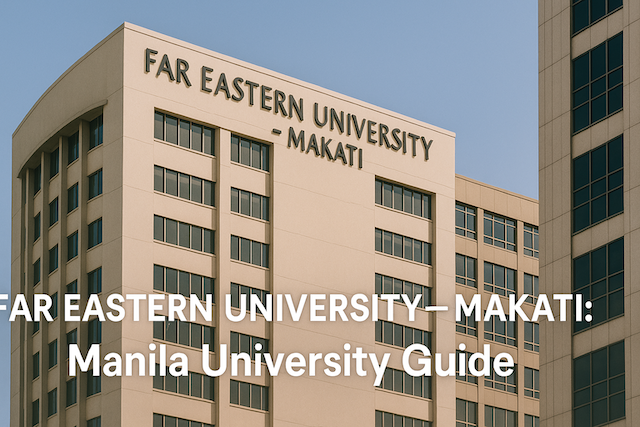
Far Eastern University – Makati: Manila University Guide
Far Eastern University (FEU) – Makati is one of the most prominent institutions in Metro Manila for business, accounting, finance, and law-related education. Strategically located in the heart of Makati’s central business district, FEU Makati offers a modern campus environment, industry-connected programs, and a strong academic reputation rooted in the heritage of the FEU system. This comprehensive guide explores everything you need to know about FEU Makati—from academics and campus facilities to admissions, costs, student life, and career opportunities.
Overview of Far Eastern University – Makati
FEU Makati was established to expand FEU’s reach into the financial and commercial hub of the Philippines. Its goal is to provide students with an education that blends strong academic foundations with real-world business exposure. The campus is known for its modern facilities, tech-forward learning environment, and programs aligned with the needs of industries operating within Makati and beyond.
FEU Makati primarily houses the School of Accountancy and the Institute of Law, but it also offers a variety of undergraduate programs designed to prepare students for careers in business, finance, management, IT, and other in-demand fields.
Location and Accessibility
Located along Gil Puyat Avenue, FEU Makati is near major offices, banks, malls, government agencies, and transport terminals. This makes it an ideal campus for students who want convenient access to internships, part-time jobs, and corporate networking opportunities.
Nearby Landmarks Include:
Public transportation is easily accessible, with jeepneys, buses, taxis, and ride-hailing services connecting the campus to the rest of Metro Manila.
Academic Programs Offered
FEU Makati offers a wide variety of programs through its key academic units. These programs are designed to prepare students for professional licensure, competitive employment, or postgraduate studies.
Undergraduate Programs
-
BS Accountancy (BSA)
A top choice among students aiming to become Certified Public Accountants (CPAs). The program is known for rigorous training and competitive board exam performance.
-
BS Business Administration (BSBA)
Majors include:
-
Financial Management
-
Business Analytics
-
Operations Management
-
BS Information Technology (BSIT)
Focused on software development, IT management, and emerging technologies.
-
BS Legal Management (BSLM)
A strong preparatory program for students interested in pursuing law school.
Graduate Programs
Campus Facilities
FEU Makati offers modern, industry-aligned facilities to support student learning and extracurricular activities.
Key Facilities Include:
-
Technology-Enabled Classrooms
Equipped with projectors, smart boards, and digital learning tools.
-
Library and Learning Commons
Houses physical and digital resources, quiet study rooms, and group study areas.
-
Moot Court
For law students to practice trial procedures and advocacy skills.
-
Computer Laboratories
For IT, analytics, programming, and data-related subjects.
-
Student Lounges
Designed for rest, collaboration, and informal gatherings.
-
Lecture and Seminar Rooms
Used for workshops, talks, and student organization events.
The campus also features Wi-Fi connectivity, student service offices, security personnel, and guidance and counseling services.
Admissions Guide
FEU Makati follows FEU’s standardized admission process. Whether you are a senior high school graduate, transferee, or second-degree applicant, you will go through the FEU College Admission Test (FEUCAT) unless exempted.
Admission Requirements
For Freshmen:
For Transferees:
For JD Program:
Application Process
-
Apply through the FEU Online Admissions Portal.
-
Submit required documents.
-
Take FEUCAT or qualifying exam (if applicable).
-
Wait for results and complete enrollment.
Tuition and Fees
FEU Makati’s tuition varies based on the program and the number of units enrolled. While exact fees may change every academic year, students should expect:
-
Undergraduate Tuition:
Approximately PHP 45,000–65,000 per semester
-
JD Program:
Approximately PHP 35,000–55,000 per semester, depending on course load
Additional fees cover laboratory use, miscellaneous charges, and student services.
Flexible payment options and installment plans are available.
Student Life at FEU Makati
Campus life at FEU Makati blends professionalism with vibrant student-led communities. Organizations host career fairs, business competitions, law debates, volunteer outreach, and cultural events.
Popular Student Organizations:
-
Junior Philippine Institute of Accountants (JPIA)
-
FEU Makati Business Society
-
FEU Legal Society
-
Technology and Innovation Club
-
Student Government
Events like orientation week, seminars, and recognition day foster student engagement and leadership.
Internship and Career Opportunities
One of FEU Makati’s biggest advantages is its proximity to Makati’s central business district. This gives students access to internships in:
-
Banking and finance
-
Accounting firms
-
Consulting agencies
-
Technology companies
-
Law offices
-
Startups
The FEU Career and Placement Office regularly coordinates with companies to provide job fairs, internship placements, and corporate networking events.
Why Choose FEU Makati?
1. Strong Industry Connection
Being close to Makati’s business ecosystem gives students unmatched exposure to real-world career paths.
2. Modern and Professional Learning Environment
The campus is designed for modern education with tech-equipped rooms and updated learning facilities.
3. Trusted FEU Academic Reputation
Students benefit from FEU’s long-standing reputation for quality education and professional excellence.
4. Competitive Licensure Performance
Programs like Accountancy and Law have strong results in national board examinations.
5. Convenient Urban Location
Easy access to transport, food establishments, dormitories, and commercial centers.
Conclusion
Far Eastern University – Makati provides world-class education in the heart of Metro Manila’s corporate hub. Whether you’re pursuing Accountancy, IT, Business, Legal Management, or Law, FEU Makati offers a balanced mix of academic rigor, modern facilities, and real-world opportunities. Students gain both theoretical knowledge and practical skills that boost their career prospects locally and internationally.
If you’re looking for a university that positions you close to the action—academically and professionally—FEU Makati stands out as a top choice.
FAQs (Frequently Asked Questions)
Where is Far Eastern University – Makati located?
Far Eastern University – Makati is situated in the central business district of Makati City, Metro Manila, along or near Gil Puyat Avenue and close to major landmarks such as Ayala Avenue, RCBC Plaza, and Makati Medical Center. Its urban location places students within walking or short commuting distance of offices, banks, restaurants, and transportation hubs, making it especially convenient for internships and professional networking.
What programs are offered at FEU Makati?
FEU Makati primarily offers business, accountancy, information technology, legal management, and law-related programs. Common undergraduate offerings include BS Accountancy, BS Business Administration (with various majors such as Financial Management or Business Analytics), BS Information Technology, and BS Legal Management. For graduate studies, the campus also hosts the law program (Juris Doctor or JD) under the FEU Institute of Law. Program availability can evolve, so applicants should always confirm the latest list of programs on the official FEU website.
Is FEU Makati different from FEU Manila?
FEU Makati is part of the larger Far Eastern University system but functions as a separate campus with its own facilities and specific program lineup. While FEU Manila is the main campus, FEU Makati focuses more strongly on business, accountancy, IT, and law—leveraging its strategic location in the Makati business district. Students enrolled at FEU Makati are FEU students and benefit from the overall reputation and standards of the FEU system.
What is the admission process for FEU Makati?
Admission generally starts with an online application through the FEU admissions portal. Applicants submit personal details, academic records (such as their senior high school report card for freshmen or transcript of records for transferees), and other required documents like a birth certificate and good moral certificate. Many applicants will also need to take the FEU College Admission Test (FEUCAT) or a similar qualifying exam, depending on the program and current policies. Once results are released, successful applicants proceed with enrollment, payment of fees, and class registration.
Are there special requirements for the law (JD) program?
Yes. The JD program is a postgraduate degree, so applicants must already hold a bachelor’s degree. They submit their college transcript of records, diploma, and other documents specified by the FEU Institute of Law. Some intakes may require an entrance exam, interview, or essay, depending on the year’s admission guidelines. Because law school policies can change, prospective JD students should refer directly to the FEU Institute of Law’s official announcements and admission bulletins.
How much is the tuition at FEU Makati?
Tuition fees at FEU Makati vary by program, year level, and number of enrolled units. Undergraduate tuition commonly falls within a mid-to-upper range for private universities in Metro Manila, while the JD program has its own fee structure. In addition to base tuition, students pay miscellaneous, laboratory, and other institutional fees. Exact amounts change over time, so the most reliable way to get current figures is to consult the official FEU Makati fee schedule or inquire directly with the finance or admissions office.
Does FEU Makati offer scholarships or financial assistance?
The broader FEU system is known to provide scholarships and financial aid for qualified students, such as academic scholarships, athletic grants, and discounts based on specific criteria. FEU Makati students may be eligible for certain FEU-wide scholarships, as well as campus-specific aid when available. Each scholarship has its own set of requirements, including grade thresholds, performance conditions, or financial need assessments. Interested students should check with the FEU Scholarships Office or the campus registrar for up-to-date details.
What are the campus facilities like at FEU Makati?
FEU Makati offers a modern, city-campus environment with technology-enabled classrooms, computer laboratories, a library or learning commons, moot court for law students, and dedicated spaces for seminars and workshops. There are student lounges for group work and relaxation, as well as offices for guidance, student services, and administration. The campus emphasizes a professional atmosphere while still giving students areas to interact, collaborate, and participate in organizations.
Is FEU Makati a good choice for Accountancy and Business?
FEU has a strong tradition in accountancy and business education, and the Makati campus builds on that legacy by being in direct proximity to corporate offices, banks, and financial institutions. This location makes it easier to secure internships, attend company talks, and connect with professionals. While “best” is subjective and depends on your priorities, FEU Makati is often considered a competitive option for students who want to study business or accountancy in a professional, industry-connected environment.
Is there student housing or dormitory near the campus?
FEU Makati itself may not operate large on-campus dormitories, but many students live in nearby condominiums, boarding houses, or shared apartments around Makati. Because the campus is located in a dense urban area, students can choose from a range of housing options at different price points. When selecting accommodation, it is important to consider safety, distance from campus, travel time, and budget. Some students also commute from neighboring cities using buses, jeepneys, or the MRT.
Can students work part-time while studying at FEU Makati?
Some students take on part-time jobs, internships, or freelance work while enrolled, especially because the campus is in a business district. However, balancing work and studies requires careful time management. For international students, work may be subject to visa restrictions and labor laws, so they must verify what is legally allowed. FEU Makati itself may post internship or on-campus assistantship opportunities, but the availability and nature of these positions change over time.
What kind of student organizations exist at FEU Makati?
FEU Makati hosts a variety of student organizations related to academics, leadership, culture, and community service. These may include student bodies for Accountancy (such as JPIA chapters), business and entrepreneurship groups, IT and innovation clubs, legal societies, and student councils. Through these organizations, students can participate in competitions, seminars, outreach programs, and leadership training that complement their formal academic education.
Is FEU Makati safe for students?
The campus typically maintains basic security measures such as guards, ID checks, and controlled entry points. Its location in a highly developed business area means that there is regular pedestrian and vehicular activity. Nonetheless, students are encouraged to practice common-sense safety habits, such as avoiding poorly lit areas at night, taking care of personal belongings, and using trusted transportation options. Safety levels can vary over time, so staying updated with campus advisories and local news is recommended.
How can I get more updated information about FEU Makati?
For the most accurate and current information, including new courses, changing admission requirements, updated tuition fees, and important deadlines, you should always refer to the official Far Eastern University channels. These typically include the FEU website, verified social media pages, and direct communication with the FEU Makati admissions, registrar, or guidance offices. Any third-party guide, including this one, should be used as a general reference rather than an official source.