2026年1月12日
3D ACADEMY offers affordable English study programs in Cebu, Philippines – perfect for beginners, professionals, and exam takers.

3D UNIVERSAL ENGLISH INSTITUTE INC
info.3d-universal.com
8:00-17:00(Mon-Fri)
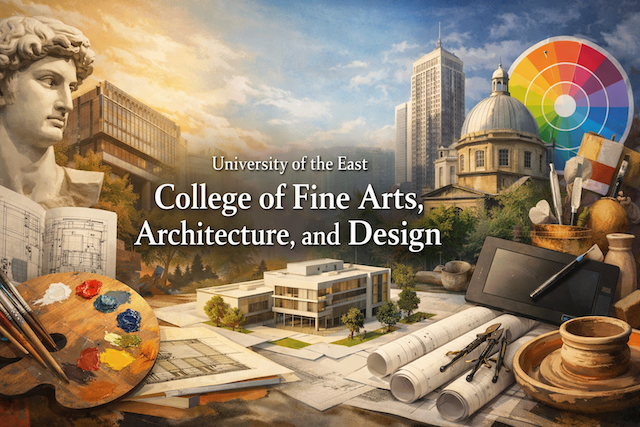
University of the East – College of Fine Arts, Architecture, and Design
Contents
- University of the East – College of Fine Arts, Architecture, and Design
- Overview of the University of the East
- History and Development of the College of Fine Arts, Architecture, and Design
- Academic Philosophy and Educational Approach
- Architecture Program
- Fine Arts Program
- Design and Visual Communication Studies
- Faculty and Professional Mentorship
- Facilities and Learning Environment
- Student Projects, Exhibitions, and Competitions
- Career Opportunities and Professional Pathways
- Student Life and Campus Culture
- Admissions and Academic Preparation
- Role of CFAD in the Philippine Creative Industry
- Conclusion
- FAQs (Frequently Asked Questions)
- What is the University of the East – College of Fine Arts, Architecture, and Design?
- Which programs are commonly associated with CFAD?
- What is the learning style like in architecture and design courses?
- Do students need to be good at drawing before entering CFAD?
- Is a portfolio required for admission?
- What kinds of facilities do students typically use?
- What software skills are useful for architecture and design students?
- How heavy is the workload at CFAD?
- What is a “critique,” and why is it important?
- What career paths can graduates pursue after CFAD?
- How can students build a strong portfolio while studying?
- What should prospective students prepare before the first semester?
- How can students succeed in a creative college environment?
University of the East – College of Fine Arts, Architecture, and Design
Overview of the University of the East
The University of the East (UE) is one of the most established private universities in the Philippines, founded in 1946. With campuses in Manila and Caloocan, UE has played a significant role in shaping professionals across business, law, education, engineering, health sciences, and the creative fields. Its strong academic tradition, accessible tuition structure, and urban campus setting have made it a popular choice for students seeking quality education in Metro Manila.
Within this academic environment, the University of the East – College of Fine Arts, Architecture, and Design (CFAD) serves as the university’s primary hub for creative and design-based disciplines. The college emphasizes a balance between artistic expression, technical competence, and professional readiness, preparing students for careers in architecture, fine arts, and design-related industries.
History and Development of the College of Fine Arts, Architecture, and Design
The College of Fine Arts, Architecture, and Design traces its roots to UE’s early commitment to creative and technical education. Initially established to support architecture and drafting programs, the college gradually expanded to include fine arts and design disciplines as the Philippine creative industry grew. Over the decades, CFAD evolved in response to changes in professional standards, technological advancements, and global design trends.
The college’s growth reflects UE’s broader mission of producing graduates who are both academically competent and socially responsible. By integrating traditional artistic foundations with modern tools such as digital design software and computer-aided drafting, CFAD continues to remain relevant in a rapidly changing professional landscape.
Academic Philosophy and Educational Approach
The University of the East – College of Fine Arts, Architecture, and Design follows an educational philosophy centered on creativity, discipline, and practical application. Students are encouraged to explore artistic ideas while grounding their work in technical accuracy and real-world constraints. This approach ensures that graduates are not only expressive designers but also problem-solvers capable of addressing functional, cultural, and environmental concerns.
Project-based learning is a core component of the curriculum. Studio courses, design critiques, and portfolio development are emphasized across programs. Faculty members, many of whom are practicing professionals, guide students through iterative design processes that mirror industry standards.
Architecture Program
The architecture program at CFAD is designed to prepare students for professional practice in the built environment. The curriculum covers architectural design, building technology, structural concepts, urban planning, environmental design, and professional practice. From the early years, students engage in design studios that gradually increase in complexity.
Hands-on learning is reinforced through drafting, model-making, and digital visualization. Students are trained in both manual drawing techniques and computer-aided design tools, ensuring versatility in professional settings. The program also emphasizes sustainability, site analysis, and contextual design, reflecting current architectural priorities.
Graduates of the architecture program are equipped to pursue licensure, apprenticeships, and careers in architectural firms, construction companies, real estate development, and government agencies.
Fine Arts Program
The fine arts program at the University of the East – College of Fine Arts, Architecture, and Design focuses on developing strong artistic foundations while encouraging personal style and conceptual thinking. Students study drawing, painting, sculpture, printmaking, and mixed media, gaining exposure to both classical techniques and contemporary practices.
Courses are structured to strengthen visual literacy, creative experimentation, and critical analysis. Art history and theory subjects provide cultural and historical context, helping students understand the evolution of artistic movements and their relevance today.
Graduates of the fine arts program often pursue careers as visual artists, illustrators, art educators, gallery professionals, and creative entrepreneurs. The program also serves as a strong foundation for further studies in art-related fields.
Design and Visual Communication Studies
Design education at CFAD extends beyond traditional fine arts into applied and commercial design fields. Visual communication and design-related courses focus on graphic design, branding, layout, typography, and digital media. These programs respond to the growing demand for creative professionals in advertising, marketing, media, and technology-driven industries.
Students learn how to communicate ideas visually across different platforms, including print, web, and digital environments. Emphasis is placed on conceptual clarity, user-centered design, and technical proficiency using industry-standard software.
By combining creative thinking with strategic communication skills, the design programs prepare graduates for dynamic roles in the creative economy.
Faculty and Professional Mentorship
One of the strengths of the University of the East – College of Fine Arts, Architecture, and Design lies in its faculty. Instructors are composed of experienced educators, licensed architects, practicing artists, and industry professionals. Their combined academic and professional backgrounds provide students with insights that extend beyond textbooks.
Faculty mentorship plays a critical role in student development. Through critiques, consultations, and project reviews, students receive constructive feedback that helps refine both technical skills and creative vision. This mentorship model supports continuous improvement and professional growth.
Facilities and Learning Environment
CFAD is housed within UE’s Manila campus, offering students access to studios, drafting rooms, computer laboratories, and exhibition spaces. These facilities are designed to support intensive studio work and collaborative learning. Architecture students benefit from dedicated drafting and model-making areas, while fine arts and design students have access to spaces suited for creative production.
The campus’s urban location also serves as an extended learning environment. Students can observe real-world architectural styles, public spaces, and cultural landmarks, enriching their academic experience through direct exposure to the city’s built and artistic landscape.
Student Projects, Exhibitions, and Competitions
Student output is a central focus at the University of the East – College of Fine Arts, Architecture, and Design. Design studios culminate in juried presentations, portfolio reviews, and exhibitions that showcase student creativity and technical competence. These activities help students develop confidence in presenting and defending their work.
Participation in local and national competitions is encouraged, providing students with opportunities to gain recognition and benchmark their skills against peers from other institutions. Exhibitions within and outside the university allow students to engage with the public and industry professionals.
Career Opportunities and Professional Pathways
Graduates of CFAD pursue diverse career paths across creative and technical industries. Architecture graduates often enter architectural firms, construction companies, or continue toward professional licensure. Fine arts graduates may become practicing artists, educators, or creative professionals in media and cultural institutions.
Design graduates find opportunities in advertising agencies, branding studios, digital media companies, and corporate design departments. The college’s emphasis on portfolio development and practical skills supports employability and career advancement.
Student Life and Campus Culture
Student life at the University of the East – College of Fine Arts, Architecture, and Design is shaped by collaboration, creativity, and academic rigor. Student organizations related to architecture, arts, and design provide platforms for peer learning, workshops, and community engagement.
These organizations help foster leadership skills and professional networks while enhancing the overall college experience. Events such as design weeks, art fairs, and collaborative projects contribute to a vibrant creative culture within the university.
Admissions and Academic Preparation
Admission to CFAD typically requires applicants to meet general university requirements, along with program-specific criteria. For architecture and fine arts programs, applicants may be required to demonstrate basic drawing skills or creative aptitude through entrance exams or portfolio submissions.
Prospective students are encouraged to develop foundational skills in drawing, visual observation, and creative thinking prior to enrollment. A strong interest in design, art, or the built environment is essential for success in these programs.
Role of CFAD in the Philippine Creative Industry
The University of the East – College of Fine Arts, Architecture, and Design plays an important role in contributing talent to the Philippine creative and construction industries. By producing graduates who are both artistically skilled and technically competent, the college supports the country’s growing demand for creative professionals.
Its emphasis on accessible education also allows students from diverse backgrounds to pursue careers in architecture and design, promoting inclusivity within the creative sector.
Conclusion
The University of the East – College of Fine Arts, Architecture, and Design stands as a solid academic choice for students seeking education in architecture, fine arts, and design within Metro Manila. Through its balanced curriculum, experienced faculty, and emphasis on practical application, CFAD prepares students for meaningful careers in creative and technical fields.
For aspiring architects, artists, and designers who value both artistic freedom and professional discipline, the College of Fine Arts, Architecture, and Design at the University of the East offers an environment where creativity, skill, and purpose can develop together.
FAQs (Frequently Asked Questions)
What is the University of the East – College of Fine Arts, Architecture, and Design?
The University of the East – College of Fine Arts, Architecture, and Design (CFAD) is the creative and design-focused college within the University of the East. It offers academic pathways that develop students’ artistic foundations, design thinking, and technical skills for careers in architecture, fine arts, and visual communication. CFAD typically emphasizes studio-based learning, critique sessions, and portfolio development, helping students build practical outputs alongside academic knowledge.
Which programs are commonly associated with CFAD?
CFAD is commonly associated with architecture, fine arts, and design-related programs. Depending on the school’s current academic offerings, students may encounter subjects such as architectural design studios, building technology, drafting, visual communication, drawing and painting fundamentals, and digital design. Because program structures can evolve, prospective students should confirm the latest list of degree programs, majors, and curricular tracks through official university channels.
What is the learning style like in architecture and design courses?
Architecture and design courses are usually studio-driven, meaning students spend significant time producing drawings, models, and digital presentations. Assignments often progress from basic exercises (line, form, space, composition) to more complex projects (site analysis, building design, user needs, sustainability). Critiques are a normal part of the process, and students are expected to revise work based on feedback, which helps build professional habits and resilience.
Do students need to be good at drawing before entering CFAD?
You do not need to be an expert artist before enrolling, but basic drawing ability and strong visual curiosity are helpful. Many programs begin with foundational courses designed to strengthen observation, proportion, perspective, and composition. If you are worried about your current skill level, practicing sketching regularly, studying basic perspective, and building a small portfolio of personal work can help you start with more confidence.
Is a portfolio required for admission?
Admission requirements vary by program and may change over time. Some programs may request a portfolio, a drawing exam, or a skills assessment, especially for fine arts or design-related tracks. Architecture programs sometimes focus more on aptitude tests and foundational readiness, but creative evidence can still be an advantage. The best approach is to check the most recent admissions guidelines and prepare a simple portfolio if recommended.
What kinds of facilities do students typically use?
Students in architecture, fine arts, and design commonly use studios, drafting areas, computer labs for digital production, and spaces for presentations or exhibits. Architecture students often rely on areas suitable for model-making and large-format printing, while fine arts students may need spaces for painting, drawing, or mixed-media work. Access and availability can differ by semester, so students should plan for both on-campus work and some at-home production.
What software skills are useful for architecture and design students?
Useful software skills depend on the track, but many students benefit from learning computer-aided drafting and 3D modeling tools, basic graphic design software, and presentation tools. Architecture students often gain value from CAD and modeling workflows, while design students commonly use layout, typography, and image-editing applications. Even if the curriculum teaches software step-by-step, self-study can help you work faster and improve output quality.
How heavy is the workload at CFAD?
Creative programs are known for demanding workloads because output-based subjects require time for ideation, drafting, iteration, and final production. Studio courses may involve weekly critiques, long working hours near deadlines, and multiple projects running simultaneously. Good time management matters: students who plan early, break tasks into phases, and keep a consistent weekly routine usually experience less stress and produce stronger work.
What is a “critique,” and why is it important?
A critique is a structured feedback session where instructors and peers review your work and discuss strengths, weaknesses, and improvements. In creative fields, critique is essential because it trains you to explain your design decisions, accept feedback professionally, and iterate toward better solutions. Students who learn to separate personal identity from the work-in-progress often grow faster and develop stronger professional communication skills.
What career paths can graduates pursue after CFAD?
Career outcomes vary by program. Architecture graduates may pursue apprenticeship roles and later work toward professional licensure, entering architectural firms, construction companies, or development-related industries. Fine arts graduates may become practicing artists, educators, illustrators, or creative entrepreneurs. Design-related graduates often work in branding, advertising, digital content, UI/UX-related roles, publishing, and corporate creative departments, depending on specialization and portfolio strength.
How can students build a strong portfolio while studying?
A strong portfolio is built through consistent documentation and thoughtful curation. Save iterations, not only final outputs, because process work shows how you think and solve problems. Photograph physical models and artworks clearly, organize projects by theme or skill, and include short explanations of your concept and tools. Over time, select fewer but higher-quality pieces, then refine layout and typography so the portfolio feels professional and easy to scan.
What should prospective students prepare before the first semester?
Prospective students can prepare by practicing basic drawing, learning simple perspective rules, and improving visual observation. For architecture, reading about space planning, climate-responsive design, and basic building concepts can help. For design, studying typography, composition, and branding basics is useful. It also helps to budget for materials such as art supplies, printing needs, and software access, since creative courses often involve production costs.
How can students succeed in a creative college environment?
Success in CFAD often comes from a combination of discipline and openness. Show up consistently, start projects early, and treat drafts as part of learning rather than proof of talent. Ask for feedback before deadlines, learn from classmates, and develop a personal workflow that includes research, sketching, iteration, and final polishing. Most importantly, focus on steady improvement: the goal is to build skills, professional habits, and a portfolio that reflects your growth.

How to Register for eTravel Philippines (2025 Guide)
Step-by-step guide to completing your eTravel registration before arriving in the Philippines, with images and tips.

Night Market in Cebu – Things You Don’t Know About Cebu Life
Discover the hidden charm of Cebu’s night markets, from street food stalls to local life tips you won’t find in tourist guides.

How to Use ChatGPT for IELTS Preparation: A Complete Guide
Learn how to prepare for IELTS using ChatGPT — including strategies for Writing, Reading, Listening, Speaking, and grammar support.

How to Build a Website Without Coding Using ChatGPT
Discover how to build your own website using AI—no coding skills needed. From structure planning to SEO and design, let ChatGPT guide you.