2026年1月12日
3D ACADEMY offers affordable English study programs in Cebu, Philippines – perfect for beginners, professionals, and exam takers.

3D UNIVERSAL ENGLISH INSTITUTE INC
info.3d-universal.com
8:00-17:00(Mon-Fri)
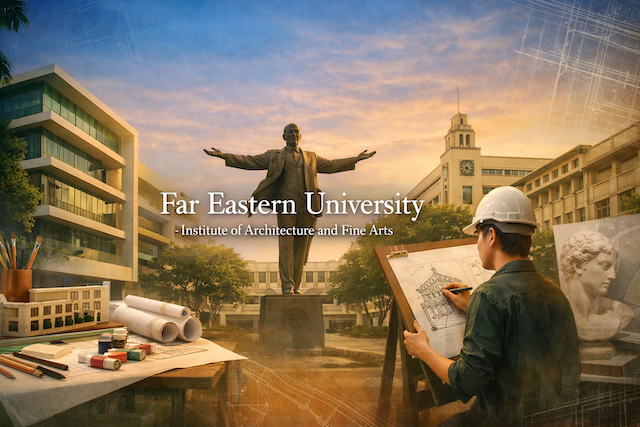
Far Eastern University (FEU) – Institute of Architecture and Fine Arts
Contents
- Far Eastern University (FEU) – Institute of Architecture and Fine Arts
- Overview of Far Eastern University
- History and Establishment of the Institute of Architecture and Fine Arts
- Academic Programs Offered
- Bachelor of Science in Architecture
- Bachelor of Fine Arts Programs
- Curriculum Design and Teaching Philosophy
- Facilities and Learning Resources
- Faculty and Academic Expertise
- Research, Innovation, and Creative Practice
- Student Life and Creative Culture
- Industry Linkages and Professional Exposure
- Career Opportunities for Graduates
- Commitment to Sustainability and Social Responsibility
- Why Choose FEU Institute of Architecture and Fine Arts
- Conclusion
- Frequently Asked Questions (FAQs)
- What is the FEU Institute of Architecture and Fine Arts (IARFA)?
- What degree programs are typically associated with IARFA?
- What can students expect from the architecture curriculum?
- How does studio learning work in architecture and fine arts?
- Is FEU IARFA a good choice for students who want a strong portfolio?
- What facilities are important for architecture and fine arts students?
- What kinds of careers do graduates commonly pursue?
- Does the institute provide opportunities for internships or industry exposure?
- How can applicants prepare for admission into architecture or fine arts?
- What study habits help students succeed in studio-based programs?
- What should students consider if they want to pursue licensure in architecture?
- How does studying on the FEU Manila campus influence the learning experience?
Far Eastern University (FEU) – Institute of Architecture and Fine Arts
The Institute of Architecture and Fine Arts (IARFA) of Far Eastern University (FEU) is one of the most respected creative and design-focused academic units in the Philippines. Known for its strong integration of architecture, fine arts, and design education, FEU IARFA plays a significant role in shaping future architects, artists, and creative professionals who are socially aware, technically competent, and culturally grounded. Located in the historic FEU Manila campus, the institute benefits from a rich academic tradition combined with modern, industry-relevant pedagogy.
Overview of Far Eastern University
Founded in 1928, Far Eastern University is one of the largest and most established private universities in the Philippines. FEU is known for its multidisciplinary academic offerings, strong board examination performance, and emphasis on values such as nationalism, service, and academic excellence. Over the decades, FEU has developed a reputation for producing graduates who are adaptable, ethical, and globally competitive.
The FEU Manila campus itself is recognized as a National Cultural Treasure due to its iconic Art Deco buildings designed by National Artist Pablo Antonio. This architectural heritage provides a uniquely inspiring environment for students of architecture and fine arts, making FEU an ideal setting for design-based education.
History and Establishment of the Institute of Architecture and Fine Arts
The Institute of Architecture and Fine Arts was established to consolidate FEU’s creative and design-related programs under one academic unit. The goal was to create an interdisciplinary platform where architecture, fine arts, and design could intersect, fostering collaboration and innovation among students and faculty.
Since its establishment, IARFA has continuously evolved its curriculum to align with national and international standards. It emphasizes not only technical proficiency but also conceptual thinking, sustainability, and social responsibility. The institute has steadily built a reputation as a training ground for professionals who contribute meaningfully to the built environment and the creative industries.
Academic Programs Offered
FEU IARFA offers a range of undergraduate and graduate programs designed to meet the diverse interests and career goals of students in architecture and fine arts.
Bachelor of Science in Architecture
The Bachelor of Science in Architecture (BS Arch) is the flagship program of the institute. It is a five-year program that prepares students for professional architectural practice and eventual licensure. The curriculum balances design theory, technical skills, and practical application, ensuring that graduates are well-equipped for both academic and professional challenges.
Students undergo intensive training in architectural design, building technology, structural concepts, environmental planning, and professional practice. Design studios form the core of the program, encouraging critical thinking, creativity, and problem-solving through progressive project-based learning.
Bachelor of Fine Arts Programs
The institute also offers Bachelor of Fine Arts programs that focus on artistic expression, visual communication, and creative innovation. These programs are designed to nurture artistic talent while providing students with practical skills applicable to various creative industries.
Students explore traditional and contemporary art forms, including painting, sculpture, digital media, and mixed media. Emphasis is placed on conceptual development, craftsmanship, and the ability to communicate ideas visually and effectively.
Curriculum Design and Teaching Philosophy
The curriculum at FEU IARFA is built on an outcomes-based education framework. This ensures that students achieve clearly defined learning outcomes aligned with professional standards and industry expectations. Courses are structured to progressively develop competencies, from foundational skills to advanced application.
Teaching at the institute emphasizes experiential learning. Studio-based instruction, workshops, design critiques, and collaborative projects are central to the learning experience. Faculty members encourage open dialogue, critical inquiry, and creative risk-taking, helping students develop their own design philosophies and artistic voices.
Facilities and Learning Resources
FEU IARFA is equipped with facilities that support both traditional and digital modes of creative production. Design studios provide dedicated spaces where students can work on projects, collaborate with peers, and engage in critiques. These studios are designed to simulate professional work environments.
The institute also has drawing rooms, computer laboratories with industry-standard software, model-making areas, and exhibition spaces. The FEU library system supports architecture and fine arts education with extensive collections of books, journals, and digital resources related to design, art history, and construction technology.
Faculty and Academic Expertise
The faculty of the Institute of Architecture and Fine Arts is composed of licensed architects, practicing artists, designers, and scholars with diverse professional backgrounds. Many faculty members are actively engaged in architectural practice, art exhibitions, research, and consultancy, bringing real-world perspectives into the classroom.
This blend of academic and professional experience ensures that students receive instruction grounded in both theory and practice. Faculty mentorship plays a crucial role in student development, guiding learners through design challenges and career planning.
Research, Innovation, and Creative Practice
Research and creative inquiry are integral components of FEU IARFA’s academic culture. The institute encourages faculty and students to engage in research projects that explore issues such as sustainable design, heritage conservation, urban development, and contemporary art practices.
Students are often involved in design research, exhibitions, and competitions that allow them to apply theoretical knowledge to real-world contexts. These activities help confirm the relevance of their work and foster a deeper understanding of social, cultural, and environmental issues.
Student Life and Creative Culture
Life at FEU IARFA extends beyond the classroom. Students are encouraged to participate in organizations, exhibitions, design competitions, and outreach programs. These activities provide opportunities for leadership development, community engagement, and professional networking.
The institute fosters a vibrant creative culture where students from different disciplines collaborate and learn from one another. Regular exhibits, lectures, and design talks expose students to diverse perspectives and contemporary trends in architecture and the arts.
Industry Linkages and Professional Exposure
FEU IARFA maintains strong connections with the professional community, including architectural firms, design studios, cultural institutions, and industry organizations. These linkages support internship programs, collaborative projects, and guest lectures.
Through professional exposure, students gain insights into industry practices, ethical standards, and emerging career paths. This exposure also helps bridge the gap between academic training and professional employment.
Career Opportunities for Graduates
Graduates of the Institute of Architecture and Fine Arts pursue diverse career paths in architecture, urban planning, interior design, visual arts, creative media, and related fields. Architecture graduates are well-prepared for licensure examinations and professional practice, while fine arts graduates find opportunities in creative industries, education, and independent practice.
The institute’s emphasis on critical thinking, creativity, and professionalism ensures that graduates are adaptable and capable of responding to evolving industry demands, both locally and internationally.
Commitment to Sustainability and Social Responsibility
Sustainability and social responsibility are core values embedded in FEU IARFA’s academic programs. Students are encouraged to consider environmental impact, cultural context, and social equity in their design and artistic work.
Design projects often address real-world issues such as housing, urban congestion, disaster resilience, and heritage preservation. This approach reinforces the idea that architecture and art have a profound influence on society and quality of life.
Why Choose FEU Institute of Architecture and Fine Arts
Choosing FEU IARFA means studying in an institution that combines historical significance with forward-looking education. Students benefit from a strong academic foundation, experienced faculty, comprehensive facilities, and a supportive creative community.
The institute’s interdisciplinary approach, emphasis on professional readiness, and commitment to ethical and socially responsive design make it an excellent choice for students aspiring to careers in architecture and fine arts.
Conclusion
The Far Eastern University Institute of Architecture and Fine Arts stands as a center of excellence for creative and design education in the Philippines. Through its well-structured programs, dedicated faculty, and vibrant academic culture, the institute continues to shape future architects and artists who are innovative, responsible, and globally competitive.
For students seeking a holistic education that balances creativity, technical skill, and social awareness, FEU IARFA offers an environment where talent is nurtured and potential is realized.
Frequently Asked Questions (FAQs)
What is the FEU Institute of Architecture and Fine Arts (IARFA)?
The FEU Institute of Architecture and Fine Arts (IARFA) is an academic unit within Far Eastern University that focuses on architecture and fine arts education. It provides students with structured training in design thinking, visual communication, and professional practice. The institute combines classroom-based learning with studio work, critiques, and project development so students can build both technical competence and creative confidence. Because it is part of a university with a long-standing academic tradition, IARFA also benefits from FEU’s broader resources, student support services, and campus culture.
What degree programs are typically associated with IARFA?
IARFA is commonly associated with architecture and fine arts pathways. The most recognized program is the undergraduate architecture track, which emphasizes design studios, building technology, and professional practice preparation. Fine arts-related offerings generally focus on developing artistic skill, conceptual thinking, and visual literacy, often supported by hands-on production work. If you are comparing programs, it helps to look at the balance of studio time, technical subjects, and portfolio-based outcomes, since these elements strongly influence student experience and graduate readiness.
What can students expect from the architecture curriculum?
Architecture students can expect a studio-centered curriculum where design problems become more complex over time. Early phases usually build foundational skills such as freehand drawing, model-making, and basic design principles. As students progress, projects typically expand into site planning, environmental considerations, building systems, and urban context. Many architecture programs also include courses on structural concepts, construction materials, and building code awareness. A key feature is critique culture: students present work, receive feedback, and revise repeatedly, which strengthens communication skills and design judgment.
How does studio learning work in architecture and fine arts?
Studio learning is a guided, project-based format where students produce work under faculty supervision. In architecture, studios often require research, concept development, drawings, and scale models or digital presentations. In fine arts, studios may include technique practice, experimentation with media, and the creation of cohesive bodies of work. Studios are typically time-intensive and may involve iterative deadlines. This approach reflects how creative professionals work in real settings: you develop ideas, test solutions, refine outputs, and communicate decisions clearly.
Is FEU IARFA a good choice for students who want a strong portfolio?
It can be a strong choice for portfolio-building because studio courses and creative outputs naturally generate portfolio material. A good portfolio usually reflects progress over time, not just final results. Students often benefit most when they document their process, show design iterations, and demonstrate problem-solving. To maximize portfolio strength, students should plan early: save sketches, take photos of models or artworks, and curate projects that highlight a range of skills such as conceptual thinking, technical drafting, digital tools, and presentation ability.
What facilities are important for architecture and fine arts students?
Architecture and fine arts programs often rely on specialized spaces. For architecture, helpful facilities include design studios, drafting and model-making areas, computer labs with design software, printing resources, and spaces for critiques and presentations. For fine arts, studios for different media, display or gallery spaces, and tool-safe work areas are valuable. Libraries and digital databases also matter because design and art decisions improve when students can research precedents, theory, materials, and historical context. When evaluating a school, consider both facilities and access rules, including operating hours and booking systems.
What kinds of careers do graduates commonly pursue?
Architecture graduates commonly pursue work in architectural design firms, construction and project management, building documentation, and related fields such as interior design or urban planning support. Many aim to complete professional requirements toward licensure and long-term practice. Fine arts graduates may pursue careers in creative industries such as visual arts production, illustration, graphic design, multimedia content, exhibition work, creative entrepreneurship, or education. Some graduates also combine disciplines, building careers that integrate design, communication, and cultural work across different sectors.
Does the institute provide opportunities for internships or industry exposure?
Many architecture and design-focused programs support professional exposure through internships, collaborative projects, guest lectures, and design events. These experiences are important because they help students understand workplace expectations, timelines, and professional standards. Students should also take initiative by joining competitions, attending talks, or volunteering in creative events, since networking often begins while still in school. Industry exposure becomes more valuable when students connect academic projects to real constraints such as client needs, budgets, sustainability goals, and site conditions.
How can applicants prepare for admission into architecture or fine arts?
Preparation usually involves strengthening both skills and habits. Applicants can practice drawing fundamentals, perspective, and basic design principles. Learning simple digital tools can help, but hand skills and visual thinking remain important. Building a small portfolio of work—sketches, designs, paintings, or creative studies—can demonstrate potential and motivation. Strong time management also matters, since studio-based programs are demanding. Applicants should also research program requirements, possible entrance assessments, and the learning environment they want, including studio culture and faculty mentorship.
What study habits help students succeed in studio-based programs?
Success in studio-based programs often depends on consistent effort rather than last-minute output. Students benefit from setting weekly goals, starting projects early, and treating critique feedback as a tool rather than a personal judgment. Regular practice in drawing, model-making, or technique development builds confidence over time. It also helps to develop a personal workflow: organizing files, documenting progress, and backing up digital work. Collaboration is another key habit—students learn faster when they exchange ideas, share resources, and participate actively in group critiques.
What should students consider if they want to pursue licensure in architecture?
Students who want to pursue architecture licensure should focus on building strong fundamentals in design, building technology, and professional practice. They should also develop communication skills, since architects must present ideas clearly to clients and teams. After graduation, licensure pathways typically involve meeting professional requirements and passing examinations, so it is wise to plan long-term. While in school, students can prepare by building technical competence, developing a disciplined work ethic, and seeking mentorship from faculty or professionals who understand the licensure journey.
How does studying on the FEU Manila campus influence the learning experience?
Studying architecture and fine arts in a historically significant campus environment can deepen appreciation for heritage, design identity, and the relationship between buildings and culture. A campus with notable architectural character can also become a living reference for students, encouraging observation of proportion, form, materials, and spatial experience. This everyday exposure can strengthen design sensitivity. At the same time, students should balance inspiration with practical training, ensuring that their work is not only visually compelling but also functional, responsible, and responsive to real community needs.

How to Register for eTravel Philippines (2025 Guide)
Step-by-step guide to completing your eTravel registration before arriving in the Philippines, with images and tips.

Night Market in Cebu – Things You Don’t Know About Cebu Life
Discover the hidden charm of Cebu’s night markets, from street food stalls to local life tips you won’t find in tourist guides.

How to Use ChatGPT for IELTS Preparation: A Complete Guide
Learn how to prepare for IELTS using ChatGPT — including strategies for Writing, Reading, Listening, Speaking, and grammar support.

How to Build a Website Without Coding Using ChatGPT
Discover how to build your own website using AI—no coding skills needed. From structure planning to SEO and design, let ChatGPT guide you.