2026年1月12日
3D ACADEMY offers affordable English study programs in Cebu, Philippines – perfect for beginners, professionals, and exam takers.

3D UNIVERSAL ENGLISH INSTITUTE INC
info.3d-universal.com
8:00-17:00(Mon-Fri)
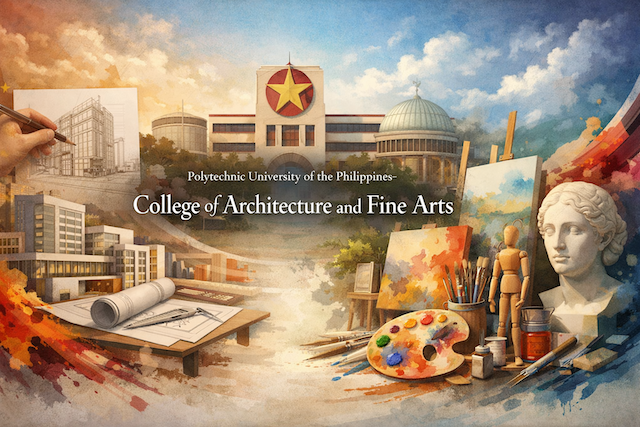
Polytechnic University of the Philippines (PUP) – College of Architecture and Fine Arts
Contents
- Polytechnic University of the Philippines (PUP) – College of Architecture and Fine Arts
- Overview of Polytechnic University of the Philippines (PUP)
- Introduction to the College of Architecture and Fine Arts (CAFA)
- History and Development of CAFA
- Academic Programs Offered by CAFA
- Curriculum Philosophy and Teaching Approach
- Faculty and Academic Mentorship
- Facilities and Learning Environment
- Student Life and Creative Culture
- Admission and Academic Rigor
- Career Opportunities for Graduates
- Contribution to Society and Nation-Building
- Why Choose PUP – College of Architecture and Fine Arts
- Conclusion
- FAQs (Frequently Asked Questions)
- What is the Polytechnic University of the Philippines (PUP) – College of Architecture and Fine Arts (CAFA)?
- What degree programs are commonly associated with CAFA?
- Where is CAFA located?
- Is PUP–CAFA a good choice for students who want affordable architecture or fine arts education?
- How competitive is admission to CAFA?
- What should applicants prepare if an aptitude or portfolio is required?
- What is studio-based learning and why is it important in architecture and fine arts?
- How heavy is the workload for CAFA students?
- Does the architecture program prepare students for the Architect Licensure Examination (ALE)?
- What skills should students develop to succeed in CAFA?
- What career paths are available after graduating from CAFA?
- How can students make the most of their time at PUP–CAFA?
Polytechnic University of the Philippines (PUP) – College of Architecture and Fine Arts
Overview of Polytechnic University of the Philippines (PUP)
The Polytechnic University of the Philippines (PUP) is one of the most prominent state universities in the Philippines, widely recognized for its commitment to accessible, quality, and socially relevant education. Established in 1904, PUP has built a strong reputation as a training ground for professionals who are technically competent, socially aware, and deeply connected to the realities of Filipino society.
Often referred to as “The Country’s First Polytechnic University,” PUP emphasizes applied learning, public service, and nation-building. Its diverse academic offerings span engineering, business, social sciences, education, technology, and the creative arts. Among its most respected and competitive academic units is the College of Architecture and Fine Arts (CAFA), which plays a crucial role in shaping future architects, designers, and visual artists in the country.
Located primarily at the PUP Sta. Mesa Campus in Manila, CAFA attracts students from various regions of the Philippines who aspire to pursue creative professions while benefiting from affordable tuition and rigorous academic training.
Introduction to the College of Architecture and Fine Arts (CAFA)
The College of Architecture and Fine Arts (CAFA) is PUP’s center for design, creativity, and spatial thinking. It brings together disciplines that deal with the built environment, visual culture, and artistic expression, combining technical proficiency with conceptual depth and social relevance.
CAFA is known for its strong emphasis on:
-
Design grounded in real-world contexts
-
Architecture and art as tools for social transformation
-
Practical skills aligned with industry needs
-
Critical thinking and creative problem-solving
Unlike purely commercial design schools, CAFA encourages students to understand architecture and fine arts as professions that directly affect communities, public spaces, cultural identity, and national development.
History and Development of CAFA
The roots of CAFA trace back to PUP’s early efforts to provide technical and vocational education that responds to the needs of society. As demand grew for formally trained architects and artists, PUP established dedicated programs that eventually evolved into the College of Architecture and Fine Arts.
Over the years, CAFA expanded its academic scope, faculty expertise, and facilities. Despite operating within a state university framework, the college has consistently produced graduates who excel in professional licensure examinations, design competitions, public-sector projects, and independent creative practice.
CAFA’s development reflects PUP’s broader mission: democratizing access to high-quality education while maintaining academic rigor and professional relevance.
Academic Programs Offered by CAFA
Bachelor of Science in Architecture (BS Architecture)
The Bachelor of Science in Architecture is the flagship program of CAFA and one of the most sought-after architecture programs in a Philippine state university.
The curriculum is designed to prepare students for the Architect Licensure Examination (ALE) and professional practice. It balances theoretical foundations, technical competence, and design studio work.
Key areas of study include:
-
Architectural Design and Planning
-
Building Technology and Construction
-
Architectural Theory and History
-
Structural Concepts
-
Urban Design and Site Planning
-
Environmental Control Systems
-
Professional Practice and Ethics
Design studios form the backbone of the program, where students progressively handle more complex architectural problems, from small-scale residential projects to large public and urban developments.
Fine Arts Programs
CAFA also offers degree programs in Fine Arts, focusing on visual expression, artistic techniques, and conceptual development. These programs are suited for students interested in careers in visual arts, illustration, multimedia, exhibition design, and creative industries.
Common focus areas include:
-
Drawing and Painting
-
Sculpture and Mixed Media
-
Visual Communication
-
Art Theory and Criticism
-
Contemporary Art Practices
Fine Arts students are encouraged to develop a personal artistic voice while engaging with social themes, Filipino identity, and contemporary issues.
Curriculum Philosophy and Teaching Approach
CAFA’s curriculum is guided by the belief that design and art must serve society. This philosophy is deeply embedded in both architecture and fine arts programs.
Design as Social Responsibility
Students are often tasked with projects that address:
-
Low-cost and socialized housing
-
Disaster-resilient architecture
-
Public schools, health centers, and community spaces
-
Urban congestion and informal settlements
By engaging with real social challenges, students learn that architecture and art are not merely aesthetic pursuits but tools for improving quality of life.
Balance of Theory and Practice
CAFA emphasizes a strong theoretical foundation while ensuring hands-on learning. Studio courses, workshops, model-making, site visits, and community immersion programs allow students to apply classroom concepts to real situations.
Critical and Creative Thinking
Rather than producing formulaic designs, CAFA encourages experimentation, critical inquiry, and conceptual exploration. Faculty members push students to justify their design decisions based on context, function, sustainability, and cultural relevance.
Faculty and Academic Mentorship
The faculty of CAFA is composed of:
-
Licensed architects
-
Practicing artists and designers
-
Urban planners and researchers
-
Academicians with advanced degrees
Many faculty members are actively involved in professional practice, government projects, research, and exhibitions. This ensures that instruction remains current and grounded in industry realities.
Mentorship is a key component of CAFA’s learning environment. Studio instructors closely guide students through design processes, critiques, and revisions, fostering resilience, discipline, and professional maturity.
Facilities and Learning Environment
CAFA operates within the PUP Sta. Mesa campus, utilizing facilities designed to support creative and technical education.
Design Studios and Classrooms
Architecture and fine arts students spend much of their time in studios, which function as collaborative workspaces for drafting, model-making, presentations, and critiques.
Workshops and Laboratories
Students have access to:
-
Drafting and model-making areas
-
Computer laboratories with CAD and design software
-
Spaces for art production and experimentation
While facilities may not be as luxurious as those of private universities, CAFA emphasizes resourcefulness, teaching students to maximize available tools and materials—an important skill in professional practice.
Campus Context
Being located in Manila allows students to engage directly with dense urban environments, historic districts, transportation systems, and diverse communities. The city itself becomes an extended classroom for architectural and artistic exploration.
Student Life and Creative Culture
Life at CAFA is known for being intense, demanding, but deeply rewarding. Architecture and fine arts students often juggle multiple projects, deadlines, and critiques, fostering strong bonds and a shared sense of purpose.
Student Organizations
Students can join organizations such as:
-
Architecture student councils
-
Fine arts and visual culture groups
-
Design collectives and publication teams
These organizations host workshops, exhibitions, design competitions, outreach programs, and academic talks that enrich student experience beyond the classroom.
Exhibitions and Design Reviews
Regular exhibits, juried critiques, and thesis defenses expose students to professional-level evaluation. External jurors from the architecture and art industries are often invited, giving students valuable feedback and networking opportunities.
Admission and Academic Rigor
Admission to CAFA is competitive, particularly for the architecture program. Applicants must pass:
-
The PUP College Entrance Test
-
Additional screening or aptitude assessments (depending on program and year)
Once admitted, students are expected to meet high academic and creative standards. The workload is heavy, and time management is essential. However, this rigor prepares graduates for the demands of professional practice and licensure examinations.
Career Opportunities for Graduates
Architecture Graduates
Graduates of BS Architecture commonly pursue careers as:
-
Licensed architects (after completing apprenticeship and passing the ALE)
-
Junior architects or architectural designers
-
Urban planners and project coordinators
-
Government architects and public sector consultants
-
Construction and project management professionals
Many PUP architecture graduates are known for their adaptability, technical competence, and strong work ethic.
Fine Arts Graduates
Fine Arts alumni find opportunities in:
-
Visual arts and independent practice
-
Illustration and graphic design
-
Creative direction and multimedia
-
Cultural institutions and galleries
-
Education and community arts programs
The versatility of fine arts training allows graduates to navigate both traditional and emerging creative industries.
Contribution to Society and Nation-Building
CAFA embodies PUP’s mission of producing professionals who serve the public good. Many alumni work in:
-
Government housing and infrastructure agencies
-
Community-based design initiatives
-
NGOs and development organizations
-
Public art and cultural preservation projects
Through architecture and fine arts, CAFA graduates contribute to shaping inclusive, sustainable, and culturally grounded environments across the Philippines.
Why Choose PUP – College of Architecture and Fine Arts
Students choose CAFA for several compelling reasons:
-
Affordable education without sacrificing quality
-
Strong emphasis on socially relevant design
-
Rigorous training that prepares students for real-world challenges
-
A culture of resilience, creativity, and public service
-
A long-standing reputation as a training ground for dedicated professionals
For students who believe that architecture and art should go beyond aesthetics and actively contribute to society, CAFA offers an environment that nurtures both skill and purpose.
Conclusion
The Polytechnic University of the Philippines – College of Architecture and Fine Arts stands as a vital institution for creative and technical education in the Philippines. Through its architecture and fine arts programs, CAFA continues to produce graduates who are not only competent designers and artists but also socially conscious citizens.
Rooted in accessibility, public service, and creative excellence, CAFA represents a powerful example of how state universities can shape the future of the built environment and visual culture. For aspiring architects and artists seeking meaningful, impactful, and affordable education, PUP–CAFA remains a highly respected and compelling choice.
FAQs (Frequently Asked Questions)
What is the Polytechnic University of the Philippines (PUP) – College of Architecture and Fine Arts (CAFA)?
PUP–CAFA is an academic college within the Polytechnic University of the Philippines that focuses on design- and art-related disciplines, primarily Architecture and Fine Arts. It aims to develop students who combine creative thinking with technical competence, and who understand the social impact of design and visual culture. As part of a state university, CAFA is also associated with affordable access to higher education while maintaining structured training through studio-based learning, critiques, and project development.
What degree programs are commonly associated with CAFA?
CAFA is best known for its Bachelor of Science in Architecture program and its Fine Arts-related offerings. Architecture typically includes intensive design studios, building technology, architectural history and theory, and professional practice preparation. Fine Arts programs generally involve foundational drawing and design, media exploration, art history and theory, and portfolio-oriented outputs. The specific list of programs, majors, and curriculum details may change over time, so applicants should verify the latest offerings through official PUP channels.
Where is CAFA located?
CAFA is primarily associated with PUP’s Sta. Mesa campus in Manila. Because university offices and learning spaces can shift due to renovations or administrative changes, prospective students should confirm the exact building location, office hours, and campus entry requirements before visiting. If you plan to tour the campus, it is helpful to prepare a list of questions about facilities, studio spaces, and program requirements to maximize your visit.
Is PUP–CAFA a good choice for students who want affordable architecture or fine arts education?
Many students consider PUP–CAFA a strong option because it is part of a public university system and is widely perceived as more affordable than many private institutions. Beyond cost, CAFA attracts students who want a disciplined studio culture, strong peer learning, and a design approach connected to community realities. However, “good choice” depends on your goals: you should compare curriculum structure, faculty profiles, facilities, commuting distance, and the overall learning environment with your personal needs and working style.
How competitive is admission to CAFA?
Admission can be competitive, especially for architecture, because design programs often have limited studio capacity and high applicant demand. Typically, students must pass PUP’s entrance processes and may be subject to additional screening depending on the program and university policies. Because requirements can change, the best approach is to monitor official announcements, prepare application documents early, and practice core skills such as drawing, visual organization, and basic design thinking if an aptitude component is required.
What should applicants prepare if an aptitude or portfolio is required?
If your program requires an aptitude test or portfolio, focus on demonstrating fundamentals rather than overly complex concepts. Include observational drawings, perspective sketches, basic composition studies, and a few finished pieces that show your patience and attention to detail. For architecture-oriented applicants, showing spatial awareness through simple plans, massing studies, or conceptual diagrams can help. For fine arts applicants, include works that show control of line, value, color, and experimentation with materials. Always label works clearly and present them in an organized format.
What is studio-based learning and why is it important in architecture and fine arts?
Studio-based learning is a teaching approach where students develop projects over time through research, iterative design, critiques, and revisions. In architecture, studios train you to solve design problems within constraints such as site conditions, user needs, structure, and building regulations. In fine arts, studios build your artistic process, technical mastery, and ability to communicate ideas visually. This format is demanding but effective because it mirrors real creative practice: you learn by making, receiving feedback, and improving repeatedly.
How heavy is the workload for CAFA students?
Architecture and fine arts programs are known for intensive workloads due to multiple outputs, deadlines, and revisions. Students often balance studio plates, models, renderings, readings, and presentations, sometimes alongside general education subjects. Time management becomes a core skill. Successful students usually plan weekly schedules, break tasks into smaller milestones, and avoid last-minute production. While the workload can be challenging, it also builds professional discipline and the ability to deliver under pressure—an essential skill in design and creative industries.
Does the architecture program prepare students for the Architect Licensure Examination (ALE)?
In the Philippines, architecture programs are generally structured to provide the academic foundation needed for professional pathways, including licensure preparation. However, becoming a licensed architect typically involves completing an accredited degree, fulfilling required practical training or apprenticeship, and passing the Architect Licensure Examination. Because regulations and accreditation details can evolve, students should confirm the program’s current standing, curriculum alignment, and any official guidance on licensure pathways from PUP and relevant professional regulatory bodies.
What skills should students develop to succeed in CAFA?
Key skills include visual communication (drawing, layout, and presentation), critical thinking, research, and the ability to accept critique. For architecture, develop spatial reasoning, basic structural understanding, and comfort with drafting tools and digital software. For fine arts, build strong fundamentals in observation, composition, and material handling. Across both fields, resilience matters: revisions are normal, feedback can be direct, and improvement comes from consistent practice. Collaboration is also valuable, as peer learning is often a major part of studio culture.
What career paths are available after graduating from CAFA?
Architecture graduates often enter design firms, construction and project management roles, government planning offices, or specialized areas such as interior fit-outs, sustainable design, or heritage conservation. With additional training and licensure, they may practice as registered and licensed professionals. Fine arts graduates may pursue careers in visual arts, illustration, graphic design, multimedia, creative direction, art education, and cultural work. Many graduates also become freelancers or entrepreneurs, building portfolios and networks to secure projects in the creative economy.
How can students make the most of their time at PUP–CAFA?
Students can maximize their experience by treating each studio project as portfolio material, seeking feedback early, and learning both manual and digital skills. Joining student organizations, attending talks, and participating in exhibitions or competitions can broaden exposure and build professional connections. It also helps to document work consistently—photograph models, save drafts, and keep process notes. Finally, maintaining a sustainable routine matters: consistent sleep, realistic schedules, and teamwork can prevent burnout in demanding creative programs.

How to Register for eTravel Philippines (2025 Guide)
Step-by-step guide to completing your eTravel registration before arriving in the Philippines, with images and tips.

Night Market in Cebu – Things You Don’t Know About Cebu Life
Discover the hidden charm of Cebu’s night markets, from street food stalls to local life tips you won’t find in tourist guides.

How to Use ChatGPT for IELTS Preparation: A Complete Guide
Learn how to prepare for IELTS using ChatGPT — including strategies for Writing, Reading, Listening, Speaking, and grammar support.

How to Build a Website Without Coding Using ChatGPT
Discover how to build your own website using AI—no coding skills needed. From structure planning to SEO and design, let ChatGPT guide you.