2026年1月12日
3D ACADEMY offers affordable English study programs in Cebu, Philippines – perfect for beginners, professionals, and exam takers.

3D UNIVERSAL ENGLISH INSTITUTE INC
info.3d-universal.com
8:00-17:00(Mon-Fri)
University of the Philippines Diliman (UPD) – College of Architecture
Contents
- University of the Philippines Diliman (UPD) – College of Architecture
- Overview of the University of the Philippines Diliman
- History and Background of the UP Diliman College of Architecture
- Academic Philosophy and Educational Approach
- Bachelor of Science in Architecture Program
- Graduate Programs and Advanced Studies
- Faculty and Academic Community
- Facilities and Learning Environment
- Research, Extension, and Public Service
- Student Life and Organizations
- Career Paths and Alumni Impact
- Admission and Academic Standards
- Role in Philippine Architecture and Society
- Conclusion
- FAQs (Frequently Asked Questions)
- What is the UP Diliman College of Architecture known for?
- What degree programs are offered by the College of Architecture?
- How long does it take to complete the BS Architecture program at UP Diliman?
- What is “studio culture,” and what should students expect?
- Is UP Diliman College of Architecture focused only on design aesthetics?
- How competitive is admission to UP Diliman for architecture?
- Do students need to be good at drawing before entering architecture school?
- What software or tools are commonly used in the program?
- What career paths do UP Diliman architecture graduates pursue?
- Does the college engage in community-based or public service projects?
- How can prospective students learn more or prepare effectively?
University of the Philippines Diliman (UPD) – College of Architecture
Overview of the University of the Philippines Diliman
The University of the Philippines Diliman (UPD) is widely recognized as the premier national university of the Philippines. Established in 1949, UP Diliman serves as the flagship campus of the University of the Philippines system and is known for its academic excellence, research leadership, and commitment to public service. Located in Quezon City, the campus spans over 493 hectares and is home to a vibrant intellectual community composed of students, faculty members, researchers, and cultural practitioners.
UP Diliman consistently ranks as one of the top universities in the country and in Southeast Asia. It offers a broad range of undergraduate, graduate, and professional programs across disciplines such as science, engineering, social sciences, humanities, arts, and design. Within this ecosystem of academic rigor and creative inquiry, the College of Architecture stands as one of the most respected institutions for architectural education in the Philippines.
History and Background of the UP Diliman College of Architecture
The UP Diliman College of Architecture traces its roots to the early development of architectural education in the country. Architecture courses were initially offered under the College of Engineering, reflecting the technical foundations of the discipline. Over time, as architecture evolved into a more interdisciplinary field encompassing design, theory, urban studies, and cultural heritage, the need for a dedicated academic unit became evident.
In 1958, the architecture program formally became an independent academic unit, eventually developing into the College of Architecture. Since then, the college has played a critical role in shaping generations of Filipino architects, planners, and design professionals. Many of the country’s most influential architects, educators, and public intellectuals are alumni of UP Diliman’s College of Architecture.
The college has remained committed to academic freedom, critical thinking, and social responsibility—values that align closely with the broader mission of the University of the Philippines as a national university.
Academic Philosophy and Educational Approach
The UP Diliman College of Architecture adopts a holistic and socially grounded approach to architectural education. Rather than focusing solely on aesthetics or technical execution, the college emphasizes architecture as a cultural, political, and ethical practice. Students are trained to analyze the built environment in relation to history, society, ecology, and economics.
Design studios form the core of the curriculum, encouraging students to develop conceptual clarity, contextual sensitivity, and critical design thinking. These studios are complemented by courses in architectural theory, history, building technology, structures, environmental systems, and professional practice.
The college also strongly values research and intellectual discourse. Students are encouraged to question dominant narratives, explore indigenous and local architectural traditions, and propose design solutions that respond to real social issues such as housing shortages, disaster resilience, urban congestion, and environmental sustainability.
Bachelor of Science in Architecture Program
The primary undergraduate offering of the College of Architecture is the Bachelor of Science in Architecture (BS Architecture). This is a five-year program designed to prepare students for professional practice, advanced studies, and leadership roles in the built environment.
The BS Architecture curriculum is structured progressively. Early years focus on foundational skills such as architectural graphics, basic design principles, mathematics, and history of architecture. As students advance, they engage in more complex design studios that address urban design, housing, institutional buildings, and mixed-use developments.
Technical subjects such as building construction, structural theory, environmental control systems, and materials science ensure that students develop a strong understanding of how buildings are conceived and realized. The program culminates in a thesis project that reflects independent research, design maturity, and social relevance.
Graduate Programs and Advanced Studies
In addition to its undergraduate program, the UP Diliman College of Architecture offers graduate-level programs that cater to practicing professionals and researchers. These include the Master of Architecture (MArch) and other specialized graduate degrees that focus on advanced design, theory, and research.
Graduate students are encouraged to engage deeply with architectural discourse and contribute original insights to the field. Many graduate research projects address pressing national and regional concerns such as heritage conservation, informal settlements, climate-responsive design, and urban policy.
The graduate programs also serve as a training ground for future educators, researchers, and thought leaders in architecture and allied disciplines.
Faculty and Academic Community
The College of Architecture is known for its distinguished faculty members, many of whom are recognized practitioners, scholars, and public intellectuals. Faculty expertise spans architectural design, urban planning, heritage conservation, theory, housing studies, and sustainable architecture.
In keeping with the UP tradition, faculty members are actively engaged in research, community service, and policy advocacy. Their involvement in national and international projects enriches classroom discussions and provides students with exposure to real-world challenges.
The academic environment is characterized by open dialogue, mentorship, and rigorous critique. Studio critiques, lectures, and forums encourage students to articulate their ideas clearly and defend their design decisions thoughtfully.
Facilities and Learning Environment
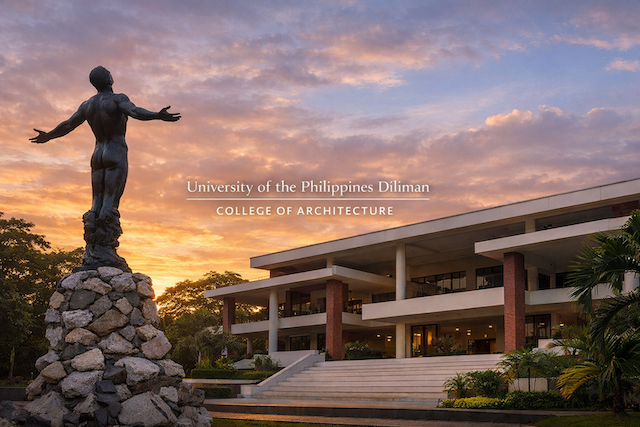
The UP Diliman College of Architecture is housed in a dedicated complex within the campus, providing students with access to studios, lecture rooms, workshops, and exhibition spaces. Design studios serve as collaborative environments where students spend long hours developing projects, engaging in critiques, and exchanging ideas.
The college also benefits from the broader resources of UP Diliman, including libraries, research centers, and cultural institutions. The UP Main Library and specialized collections provide extensive resources on architecture, urban studies, history, and the arts.
Exhibitions, lectures, and design competitions are regularly held within the college, fostering a culture of creative exchange and intellectual engagement.
Research, Extension, and Public Service
Research and extension work are central to the mission of the UP Diliman College of Architecture. Faculty and students actively participate in research projects that address national development goals and community needs.
Extension programs often involve collaboration with local government units, non-government organizations, and marginalized communities. These initiatives may focus on housing design, disaster risk reduction, heritage documentation, or urban planning support.
Through these activities, the college reinforces the idea that architecture is not only a profession but also a form of public service. Students gain firsthand experience in applying their skills to real-world contexts while developing social awareness and ethical responsibility.
Student Life and Organizations
Student life at the UP Diliman College of Architecture is dynamic and intellectually stimulating. Students balance demanding academic workloads with participation in student organizations, design competitions, and cultural activities.
The United Architects of the Philippines Student Auxiliary (UAPSA-UP) is one of the most prominent student organizations, providing professional exposure, workshops, and networking opportunities. Other student-led groups focus on design advocacy, research, and community engagement.
UP Diliman’s broader campus culture, known for its activism, artistic expression, and academic freedom, further enriches the student experience. Architecture students often collaborate with peers from fine arts, urban planning, engineering, and social sciences.
Career Paths and Alumni Impact
Graduates of the UP Diliman College of Architecture pursue diverse career paths. Many become licensed architects and establish successful design practices, while others work in urban planning, government agencies, real estate development, and construction management.
A significant number of alumni are involved in academia, research, heritage conservation, and policy-making. Some have gained international recognition for their work in sustainable design, cultural preservation, and socially responsive architecture.
The strong alumni network of UP Diliman provides mentorship, professional opportunities, and continued engagement with the college. Alumni contributions play a vital role in maintaining the institution’s reputation and influence.
Admission and Academic Standards
Admission to the UP Diliman College of Architecture is highly competitive. Undergraduate applicants must pass the University of the Philippines College Admission Test (UPCAT), which evaluates academic aptitude across multiple disciplines.
Once admitted, students are expected to maintain high academic standards. The curriculum is rigorous, requiring discipline, creativity, and resilience. Studio culture demands time management, critical thinking, and the ability to accept constructive criticism.
Graduate admissions typically require academic credentials, professional experience, and a clear research or design interest aligned with the college’s academic focus.
Role in Philippine Architecture and Society
The UP Diliman College of Architecture has played a transformative role in shaping Philippine architecture and urban discourse. Its graduates and faculty members have contributed significantly to debates on national identity, heritage, housing, and sustainable development.
By emphasizing context-sensitive and socially engaged design, the college has helped redefine architectural practice in the Philippines. It continues to challenge conventional approaches and promote architecture as a tool for nation-building.
As cities face increasing pressures from urbanization, climate change, and social inequality, the College of Architecture remains at the forefront of critical inquiry and innovation.
Conclusion
The University of the Philippines Diliman – College of Architecture stands as a leading institution for architectural education in the Philippines. Its strong academic foundation, socially grounded philosophy, and commitment to public service distinguish it from other architecture schools in the country.
For students who seek an education that goes beyond technical training and embraces critical thinking, cultural awareness, and social responsibility, the UP Diliman College of Architecture offers an intellectually challenging and deeply meaningful academic journey.
Through its teaching, research, and extension work, the college continues to shape not only future architects but also the broader discourse on the built environment and national development.
FAQs (Frequently Asked Questions)
What is the UP Diliman College of Architecture known for?
The University of the Philippines Diliman (UPD) College of Architecture is known for rigorous design training, strong critical thinking culture, and an emphasis on architecture as a public-serving profession. The college is often associated with context-driven design approaches—projects that respond to Filipino culture, climate realities, urban challenges, and community needs. Students typically experience a studio environment that values research, iteration, and critique, helping them develop both conceptual depth and practical problem-solving skills. The college is also respected for producing graduates who contribute not only to private practice but also to government, academe, heritage work, urban policy, and social development initiatives.
What degree programs are offered by the College of Architecture?
The college’s main undergraduate offering is the Bachelor of Science in Architecture (BS Architecture). UP Diliman also offers graduate-level programs in architecture, which may include advanced study tracks focusing on architectural design, theory, or research. Program availability and specific degree titles can change over time, so applicants should consult the official UP Diliman or College of Architecture channels for the latest program list, curricular outlines, and admissions requirements. In general, students can expect a structured progression from foundational courses toward advanced studios and a culminating capstone or thesis requirement.
How long does it take to complete the BS Architecture program at UP Diliman?
Architecture programs in the Philippines are typically designed as multi-year professional tracks, and UP Diliman’s BS Architecture is commonly structured as a five-year program. The program usually builds from fundamentals (drawing, design, history, and basic technical subjects) to higher-level design studios and integrated technical courses. Students may need additional time depending on academic load, studio performance, required coursework sequencing, and individual circumstances. Because architecture is studio-intensive, successful completion often depends on consistent project development and time management across semesters.
What is “studio culture,” and what should students expect?
Studio culture refers to the learning environment where most design work is produced and evaluated. In architecture school, studios are not only classrooms but also collaborative workspaces where students develop design proposals through sketches, models, drawings, digital outputs, and presentations. At UP Diliman, students should expect frequent critiques (often called “crits”) where faculty and sometimes guest reviewers assess projects. Feedback can be direct and detailed, and it is meant to strengthen design thinking, communication skills, and technical clarity. Studio culture also encourages peer learning—students often improve by observing others’ approaches and sharing techniques.
Is UP Diliman College of Architecture focused only on design aesthetics?
No. While aesthetics and form-making are important, UP Diliman’s approach generally frames architecture as both a creative discipline and a socially responsible practice. Students are trained to consider site context, climate responsiveness, cultural meaning, urban systems, and user needs. Technical competence—structures, building technology, environmental controls, and materials—is treated as essential, not optional. Many design problems are approached through research and critical analysis, which helps students develop proposals that can be defended beyond visual appeal and aligned with real constraints such as safety, sustainability, cost, and community impact.
How competitive is admission to UP Diliman for architecture?
Admission to UP Diliman is competitive overall, and architecture is often among the programs with strong applicant interest. Applicants typically need to qualify through the university’s admissions process and meet program-specific requirements if applicable. Because admissions policies may change, prospective students should rely on official announcements for exact procedures and eligibility. Strong academic preparation, disciplined study habits, and a readiness for intensive project-based learning are important. Applicants who are genuinely curious about the built environment, art, history, and problem-solving tend to adapt well to the program’s demands.
Do students need to be good at drawing before entering architecture school?
A background in drawing can help, but it is not always a strict requirement for success. Many students develop strong drawing and visualization skills during the program through repeated practice. Architecture education trains students to communicate ideas visually using hand sketches, drafting, diagramming, physical models, and digital tools. What matters most is willingness to learn, openness to critique, and persistence. Students who consistently practice representational skills—especially spatial thinking and clear communication—often progress quickly even if they start without extensive art training.
What software or tools are commonly used in the program?
Architecture students typically use a mix of hand and digital tools. Common categories include drafting and modeling software, rendering tools, and graphic layout programs for presentations. Students may also use physical model-making materials and workshop tools. Specific software preferences can vary by instructor and studio requirements, and the “best” tool often depends on the project stage—concept development, technical documentation, visualization, or final presentation. New students are usually advised to focus first on fundamental design thinking and representation, then gradually build software proficiency without letting tools override design intent.
What career paths do UP Diliman architecture graduates pursue?
Many graduates pursue professional licensure and work in architectural design firms, construction and project management, real estate development, and design consultancy. Others build careers in urban planning, heritage conservation, housing and community development, government service, research, and teaching. UP Diliman’s broader academic culture can also encourage interdisciplinary paths, such as combining architecture with sustainability work, disaster resilience planning, policy roles, or design entrepreneurship. A strong portfolio, internship experience, and clear professional direction typically strengthen employability after graduation.
Does the college engage in community-based or public service projects?
Yes. UP Diliman’s identity as a national university supports extension and public service initiatives. Architecture-related community projects may involve housing support, planning assistance, post-disaster design studies, heritage documentation, or partnerships with local organizations. These projects help students learn how design operates under real conditions—limited resources, urgent needs, diverse stakeholders, and complex social contexts. Community engagement also reinforces ethical responsibility, reminding students that architecture affects daily life, safety, dignity, and long-term development.
How can prospective students learn more or prepare effectively?
Prospective students can prepare by strengthening foundational skills: reading comprehension, basic math, visual communication, and time management. Exploring architecture through books, documentaries, exhibits, or local built environment observation can also help build design awareness. Practicing sketching, spatial reasoning, and simple model-making can be useful, but curiosity and discipline matter just as much. For the most accurate and current information, applicants should consult official UP Diliman resources for admissions details, program updates, and academic policies before making final decisions.

How to Register for eTravel Philippines (2025 Guide)
Step-by-step guide to completing your eTravel registration before arriving in the Philippines, with images and tips.

Night Market in Cebu – Things You Don’t Know About Cebu Life
Discover the hidden charm of Cebu’s night markets, from street food stalls to local life tips you won’t find in tourist guides.

How to Use ChatGPT for IELTS Preparation: A Complete Guide
Learn how to prepare for IELTS using ChatGPT — including strategies for Writing, Reading, Listening, Speaking, and grammar support.

How to Build a Website Without Coding Using ChatGPT
Discover how to build your own website using AI—no coding skills needed. From structure planning to SEO and design, let ChatGPT guide you.