2025年12月15日
3D ACADEMY offers affordable English study programs in Cebu, Philippines – perfect for beginners, professionals, and exam takers.

3D UNIVERSAL ENGLISH INSTITUTE INC
info.3d-universal.com
8:00-17:00(Mon-Fri)
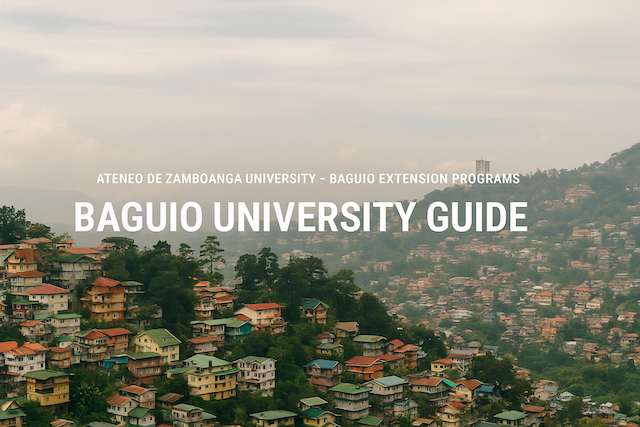
Ateneo de Zamboanga University – Baguio Extension Programs: Baguio University Guide
Contents
- Ateneo de Zamboanga University – Baguio Extension Programs: Baguio University Guide
- Overview of Ateneo de Zamboanga University
- What Are Baguio Extension Programs?
- Academic Focus Areas
- Who Are These Programs For?
- Why Choose Ateneo de Zamboanga University Extension Programs?
- Learning Environment and Teaching Style
- How the Programs Are Delivered
- Admission and Enrollment Process
- Program Duration and Schedule
- Career Benefits of Taking AdZU Baguio Extension Programs
- Partner Institutions and Local Collaborations
- Student Feedback and Learning Outcomes
- Final Thoughts
- FAQs (Frequently Asked Questions)
- What are Ateneo de Zamboanga University – Baguio Extension Programs?
- Are these full college degree programs?
- Who can enroll in the Baguio Extension Programs?
- What types of courses are usually offered?
- How long does each program usually last?
- How are the classes conducted: face-to-face or online?
- What is the teaching style in these extension programs?
- Do participants receive a certificate after completing a program?
- Can these programs provide CPD (Continuing Professional Development) credits?
- How much do the extension programs cost?
- What are the usual admission requirements?
- How can I stay updated about upcoming Baguio Extension Programs?
- What makes Ateneo de Zamboanga University’s extension programs different from other trainings?
Ateneo de Zamboanga University – Baguio Extension Programs: Baguio University Guide
Ateneo de Zamboanga University (AdZU) is one of the most respected Jesuit institutions in the Philippines, known for its academic excellence, leadership training, and strong commitment to social formation. While its main campus is located in Zamboanga City, the university has extended its reach through specialized extension programs offered in Baguio City. These programs provide opportunities for professionals, educators, and community workers in Northern Luzon to access Jesuit-quality training without relocating to Mindanao.
This guide provides a detailed overview of Ateneo de Zamboanga University’s Baguio Extension Programs, including offerings, academic environment, admissions, campus life, and why students choose AdZU for continuing education.
Overview of Ateneo de Zamboanga University
Ateneo de Zamboanga University is a private Jesuit-run higher education institution founded in 1912. It is widely recognized for its commitment to academic excellence, ethical leadership, and service to marginalized communities. The Jesuit model of education emphasizes critical thinking, strong social values, spiritual development, and service-oriented leadership.
Its extension programs in Baguio City expand the university’s mission by offering advanced academic and professional courses to individuals and organizations in the Cordillera Administrative Region (CAR) and nearby provinces.
What Are Baguio Extension Programs?
The Baguio Extension Programs of Ateneo de Zamboanga University are designed to provide flexible, high-quality academic and training opportunities for learners in the Northern Luzon region. These programs are typically conducted through partnerships with local institutions, training centers, and community organizations.
Typical Program Formats
-
Short-term certificate courses
-
Workshops and seminars
-
Graduate-level modules
-
Professional development programs
-
Leadership and organizational training
Programs are often designed for:
-
Educators
-
Community development workers
-
Government employees
-
NGO personnel
-
Business professionals
-
Youth leaders
Because these programs are flexible, busy working adults can pursue further education without having to commit to full-time study.
Academic Focus Areas
While the specific courses offered in Baguio may vary depending on the semester and institutional partnerships, several academic and professional fields are frequently covered.
1. Education and Teaching Innovation
Ateneo’s education-related programs emphasize modern pedagogy, inclusive education, curriculum development, and leadership for school administrators.
These courses are popular among teachers seeking professional growth and promotion.
2. Leadership and Management Training
Jesuit institutions are known for forming leaders who are “men and women for others.”
Programs may include:
-
Organizational leadership
-
Ethical decision-making
-
Team management
-
Conflict resolution
-
Strategic planning
These are widely used by government agencies and NGOs.
3. Community Development and Social Transformation
These programs highlight AdZU’s commitment to social justice and community empowerment.
Training may focus on:
-
Grassroots community leadership
-
Participatory development
-
Disaster preparedness and response
-
Social research methods
4. Guidance and Counseling Courses
Extension programs sometimes include modules for mental health advocates and school counselors, covering:
-
Basic counseling techniques
-
Psychological first aid
-
Student wellness programs
5. Theology and Values Formation
Given the Jesuit identity of the institution, some programs include:
-
Spiritual formation
-
Christian leadership
-
Values education modules
These are often used by Catholic school teachers and church-based organizations.
6. Research and Academic Writing Workshops
To support professionals and graduate students, AdZU offers workshops that develop skills in:
-
Qualitative and quantitative research
-
Academic writing
-
Journal publication
-
Capstone preparation
Who Are These Programs For?
Ateneo de Zamboanga University’s extension programs in Baguio are ideal for those who want to pursue high-quality education while managing work and personal responsibilities.
Common Participants
-
Teachers seeking promotion or CPD (Continuing Professional Development) units
-
Youth and community leaders
-
NGO and LGU workers
-
Business managers
-
Students preparing for graduate studies
-
Individuals looking to build leadership and communication skills
The programs attract a diverse group of learners, creating rich discussions and collaborative learning environments.
Why Choose Ateneo de Zamboanga University Extension Programs?
1. Jesuit Quality Education
AdZU follows the centuries-old Jesuit tradition of academic rigor, character formation, and leadership development. The training is holistic, focusing not just on knowledge but also on values, ethics, and social mission.
2. Accessible Learning Without Relocation
Students based in Baguio and nearby provinces can enjoy Ateneo-level training without the need to travel to Zamboanga City or Manila.
3. Flexible and Modular Delivery
Programs usually take the form of weekend classes, short-term workshops, hybrid learning setups, or customized training. This makes them ideal for working professionals.
4. Expert Instructors
Modules are conducted by experienced faculty members from Ateneo de Zamboanga University and partner institutions. Many are specialists in education, leadership, psychology, and community development.
5. Professional Growth and Credentials
Participants may receive:
-
Certificates of completion
-
CPD credits
-
Training credentials recognized by academic institutions and employers
These certificates can boost resumes and support career advancement.
Learning Environment and Teaching Style
Ateneo extension programs emphasize:
-
Interactive learning
-
Real-world application
-
Group activities and workshops
-
Reflection sessions
-
Case studies and simulations
Learners are encouraged to think critically and examine social issues through multiple perspectives.
The atmosphere is supportive, inclusive, and community-oriented.
How the Programs Are Delivered
1. In-Person Training
Workshops and seminars are often held at partner venues within Baguio City. Facilities depend on the hosting institution but generally include classrooms, conference rooms, and multimedia-equipped halls.
2. Online and Hybrid Learning
To accommodate learners from distant towns, some modules are offered via:
-
Zoom sessions
-
Online collaborative activities
-
Self-paced digital modules
Hybrid setups combine face-to-face intensives with online classes.
3. Customized Training for Organizations
Government offices, schools, and NGOs can request tailored training suited to their needs, such as leadership coaching, disaster risk management, or community engagement workshops.
Admission and Enrollment Process
Because extension programs are not full-degree offerings, the admission process is simpler and quicker.
Typical Requirements
-
Registration form
-
Valid ID
-
Payment of program fees
-
Sometimes: recommendation letter or employment certification (for specialized modules)
Steps to Enroll
-
Check available programs announced by Ateneo de Zamboanga University or partner institutions.
-
Submit the registration form (online or onsite).
-
Settle the required fees.
-
Attend orientation or receive course instructions.
Fees vary depending on program type, duration, and materials.
Program Duration and Schedule
Extension programs vary in length and intensity.
Common Timeframes
-
1–2 days: Training workshops
-
1 week: Specialized skill modules
-
1–3 months: Leadership or education programs
-
Modular sessions: Conducted on weekends or evenings
Schedules are intentionally flexible to accommodate professionals.
Career Benefits of Taking AdZU Baguio Extension Programs
Graduates of extension programs can enjoy improved career opportunities.
1. Career Advancement
Teachers may earn CPD points needed for license renewal or promotion.
NGO workers may gain credentials required for program management roles.
2. Expanded Professional Network
Participants meet peers from various sectors:
-
Education
-
Government
-
Corporate
-
Religious groups
-
NGOs
This fosters collaboration and creates opportunities for future projects.
3. Strengthened Leadership and Communication Skills
Jesuit education is known for forming leaders who are reflective, compassionate, and service-oriented.
4. Better Preparedness for Graduate Studies
Those planning to pursue a master’s degree benefit from research and academic writing workshops.
Partner Institutions and Local Collaborations
The success of AdZU’s extension programs in Baguio depends on partnerships with organizations such as:
-
Local universities
-
Catholic schools
-
LGUs
-
NGOs
-
Private training centers
These collaborations ensure the relevance and accessibility of programs to local communities.
Student Feedback and Learning Outcomes
Students who attend Ateneo extension programs often highlight:
-
High-quality instructors
-
Welcoming learning environment
-
Practical and immediately applicable knowledge
-
Personal growth
-
Strong sense of community
Many participants continue enrolling in multiple programs due to positive experiences.
Final Thoughts
Ateneo de Zamboanga University’s Baguio Extension Programs offer a powerful combination of academic excellence, leadership training, and social formation—hallmarks of Jesuit education. For professionals and learners in Northern Luzon, these programs provide valuable pathways for personal growth, career advancement, and community development.
Whether you are a teacher seeking professional credits, a leader wanting to sharpen your skills, or a community worker aiming to make a greater impact, AdZU’s extension programs in Baguio provide accessible, high-quality education tailored to your goals.
FAQs (Frequently Asked Questions)
What are Ateneo de Zamboanga University – Baguio Extension Programs?
Ateneo de Zamboanga University (AdZU) Baguio Extension Programs are non-degree training, certificate, and development courses offered outside the main Zamboanga campus, usually in partnership with local institutions in Baguio City and nearby areas. These programs aim to bring Jesuit-quality education, leadership formation, and professional development closer to learners in Northern Luzon without requiring them to relocate or enroll in full-time degree programs.
Are these full college degree programs?
No. The Baguio extension offerings are typically short-term and modular, such as certificate courses, seminars, workshops, and professional development training. While they may support your academic and career growth, they are not equivalent to a full bachelor’s or master’s degree. However, some modules can be useful preparation for graduate studies or can complement an existing degree.
Who can enroll in the Baguio Extension Programs?
The programs are designed mainly for working professionals and community leaders. Common participants include teachers, guidance counselors, administrators, LGU and NGO staff, church workers, youth leaders, and managers in private companies. In some cases, undergraduate students and fresh graduates who want to enhance specific skills—such as research, leadership, or communication—may also be accepted, depending on program requirements.
What types of courses are usually offered?
Offerings vary by year and by partnership, but they often include topics such as:
- Educational leadership and innovative teaching
- Organizational and community leadership
- Guidance and counseling basics
- Community development and social transformation
- Spiritual formation and values education
- Research methods and academic writing
These courses are typically practical, context-based, and aligned with AdZU’s mission of forming competent and compassionate leaders.
How long does each program usually last?
Program duration depends on the design and objectives. Some activities last only one to two days (for intensive workshops), while others may run for several weeks or months with sessions held on weekends or evenings. Modular leadership or education programs might be spread out to accommodate busy schedules, allowing learners to balance work, family, and study.
How are the classes conducted: face-to-face or online?
Delivery modes can be:
- Face-to-face sessions at partner schools, training centers, or conference venues in Baguio
- Online classes via video conferencing platforms and learning management systems
- Hybrid formats that combine in-person sessions with online modules
The chosen format depends on the specific program, logistical arrangements, and current health or travel conditions.
What is the teaching style in these extension programs?
The teaching style follows the Jesuit educational tradition, which is interactive, reflective, and learner-centered. Expect a combination of short lectures, group discussions, workshops, role-plays, case studies, and written reflection. Participants are encouraged to connect theory with their personal and professional experiences, and to think critically about social issues and their role in addressing them.
Do participants receive a certificate after completing a program?
Yes. Most extension programs award a certificate of completion or participation to those who meet attendance and performance requirements. For some professional courses, the certificate may indicate the number of training hours or units earned. These documents can be added to your portfolio, submitted to your employer, or used as supporting evidence for promotion or continuing professional development, depending on institutional policies.
Can these programs provide CPD (Continuing Professional Development) credits?
Some education- or profession-related programs may be designed to qualify for CPD credits, especially for teachers or licensed professionals, but this depends on accreditation arrangements and government regulations at the time of offering. It is important for participants to check the specific program announcement or contact the organizer directly to confirm whether CPD points are included.
How much do the extension programs cost?
Fees vary based on program type, duration, materials, and venue. Short workshops are generally more affordable, while longer or highly specialized modules may have higher fees. Costs may cover handouts, certificates, and other resources. Some programs may also be subsidized or supported by partner organizations, which helps keep fees manageable for participants.
What are the usual admission requirements?
Because these are non-degree programs, admission requirements are typically straightforward. Common requirements include:
- Accomplished registration or application form
- Valid ID or employment ID for verification
- Payment of program fee within the specified deadline
For specialized courses, you may be asked for a brief resume, a recommendation letter, or proof of current employment in a relevant field.
How can I stay updated about upcoming Baguio Extension Programs?
Announcements are usually made through official Ateneo de Zamboanga University channels and partner institutions. To stay updated, you can:
- Follow official AdZU social media pages and website updates
- Connect with partner schools or training centers in Baguio
- Join mailing lists or contact the organizing office to express your interest
Regularly checking official announcements ensures that you receive accurate information on schedules, fees, and application procedures.
What makes Ateneo de Zamboanga University’s extension programs different from other trainings?
AdZU’s Baguio Extension Programs are guided by the Jesuit tradition of forming “men and women for others.” This means that, beyond technical skills, the programs emphasize ethical leadership, social responsibility, and personal reflection. Participants are not only trained to be competent professionals but also encouraged to become compassionate, reflective, and service-oriented leaders in their workplaces and communities.
Baguio University Guide
Baguio Province All Universities Lists
Philippines University Guide

How to Register for eTravel Philippines (2025 Guide)
Step-by-step guide to completing your eTravel registration before arriving in the Philippines, with images and tips.

Night Market in Cebu – Things You Don’t Know About Cebu Life
Discover the hidden charm of Cebu’s night markets, from street food stalls to local life tips you won’t find in tourist guides.

How to Use ChatGPT for IELTS Preparation: A Complete Guide
Learn how to prepare for IELTS using ChatGPT — including strategies for Writing, Reading, Listening, Speaking, and grammar support.

How to Build a Website Without Coding Using ChatGPT
Discover how to build your own website using AI—no coding skills needed. From structure planning to SEO and design, let ChatGPT guide you.