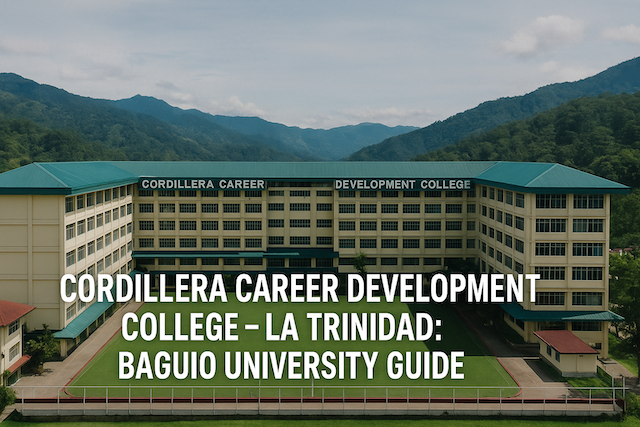
Cordillera Career Development College (CCDC) – La Trinidad: Baguio University Guide
Cordillera Career Development College (CCDC) in La Trinidad, Benguet, is one of the most recognized higher education institutions in the Cordillera region. Known for its strong academic foundations, culturally grounded programs, and commitment to community development, CCDC has become a top choice for students aiming to pursue quality education while experiencing the unique cultural environment of the Cordilleras.
This guide provides a comprehensive overview of CCDC’s programs, facilities, campus life, admissions, and what students can expect when studying in La Trinidad.
Overview of Cordillera Career Development College (CCDC)
Cordillera Career Development College was established to provide accessible and high-quality education to students in the Cordillera Administrative Region (CAR). Over the years, it has grown significantly, expanding its program offerings and becoming a reputable institution in disciplines such as education, criminology, engineering, business, and information technology.
The college operates with a mission to promote academic excellence, cultural appreciation, and student development. CCDC embraces the Cordilleran identity, ensuring that its curriculum and campus culture reflect the values, traditions, and aspirations of the local community.
La Trinidad, where CCDC is located, is known for its cool climate, scenic mountain views, and the famous Strawberry Farm. Students enjoy a peaceful environment ideal for studying while still being close to Baguio City’s urban conveniences.
Location and Campus Environment
CCDC is situated in Buyagan, La Trinidad, Benguet, making it easily accessible to students from both La Trinidad and neighboring Baguio City. Public transportation is readily available, and the campus area is surrounded by essential establishments such as convenience stores, dormitories, eateries, and internet cafés.
Key Features of the Location:
-
Cool, mountain climate that makes studying more comfortable year-round
-
Safe and student-friendly environment with many boarding houses within walking distance
-
Proximity to Baguio City, only 10–20 minutes away depending on traffic
-
Beautiful natural scenery, providing a relaxing atmosphere for academic life
The campus itself is modest yet well-equipped, with buildings dedicated to specific academic disciplines, open spaces for student recreation, and facilities that support holistic development.
Academic Programs at CCDC
CCDC offers a diverse set of undergraduate and graduate programs, designed to meet regional and national workforce demands. The institution is particularly known for its teacher education and criminology programs.
Popular Programs:
Education Programs
-
Bachelor of Elementary Education (BEEd)
-
Bachelor of Secondary Education (BSEd)
-
Major fields often include English, Mathematics, Social Studies, and Science
CCDC’s education graduates are recognized for their strong teaching foundations and high board exam performance.
Criminology
One of the flagship programs, the Bachelor of Science in Criminology prepares students for careers in law enforcement, investigation, corrections, and public safety. CCDC regularly produces board passers and provides specialized training through simulation activities.
Business and Accountancy
These programs equip students with managerial, entrepreneurial, and technical skills relevant to today’s business industries.
Engineering and Technology Programs
Engineering and IT students benefit from laboratory-based learning and industry-aligned training.
Graduate Studies
CCDC also offers postgraduate programs for professionals looking to advance their careers, especially in education and public administration.
Campus Facilities and Student Resources
To support the academic and extracurricular needs of students, CCDC provides a number of essential facilities.
Library and Learning Resource Center
The library houses textbooks, journals, digital materials, and research resources. It is designed to provide a quiet and comfortable study environment.
Computer Laboratories
Multiple computer labs ensure that students—particularly those in IT and business programs—have access to up-to-date technology for coursework and projects.
Science and Engineering Laboratories
Students in engineering, criminology, and related fields gain hands-on experience through specialized laboratories and equipment.
Audio-Visual Rooms
These are used for lectures, presentations, and multimedia instruction.
Sports and Wellness Facilities
CCDC supports student wellness through courts and open areas where athletes and student organizations hold practices and events.
Canteens and Food Stalls
Affordable food options are available on campus and nearby, catering to student budgets.
Dormitories and Boarding Houses
While CCDC does not operate its own dormitory, many safe and reasonably priced boarding houses are located around the campus.
Student Life at CCDC
Life at CCDC is a blend of academics, culture, and community involvement. Students can expect a supportive and inclusive environment where traditions and modern education meet.
What Student Life Looks Like:
-
Student Organizations: Academic clubs, cultural groups, sports teams, and special-interest organizations welcome student participation.
-
Cultural Appreciation: CCDC places emphasis on Cordilleran heritage through events, performances, and cultural programs.
-
Community Outreach: Students join outreach activities in local communities, reflecting the school’s commitment to service.
-
Campus Events: Intramurals, academic fairs, seminars, and foundation week celebrations create a vibrant atmosphere.
Overall, CCDC fosters both intellectual and personal growth, allowing students to build lifelong friendships and meaningful experiences.
Tuition Fees and Budget Considerations
CCDC is known for being affordable compared to many private institutions. Tuition varies depending on the program, laboratory fees, and year level, but students generally find CCDC accessible even with limited financial resources.
Estimated Student Expenses (Approximate):
-
Tuition and school fees: Moderate and competitive
-
Boarding house: ₱2,500–₱5,000 per month depending on location and amenities
-
Food and allowance: ₱150–₱250 per day
-
Transportation: Minimal, especially for students living nearby
Scholarships and financial assistance programs are available for qualified students, including academic scholarships and government-funded options.
Admission Requirements and Process
Admission to CCDC is straightforward and student-friendly. Requirements may vary by program, but generally include:
Basic Requirements:
-
High School Report Card (Form 138) or SHS Form 137
-
Certificate of Good Moral Character
-
NSO/PSA Birth Certificate
-
2×2 ID photos
-
Application form (available on campus or official channels)
For Transferees:
For Graduate Programs:
Applicants are encouraged to submit documents early, especially for high-demand courses like criminology and education.
Why Choose CCDC?
Students often choose CCDC for its combination of quality education, affordability, and community-centered values. Here are some reasons why CCDC stands out:
-
Strong cultural identity and community connection
-
Accessible education with competitive tuition fees
-
Wide range of academic programs suited to local and national industries
-
Supportive and safe environment ideal for college students
-
Dedicated faculty and hands-on learning experiences
CCDC remains committed to producing graduates who are competent, culturally grounded, and ready to contribute to their professions and communities.
Living in La Trinidad as a CCDC Student
La Trinidad is an excellent place for students due to its cooler climate and peaceful surroundings. While quieter than Baguio City, it offers everything students need—markets, malls, cafés, study areas, gyms, and transportation.
Highlights of Living in La Trinidad:
-
Cost of living is lower than in Baguio
-
Safe and friendly communities
-
Access to fresh produce and local delicacies
-
Nearby attractions such as Strawberry Farm, Mt. Kalugong, and museums
Students can easily balance their studies with recreation, making La Trinidad a comfortable and rewarding place to live.
Final Thoughts
Cordillera Career Development College (CCDC) is a strong choice for students seeking quality education in a culturally rich and academically supportive environment. With a diverse range of programs, affordable tuition, and close-knit campus life, CCDC continues to shape the careers and futures of students across the Cordillera region and beyond.
Whether you are a first-year student, transferee, or working professional pursuing graduate studies, CCDC offers opportunities for growth, learning, and community engagement.
FAQs (Frequently Asked Questions)
Where is Cordillera Career Development College (CCDC) located?
Cordillera Career Development College (CCDC) is located in La Trinidad, Benguet, within the Cordillera region of the Philippines. The campus is in a convenient area that is accessible by public transportation from both La Trinidad town center and nearby Baguio City. Because it is in an elevated, mountainous area, students enjoy a cool climate and scenic surroundings that are ideal for focused study and campus life.
What academic programs does CCDC offer?
CCDC offers a range of undergraduate and graduate programs that respond to regional and national employment needs. Popular undergraduate programs include Education (Elementary and Secondary), Criminology, Business Administration, Accountancy, Office Administration, Information Technology, Computer Science, and Civil Engineering. The college also offers graduate programs, especially in the fields of education and public administration, for professionals who want to advance their careers or qualify for higher positions.
Is CCDC a good choice for Education and Criminology students?
Yes. CCDC is widely recognized in the Cordillera region for its strong Education and Criminology programs. Education students receive solid training in pedagogy, classroom management, and subject specialization, helping them prepare for the Licensure Examination for Teachers and real-world teaching environments. Criminology students benefit from a curriculum that includes law, forensics, investigation, and community safety, along with practical exercises and simulations that reflect actual field conditions.
How much does it cost to study at CCDC?
Tuition and fees at CCDC are generally more affordable compared to many private universities in larger cities. Actual costs vary by program, number of units, and laboratory requirements, but most students find the school budget-friendly. Aside from tuition, students should also plan for boarding house rent, food, transportation, uniforms, and school materials. The overall monthly cost of living in La Trinidad is typically lower than in Baguio City, which is helpful for budget-conscious families.
Are there scholarships or financial assistance programs available?
CCDC offers scholarship and financial assistance opportunities for qualified students. These may include academic scholarships for honor students, government-funded scholarship programs, and discounts for deserving or low-income students. Some scholarships are performance-based and require maintaining a certain grade point average, while others are need-based. Interested applicants should inquire at the school’s admissions or scholarship office for updated information, requirements, and application deadlines.
What is student life like at CCDC?
Student life at CCDC is a mix of academic focus, cultural pride, and community involvement. Learners can join various student organizations, such as academic clubs, cultural and arts groups, religious organizations, and sports teams. The school also hosts events like intramurals, foundation celebrations, seminars, and outreach activities. Because CCDC is deeply connected to the Cordilleran community, students often participate in cultural programs and service projects that highlight indigenous identity and local traditions.
What facilities can students use on campus?
CCDC provides essential facilities to support both academic and extracurricular activities. These typically include a library and learning resource center, computer laboratories, science and criminology laboratories, engineering classrooms, and audio-visual rooms for lectures and presentations. There are also open spaces, courts, or multipurpose areas for sports, student gatherings, and events. On or near the campus, students can find canteens, small eateries, and stores that cater to everyday needs.
Are there dormitories or boarding houses near CCDC?
While CCDC may not operate its own large on-campus dormitory, there are many boarding houses and rented rooms available within walking distance or a short commute from the school. These options range from simple shared rooms with common facilities to more private units with their own bathrooms and kitchens. Rental rates are generally reasonable, and many students choose to live with classmates or friends to share costs. It is still important to visit and inspect the boarding house personally before signing any agreement.
How do students commute to and from CCDC?
Most students commute to CCDC via local jeepneys, vans, or other public transport that pass through La Trinidad and nearby barangays. Those coming from Baguio City usually take routes that go toward La Trinidad town proper and then transfer to vehicles that pass near the campus. Because the school is in an accessible area, travel time is manageable, although it can increase slightly during rush hours or peak seasons. Some students also walk or use motorcycles if they live nearby.
What is it like living and studying in La Trinidad compared to Baguio City?
La Trinidad offers a quieter and more laid-back environment compared to the busier streets of Baguio City. The climate is similarly cool, and students benefit from less noise and congestion, which can make studying more comfortable. At the same time, La Trinidad has markets, grocery stores, cafés, and basic services, so daily needs are easy to meet. Baguio City is only a short ride away, so students can still access malls, major hospitals, and additional entertainment options when needed.
Is CCDC suitable for students from outside the Cordillera region?
Yes. Although CCDC is strongly rooted in Cordilleran culture and primarily serves the region, it welcomes students from other provinces and regions of the Philippines. Non-local students often find the cultural experience enriching, as they learn about indigenous traditions while pursuing their chosen degrees. The relatively low cost of living and friendly community also make La Trinidad a comfortable place for students who are living away from home for the first time.
How can I apply to CCDC and what documents do I need?
Prospective students usually begin by securing and filling out an application or admission form, which may be obtained on campus or through official channels. Common requirements include a high school report card or senior high school Form 137, a certificate of good moral character, a PSA birth certificate, and recent ID photos. Transferees and graduate school applicants must also submit their transcript of records and other program-specific documents. It is best to contact the admissions office directly or visit the campus during office hours to get the latest list of requirements and enrollment schedules.