2025年12月15日
3D ACADEMY offers affordable English study programs in Cebu, Philippines – perfect for beginners, professionals, and exam takers.

3D UNIVERSAL ENGLISH INSTITUTE INC
info.3d-universal.com
8:00-17:00(Mon-Fri)
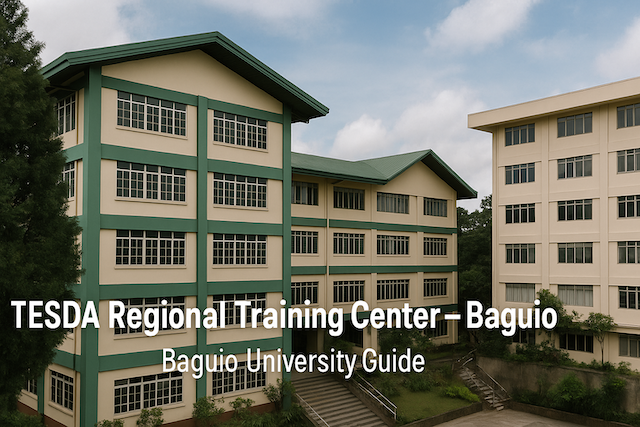
TESDA Regional Training Center – Baguio: Baguio University Guide
Contents
- TESDA Regional Training Center – Baguio: Baguio University Guide
- Overview of TESDA Regional Training Center – Baguio
- Why Choose TESDA RTC–Baguio?
- Training Programs Offered
- Campus Facilities and Training Environment
- Student Life and Learning Experience
- Admission Requirements
- How to Enroll
- Scholarship Opportunities
- Career Opportunities for Graduates
- TESDA Assessment and Certification
- Location and Accessibility
- Final Thoughts
- FAQs (Frequently Asked Questions)
- What is TESDA Regional Training Center – Baguio?
- What kinds of courses are offered at TESDA RTC–Baguio?
- Do I need to be a college graduate to enroll?
- What are the basic admission requirements?
- How much are the tuition and training fees?
- Are there TESDA scholarships available at the center?
- How long does each training program take to finish?
- Is the training focused more on theory or practice?
- What kind of certificate will I receive after completing the course?
- Is there an age limit for applicants?
- Can foreigners study at TESDA RTC–Baguio?
- Does the center offer dormitories or on-campus accommodation?
- What job opportunities are available after graduating?
- How do I apply or get more information?
TESDA Regional Training Center – Baguio: Baguio University Guide
The TESDA Regional Training Center – Baguio (TESDA RTC-Baguio) is one of the leading government-operated technical-vocational (tech-voc) institutions in Northern Luzon. It plays a vital role in providing industry-aligned skills training, assessment, and certification to students, employees, job seekers, and career shifters. Situated in Baguio City—one of the Philippines’ major education hubs—the center attracts learners from Benguet, Cordillera provinces, and other regions seeking high-quality and affordable vocational education.
This guide gives an in-depth overview of TESDA RTC–Baguio, covering its programs, facilities, campus life, admission procedures, and opportunities available for graduates.
Overview of TESDA Regional Training Center – Baguio
TESDA RTC–Baguio is a highly reputable institution under the Technical Education and Skills Development Authority (TESDA), which is the Philippine government’s main agency for technical-vocational education and skills training. The center serves as both a training ground and assessment site, offering a wide variety of courses aligned with national and global workforce standards.
The center’s mission focuses on producing job-ready graduates equipped with competencies needed in industries such as construction, automotive, welding, electronics, information technology, tourism, and more. The training programs combine theoretical instruction with intensive hands-on practice, ensuring learners master practical skills applicable in real-world work environments.
Why Choose TESDA RTC–Baguio?
TESDA RTC–Baguio stands out for several reasons:
Industry-Recognized Certifications
All courses culminate in a National Certificate (NC) or Certificate of Competency (COC)—recognized locally and internationally. These certificates open doors for employment in various sectors, including overseas opportunities.
Affordable Training Fees
Many programs are subsidized by the government. Several courses are offered free through TESDA scholarships such as TWSP, PESFA, and STEP. This makes vocational education accessible to students from diverse backgrounds.
Strong Employment Demand
Skills-based careers are increasingly essential in the Philippine economy. Graduates of welding, automotive, construction, and technical fields often secure jobs quickly due to high demand.
Accessible Location
Located in Baguio City, the training center is near major transportation hubs and residential areas, making it convenient for both local and out-of-town students.
Training Programs Offered
TESDA RTC–Baguio offers a wide range of Competency-Based Training (CBT) programs. These are frequently updated to match industry requirements. Common programs include:
Automotive Servicing
Automotive Servicing NC I–II covers diagnosis, maintenance, and repair of vehicle systems. Students learn mechanical and electronic troubleshooting using modern tools and equipment.
Welding and Fabrication
Programs such as SMAW (Shielded Metal Arc Welding) NC I–II, TIG Welding, and MIG Welding are among the most in-demand. Graduates often pursue high-paying jobs in construction, manufacturing, or overseas.
Electrical Installation and Maintenance
This program teaches students to install, maintain, and troubleshoot residential and commercial electrical systems. It includes safety protocols, wiring design, and use of electrical tools.
Electronics and Mechatronics
Learners acquire knowledge in electronic circuit installation, basic robotic systems, and equipment servicing—skills essential for modern industries.
Construction and Heavy Equipment Operation
Programs include carpentry, masonry, plumbing, and heavy equipment operation. These courses are ideal for those pursuing careers in infrastructure projects.
Information and Communication Technology (ICT)
ICT programs range from Computer Systems Servicing NC II to more advanced networking and hardware-related courses. Students gain skills needed for IT support roles.
Tourism and Hospitality
Programs such as Housekeeping NC II, Food and Beverage Services NC II, and Front Office Services NC II prepare students for careers in hotels, resorts, and restaurants.
Campus Facilities and Training Environment
TESDA RTC–Baguio maintains specialized workshops and laboratories to support hands-on learning. Facilities often include:
-
Welding shops equipped with modern welding machines
-
Automotive labs featuring real vehicle units for diagnostics
-
Electrical and electronics rooms with updated testing tools
-
ICT laboratories with computers and networking equipment
-
Training kitchens and hospitality simulation rooms
-
Classrooms designed for competency-based learning sessions
The center follows TESDA’s strict training and assessment standards, ensuring learners receive instruction comparable to industry practices.
Student Life and Learning Experience
Although TESDA RTC–Baguio is primarily a training-focused institution, students enjoy an engaging and supportive learning environment.
Hands-On Learning
Classes emphasize practical application, often with 70% hands-on activities and 30% classroom instruction.
Industry Exposure
Some programs include industry immersion or on-the-job training (OJT), allowing students to experience actual work settings before graduation.
Supportive Instructors
Trainers are TESDA-certified, many of whom have professional backgrounds in their respective fields.
Flexible Schedules
TESDA offers weekday and weekend classes to accommodate working adults, students, and individuals balancing other commitments.
Admission Requirements
Admission at TESDA RTC–Baguio is straightforward. Typical requirements include:
-
Completed application form
-
High school diploma or ALS certificate (or college credentials)
-
Birth certificate (PSA)
-
1–2 valid IDs
-
Medical certificate (depending on the course)
-
1×1 or 2×2 ID photos
-
Attendance in an orientation or screening interview
Requirements may vary depending on the course or scholarship program.
How to Enroll
TESDA RTC–Baguio follows a clear enrollment process:
-
Choose a training program
Review available TESDA courses and select the one that fits your career goals. -
Check training schedules and scholarship availability
Many courses have limited slots, so early inquiry is recommended. -
Prepare all necessary documents
Submit these to the TESDA registrar or admissions office. -
Attend screening or orientation
Some programs require basic skills evaluation. -
Pay training fees or confirm scholarship status
If your slot is approved under a TESDA scholarship, fees may be waived. -
Begin training
Classes usually run from 2 weeks to 6 months, depending on the program.
Scholarship Opportunities
TESDA RTC–Baguio participates in several national scholarship programs, including:
Training for Work Scholarship Program (TWSP)
Covers tuition for priority skills needed by industries such as construction, automotive, and ICT.
Private Education Student Financial Assistance (PESFA)
Provides financial aid to deserving students entering tech-voc education.
Special Training for Empowerment Program (STEP)
Designed for out-of-school youth, unemployed adults, and community-based learners.
TESDA Online Program (TOP)
Offers free digital learning modules that support in-person training.
Career Opportunities for Graduates
Graduates of TESDA RTC–Baguio are equipped for a wide range of local and international job opportunities, such as:
-
Automotive technician
-
Welder or fabricator
-
Electrician
-
Electronics technician
-
IT support specialist
-
Hotel and restaurant service staff
-
Construction worker or tradesperson
TESDA certificates significantly improve employability, especially in industries that value practical skills and certifications.
TESDA Assessment and Certification
Assessment is a crucial part of TESDA training. After completing a program, students undergo a competency assessment to verify their skills. Successful candidates receive:
-
National Certificate (NC I, NC II, NC III, or NC IV)
-
Certificate of Competency (COC)
These certifications are widely accepted by employers in the Philippines and abroad.
Location and Accessibility
TESDA RTC–Baguio is strategically located within the city, making it accessible by jeepneys, taxis, and public transportation. Its location is close to residential areas, commercial centers, and other educational institutions, providing convenience for daily commuters.
Final Thoughts
TESDA Regional Training Center – Baguio is an excellent choice for students and professionals seeking practical, skills-focused education that leads directly to employment. Whether you want to enter the workforce quickly, upgrade your skills, or transition to a new career, TESDA RTC–Baguio offers affordable, high-quality training that meets both local and international standards.
If you aim to build a solid foundation in technical-vocational skills, this institution provides one of the best learning environments in the region.
FAQs (Frequently Asked Questions)
What is TESDA Regional Training Center – Baguio?
TESDA Regional Training Center – Baguio (TESDA RTC–Baguio) is a government-operated technical-vocational training institution under the Technical Education and Skills Development Authority (TESDA). It offers skills-based programs, competency assessments, and nationally recognized certifications for individuals who want to gain practical skills for employment, entrepreneurship, or career advancement. The center serves learners from Baguio City, Benguet, and nearby provinces in the Cordillera region.
What kinds of courses are offered at TESDA RTC–Baguio?
The center offers a wide range of competency-based training programs. Common areas include Automotive Servicing, Welding (such as SMAW, TIG, and MIG), Electrical Installation and Maintenance, Electronics, Information and Communication Technology (ICT), Construction-related trades (carpentry, masonry, plumbing), and Tourism and Hospitality courses like Housekeeping, Food and Beverage Services, and Front Office Services. Available courses may change depending on industry demand and TESDA priorities, so it is best to check the latest schedule directly with the center.
Do I need to be a college graduate to enroll?
No. Many TESDA programs accept applicants who are high school graduates, senior high school completers, or ALS passers. Some courses may have specific educational prerequisites, but a college diploma is not usually required. In a few advanced or specialized programs, prior training or experience in a related field may be necessary, so applicants should clarify requirements for their chosen course before applying.
What are the basic admission requirements?
Typical requirements include a duly accomplished application form, a high school diploma or ALS certificate (or higher educational credential), a birth certificate, at least one valid ID, and recent ID photos. Some programs may ask for a medical certificate, proof of residency, or other supporting documents. Applicants may also be required to attend an orientation, briefing, or simple skills screening before final acceptance into the program.
How much are the tuition and training fees?
Training fees vary by course, duration, and materials needed. However, many programs are heavily subsidized or completely free under TESDA scholarship programs. In most cases, trainees only need to shoulder minimal expenses such as personal supplies, uniforms, or transportation. Since fees and scholarships can change, it is recommended to directly contact TESDA RTC–Baguio or visit their official channels for updated fee information.
Are there TESDA scholarships available at the center?
Yes. TESDA RTC–Baguio usually participates in several scholarship schemes such as the Training for Work Scholarship Program (TWSP), Private Education Student Financial Assistance (PESFA), and the Special Training for Employment Program (STEP). These scholarships may cover tuition, training materials, and sometimes provide a training allowance. Slots are limited and often prioritized for qualified applicants like out-of-school youth, unemployed individuals, or those belonging to specific target sectors.
How long does each training program take to finish?
Course duration depends on the program and the number of training hours required by TESDA standards. Some short courses may be completed in two to four weeks, while more extensive programs can take two to six months. Training is typically scheduled in sessions of several hours per day, either on weekdays, weekends, or a combination of both, making it possible for working learners to join.
Is the training focused more on theory or practice?
TESDA training is designed to be highly practical and competency-based. While trainees do learn essential theory and safety concepts in the classroom, a large portion of the program involves hands-on activities, shop work, and practice using actual tools, equipment, machines, or simulation facilities. The goal is to ensure that trainees can perform real tasks at industry standards, not just memorize concepts.
What kind of certificate will I receive after completing the course?
After finishing the training, you may proceed to the TESDA competency assessment. If you pass, you will be awarded a National Certificate (NC I, NC II, NC III, or NC IV, depending on the course) or a Certificate of Competency (COC). These credentials are nationally recognized and are often required by employers in the Philippines and abroad, especially in trades such as welding, automotive servicing, electrical installation, and hospitality.
Is there an age limit for applicants?
Generally, TESDA programs are open to individuals who are at least 18 years old, though some community-based programs may accept slightly younger trainees with parental consent. There is usually no strict upper age limit as long as the applicant is physically and mentally capable of undergoing the training and performing the tasks required in the chosen course.
Can foreigners study at TESDA RTC–Baguio?
In many cases, foreign nationals may enroll in TESDA programs, but they must comply with Philippine immigration laws and TESDA’s specific guidelines for foreign trainees. This may involve additional documentation such as a valid visa and identification papers. It is important for foreign applicants to inquire directly with TESDA RTC–Baguio or the TESDA regional office to confirm eligibility and requirements before applying.
Does the center offer dormitories or on-campus accommodation?
TESDA RTC–Baguio mainly functions as a training facility and does not always provide full dormitory services like a typical university campus. Some centers may have limited accommodation for specific programs or trainees, but many students stay in nearby boarding houses, dorms, or rented rooms in Baguio City or Benguet. Prospective trainees from outside the city should plan ahead and consider housing options near the training center.
What job opportunities are available after graduating?
Graduates can pursue various career paths depending on their course. For example, welding graduates may work in construction, shipbuilding, or manufacturing; automotive servicing graduates can become mechanics or technicians in shops and dealerships; and hospitality graduates can work in hotels, resorts, or restaurants. With an NC or COC, many graduates also explore overseas opportunities, freelance work, or start small businesses related to their acquired skills.
How do I apply or get more information?
To apply, you can visit TESDA Regional Training Center – Baguio in person, contact them via phone or email, or check their official website or social media pages for announcements. Look for current course offerings, training schedules, and scholarship calls. Prepare your documents, follow their application steps, and attend the required orientation or screening. Staying updated through their official channels ensures you do not miss newly opened courses or scholarship slots.
Baguio University Guide
Baguio Province All Universities Lists
Philippines University Guide

How to Register for eTravel Philippines (2025 Guide)
Step-by-step guide to completing your eTravel registration before arriving in the Philippines, with images and tips.

Night Market in Cebu – Things You Don’t Know About Cebu Life
Discover the hidden charm of Cebu’s night markets, from street food stalls to local life tips you won’t find in tourist guides.

How to Use ChatGPT for IELTS Preparation: A Complete Guide
Learn how to prepare for IELTS using ChatGPT — including strategies for Writing, Reading, Listening, Speaking, and grammar support.

How to Build a Website Without Coding Using ChatGPT
Discover how to build your own website using AI—no coding skills needed. From structure planning to SEO and design, let ChatGPT guide you.