2025年12月15日
3D ACADEMY offers affordable English study programs in Cebu, Philippines – perfect for beginners, professionals, and exam takers.

3D UNIVERSAL ENGLISH INSTITUTE INC
info.3d-universal.com
8:00-17:00(Mon-Fri)
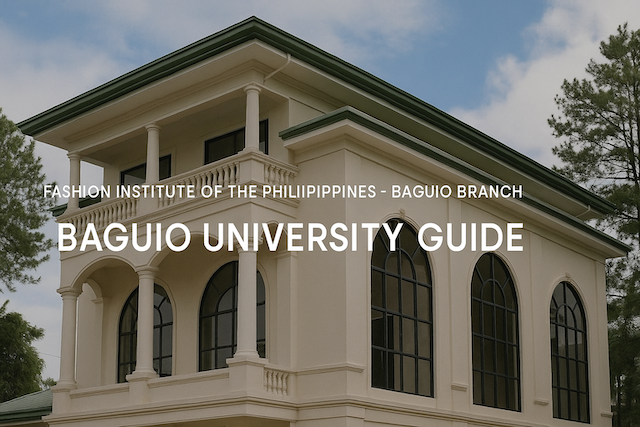
Fashion Institute of the Philippines – Baguio Branch
Contents
- Fashion Institute of the Philippines – Baguio Branch: Baguio University Guide
- Overview of Fashion Institute of the Philippines – Baguio Branch
- Programs Offered
- Admission Requirements and Enrollment Process
- Class Structure and Learning Experience
- Facilities and Learning Environment
- Career Opportunities After Studying at FIP Baguio
- Why Choose Fashion Institute of the Philippines – Baguio Branch?
- Tips for Prospective Students
- Final Thoughts
- FAQs (Frequently Asked Questions)
- What type of school is Fashion Institute of the Philippines – Baguio Branch?
- Do I need prior experience in fashion or drawing skills to enroll?
- What are the usual admission requirements for new students?
- How does the enrollment process at the Baguio Branch usually work?
- How long do the courses take to complete?
- Can I study at Fashion Institute of the Philippines – Baguio Branch while working or studying elsewhere?
- What facilities and equipment can students expect at the Baguio campus?
- How much are the tuition fees, and are installment plans available?
- Will I receive a certificate after finishing a course?
- What kind of careers can I pursue after studying at FIP – Baguio Branch?
- Is Fashion Institute of the Philippines – Baguio Branch suitable for hobbyists as well as future professionals?
- How can I get the most out of my studies at FIP – Baguio Branch?
Fashion Institute of the Philippines – Baguio Branch: Baguio University Guide
Fashion Institute of the Philippines (FIP) – Baguio Branch is one of the premier fashion education hubs in North Luzon, offering industry-driven programs designed for aspiring designers, stylists, pattern makers, and fashion entrepreneurs. Known for its modern approach and intensive hands-on training, FIP provides students in Baguio and nearby provinces an accessible pathway into the Philippine and international fashion industry.
This guide explores the school’s programs, admission process, facilities, learning experience, and why it stands out as a top choice for creative individuals pursuing a career in fashion.
Overview of Fashion Institute of the Philippines – Baguio Branch
The Fashion Institute of the Philippines is recognized for providing high-quality, skill-focused education that aligns with global fashion standards. Unlike traditional four-year courses, FIP focuses on short-term certificate programs designed to deliver practical competencies quickly and effectively.
The Baguio Branch caters to Northern Luzon students seeking professional training without relocating to Manila. With Baguio’s growing creative and arts community, the city provides an ideal environment for fashion students to experiment, collaborate, and find inspiration.
Key strengths of the institution include:
-
Programs taught by industry practitioners
-
Flexible schedules suited for working individuals
-
Fast-track learning structure
-
Affordable tuition compared to major design schools
-
Opportunities for portfolio building and fashion show participation
Programs Offered
FIP – Baguio Branch offers a wide variety of specialized fashion courses. These cover beginner to advanced levels, enabling students to progressively build competencies.
Basic Fashion Design
This program introduces students to the fundamentals of fashion illustration, color theory, and garment design. It is ideal for beginners and serves as a foundation for more advanced courses.
Advanced Fashion Design
Students delve deeper into conceptual development, collection planning, fabric selection, and garment styling. This course focuses on producing a cohesive collection for portfolio purposes.
Pattern Making
Pattern making is a core technical course designed to teach students how to draft and manipulate patterns for different clothing types. Precision, measurement, and tailoring techniques are emphasized.
Advanced Pattern Making
This course refines the student’s ability to create more complex patterns, such as evening wear, menswear, and couture-inspired designs.
Sewing and Garment Construction
Students learn sewing machine operations, garment assembly, finishing techniques, and quality control. It is highly practical and often paired with pattern-making courses.
Haute Couture Techniques
This premium course explores hand-sewing methods, draping, embellishment, corsetry, and luxury craftsmanship inspired by international couture houses.
Fashion Styling
One of FIP’s most popular courses, Fashion Styling teaches students how to style models for magazines, advertising campaigns, lookbooks, and fashion shows. It covers mood-boarding, trend forecasting, and visual storytelling.
Fashion Merchandising
This program is designed for those interested in fashion business, retail buying, brand management, and marketing. Students learn consumer behavior analysis and product development.
Menswear Design
A specialized course focusing on male clothing design, including suit construction, casual wear, and modern tailoring.
Special Workshops
FIP also offers seasonal workshops such as:
-
Swimwear design
-
Bridal couture
-
Draping techniques
-
Fashion illustration enhancement
Admission Requirements and Enrollment Process
FIP maintains a straightforward and flexible enrollment system that makes fashion education widely accessible.
Basic Admission Requirements
Applicants typically need:
-
Completed registration form
-
One valid ID
-
Enrollment fee or initial down payment
-
No portfolio required (ideal for beginners)
Enrollment Steps
-
Contact the FIP Baguio Branch via Facebook or phone to inquire about available schedules.
-
Choose your preferred course and class time.
-
Submit basic requirements and settle the enrollment fee.
-
Attend the orientation session for course expectations and materials.
The school offers rolling enrollment, meaning students can join when new cycles open, usually every 1–2 months.
Class Structure and Learning Experience
Classes at FIP are designed to be highly practical. Students spend most of their time sewing, drafting patterns, sketching designs, and working on actual garments.
Hands-On Training
The majority of each course is spent applying concepts directly. Students produce individual projects that are checked and refined by instructors.
Small Class Sizes
Classes typically operate in small groups, ensuring personalized guidance and close supervision.
Portfolio Development
Each course produces output that can be included in a professional portfolio. For advanced courses, students often develop entire collections.
Collaboration Opportunities
Students may participate in fashion shoots, styling sessions, and events organized by FIP or external partners in the creative industry.
Instructor Expertise
Most instructors are industry practitioners—designers, stylists, or pattern makers—who bring real-world insight and up-to-date knowledge.
Facilities and Learning Environment
The Baguio Branch offers modern, well-equipped facilities suitable for intensive fashion training.
Design Studios
The campus features spacious studios where students can sketch, conceptualize, and collaborate.
Sewing Rooms
Sewing rooms come with industrial sewing machines, overlock machines, and pressing tools.
Pattern-Making Equipment
Tables and tools are available for drafting, cutting, and assembling garments.
Fashion Library
The school may also provide digital or physical resources on trends, textiles, and global fashion inspirations.
Creative Environment
Located in Baguio, a city known for its arts culture, students can draw inspiration from local designers, markets, and creative communities.
Career Opportunities After Studying at FIP Baguio
Graduates pursue various career paths depending on their chosen specialization.
Fashion Designer
Many students develop their own clothing lines or work as designers for local brands.
Pattern Maker or Garment Technician
This technical role is in high demand, especially in manufacturing hubs like Manila and nearby provinces.
Fashion Stylist
Students who take styling courses can work with:
-
Magazines
-
Marketing agencies
-
Photographers
-
Celebrities
-
Clothing brands
Entrepreneur
Several FIP graduates launch their own boutiques, online shops, or tailoring businesses.
Costume Designer
Opportunities exist in film, theater, and events, especially with Northern Luzon’s growing production scene.
Fashion Illustrator
Those with strong drawing skills may pursue freelance illustration or work with design houses.
Why Choose Fashion Institute of the Philippines – Baguio Branch?
Practical and Industry-Relevant Training
FIP is known for producing graduates who can start working immediately thanks to its hands-on, skills-first approach.
Flexible and Affordable Programs
Short courses allow students to learn quickly without the long commitment of a four-year degree.
Convenient Location for Northern Luzon Students
No need to relocate to Metro Manila to access high-quality fashion education.
Strong Creative Community
Baguio’s artistic culture gives students unique inspiration not found elsewhere in the Philippines.
High Graduate Success Rate
Many alumni become designers, stylists, business owners, and creative professionals.
Tips for Prospective Students
-
Choose a course that aligns with your long-term goals. If you want to create garments, prioritize pattern-making and sewing.
-
Build your portfolio from day one. Document all your outputs.
-
Invest in quality materials. Fashion projects look better with higher-quality fabrics.
-
Practice consistently outside class. Skills improve with repetition.
-
Network with classmates and instructors. Opportunities often arise from connections.
Final Thoughts
Fashion Institute of the Philippines – Baguio Branch stands as one of the most reputable fashion schools in the region, offering skill-based learning that prepares students for real-world creative careers. Whether you aspire to become a designer, stylist, or fashion entrepreneur, FIP provides the practical training and supportive environment needed to turn your passion into a profession.
FAQs (Frequently Asked Questions)
What type of school is Fashion Institute of the Philippines – Baguio Branch?
Fashion Institute of the Philippines – Baguio Branch is a specialized fashion school that offers short-term, skills-based programs instead of traditional four-year college degrees. It focuses on practical training in design, pattern making, sewing, and styling so that students can quickly build a portfolio and enter the fashion industry. Many learners are aspiring designers, stylists, or entrepreneurs, including beginners who have no prior background in fashion.
Do I need prior experience in fashion or drawing skills to enroll?
No, prior experience is not required for most entry-level courses such as Basic Fashion Design, Basic Pattern Making, or Sewing and Garment Construction. These programs are designed for beginners and start with foundational concepts like basic sketching, understanding body proportions, and sewing machine operation. However, a genuine interest in fashion, willingness to practice regularly, and openness to feedback are important for success.
What are the usual admission requirements for new students?
Admission requirements are generally simple and accessible. New students are typically asked to submit a completed registration form, present at least one valid ID, select their preferred course and schedule, and pay the required enrollment or reservation fee. A portfolio is usually not mandatory for beginner courses, which makes the school suitable for those who are just starting their fashion journey. Specific requirements may vary slightly depending on the course or intake.
How does the enrollment process at the Baguio Branch usually work?
The typical enrollment process begins with contacting the Baguio Branch through its official social media page or phone number to inquire about current or upcoming class schedules. After choosing a course and schedule, students fill out a registration form and settle the initial fee or down payment. Once enrollment is confirmed, the school provides details on the first day of class, required materials, and any orientation or briefing sessions. Because classes often follow a rolling schedule, it is recommended to reserve a slot early, especially for popular programs like Fashion Design or Fashion Styling.
How long do the courses take to complete?
Course duration varies depending on the program and schedule. Many short courses run for several weeks to a few months, with classes held a few times per week. Intensive or advanced programs may require more hours per session or a longer period to complete. Since schedules can change based on demand, batch size, and instructor availability, students should confirm the latest timetable and estimated course duration directly with the Baguio Branch before enrolling.
Can I study at Fashion Institute of the Philippines – Baguio Branch while working or studying elsewhere?
Yes, many students at the Baguio Branch are working professionals, college students, or business owners who attend classes part-time. The school often offers flexible schedules, such as weekday or weekend classes, to accommodate different lifestyles. When inquiring about a course, it is helpful to mention your current commitments so that staff can recommend the most suitable schedule for you. Time management is important, especially for courses that require independent practice outside class hours.
What facilities and equipment can students expect at the Baguio campus?
Students can normally expect access to fashion studios and sewing rooms equipped with drafting tables, dress forms, industrial sewing machines, and pressing tools. These spaces are designed to support practical, hands-on learning in pattern making, sewing, and garment construction. While the school provides major equipment, students are usually responsible for personal tools and materials such as measuring tapes, scissors, fabrics, and sketchbooks. The creative atmosphere of Baguio City also enhances the learning environment by offering plenty of inspiration from local crafts and art communities.
How much are the tuition fees, and are installment plans available?
Tuition fees differ by course, level (basic or advanced), and duration. In general, short courses are more affordable than full-degree programs offered by traditional universities. Many branches offer flexible payment options, such as paying in installments or settling fees per module. Because rates may change over time and promotions may be offered for specific batches, it is best to request the latest fee schedule directly from Fashion Institute of the Philippines – Baguio Branch through their official contact channels.
Will I receive a certificate after finishing a course?
Yes, students who complete the required hours, exercises, and final projects for a particular course are typically awarded a certificate of completion. This certificate can be used as supporting documentation when applying for jobs, internships, or freelance opportunities in the fashion industry. More importantly, the projects and garments you create during the course can be included in your portfolio, which is often more valuable than certificates when showcasing your skills to employers or clients.
What kind of careers can I pursue after studying at FIP – Baguio Branch?
Graduates of the Baguio Branch may pursue various creative and technical careers in the fashion industry, depending on their chosen specialization and dedication. Common paths include becoming a fashion designer, pattern maker, garment constructor, stylist, fashion illustrator, or fashion entrepreneur. Some graduates launch their own clothing lines, online shops, or small tailoring businesses, while others go into styling for photo shoots, advertising campaigns, or events. The school’s practical training and emphasis on portfolio building help students transition into freelance work, employment in fashion companies, or entrepreneurial ventures.
Is Fashion Institute of the Philippines – Baguio Branch suitable for hobbyists as well as future professionals?
Yes, the Baguio Branch welcomes both serious career-seekers and hobbyists. Some students enroll to pursue long-term careers in design or styling, while others simply want to improve their sewing skills, create custom clothing, or explore fashion as a creative outlet. Because courses are modular and skill-based, you can start with one program, assess your interest and progress, and later decide whether to continue to more advanced levels or branch out into related courses such as Fashion Styling or Fashion Merchandising.
How can I get the most out of my studies at FIP – Baguio Branch?
To maximize your learning experience, attend classes consistently, complete exercises on time, and practice regularly outside class. Take photos of your projects and organize them into a portfolio from the beginning. Do not hesitate to ask instructors for feedback and practical tips. Networking with classmates, photographers, makeup artists, and local designers is also helpful because many fashion opportunities arise through personal connections. Finally, stay updated with trends but focus on strengthening your core skills so that you can adapt to different styles and client needs over time.
Baguio University Guide
Baguio Province All Universities Lists
Philippines University Guide

How to Register for eTravel Philippines (2025 Guide)
Step-by-step guide to completing your eTravel registration before arriving in the Philippines, with images and tips.

Night Market in Cebu – Things You Don’t Know About Cebu Life
Discover the hidden charm of Cebu’s night markets, from street food stalls to local life tips you won’t find in tourist guides.

How to Use ChatGPT for IELTS Preparation: A Complete Guide
Learn how to prepare for IELTS using ChatGPT — including strategies for Writing, Reading, Listening, Speaking, and grammar support.

How to Build a Website Without Coding Using ChatGPT
Discover how to build your own website using AI—no coding skills needed. From structure planning to SEO and design, let ChatGPT guide you.