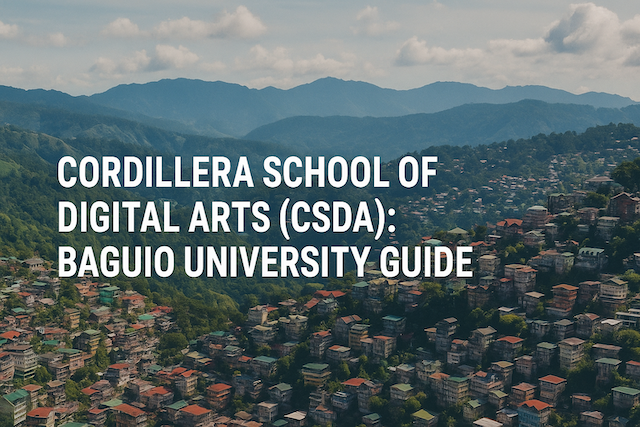
Cordillera School of Digital Arts (CSDA): Baguio University Guide
The Cordillera School of Digital Arts (CSDA) stands as one of Baguio City’s most innovative and industry-oriented institutions for creative education. Located in a city known for its artistic culture and flourishing digital sectors, CSDA offers students high-impact programs in animation, multimedia arts, digital design, and creative technology. This guide provides an in-depth look at the school’s offerings, campus culture, facilities, career opportunities, admission process, and what future students can expect when choosing CSDA as their stepping stone into the creative digital world.
Overview of Cordillera School of Digital Arts (CSDA)
Cordillera School of Digital Arts is a specialized educational institution that focuses on digital media, animation, and creative arts programs. It aims to prepare aspiring professionals for careers in the fast-growing global creative industry. As digital art and creative technology continue to expand worldwide, CSDA positions itself as a strong training ground for students who want practical skills, industry experience, and a portfolio-based education.
The school is known for its hands-on curriculum, mentorship from experienced practitioners, and strong emphasis on real-world application. Many CSDA graduates enter fields such as animation, gaming, advertising, film, graphic design, and multimedia communication.
Location and Campus Environment
Baguio City provides an ideal setting for a digital arts school due to its artistic community, cooler climate, and calm environment that fosters creativity. CSDA typically maintains studio-inspired learning spaces equipped with computers, drawing tools, software programs, and production equipment.
Students benefit from:
-
Modern digital labs and workstations
-
Spaces for drawing, storyboarding, and concept development
-
Collaborations with local artists and creative agencies
-
A peaceful atmosphere that enhances productivity and concentration
The campus’s environment encourages a creative lifestyle and allows students to connect with peers who share similar artistic and technological interests.
Academic Programs at CSDA
CSDA offers a collection of certificate, diploma, and specialized courses tailored to digital arts and creative media. Program availability may vary by school year, but common offerings include:
2D Animation
A foundational program covering drawing basics, character animation, in-betweening, storyboarding, and production pipelines. Students produce animated shorts as part of their portfolio.
3D Animation
Focused on modeling, rigging, texturing, lighting, and character/prop creation using industry-standard 3D software. Students learn workflows used in gaming and film production.
Multimedia Arts
An interdisciplinary program exploring graphic design, digital illustration, video editing, photography, motion graphics, and interactive media.
Game Design and Development
Courses may include game theory, storytelling, character design, and basic programming. Students build prototypes and conceptualize game environments.
Graphic Design
Training in branding, layout design, digital marketing materials, and visual communication using modern design tools.
Film and Video Production
Covers cinematography, editing, scriptwriting, and digital storytelling for modern media platforms.
These programs emphasize strong foundational skills, creativity, and technical proficiency, allowing students to build competitive portfolios for employment or freelance work.
Teaching Approach and Learning Experience
CSDA’s academic model centers on:
-
Project-Based Learning – Students complete real-world assignments similar to those in creative industries.
-
Portfolio Development – Every major course contributes to the student’s professional portfolio.
-
Industry Exposure – Guest speakers, workshops, and collaborations expose students to current trends and expectations.
-
Mentorship – Faculty members are practitioners in design, animation, and multimedia fields.
-
Practical Skills – Rather than purely theoretical classes, students spend most of their time creating, designing, and producing.
This environment ensures that graduates are job-ready and confident in their creative and technical skills.
Facilities and Equipment
While CSDA’s facilities vary by location and ongoing updates, students can typically expect:
-
High-performance computers optimized for animation and design
-
Licensed creative software (Adobe, Autodesk, Toon Boom, etc.)
-
Drawing tablets and digital sketching tools
-
Editing and production equipment for film and video
-
Classrooms designed like creative studios
-
Spaces for collaboration and brainstorming
These resources help students simulate real production settings and understand the workflow used in professional studios.
Student Life and Community
CSDA fosters a collaborative, creativity-driven atmosphere where students often work in teams and learn from one another. The student community includes artists, designers, storytellers, programmers, and multimedia enthusiasts.
Common student activities include:
-
Art exhibitions
-
Animation festivals or screenings
-
Student clubs for comics, illustration, gaming, and photography
-
Collaborative projects with local artists or companies
Because Baguio is an arts-centric city, students also enjoy nearby galleries, creative events, and festivals that fuel inspiration.
Career Opportunities After CSDA
The digital arts industry is continuously growing, giving CSDA graduates numerous career paths. Possible roles include:
Freelancing is also popular among graduates, providing flexibility in work style and project types. With a strong portfolio, students can compete in both local and international markets, including outsourcing studios and global creative platforms.
Admission Requirements and Enrollment Process
Admission procedures may vary each term, but general requirements include:
-
Completed application form
-
High school diploma or equivalent
-
Birth certificate
-
Identification documents
-
Portfolio (optional but beneficial for creative programs)
-
Application or registration fee
Some programs may require an orientation or interview to ensure students understand the workload and creative expectations.
Enrollment usually involves choosing a program, securing payment arrangements, and attending orientation before classes begin.
Tuition Fees and Financial Considerations
CSDA is considered more affordable compared to larger private institutions offering similar digital arts programs. Tuition typically varies by:
Students must also account for costs such as:
-
Drawing materials
-
Digital tools or personal devices
-
USB drives and storage media
-
Printing for portfolio works
Despite these expenses, many students find the investment worthwhile due to the strong job market for digital creatives.
Why Choose CSDA?
Students often choose Cordillera School of Digital Arts because it offers:
-
A focused and industry-relevant curriculum
-
Experienced practitioners as instructors
-
Opportunities to build an impressive portfolio
-
Exposure to real-world projects
-
A creative and supportive community
-
Affordable access to modern digital arts training
For aspiring animators, designers, and multimedia artists seeking practical training in Baguio, CSDA is one of the most specialized institutions available.
Final Thoughts
Cordillera School of Digital Arts provides an excellent learning environment for students passionate about digital creativity and visual storytelling. Through comprehensive programs, hands-on training, and a vibrant artistic community, CSDA equips learners with the tools they need to thrive in the competitive world of creative industries. Whether you dream of working in animation studios, producing digital content, or building a freelance career, CSDA offers a solid foundation to help you pursue those goals.
FAQs (Frequently Asked Questions)
What types of programs does Cordillera School of Digital Arts (CSDA) offer?
CSDA typically offers specialized programs in digital and creative fields such as 2D and 3D animation, multimedia arts, graphic design, game design, and film or video production. Some courses are full diploma or long-term programs, while others are short-term or certificate-based training designed for upskilling. Program availability may change per term, so applicants should always check the latest offerings before enrolling.
Is CSDA a good choice for beginners with no art or design background?
Yes, CSDA is generally beginner-friendly, especially for motivated students who are serious about building creative skills. Many introductory classes cover basic drawing, design fundamentals, and software orientation before moving to more advanced topics. While prior art experience is helpful, it is not always required. What matters most is a willingness to practice consistently and an openness to receive feedback and improve.
What are the basic admission requirements for CSDA?
Common requirements include a completed application form, high school diploma or equivalent, valid identification, and recent photos. Some programs may request a short essay, skills assessment, or informal interview. A portfolio is often recommended but not strictly required for beginners. Requirements can vary by course or term, so it is important to confirm the exact checklist directly with the school’s admissions office.
Do I need a portfolio to apply to CSDA?
A portfolio is usually optional for entry-level or beginner programs but can be a strong advantage. Even simple sketches, school projects, or personal artworks can demonstrate your interest and potential. For more advanced courses, a portfolio may be required to assess your current skill level. In any case, students will develop a more polished, professional portfolio throughout their time at CSDA.
How much does it cost to study at CSDA?
Tuition fees depend on the type of program, its length, and the number of subjects or modules you enroll in. Short courses are typically more affordable, while longer programs involve higher overall costs. Students should also budget for personal materials such as sketchbooks, external storage, and other supplies. Since fees can change, it is advisable to request the latest tuition and payment details directly from the school.
What equipment or software do students need?
CSDA usually provides access to computers and industry-standard software on campus. However, many students choose to have their own laptops or drawing tablets for practice at home. Recommended tools often include a capable computer, digital drawing tablet, external hard drive, and access to creative software. The school may issue a list of minimum specifications so students can prepare the right equipment.
Are there online or blended learning options?
Some digital arts schools offer online or blended classes, especially for software-based subjects or theory components. Availability depends on the term, demand, and school policy. Even when online options are offered, many programs still value in-person studio work and collaboration. Prospective students should ask CSDA directly whether their chosen program is available onsite, online, or in a hybrid format.
Can international students enroll at CSDA?
International students may be welcome, but they usually need to follow additional steps such as visa processing, documentation, and financial proof. The school’s administration can clarify whether they accept foreign students and what specific requirements apply. International applicants should contact CSDA early, as processing time for visas and documents can be longer than for local students.
What kind of careers can CSDA graduates pursue?
Graduates can work in various creative industries, including animation studios, advertising agencies, game development companies, film production houses, and digital marketing firms. Typical roles include animator, graphic designer, multimedia artist, video editor, storyboard artist, concept artist, motion graphics designer, and game artist. Many graduates also choose freelance work, taking on global clients and remote projects in the digital creative market.
Does CSDA provide internship or job placement support?
Digital arts schools often maintain connections with studios, agencies, and companies that seek creative talent. CSDA may facilitate internships, project-based collaborations, or industry linkages to help students gain experience. While no school can guarantee employment, guidance on portfolios, demo reels, resumes, and interview preparation can significantly improve a graduate’s chances in the job market.
What is the class environment like at CSDA?
Classes at CSDA are typically studio-style, with a strong emphasis on hands-on work, critiques, and collaboration. Students spend much of their time creating projects, practicing techniques, and receiving feedback from instructors and classmates. The atmosphere is usually informal but focused, encouraging creativity, experimentation, and peer learning within a supportive community of artists and designers.
How can I know if CSDA is the right school for me?
If you are passionate about drawing, design, animation, gaming, or visual storytelling and you prefer practical, portfolio-based learning, CSDA may be a strong fit. You can visit the campus, attend orientations or open house events, talk to current students, and review sample student works. Reflect on your long-term goals, budget, and preferred learning style to decide whether CSDA aligns with your creative and career ambitions.