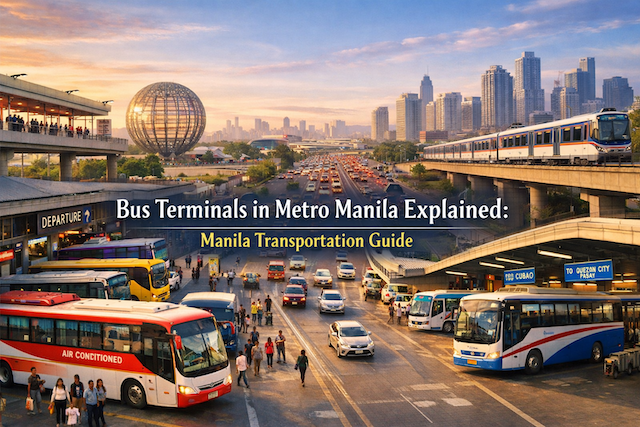
Bus Terminals in Metro Manila Explained: Manila Transportation Guide
Metro Manila is the main transportation hub of the Philippines, and its bus terminals play a critical role in connecting the capital region to nearby provinces and distant destinations across Luzon. For travelers, expats, and even locals, understanding how bus terminals in Metro Manila work can save time, money, and stress.
This guide explains the major bus terminals in Metro Manila, where they are located, what routes they serve, how to use them efficiently, and what to expect when traveling by bus.
Why Bus Terminals Matter in Metro Manila
Unlike cities with a single central bus station, Metro Manila has multiple bus terminals scattered across different cities. Each terminal typically serves specific bus companies and regions.
Bus terminals are important because they:
-
Connect Metro Manila to provinces across Luzon
-
Offer affordable alternatives to flights
-
Serve routes not covered by trains
-
Act as transfer points for ferries, jeepneys, and local buses
For long-distance travel, buses remain one of the most practical options in the Philippines.
How Bus Terminals Are Organized in Metro Manila
Bus terminals in Metro Manila are not unified under one system. Instead, they are organized by:
Some terminals are large, formal facilities, while others are company-owned depots or roadside terminals.
Major Bus Terminal Areas in Metro Manila
Cubao Bus Terminals (Quezon City)
Cubao is the largest and most important bus terminal hub in Metro Manila.
Why Cubao Is a Major Hub
Cubao sits at the intersection of major roads and is connected to MRT-3 and LRT-2, making it accessible from most parts of the city.
Destinations Served
-
Northern Luzon (Baguio, Ilocos, La Union)
-
Central Luzon (Pampanga, Tarlac, Pangasinan)
-
Southern Luzon (Batangas, Quezon Province, Bicol)
Major Bus Companies in Cubao
-
Victory Liner
-
Five Star
-
Partas
-
Solid North
-
Genesis
-
Baliwag Transit
Cubao has multiple terminals within walking distance of each other, so always confirm the exact terminal location of your bus company.
Pasay Bus Terminals
Pasay is another major transportation hub, especially for travelers coming from the airport.
Why Pasay Is Important
Pasay is close to:
Destinations Served
-
Southern Luzon (Batangas, Laguna, Quezon Province)
-
Bicol Region
-
Some Visayas ferry connections via Batangas Port
Major Bus Companies in Pasay
-
JAM Liner
-
JAC Liner
-
DLTB
-
ALPS
-
Philtranco
Pasay terminals are commonly used by travelers heading to beach destinations, ports, and southern provinces.
Avenida Bus Terminals (Manila City)
Avenida (Rizal Avenue) is one of the oldest bus terminal areas in Metro Manila.
Characteristics of Avenida Terminals
Destinations Served
-
Northern Luzon
-
Some southern routes
-
Regional overnight buses
Notable Bus Companies
-
Philtranco
-
Farinas
-
GV Florida (routes vary)
Avenida terminals are convenient for travelers staying in Manila City but may feel overwhelming for first-time visitors.
Alabang Bus Terminals (Muntinlupa)
Alabang serves as a major gateway to Southern Luzon.
Why Use Alabang Terminals
Destinations Served
-
Laguna
-
Batangas
-
Quezon Province
-
Bicol Region
Key Terminal Areas
Alabang terminals are generally more organized and less chaotic than those in central Manila.
PITX (Parañaque Integrated Terminal Exchange)
PITX is the most modern and government-planned bus terminal in Metro Manila.
What Makes PITX Different
-
Fully integrated terminal
-
Air-conditioned waiting areas
-
Clear signage
-
Multiple transport modes in one location
Destinations Served
PITX is designed to decongest Metro Manila and centralize bus operations, especially for southern routes.
Provincial vs City Bus Terminals
Provincial Bus Terminals
-
Serve long-distance routes
-
Usually have ticket counters
-
Buses depart on fixed schedules
-
Often offer air-conditioned or deluxe buses
City Bus Terminals
-
Serve Metro Manila routes
-
Some operate on a first-come, first-served basis
-
Integrated with EDSA Busway and PITX
-
More frequent departures
Understanding whether your route uses a provincial or city terminal is essential for planning.
How to Choose the Right Bus Terminal
Choosing the right terminal depends on several factors:
Destination
-
Northern destinations: Cubao or Avenida
-
Southern destinations: Pasay, Alabang, or PITX
Location
-
Staying near Quezon City: Cubao
-
Staying near NAIA or Makati: Pasay
-
Staying in the south: Alabang or PITX
Bus Company
Some bus companies only operate from specific terminals, so always check their official departure point.
Ticketing at Bus Terminals
Buying Tickets On-Site
Online Booking
Walk-In vs Reserved Seating
Facilities at Bus Terminals
Facilities vary widely depending on the terminal.
Common Facilities
-
Restrooms
-
Small convenience stores
-
Food stalls
-
Waiting areas
Better Facilities (PITX, Alabang)
-
Air-conditioned lounges
-
Food courts
-
ATMs
-
Clear digital displays
Older terminals may lack comfort but are still functional.
Peak Hours and Best Times to Travel
Peak Travel Periods
-
Fridays and Sundays
-
Holidays and long weekends
-
Christmas, Holy Week, and summer season
Best Time to Arrive
Traffic conditions can affect arrival times, so plan ahead.
Safety Tips When Using Bus Terminals
Bus terminals are generally safe, but basic precautions are necessary.
Practical Safety Tips
-
Keep valuables secured
-
Avoid displaying large amounts of cash
-
Follow official signage and staff instructions
-
Be cautious of unofficial ticket sellers
Modern terminals like PITX have better security, but awareness is still important.
Common Mistakes First-Time Travelers Make
Going to the Wrong Terminal
Always double-check the exact terminal address of your bus company.
Underestimating Travel Time
Traffic in Metro Manila can be unpredictable.
Not Booking During Peak Season
Seats sell out quickly during holidays.
Confusing Similar Bus Company Names
Some companies have similar branding; verify the logo and terminal signage.
Bus Terminals vs Train and Airport Travel
Bus terminals remain competitive because:
-
They are cheaper than flights
-
They reach destinations without airports
-
They offer overnight travel options
However, buses are affected by traffic, unlike trains. For short distances, trains may be faster, but for provincial travel, bus terminals remain essential.
Future Developments in Metro Manila Bus Terminals
The Philippine government continues to invest in:
These changes aim to reduce congestion and improve passenger experience.
Final Thoughts on Bus Terminals in Metro Manila
Bus terminals in Metro Manila can seem complex at first, but once you understand how they are organized, traveling by bus becomes straightforward and affordable. Whether you are heading north to the mountains, south to the beaches, or east to provincial towns, there is a bus terminal that fits your route.
Knowing where to go, which terminal to use, and what to expect will make your journey smoother and more efficient.
With proper planning, buses remain one of the most practical ways to travel in and out of Metro Manila.
FAQs (Frequently Asked Questions)
Which are the main bus terminal areas in Metro Manila?
The biggest bus terminal hubs in Metro Manila are Cubao (Quezon City), Pasay, Avenida (Manila City), Alabang (Muntinlupa), and PITX (Parañaque Integrated Terminal Exchange). Cubao is widely used for many North Luzon routes and also has several terminals clustered close together. Pasay is popular for South Luzon routes and is convenient for travelers coming from airport-adjacent areas. Avenida is an older terminal zone in the City of Manila that still serves multiple provincial routes. Alabang is a strong gateway for Southern Luzon trips, especially if you are staying in the southern part of the metro. PITX is the newest and most organized option for many southern and nearby provincial routes, designed as an integrated interchange for buses and other transport.
How do I know which terminal to go to for my destination?
Start by identifying your bus company, because terminals are often company-specific. Then confirm the exact departure terminal address, not just the general area (for example, “Cubao” can mean several different terminals). Next, match your destination region: Northern Luzon routes commonly depart from Cubao or Avenida, while many Southern Luzon routes use Pasay, Alabang, or PITX. If you are unsure, check the bus operator’s official website or verified social media page, or call their hotline if available. It is also smart to search the terminal location on a map and save it offline, since some terminals have similar names or are located on parallel streets.
Is PITX the same as a regular bus terminal?
PITX is a bus terminal, but it works more like a modern transport interchange than a traditional roadside terminal. It was built to help manage traffic and organize bus operations by centralizing routes and transfers. Unlike many older terminals, PITX typically offers clearer signage, multiple boarding gates, more structured queuing, and better passenger facilities such as larger waiting areas and more food options. Many travelers find PITX easier to use, especially if they prefer a more “airport-like” terminal experience. However, not every bus company or route departs from PITX, so it is still important to confirm your specific operator’s departure point.
Should I buy my bus ticket at the terminal or online?
Both options can work, but the best choice depends on your route and travel date. For regular weekdays and less popular routes, buying at the terminal is often fine. For weekends, holidays, long weekends, and peak seasons (especially Christmas and Holy Week), online booking is strongly recommended when available because buses can sell out. Online tickets also reduce the time you spend lining up. That said, some routes still operate on a walk-in basis, or have limited online options. If you are traveling with a group, have tight timing, or want a specific seat, booking in advance is the safer plan.
How early should I arrive at a bus terminal in Metro Manila?
For provincial (long-distance) trips, aim to arrive at least 45–60 minutes before departure, and earlier during peak travel periods. For shorter routes with frequent departures, 30–45 minutes may be enough, but it still depends on how busy the terminal is. The bigger issue is Metro Manila traffic: even if the terminal is not far, travel time can double unexpectedly. If you are traveling for an overnight bus, a holiday trip, or a route that departs only a few times per day, arriving early helps you handle ticket lines, security checks, baggage loading, and gate changes without stress.
Are bus terminals in Metro Manila safe for tourists?
Most terminals are generally safe, but like any crowded transport hub, they require basic awareness. Keep valuables in a zipped bag worn in front, avoid showing large amounts of cash, and stay alert in packed waiting areas. Use official ticket counters and avoid “assistants” who approach you aggressively offering tickets or shortcuts. If you feel unsure, ask uniformed staff or security guards for guidance. Modern terminals such as PITX and some terminals in Alabang may feel more secure due to stronger organization and clearer systems, but even in older areas like Avenida, you can travel safely with normal precautions.
What facilities should I expect inside a typical bus terminal?
Facilities vary widely. Many terminals have restrooms, small food stalls, and basic waiting areas. Larger hubs may have multiple ticket counters, convenience stores, and dedicated baggage loading zones. PITX and some integrated terminals often provide more comfortable waiting spaces, a wider range of food options, and more visible gate and route information. Older terminals may be functional but crowded, with limited seating and fewer clear signs. If you are traveling long distance, it helps to bring water, small snacks, tissues, and a power bank, especially if you are unsure about terminal amenities.
What is the difference between provincial buses and city buses in Metro Manila?
Provincial buses run between Metro Manila and provinces such as Baguio, Batangas, or Bicol. They usually have fixed schedules, ticket counters, reserved seating (on many routes), and baggage policies. City buses operate within Metro Manila, including major corridors like EDSA, and often have more frequent service with less formal ticketing. Some city buses use cashless systems depending on the route. Provincial terminals tend to feel like “departure stations,” while city bus areas may feel more like commuter stops, although facilities are improving due to government transport reforms.
Can I bring luggage on buses from these terminals?
Yes. For provincial buses, luggage is commonly stored in the baggage compartment under the bus, while a small bag can be kept with you inside. Policies vary by company, so oversized luggage or multiple large suitcases may require extra fees. Always keep valuables (passport, money, electronics) in a carry-on bag, not in checked luggage. For city buses, luggage rules are stricter due to limited space, and large suitcases may not be practical. If you are traveling to a port or airport connection, choose a service that is known to accommodate travelers with bags.
Why do some terminals have the same “area name” but different locations?
In Metro Manila, “terminal areas” often refer to neighborhoods rather than a single building. For example, Cubao has several terminals run by different companies, sometimes only a few blocks apart but not interchangeable. Pasay also has multiple operator terminals. This is why it is risky to navigate using only the area name. Always confirm the bus company and exact terminal address. If possible, search the terminal on a map before your trip and check recent passenger posts for updated entrance points, because terminal gates can change due to roadworks or traffic management rules.
What should I do if I end up at the wrong terminal?
First, do not panic—this happens often to first-time travelers. Ask official staff or security guards for directions to the correct terminal or the nearest transport option. In areas like Cubao, the correct terminal might be walkable. If it is far, you may need a short taxi or ride-hailing trip, or a train plus a short walk. If you already bought a ticket, contact the bus company’s counter and explain the situation; some operators may rebook you to a later departure, depending on their policies. Build extra buffer time into your schedule to reduce the risk of missing your bus.