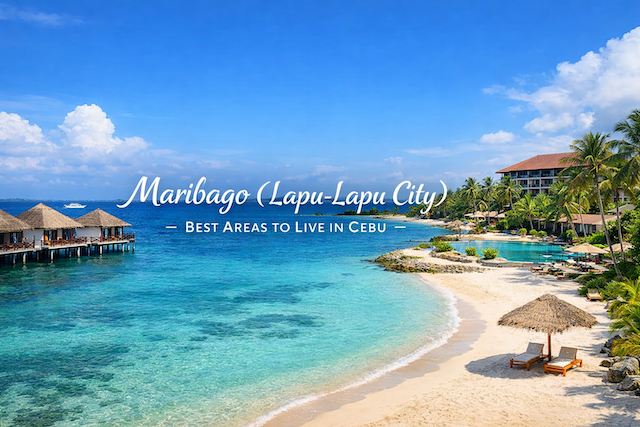
Maribago (Lapu-Lapu City): Best Areas to Live in Cebu
Maribago, located in Lapu-Lapu City on Mactan Island, has steadily grown into one of the most attractive residential areas in Cebu. Known for its resort-lined coastline, relaxed atmosphere, and improving urban infrastructure, Maribago offers a unique lifestyle that blends everyday convenience with a tropical island setting. For expats, retirees, remote workers, and long-term residents looking beyond Cebu City’s dense urban core, Maribago stands out as a balanced and livable option.
This guide explores why Maribago is considered one of the best areas to live in Cebu, covering lifestyle, housing options, accessibility, safety, costs, and who this area is best suited for.
Where Is Maribago Located?
Maribago is situated on the western coast of Mactan Island within Lapu-Lapu City. It lies between the more commercialized Mactan Newtown area and the quieter residential barangays further south. The area faces the Mactan Channel, offering coastal views and easy access to beaches and resorts.
One of Maribago’s key advantages is its proximity to Mactan-Cebu International Airport, which is typically a 15–25 minute drive depending on traffic. This makes Maribago especially appealing for frequent travelers, business professionals, and overseas residents who value quick airport access without living in a busy commercial district.
General Living Environment and Atmosphere
Maribago offers a noticeably slower pace of life compared to central Cebu City. While it is not isolated, it avoids the heavy congestion and noise common in downtown areas. Palm-lined roads, resort entrances, and residential compounds give the neighborhood a laid-back, resort-town feel.
At the same time, Maribago is not purely a tourist zone. Many locals, long-term expats, and Filipino families live here year-round. This mix creates a stable community environment rather than a purely transient one. The area feels lived-in, practical, and increasingly well-developed without losing its coastal charm.
Housing Options in Maribago
Condominiums and Apartments
Maribago has seen steady development in mid-rise condominiums and serviced apartments. These are often smaller-scale than large Cebu City condo towers, appealing to residents who prefer lower density living.
Many condo units cater to expats and long-term renters, offering amenities such as swimming pools, security, parking, and sometimes beachfront or sea-view access. Prices tend to be more affordable than premium Cebu City locations while still offering good quality and modern layouts.
Houses and Gated Communities
One of Maribago’s biggest strengths is its availability of houses, including single-family homes and townhouses. Several gated subdivisions exist in and around Maribago, providing a more suburban lifestyle with added security.
These homes are popular among families, retirees, and long-term residents who want more space, privacy, and the ability to customize their living environment. Compared to Cebu City, Maribago offers better value per square meter for houses, especially for those seeking outdoor space.
Resort-Style Residences
Due to its coastal location, Maribago also features resort-style residential developments. Some properties are attached to or located near beach resorts, offering amenities such as beach access, landscaped grounds, and hotel-like services. These residences appeal strongly to retirees and remote workers seeking a relaxed, vacation-like daily lifestyle.
Cost of Living in Maribago
Rental Costs
Rental prices in Maribago are generally lower than premium areas like Cebu Business Park or IT Park, while offering larger living spaces. Studio and one-bedroom apartments are widely available, with two- and three-bedroom options common in both condos and houses.
Houses in gated communities provide good value compared to similar properties in Banilad or Talamban. For residents who prioritize space over proximity to city offices, Maribago is financially attractive.
Daily Expenses
Daily living costs such as groceries, utilities, and dining are moderate. Local markets and neighborhood stores help keep expenses down, while supermarkets and imported goods are accessible in nearby commercial areas.
Electricity costs can be higher if air conditioning is used extensively, which is common in coastal areas. However, sea breezes often reduce the need for constant cooling, especially in homes designed for ventilation.
Accessibility and Transportation
Airport Access
Maribago’s proximity to Mactan-Cebu International Airport is one of its most practical advantages. This is particularly beneficial for expats who travel internationally or domestically on a regular basis.
Roads and Connectivity
Maribago is connected to major roads leading to Lapu-Lapu City center, Mactan Newtown, and the bridges to Cebu City. While traffic can be heavy during peak hours, it is generally less congested than central Cebu City.
Public Transportation
Jeepneys, tricycles, and motorcycle taxis are widely available. Grab operates in the area, though availability may vary during late hours. Many long-term residents choose to own a car or motorbike for added convenience, especially for families.
Lifestyle and Daily Convenience
Shopping and Groceries
Maribago has access to a mix of local shops and larger commercial centers. While it does not have large malls within walking distance, major shopping destinations in Lapu-Lapu City are a short drive away.
Local markets offer fresh seafood, fruits, and vegetables, which is a major plus for residents who enjoy cooking at home. Imported goods and specialty items are accessible through nearby supermarkets.
Dining Options
Dining in Maribago ranges from local Filipino eateries to international restaurants, especially around resort areas. Seafood restaurants are a highlight, taking advantage of the area’s coastal location.
While nightlife is relatively quiet compared to Cebu City, this suits residents seeking a peaceful living environment. For more active nightlife, areas like Mactan Newtown or Cebu City are reachable by car.
Beaches and Outdoor Living
One of Maribago’s defining features is its access to beaches. While many beaches are associated with resorts, some residences offer private or semi-private beach access.
Living near the coast allows for an outdoor-oriented lifestyle, including swimming, walking, paddleboarding, and sunset viewing. This is a major draw for retirees, digital nomads, and anyone seeking a healthier work-life balance.
Safety and Security
Maribago is generally considered a safe residential area, especially within gated communities and condominium developments. Resorts and residential compounds often have private security, CCTV, and controlled access.
As with any area in Cebu, basic precautions are recommended, particularly in less developed side streets. Overall, Maribago has a calmer and safer reputation compared to densely populated urban districts.
Schools and Family Living
Maribago is suitable for families, though it is not a major education hub. Several private schools and international schools are accessible within Lapu-Lapu City and Cebu City, typically requiring a short commute.
The availability of houses, quieter streets, and outdoor spaces makes Maribago attractive for families with children, especially those who prefer a less urban upbringing environment.
Internet and Remote Work Suitability
Internet connectivity in Maribago has improved significantly in recent years. Fiber connections are available in many subdivisions and condominiums, making the area suitable for remote workers and online businesses.
While power outages can occur occasionally, they are not significantly more frequent than in other parts of Cebu. Many modern residences include backup power or generator access.
Who Should Live in Maribago?
Maribago is especially well-suited for:
-
Expats seeking a relaxed coastal lifestyle
-
Retirees looking for peace, space, and beach access
-
Families wanting houses and gated communities
-
Remote workers who value tranquility over city nightlife
-
Frequent travelers needing fast airport access
Those who rely heavily on walking access to offices, malls, or nightlife may find Cebu City more suitable. However, for residents prioritizing lifestyle quality and space, Maribago offers strong advantages.
Pros and Cons of Living in Maribago
Pros
-
Close to the airport
-
Coastal and resort-like environment
-
More affordable housing with larger space
-
Good balance of local community and expat presence
-
Quieter and less congested than Cebu City
Cons
-
Limited nightlife and entertainment options
-
Requires transportation for major shopping and work hubs
-
Some areas are less developed than central districts
Final Thoughts: Is Maribago One of the Best Areas to Live in Cebu?
Maribago stands out as one of the best residential areas in Cebu for those who value comfort, space, and a relaxed island lifestyle. It may not offer the fast-paced energy of Cebu City, but it compensates with coastal living, practical convenience, and strong long-term livability.
For expats, families, retirees, and remote workers seeking a sustainable and enjoyable place to live in Cebu, Maribago remains one of the most compelling choices on Mactan Island.
FAQs (Frequently Asked Questions)
Is Maribago a good area to live in Cebu for long-term residents?
Yes. Maribago is widely considered one of the most practical and comfortable areas to live in Cebu for long-term residents, especially if you prefer a coastal lifestyle over a dense city environment. The neighborhood in Lapu-Lapu City has a stable mix of local families and long-stay expats, which helps the area feel more residential than purely tourist-oriented. Many people choose Maribago because it offers a calmer pace of life, access to daily necessities, and convenient links to the airport and the main roads connecting to Cebu City.
What type of people usually choose to live in Maribago?
Maribago tends to attract expats, retirees, remote workers, and families who want more space and a quieter setting than central Cebu City. It also fits frequent travelers who value being close to Mactan-Cebu International Airport. Residents who enjoy outdoor activities, seafood dining, and a laid-back community atmosphere often find Maribago a strong match. If you need to be in Cebu Business Park or IT Park every day, you can still live in Maribago, but you should plan around bridge traffic and commuting time.
How far is Maribago from Mactan-Cebu International Airport?
Maribago is relatively close to the airport, and this is one of its biggest lifestyle advantages. In light traffic, the drive can be around 15 to 25 minutes. During peak hours, travel time can increase depending on road conditions and congestion around key junctions. Many residents consider the short airport access a major benefit, especially compared to living deeper in Cebu City where travel times can be longer and less predictable.
Is Maribago more affordable than Cebu City areas like IT Park or Cebu Business Park?
In many cases, yes. Maribago often offers better value for space, particularly for houses or larger rental units. Cebu City’s prime business districts tend to have higher rental rates because of office proximity and high-density condominium demand. In Maribago, you may find larger floor areas, more townhouse options, and a wider range of residential compounds at a more moderate cost. However, exact pricing still depends on the property type, furnishing level, and whether the unit is near the coast or inside a gated subdivision.
What housing options are available in Maribago?
Maribago has a mix of condos, apartments, townhouses, and detached houses. Some residents choose mid-rise condominiums or serviced apartments for convenience and security. Others prefer gated subdivisions that offer family-friendly streets and a quieter atmosphere. Because Maribago is near resort zones, you can also find residences that feel resort-like, sometimes with amenities such as pools, landscaped common areas, and stronger security presence. This variety makes the area flexible for both short-term renters and long-term homeowners.
Is it possible to live in Maribago without a car?
It is possible, but it depends on your daily routine. Public transport options include jeepneys, tricycles, and motorcycle taxis, and Grab is available in many situations. If you work from home or mostly stay within Lapu-Lapu City, you can manage without owning a car. However, many long-term residents prefer having a car or motorbike because it makes grocery runs, school commuting, and trips to Cebu City more convenient. If you plan frequent mall visits, school drop-offs, or flexible weekend travel, private transport can significantly improve comfort.
How is the traffic when commuting from Maribago to Cebu City?
Traffic can be manageable outside rush hours, but commuting to Cebu City involves crossing one of the bridges, so peak-hour congestion is a real factor. Travel time varies depending on your destination (for example, Cebu Business Park versus Talamban) and the time of day. Many residents reduce stress by leaving early, avoiding strict office start times, or choosing hybrid work arrangements. If you need a daily commute to the city, Maribago can still work, but you should treat traffic planning as part of your lifestyle decision.
Is Maribago safe for expats and families?
Generally, Maribago is considered a safe area, especially within gated communities, condominiums, and well-managed residential compounds. Many neighborhoods have security guards, controlled entry points, and CCTV coverage. As with any area in Cebu, it is still smart to practice basic safety habits such as securing valuables, avoiding poorly lit streets late at night, and choosing reputable transport options. Overall, the community feel and the presence of established residential developments contribute to a sense of security for long-term residents.
Are there good schools near Maribago?
Maribago itself is not the main school hub of Cebu, but there are schools within Lapu-Lapu City and additional options across the bridge in Cebu City. For families, the practical question is commute time and the school’s location relative to your home. Some parents choose schools closer to Mactan for easier daily routines, while others prioritize specific programs or international-style education that may be located in Cebu City. If schooling is a top priority, it helps to choose a home location in Maribago that gives you the most efficient route to your preferred school.
How reliable is the internet in Maribago for remote work?
Internet reliability is generally good in many parts of Maribago, particularly in newer subdivisions and condominium buildings where fiber connections are more common. Remote workers can typically maintain stable video calls and online work with the right provider and plan. That said, service quality can vary by street and building, so it is wise to confirm available providers before signing a long lease. If your work is highly sensitive to outages, consider a backup option such as a mobile data plan or a pocket Wi-Fi device.
Does Maribago feel like a tourist area because of resorts?
Some parts of Maribago are close to resorts and beach attractions, but the area still functions as a real residential community. Many streets and subdivisions are quiet and oriented around daily life rather than tourism. In practice, the resort presence can be a positive: it often brings better road maintenance, more dining options, and an overall cleaner and more secure environment in nearby zones. If you prefer to avoid tourist traffic entirely, choosing a home slightly inland rather than directly beside major resort entrances can provide a more local, peaceful feel.
What are the biggest pros and cons of living in Maribago?
The biggest advantages are airport access, coastal lifestyle, generally good value for housing space, and a calmer atmosphere compared to Cebu City. The main downsides are the need for transportation for many errands, fewer nightlife and entertainment options, and potential traffic when commuting across the bridge to Cebu City. For many residents, Maribago is an excellent fit if your priority is quality of life, space, and a relaxed daily rhythm rather than being in the center of Cebu’s business and nightlife districts.