2025年12月29日
3D ACADEMY offers affordable English study programs in Cebu, Philippines – perfect for beginners, professionals, and exam takers.

3D UNIVERSAL ENGLISH INSTITUTE INC
info.3d-universal.com
8:00-17:00(Mon-Fri)
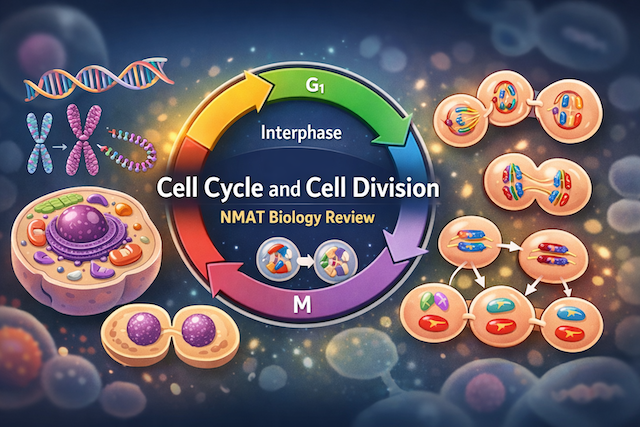
Cell Cycle and Cell Division: NMAT Biology Review
Contents
- Cell Cycle and Cell Division: NMAT Biology Review
- Introduction to the Cell Cycle
- Overview of the Cell Cycle Phases
- Interphase: Preparation for Cell Division
- G1 Phase: Cell Growth and Metabolic Activity
- S Phase: DNA Synthesis
- G2 Phase: Final Preparations
- The Mitotic Phase (M Phase)
- Mitosis: Division of the Nucleus
- Prophase: Chromosome Condensation
- Prometaphase: Nuclear Envelope Breakdown
- Metaphase: Chromosome Alignment
- Anaphase: Separation of Sister Chromatids
- Telophase: Nuclear Reformation
- Cytokinesis: Division of the Cytoplasm
- Regulation of the Cell Cycle
- Cyclins and Cyclin-Dependent Kinases (CDKs)
- Cell Cycle Checkpoints
- Role of Tumor Suppressor Genes
- Apoptosis and Cell Cycle Control
- Meiosis: Specialized Cell Division
- Meiosis I: Reduction Division
- Meiosis II: Equational Division
- Differences Between Mitosis and Meiosis
- Cell Cycle Abnormalities and Disease
- Importance of the Cell Cycle in NMAT Biology
- Study Tips for NMAT Candidates
- Conclusion
- Problems Sets: Cell Cycle and Cell Division (NMAT Biology)
- Answer Keys: Cell Cycle and Cell Division (NMAT Biology)
Cell Cycle and Cell Division: NMAT Biology Review
Introduction to the Cell Cycle
The cell cycle is a highly regulated sequence of events that enables a cell to grow, replicate its genetic material, and divide into two daughter cells. Understanding the cell cycle is essential for NMAT Biology because it connects fundamental concepts in genetics, molecular biology, and physiology. Questions related to the cell cycle often test knowledge of phase order, regulatory checkpoints, molecular control mechanisms, and differences between mitosis and meiosis. A strong grasp of these topics helps in analyzing cell growth, tissue repair, development, and disease processes such as cancer.
Overview of the Cell Cycle Phases
The cell cycle is broadly divided into two major stages: Interphase and the Mitotic (M) phase. Interphase occupies most of the cell cycle and is the period during which the cell grows and prepares for division. The M phase includes mitosis and cytokinesis, where the actual division of the cell occurs.
Interphase: Preparation for Cell Division
Interphase is subdivided into three distinct phases: G1, S, and G2. Although no visible division occurs, interphase is a highly active stage involving intense metabolic and genetic activity.
G1 Phase: Cell Growth and Metabolic Activity
The G1 (Gap 1) phase is the period of cell growth following cell division. During this phase, the cell increases in size, synthesizes RNA and proteins, and produces organelles necessary for future functions. Cells also assess whether environmental conditions are favorable for division. Some cells may exit the cycle temporarily or permanently into a resting state called G0, especially differentiated cells like neurons.
S Phase: DNA Synthesis
The S (Synthesis) phase is characterized by the replication of the cell’s DNA. Each chromosome is duplicated to form two identical sister chromatids connected at the centromere. This ensures that each daughter cell receives a complete and identical set of genetic information. Errors during DNA replication are minimized by proofreading enzymes, but mistakes that persist can lead to mutations.
G2 Phase: Final Preparations
The G2 (Gap 2) phase involves further cell growth and preparation for mitosis. Proteins required for chromosome separation and spindle formation are synthesized. The cell checks for DNA damage and confirms that replication is complete before proceeding to mitosis.
The Mitotic Phase (M Phase)
The M phase consists of mitosis, which involves nuclear division, and cytokinesis, which divides the cytoplasm. This phase ensures the accurate distribution of genetic material and cellular components between two daughter cells.
Mitosis: Division of the Nucleus
Mitosis is a continuous process traditionally divided into five stages: prophase, prometaphase, metaphase, anaphase, and telophase. Each stage has distinct structural and molecular events.
Prophase: Chromosome Condensation
During prophase, chromatin condenses into visible chromosomes. Each chromosome consists of two sister chromatids joined at the centromere. The nucleolus disappears, and the mitotic spindle begins to form from microtubules originating at the centrosomes.
Prometaphase: Nuclear Envelope Breakdown
In prometaphase, the nuclear envelope breaks down, allowing spindle microtubules to attach to chromosomes at specialized protein structures called kinetochores. Chromosomes begin moving toward the cell’s equatorial plane.
Metaphase: Chromosome Alignment
Metaphase is marked by the alignment of chromosomes along the metaphase plate, an imaginary plane equidistant from the spindle poles. This stage is critical for ensuring that sister chromatids are properly attached to opposite spindle fibers, preventing unequal chromosome distribution.
Anaphase: Separation of Sister Chromatids
During anaphase, sister chromatids separate and are pulled toward opposite poles of the cell. Once separated, each chromatid is considered an individual chromosome. This step ensures equal genetic material in both daughter cells.
Telophase: Nuclear Reformation
In telophase, chromosomes arrive at the poles and begin to decondense back into chromatin. Nuclear envelopes reform around each set of chromosomes, and nucleoli reappear. The mitotic spindle disassembles, marking the end of nuclear division.
Cytokinesis: Division of the Cytoplasm
Cytokinesis overlaps with telophase and completes cell division. In animal cells, a contractile ring of actin and myosin forms a cleavage furrow that pinches the cell into two. In plant cells, a cell plate forms between the two nuclei, eventually developing into a new cell wall.
Regulation of the Cell Cycle
Cell cycle progression is tightly regulated by a complex network of proteins to ensure accuracy and prevent uncontrolled division. Key regulators include cyclins, cyclin-dependent kinases (CDKs), and checkpoint proteins.
Cyclins and Cyclin-Dependent Kinases (CDKs)
Cyclins are regulatory proteins whose concentrations fluctuate during the cell cycle. They activate CDKs, which are enzymes that phosphorylate target proteins to drive the cell from one phase to another. Different cyclin-CDK complexes operate at specific points in the cycle, such as the G1/S and G2/M transitions.
Cell Cycle Checkpoints
Checkpoints are control mechanisms that monitor cell cycle progression. The G1 checkpoint ensures that conditions are favorable and DNA is undamaged before replication. The G2 checkpoint verifies that DNA replication is complete and free of errors. The spindle checkpoint during metaphase ensures that all chromosomes are properly attached to spindle fibers before anaphase begins.
Role of Tumor Suppressor Genes
Tumor suppressor proteins, such as p53, play a critical role in cell cycle regulation. p53 can halt the cell cycle if DNA damage is detected, allowing time for repair or triggering apoptosis if the damage is irreparable. Loss of such regulatory mechanisms can lead to cancer.
Apoptosis and Cell Cycle Control
Apoptosis, or programmed cell death, is a regulated process that eliminates damaged or unnecessary cells. It is closely linked to cell cycle control, ensuring that cells with severe genetic defects do not continue dividing.
Meiosis: Specialized Cell Division
While mitosis produces identical somatic cells, meiosis is a specialized form of cell division that produces gametes with half the chromosome number. Meiosis involves two successive divisions, meiosis I and meiosis II, following a single round of DNA replication.
Meiosis I: Reduction Division
Meiosis I is characterized by homologous chromosome pairing, crossing over, and separation. Prophase I is especially significant, as homologous chromosomes form synapsis and exchange genetic material, increasing genetic diversity. Homologous chromosomes, not sister chromatids, separate during anaphase I.
Meiosis II: Equational Division
Meiosis II resembles mitosis, where sister chromatids separate. The result of meiosis is four genetically distinct haploid cells. Understanding the differences between meiosis I and meiosis II is a frequent focus of NMAT questions.
Differences Between Mitosis and Meiosis
Mitosis results in two identical diploid daughter cells and is involved in growth and repair. Meiosis produces four non-identical haploid cells and is essential for sexual reproduction. Key differences include the number of divisions, genetic variation, and chromosome pairing.
Cell Cycle Abnormalities and Disease
Disruptions in cell cycle regulation can lead to diseases such as cancer. Uncontrolled cell division results from mutations in genes regulating checkpoints, CDKs, or tumor suppressors. Understanding these abnormalities helps link cell biology concepts to clinical applications, an important aspect of NMAT preparation.
Importance of the Cell Cycle in NMAT Biology
NMAT Biology frequently tests conceptual understanding rather than rote memorization. Questions may involve identifying stages from diagrams, predicting outcomes of regulatory failures, or comparing mitosis and meiosis. Mastery of the cell cycle also supports related topics such as genetics, molecular biology, and physiology.
Study Tips for NMAT Candidates
To prepare effectively, focus on understanding the sequence of events and the purpose of each phase. Practice labeling diagrams of mitosis and meiosis. Pay special attention to checkpoints and regulatory proteins, as these are commonly tested. Integrating conceptual knowledge with practice questions will strengthen retention and exam performance.
Conclusion
The cell cycle and cell division are foundational topics in biology and central to NMAT preparation. From interphase to cytokinesis, each step ensures accurate growth, replication, and inheritance of genetic material. Understanding regulatory mechanisms, differences between mitosis and meiosis, and the clinical significance of cell cycle control provides a comprehensive framework for tackling NMAT Biology questions with confidence.
Problems Sets: Cell Cycle and Cell Division (NMAT Biology)
Problem Set 1: Basic Concepts of the Cell Cycle
Q1. Which phase of the cell cycle occupies the longest duration in most actively dividing cells?
A. M phase
B. G1 phase
C. S phase
D. G2 phase
Q2. During which phase does DNA replication occur?
A. G1
B. G2
C. S
D. M
Q3. Cells that permanently exit the cell cycle and no longer divide are typically in which stage?
A. G1
B. S
C. G0
D. G2
Q4. Which event characterizes the G2 phase?
A. Cell growth and protein synthesis only
B. DNA replication
C. Final preparation for mitosis and DNA damage check
D. Cytoplasmic division
Q5. The correct sequence of the cell cycle phases is:
A. G1 → G2 → S → M
B. G1 → S → G2 → M
C. S → G1 → G2 → M
D. M → G1 → S → G2
Problem Set 2: Mitosis and Cytokinesis
Q6. During which stage of mitosis do chromosomes align at the equatorial plane?
A. Prophase
B. Metaphase
C. Anaphase
D. Telophase
Q7. Separation of sister chromatids occurs during:
A. Prophase
B. Metaphase
C. Anaphase
D. Telophase
Q8. Which structure attaches spindle fibers to chromosomes?
A. Centromere
B. Centrosome
C. Kinetochore
D. Nucleolus
Q9. Which of the following best describes cytokinesis in animal cells?
A. Formation of a cell plate
B. Formation of a cleavage furrow
C. Breakdown of nuclear membrane
D. Condensation of chromosomes
Q10. In plant cells, cytokinesis occurs by:
A. Cleavage furrow formation
B. Spindle elongation
C. Cell plate formation
D. Chromosome decondensation
Problem Set 3: Cell Cycle Regulation
Q11. Cyclins regulate the cell cycle by:
A. Degrading DNA
B. Inhibiting spindle fibers
C. Activating cyclin-dependent kinases
D. Forming chromosomes
Q12. Which checkpoint ensures that all chromosomes are properly attached to spindle fibers before separation?
A. G1 checkpoint
B. G2 checkpoint
C. Spindle (M) checkpoint
D. DNA damage checkpoint
Q13. The protein p53 primarily functions to:
A. Promote cell division
B. Repair spindle fibers
C. Halt the cell cycle in response to DNA damage
D. Initiate DNA replication
Q14. Failure of cell cycle checkpoints most directly leads to:
A. Increased apoptosis
B. Controlled cell growth
C. Uncontrolled cell division
D. Reduced mutation rates
Q15. Which molecule directly phosphorylates target proteins to advance the cell cycle?
A. Cyclin
B. CDK
C. p53
D. DNA polymerase
Problem Set 4: Meiosis and Comparison with Mitosis
Q16. Crossing over occurs during which stage of meiosis?
A. Prophase I
B. Metaphase I
C. Anaphase I
D. Prophase II
Q17. Which event is unique to meiosis I?
A. Separation of sister chromatids
B. Separation of homologous chromosomes
C. DNA replication
D. Cytokinesis
Q18. How many daughter cells are produced at the end of meiosis?
A. Two diploid cells
B. Two haploid cells
C. Four diploid cells
D. Four haploid cells
Q19. Which process contributes most to genetic variation in meiosis?
A. Cytokinesis
B. DNA replication
C. Crossing over
D. Spindle formation
Q20. Compared to mitosis, meiosis results in cells that are:
A. Genetically identical
B. Diploid
C. Genetically diverse
D. Larger in size
Answer Keys: Cell Cycle and Cell Division (NMAT Biology)
Answers: Problem Set 1
-
B – G1 phase
-
C – S phase
-
C – G0
-
C – Final preparation and DNA check
-
B – G1 → S → G2 → M
Answers: Problem Set 2
-
B – Metaphase
-
C – Anaphase
-
C – Kinetochore
-
B – Cleavage furrow
-
C – Cell plate formation
Answers: Problem Set 3
-
C – Activating CDKs
-
C – Spindle checkpoint
-
C – Halts the cell cycle
-
C – Uncontrolled cell division
-
B – CDK
Answers: Problem Set 4
-
A – Prophase I
-
B – Separation of homologous chromosomes
-
D – Four haploid cells
-
C – Crossing over
-
C – Genetically diverse
NMAT Study Guide: Complete Preparation Guide for Medical School in the Philippines

How to Register for eTravel Philippines (2025 Guide)
Step-by-step guide to completing your eTravel registration before arriving in the Philippines, with images and tips.

Night Market in Cebu – Things You Don’t Know About Cebu Life
Discover the hidden charm of Cebu’s night markets, from street food stalls to local life tips you won’t find in tourist guides.

How to Use ChatGPT for IELTS Preparation: A Complete Guide
Learn how to prepare for IELTS using ChatGPT — including strategies for Writing, Reading, Listening, Speaking, and grammar support.

How to Build a Website Without Coding Using ChatGPT
Discover how to build your own website using AI—no coding skills needed. From structure planning to SEO and design, let ChatGPT guide you.