2026年1月12日
3D ACADEMY offers affordable English study programs in Cebu, Philippines – perfect for beginners, professionals, and exam takers.

3D UNIVERSAL ENGLISH INSTITUTE INC
info.3d-universal.com
8:00-17:00(Mon-Fri)
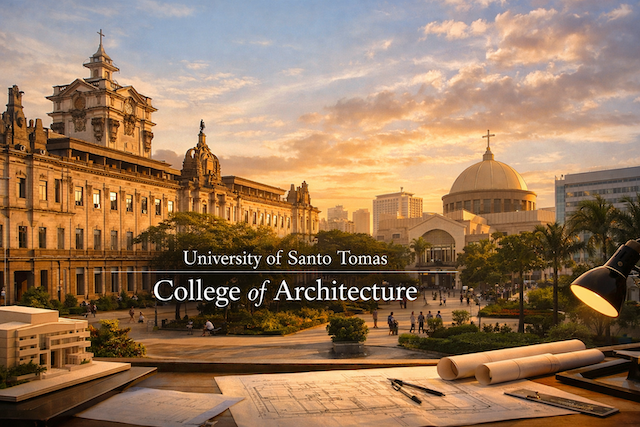
University of Santo Tomas (UST) – College of Architecture
Contents
- University of Santo Tomas (UST) – College of Architecture
- Overview of the University of Santo Tomas
- History of the UST College of Architecture
- Academic Philosophy and Educational Approach
- Bachelor of Science in Architecture Program
- Design Studio Culture
- Faculty and Academic Staff
- Facilities and Learning Resources
- Research, Heritage, and Sustainability Focus
- Student Organizations and Co-Curricular Activities
- Internship and Professional Preparation
- Notable Alumni and Industry Impact
- Admission and Student Profile
- Why Choose UST College of Architecture
- Future Directions and Vision
- Conclusion
- FAQs (Frequently Asked Questions)
- What is the UST College of Architecture known for?
- How long is the Bachelor of Science in Architecture program at UST?
- What does “studio culture” mean at UST College of Architecture?
- What kinds of projects do architecture students typically do?
- Is UST College of Architecture more traditional or more modern in approach?
- What software skills are useful for students entering architecture school?
- How important is drawing skill for admission and success?
- What is the workload like in the UST architecture program?
- Does UST architecture focus on sustainability and climate-responsive design?
- How does UST prepare students for the Architect Licensure Examination (ALE)?
- What should applicants do to prepare for architecture school at UST?
- Can international students apply to UST College of Architecture?
University of Santo Tomas (UST) – College of Architecture
Overview of the University of Santo Tomas
The University of Santo Tomas (UST), founded in 1611, is the oldest existing university in Asia and one of the most prestigious higher education institutions in the Philippines. Located in Manila, UST has built a strong academic reputation across disciplines such as medicine, law, engineering, business, and the arts. Its long history, Catholic identity, and commitment to academic excellence have made it a top choice for Filipino and international students alike.
Among its many distinguished academic units, the UST College of Architecture stands out as one of the most respected architecture schools in the country. Known for its rigorous academic training, strong design culture, and consistent performance in licensure examinations, the college has produced generations of architects who have shaped the Philippine built environment.
History of the UST College of Architecture
The UST College of Architecture traces its roots back to 1930, making it one of the oldest architecture schools in the Philippines. Initially established as part of the College of Engineering, architecture later became an independent college due to the growing demand for specialized architectural education.
Throughout its history, the college has evolved alongside changes in architectural practice, urban development, and construction technology. While maintaining a strong foundation in classical architectural principles, the curriculum has continuously adapted to modern design methodologies, sustainability concerns, and digital tools.
The college has played a key role in shaping architectural education in the Philippines, influencing curriculum standards nationwide and producing leaders in professional practice, academe, and public service.
Academic Philosophy and Educational Approach
The UST College of Architecture emphasizes a holistic architectural education that balances theory, design, technology, and professional ethics. The program is rooted in the belief that architects must be socially responsible, culturally aware, and technically competent.
Students are trained not only to design visually compelling structures but also to understand the social, historical, environmental, and economic contexts of architecture. The Thomistic philosophy of UST promotes critical thinking, moral responsibility, and service to society, values that are integrated into architectural education.
Studio-based learning is at the core of the program, supported by lectures, workshops, site visits, and interdisciplinary collaboration.
Bachelor of Science in Architecture Program
The primary academic offering of the college is the Bachelor of Science in Architecture (BS Architecture), a five-year program that follows the standards set by the Commission on Higher Education (CHED) and the Professional Regulation Commission (PRC).
Curriculum Structure
The curriculum is structured to progressively develop students’ skills and knowledge:
-
First Year: Foundation courses in design, visual communication, freehand drawing, architectural graphics, and basic theory
-
Second Year: Introduction to architectural design studios, building materials, history of architecture, and basic construction
-
Third Year: Intermediate design studios, structural concepts, environmental control systems, and urban design fundamentals
-
Fourth Year: Advanced design studios, professional practice, housing, planning, and building technology integration
-
Fifth Year: Architectural design thesis, comprehensive design projects, and internship preparation
Each year builds upon the previous one, ensuring a strong balance between creativity, technical competence, and professional readiness.
Design Studio Culture
The design studio is the heart of the UST College of Architecture experience. Studio courses demand a high level of commitment, discipline, and creativity. Students spend long hours conceptualizing, drafting, modeling, and refining their designs.
Critiques, or “juries,” are a central part of studio culture. Students present their work to professors and invited professionals who provide feedback, encouraging critical thinking and design refinement. This rigorous environment prepares students for the realities of professional architectural practice.
Collaboration and peer learning are strongly encouraged, fostering a sense of community and shared growth among students.
Faculty and Academic Staff
The faculty of the UST College of Architecture is composed of licensed architects, urban planners, historians, and specialists with extensive professional and academic experience. Many faculty members are active practitioners who bring real-world insights into the classroom.
Several professors have received national and international recognition for their work in architecture, research, heritage conservation, and urban planning. This combination of academic rigor and professional expertise ensures that students receive education that is both theoretically grounded and practically relevant.
Faculty mentorship plays a significant role in student development, especially during thesis preparation and design studios.
Facilities and Learning Resources
The UST College of Architecture is housed within the UST campus, which is known for its historic buildings and vibrant academic atmosphere. Facilities are designed to support both traditional and digital modes of architectural education.
Key facilities include:
-
Design studios with drafting tables and collaborative spaces
-
Computer laboratories equipped with architectural software
-
Model-making and workshop areas
-
Lecture halls and seminar rooms
-
Access to the UST Miguel de Benavides Library, one of the largest academic libraries in Southeast Asia
Students benefit from a learning environment that combines heritage architecture with modern educational infrastructure.
Research, Heritage, and Sustainability Focus
Research plays an increasingly important role in the college’s academic direction. Faculty and students engage in studies related to architectural theory, history, urban development, housing, and sustainability.
The UST College of Architecture is particularly recognized for its contributions to heritage conservation. Given UST’s historical context, the college actively promotes the preservation of Philippine architectural heritage through research, documentation, and adaptive reuse projects.
Sustainability is also a major theme in design studios, with students encouraged to integrate passive design strategies, climate-responsive architecture, and environmentally responsible materials into their projects.
Student Organizations and Co-Curricular Activities
Student life at the UST College of Architecture is vibrant and dynamic. Several student organizations support academic, creative, and social development, including:
-
United Architects of the Philippines Student Auxiliary (UAPSA–UST)
-
College-based academic and design organizations
-
Arts, photography, and cultural groups
These organizations organize design competitions, workshops, lectures, outreach programs, and social events. Participation helps students develop leadership skills, professional networks, and a sense of social responsibility.
The college also encourages students to join national and international architecture competitions, many of which have brought recognition to UST.
Internship and Professional Preparation
Professional preparation is a core component of the architecture program. Students are introduced early to the realities of architectural practice, including project management, ethics, and legal responsibilities.
The curriculum aligns closely with the requirements of the Architect Licensure Examination (ALE) in the Philippines. Graduates are well-prepared for post-graduate apprenticeship and licensure, consistently achieving strong passing rates in board examinations.
Industry linkages with architectural firms, construction companies, and government agencies further enhance students’ exposure to professional practice.
Notable Alumni and Industry Impact
The UST College of Architecture has produced numerous prominent architects who have made significant contributions to Philippine architecture and urban development. Alumni can be found leading architectural firms, teaching in universities, working in government planning agencies, and practicing internationally.
The college’s alumni network plays an active role in mentoring students, supporting academic initiatives, and strengthening the institution’s professional connections.
UST-trained architects are widely respected for their strong design foundations, ethical orientation, and adaptability in diverse professional settings.
Admission and Student Profile
Admission to the UST College of Architecture is competitive. Applicants must pass the UST Entrance Test (USTET) and meet specific academic and aptitude requirements. Creativity, spatial awareness, and commitment to the demanding nature of the program are important qualities for aspiring students.
The student body is diverse, coming from different regions of the Philippines and occasionally from abroad. This diversity enriches the learning environment and encourages the exchange of ideas and perspectives.
Why Choose UST College of Architecture
There are several reasons why students choose the UST College of Architecture:
-
Long-standing reputation and academic tradition
-
Strong design studio culture
-
High licensure examination performance
-
Emphasis on ethics, heritage, and social responsibility
-
Experienced faculty and professional mentorship
-
Active student life and industry exposure
The college offers an education that is deeply rooted in history while being responsive to contemporary architectural challenges.
Future Directions and Vision
Looking ahead, the UST College of Architecture continues to strengthen its role in shaping the future of architectural education in the Philippines. The college aims to further integrate digital technologies, sustainability research, and global perspectives into its curriculum.
International partnerships, interdisciplinary collaboration, and expanded research initiatives are part of the college’s long-term vision. At the same time, it remains committed to preserving its core values of excellence, service, and ethical responsibility.
Conclusion
The University of Santo Tomas – College of Architecture represents a unique blend of tradition and innovation. With nearly a century of architectural education, the college has consistently produced architects who are technically skilled, creatively grounded, and socially conscious.
For students seeking a rigorous, values-driven, and professionally respected architecture education in the Philippines, the UST College of Architecture remains one of the top choices. Its enduring legacy, combined with a forward-looking academic vision, ensures its continued influence on the architectural landscape of the country for generations to come.
FAQs (Frequently Asked Questions)
What is the UST College of Architecture known for?
The University of Santo Tomas (UST) College of Architecture is widely recognized for its long-established reputation, rigorous studio culture, and strong foundation in both design and building technology. Many students choose UST because the program emphasizes conceptual thinking, structured design development, and disciplined presentation skills. The college is also known for encouraging an appreciation of Philippine architectural heritage while supporting modern approaches such as sustainable and climate-responsive design. Graduates are often described as having strong drafting and communication skills, good work habits developed through studio training, and a professional mindset shaped by UST’s academic standards.
How long is the Bachelor of Science in Architecture program at UST?
The Bachelor of Science in Architecture program in the Philippines is typically completed in five years, and UST follows this standard structure. The program is studio-centered, meaning students take architectural design classes every year that gradually become more complex. Alongside design studios, students complete subjects in architectural history, theory, construction methods, building utilities, structures, environmental controls, and professional practice. After graduation, students usually proceed to post-graduate apprenticeship requirements before taking the Architect Licensure Examination (ALE), depending on current professional regulations.
What does “studio culture” mean at UST College of Architecture?
Studio culture refers to the learning environment created by design studios, where students spend significant time developing projects through sketches, research, drawings, models, and presentations. At UST, studio culture is often described as demanding but formative. Students learn to accept critique, revise work multiple times, and defend design decisions through clear reasoning. Studio culture also encourages peer learning, because students observe how classmates solve design problems and share techniques for drafting, model-making, and layout. Time management becomes essential because design outputs are often submitted alongside technical subjects.
What kinds of projects do architecture students typically do?
Architecture projects change by year level. Early projects may focus on basic spatial planning, form studies, and small-scale structures that teach students design principles and communication skills. As students progress, projects often incorporate structural logic, building codes, site analysis, and environmental design strategies. Advanced studios may include housing, mixed-use buildings, institutional projects, urban infill proposals, and larger-scale complexes. Many programs also require a final thesis or comprehensive design project that integrates research, design development, technical drawings, and professional presentation materials.
Is UST College of Architecture more traditional or more modern in approach?
UST is best understood as balanced. The program maintains a disciplined and structured approach to design education, which some students describe as “traditional” because of strong emphasis on fundamentals like architectural drawing, design principles, and architectural history. At the same time, the college adapts to modern practice through digital design tools, contemporary building technologies, and sustainability-focused thinking. Students typically encounter both manual and digital workflows, learning when to use each effectively. The combination helps graduates adapt to various architectural offices and project types.
What software skills are useful for students entering architecture school?
While specific tools can vary, incoming students benefit from being comfortable with basic digital tasks such as file organization, presentation layout, and image editing. During architecture school, students commonly learn drafting and modeling tools as well as rendering and layout software. However, strong fundamentals matter more than software at the beginning. Skills like freehand sketching, clear labeling, visual composition, and spatial thinking often make the transition easier. Many students develop software proficiency gradually as studio requirements become more complex and deadlines require more efficient workflows.
How important is drawing skill for admission and success?
Drawing skill is helpful, but it is not the only factor that determines success. Many students improve significantly once they receive proper training in architectural graphics and design communication. What matters most is the willingness to practice, accept feedback, and develop clarity in visual expression. In studio, drawings are tools for thinking and communicating ideas rather than purely artistic outputs. Students who start with average drawing ability can still perform well if they are consistent, organized, and open to learning. Over time, architectural drawing becomes more technical, focusing on precision and readability.
What is the workload like in the UST architecture program?
The workload is typically heavy because design studios require ongoing development, and technical subjects add weekly problem sets, quizzes, and projects. Students often manage multiple deadlines, including plates (design boards), models, reports, and exams. The workload can increase during midterms and finals, when design juries and major submissions occur. Successful students usually build strong routines: scheduling tasks early, breaking big deliverables into smaller steps, and maintaining consistent progress instead of relying on last-minute work. Good health habits and communication with teammates also help during demanding periods.
Does UST architecture focus on sustainability and climate-responsive design?
Yes. Philippine architecture increasingly emphasizes tropical design principles, resilience, and sustainability, and students are commonly encouraged to integrate these ideas into studio work. Sustainability may appear through passive cooling strategies, daylighting, natural ventilation, site planning, rainwater management, and thoughtful material selection. Climate-responsive design is especially relevant in the Philippines due to heat, humidity, heavy rainfall, and typhoon risks. Students may also explore community-based design and disaster-resilient approaches, depending on studio themes and faculty direction.
How does UST prepare students for the Architect Licensure Examination (ALE)?
UST supports licensure preparation by ensuring students complete core competencies aligned with professional expectations: design, building technology, structures, history and theory, planning concepts, and professional practice. The consistent training in drafting standards, technical detailing, and architectural documentation helps students develop the discipline needed for board-related topics. After graduation, many students continue structured review programs, and the strength of their academic foundation can make review more efficient. Strong studio critique experience can also help in expressing design logic clearly, which is valuable in professional settings.
What should applicants do to prepare for architecture school at UST?
Applicants can prepare by strengthening basic math and physics understanding, practicing freehand sketching, and building comfort with reading plans and simple spatial diagrams. It also helps to study basic architectural concepts such as scale, proportion, circulation, and functional planning. Developing good study habits is just as important: learning to manage time, keep materials organized, and communicate ideas clearly. If possible, applicants can visit museums, observe buildings critically, and practice describing spaces in words and sketches. Curiosity and consistency often matter more than prior technical mastery.
Can international students apply to UST College of Architecture?
In general, UST accepts international students across its programs, though requirements can differ depending on citizenship, academic background, and documentation. International applicants typically need to meet admission test or evaluation requirements, provide equivalent academic records, and comply with immigration and visa rules. For architecture, it is also important for international students to consider long-term licensing plans, because professional registration processes differ by country. Prospective applicants should verify current requirements through official UST admissions channels before planning timelines.

How to Register for eTravel Philippines (2025 Guide)
Step-by-step guide to completing your eTravel registration before arriving in the Philippines, with images and tips.

Night Market in Cebu – Things You Don’t Know About Cebu Life
Discover the hidden charm of Cebu’s night markets, from street food stalls to local life tips you won’t find in tourist guides.

How to Use ChatGPT for IELTS Preparation: A Complete Guide
Learn how to prepare for IELTS using ChatGPT — including strategies for Writing, Reading, Listening, Speaking, and grammar support.

How to Build a Website Without Coding Using ChatGPT
Discover how to build your own website using AI—no coding skills needed. From structure planning to SEO and design, let ChatGPT guide you.