2026年1月16日
3D ACADEMY offers affordable English study programs in Cebu, Philippines – perfect for beginners, professionals, and exam takers.

3D UNIVERSAL ENGLISH INSTITUTE INC
info.3d-universal.com
8:00-17:00(Mon-Fri)
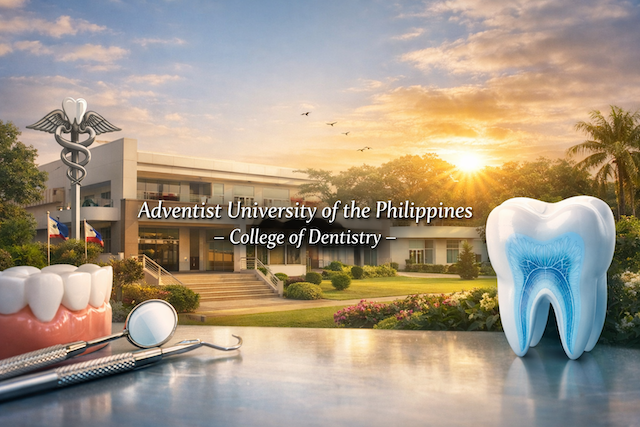
Adventist University of the Philippines – College of Dentistry
Contents
- Adventist University of the Philippines – College of Dentistry
- Quick Overview of AUP and Its Dentistry Program
- Why Students Consider AUP College of Dentistry
- Doctor of Dental Medicine (DMD): What the Program Typically Covers
- Clinical Training and Patient Care Experience
- Facilities, Learning Environment, and Campus Life
- Admissions: What to Prepare and How to Apply
- Tuition and Estimated Costs: What “Realistic Budgeting” Looks Like
- Student Support, Mentoring, and Professional Development
- Career Path After Graduation
- Who Is This Program Best For?
- How to Contact AUP for the Most Updated Details
- Final Thoughts
- FAQs (Frequently Asked Questions)
- Is Adventist University of the Philippines (AUP) a good option for studying dentistry in the Philippines?
- What degree does AUP offer for dentistry?
- How long does the DMD program usually take?
- What is the difference between pre-clinical and clinical training in dental school?
- What kinds of dental procedures do students typically learn during clinical years?
- How competitive is admission to AUP College of Dentistry?
- What documents are commonly required for applying to dentistry at AUP?
- Do international students need special requirements to enroll?
- How much does it cost to study dentistry at AUP?
- Are there dormitories or housing options near AUP?
- How is student life at AUP different from city-based dental schools?
- Does AUP emphasize community service or outreach activities for dentistry students?
- Will graduating from AUP allow me to work as a dentist in the Philippines?
- Can I transfer into AUP College of Dentistry from another school?
- What should I ask AUP before enrolling?
Adventist University of the Philippines – College of Dentistry
The Adventist University of the Philippines (AUP) is a private Christian university located in Puting Kahoy, Silang, Cavite, known for combining academic training with values-based education. Within its health-science offerings, the AUP College of Dentistry is one of the university’s most established professional programs, serving students who want a dentistry education that emphasizes clinical competence, ethical practice, and service-oriented leadership.
This guide explains what to expect from AUP’s dentistry pathway—how the program is structured, what clinical training looks like, how student life is shaped by the campus environment, and how to plan for costs and admissions. If you are comparing dental schools in the Philippines, or you are an international student exploring where to study dentistry, this overview will help you understand how AUP’s College of Dentistry may fit your goals.
Quick Overview of AUP and Its Dentistry Program
AUP is a boarding-school-style campus community, surrounded by greenery and designed to support a holistic student lifestyle: academics, personal development, and community engagement. The dentistry program is offered under the College of Dentistry and leads to the Doctor of Dental Medicine (DMD) degree. In the Philippine context, the DMD is the standard professional degree that prepares students for the national dental licensure examination and for clinical practice.
AUP’s dentistry education is often described as mission-oriented. That does not only mean religious instruction—it usually translates into a strong culture of service, community outreach, and patient-centered care. Students are encouraged to develop both technical skill and professional character, with a focus on empathy, integrity, and responsible decision-making in clinical settings.
Why Students Consider AUP College of Dentistry
Every dental school has its own “feel.” AUP attracts students for several common reasons:
- Values-based environment: Students who want a faith-informed approach to healthcare often appreciate the university culture and campus life.
- Holistic formation: Beyond technical competency, the program encourages communication skills, professionalism, and patient respect.
- Campus setting: AUP’s Silang, Cavite location offers a quieter campus atmosphere than dense inner-city environments, which some students find easier for focus and routine.
- Service mindset: Community involvement and outreach projects can be a meaningful part of the student experience, especially for those who value public health impact.
Of course, the best choice depends on your personal learning style. Some students thrive in a calmer campus environment, while others prefer the pace of city-based clinical exposure. It’s smart to weigh both academic factors and daily-life factors when selecting a dental school.
Doctor of Dental Medicine (DMD): What the Program Typically Covers
The DMD program in the Philippines is designed to move students from foundations to clinical competence. While course titles can vary by school, the overall arc is similar:
- Early years: Foundational sciences and basic health concepts (anatomy, physiology, biochemistry, microbiology), plus an introduction to dental materials and basic pre-clinical skills.
- Middle years: More intensive dental sciences and technique development, including operative dentistry concepts, prosthodontics principles, oral pathology, radiology fundamentals, and patient assessment.
- Clinical years: Supervised patient care, case planning, execution of procedures, documentation, infection control, and professional ethics—often with increasing responsibility as students progress.
In a strong DMD program, the goal is not only to teach procedures but to train clinical reasoning: how to evaluate a patient, prioritize needs, create a plan, and deliver safe, effective treatment while communicating clearly and acting professionally.
Clinical Training and Patient Care Experience
Clinical training is the heart of dental education. At AUP, dentistry students typically progress from simulated practice (pre-clinical laboratory sessions) to supervised clinical care. In this phase, students learn to translate technique into real patient outcomes—working under faculty guidance to maintain safety and quality standards.
Key clinical competencies students generally develop include:
- Patient assessment: Medical/dental history taking, basic diagnostics, interpreting findings, and creating a treatment roadmap.
- Infection control: Sterilization processes, personal protective equipment protocols, clinic discipline, and safe instrument handling.
- Documentation: Accurate charting, procedural notes, consent, and case monitoring—skills that are essential for professional practice.
- Communication: Explaining procedures in plain language, building trust, managing anxiety, and presenting options respectfully.
A strong clinical experience is not only about the number of procedures. It also includes the quality of supervision, how cases are reviewed, and how students are coached in planning, ethics, and patient-centered decision-making.
Facilities, Learning Environment, and Campus Life
AUP is known for a campus structure that supports students who want a stable, routine-driven lifestyle. Many students live on or near campus. Because AUP is a boarding-school-style university, it typically has systems for student housing and campus life support.
For dentistry students, day-to-day reality often includes a mix of classroom instruction, lab work, clinic sessions, and independent study. Dentistry is demanding almost everywhere in the world, so an environment that reduces commuting stress and supports consistent schedules can be a real advantage.
Students also commonly value:
- Access to dormitories/apartments: On-campus or near-campus housing can simplify daily logistics.
- Community: A tighter campus environment can make it easier to build relationships with classmates and mentors.
- Wellness routines: Some students appreciate a campus culture that encourages balanced living and responsible habits.
Admissions: What to Prepare and How to Apply
Admissions requirements can differ depending on whether you are a first-time applicant, transferee, or international student. In general, dentistry applicants should plan to prepare the following categories of documents:
- Academic records: Transcript of records and proof of eligibility (especially for transferees).
- Identity documents: Birth certificate and other required civil documents.
- Application requirements: Application form, photos, and payment of application/exam-related fees if applicable.
- Health and readiness: Medical clearance or checkups may be part of the university process.
If you are an international applicant, you should also expect additional steps such as credential evaluation, immigration/visa documentation, and possibly proof of English readiness depending on your background. It is best to contact the university directly early, because timelines for international documents can be longer than domestic applications.
Tuition and Estimated Costs: What “Realistic Budgeting” Looks Like
Cost planning is one of the most practical parts of choosing a dental school. Dentistry expenses are not only tuition—students should budget for laboratory requirements, clinical materials, instruments, and living costs.
AUP publishes a tentative financial information sheet for Dental Medicine (Academic Year 2023–2024). While figures can change by year and level, it gives a useful picture of how costs can rise as students move into more clinic-intensive years (where laboratory and clinic-related fees increase).
Examples of how the published estimates may look (figures are in Philippine pesos and are presented as “estimated tuition & fees” per term in the published document):
- Early DMD level estimates: Roughly around the 50,000–55,000+ range per semester for some early terms, with an inter-semester figure also listed.
- Mid-level terms: Figures can move upward (for example, into the 70,000–80,000+ range in some terms) as laboratory requirements become heavier.
- Clinic-intensive terms: Some listed totals are higher (including terms around 100,000+) where clinic and laboratory costs appear significantly larger.
International or foreign-student related fees may also apply (for example, foreign service fees and foreign general fee totals are shown separately in the published estimates). In addition, housing and meal plans are separate—AUP lists various dormitory and boarding options with different price points, depending on occupancy and accommodation type.
Budgeting tip: When comparing schools, avoid comparing only “tuition per unit.” Dentistry often becomes more expensive in clinical years due to materials and patient-care requirements. Ask for the most updated schedule of fees and a realistic breakdown of expected program costs.
Student Support, Mentoring, and Professional Development
In a professional healthcare program, support systems matter. Students typically benefit from a structure that includes faculty mentoring, clinic supervision, and guidance on professional conduct. In dentistry, mentors do more than correct technique; they shape how students think—how to plan treatment, how to manage complications, and how to uphold patient safety.
Students often gain professional development through:
- Case presentations: Learning to present findings and justify treatment plans clearly.
- Ethics discussions: Consent, patient rights, boundaries, and responsible care.
- Community service: Outreach programs that strengthen real-world patient communication and public health awareness.
If you plan to build a future in dentistry—whether private practice, public health, or specialized training—these “soft skill” aspects can be as important as technical competency.
Career Path After Graduation
Graduates of the Doctor of Dental Medicine pathway typically pursue professional licensure, then move toward one or more career directions:
- General dental practice: Building a clinic career with broad patient services.
- Employment-based practice: Working in established clinics, hospitals, or dental groups.
- Public health dentistry: Community programs, school dentistry, or government health services.
- Specialization: Pursuing advanced training in fields such as orthodontics, oral surgery, periodontics, pediatric dentistry, prosthodontics, and more (pathways depend on national requirements and available programs).
- Service and mission work: For students aligned with AUP’s culture, service-focused dentistry can be an important long-term direction.
It is wise to think early about your desired destination. If you want specialization, focus on building strong academic performance and clinical discipline. If you want private practice, start learning about patient relationships, business basics, and ethical decision-making—because reputation and trust are core assets in dentistry.
Who Is This Program Best For?
AUP College of Dentistry may be a strong fit if you:
- Prefer a campus-centered lifestyle with housing options and a structured environment.
- Value a values-based approach to healthcare education and professional behavior.
- Want to develop both clinical skill and service mindset, not only technical proficiency.
- Are motivated to handle the heavy study load typical of dentistry and want an environment that supports consistent routines.
On the other hand, if you strongly prefer an urban environment with dense city-based clinical exposure from day one, you should compare AUP’s campus setting with dental schools located in major metropolitan centers and evaluate which environment matches your learning preferences.
How to Contact AUP for the Most Updated Details
Because admissions rules and fee schedules can change, it is best to confirm the latest information directly with the university. AUP’s official contact details for admissions (published on their website) include:
- Email: admissions@aup.edu.ph
- Landline: +63 49 541 1211 (local 2602)
- Location: Puting Kahoy, Silang, Cavite, 4118, Philippines
When you contact admissions, include a short, clear message with: your educational background, whether you are applying as a new student or transferee, whether you are an international applicant, and your target intake/semester. This helps the office respond faster and more accurately.
Final Thoughts
Choosing a dental school is not only about passing a licensure exam—it is about becoming a competent, ethical professional who can serve patients safely and confidently. The AUP College of Dentistry offers a path for students who want a DMD education rooted in service, character, and disciplined clinical training, within a campus environment designed to support student life and development.
If you are seriously considering AUP, the best next step is to request the most updated admissions requirements and fee schedule, then evaluate the program alongside your personal priorities: learning environment, cost structure, clinical training approach, and long-term career goals.
FAQs (Frequently Asked Questions)
Is Adventist University of the Philippines (AUP) a good option for studying dentistry in the Philippines?
AUP can be a good option if you want a dentistry program within a values-based university setting and prefer a campus environment that supports structured routines. The College of Dentistry is part of a larger institution known for health-related education, and many students value the community feel of the campus. However, “good” depends on your priorities—clinical exposure, costs, location, learning culture, and long-term goals such as general practice or future specialization.
What degree does AUP offer for dentistry?
AUP offers the Doctor of Dental Medicine (DMD) program, which is the standard professional dentistry degree in the Philippines. The DMD pathway is designed to build strong foundations in dental sciences, develop technical and clinical skills, and prepare students for supervised patient care. Graduates generally aim to take the Philippine dental licensure examination after completing the required program components.
How long does the DMD program usually take?
The length of a DMD program in the Philippines can vary depending on curriculum structure, academic policies, and student progression. Some students finish on schedule, while others may take longer due to course sequencing, clinical requirements, or personal circumstances. For the most accurate timeline, it is best to confirm with AUP admissions or the College of Dentistry office, especially if you are applying as a transferee or international student.
What is the difference between pre-clinical and clinical training in dental school?
Pre-clinical training usually focuses on foundational knowledge and skills development in laboratories and simulation settings. Students practice hand skills, learn dental materials, and build technique before treating real patients. Clinical training is the stage where students provide supervised patient care in a dental clinic setting. This includes assessment, diagnosis support, treatment planning, procedures, and documentation—all under faculty oversight.
What kinds of dental procedures do students typically learn during clinical years?
Clinical training generally includes core competencies such as patient evaluation, basic restorative procedures, periodontal care foundations, radiographic interpretation basics, prosthodontic principles, preventive dentistry, and other supervised services depending on the school’s clinical scope and patient flow. The exact procedures and clinical requirements differ by institution, so prospective students should ask AUP for their current clinical curriculum outline and clinic requirement system.
How competitive is admission to AUP College of Dentistry?
Admissions competitiveness depends on available slots, applicant volume, and the school’s requirements for academic records and evaluations. Dentistry programs are often selective because of limited clinical capacity and resource requirements. To strengthen an application, it helps to prepare complete documents early, keep academic records in good standing, and follow admissions instructions carefully. If an entrance exam or interview is part of the process, treat it seriously and prepare in advance.
What documents are commonly required for applying to dentistry at AUP?
Applicants commonly submit academic transcripts and other school records, identification documents, and completed application forms. Some applicants may need additional paperwork, such as transfer credentials (for transferees) or international credential evaluation (for foreign students). Requirements can change, so the best practice is to request the latest checklist from AUP admissions and confirm deadlines for the intake you are targeting.
Do international students need special requirements to enroll?
International applicants typically need additional documentation beyond local requirements. This may include passport copies, proof of previous education, and other immigration-related papers. Processing time can be longer for international documents, so early planning is important. Because requirements differ depending on nationality and educational background, international students should contact AUP directly to confirm the latest procedures and any fees that may apply specifically to foreign students.
How much does it cost to study dentistry at AUP?
Costs include tuition and school fees, but dentistry also requires budgeting for instruments, uniforms, supplies, laboratory materials, and clinic-related expenses. AUP has published estimated financial information in some academic years showing that fees can increase as students move into clinic-intensive terms. Because fee schedules can change annually, you should request the most updated breakdown from the university and ask whether certain costs are paid per term, per course, or per clinical requirement.
Are there dormitories or housing options near AUP?
AUP is known for a campus community where many students live on or near campus. Housing options can include dormitory-style arrangements or nearby accommodations, depending on availability and student preference. If housing is a priority for you, ask AUP about current dorm capacity, room types, rules, meal plans (if any), and estimated monthly costs. Early reservation is often helpful, especially before the start of a new term.
How is student life at AUP different from city-based dental schools?
AUP’s Silang, Cavite campus setting is generally quieter than dense urban environments, which can be a benefit for students who want fewer distractions and a more routine-driven schedule. City-based dental schools may offer different lifestyle advantages such as easier access to hospitals, dense commercial areas, and broader transportation networks. The “best” environment depends on how you study, how you manage stress, and whether you prefer a campus community or an urban lifestyle.
Does AUP emphasize community service or outreach activities for dentistry students?
AUP’s identity as a Christian university often supports a service-oriented culture. In many schools with a similar mission, students participate in outreach, community programs, or service activities that reinforce public health awareness and patient communication. Specific outreach activities can change by year or department plan, so you should ask the College of Dentistry what community programs are active and how students participate.
Will graduating from AUP allow me to work as a dentist in the Philippines?
Graduation from a DMD program is typically one step in the pathway toward professional practice. In the Philippines, graduates generally aim to take the national dental licensure examination and meet regulatory requirements. Requirements and processes can change, so students should stay informed through official channels. If your goal is to practice outside the Philippines later, also research the licensing rules of your target country, as international recognition varies widely.
Can I transfer into AUP College of Dentistry from another school?
Transfer policies depend on the university’s rules, curriculum alignment, and credit evaluation. In professional programs like dentistry, not all courses transfer cleanly, and clinical requirements often must be completed under the receiving school’s system. If you are a transferee, prepare a complete set of transcripts and course descriptions, and ask AUP how crediting works, whether there are bridging subjects, and how transfer timing may affect your graduation schedule.
What should I ask AUP before enrolling?
Ask for the latest admissions checklist, tuition and fees per term, and a clear explanation of additional dentistry costs (instruments, clinic materials, uniforms, lab fees). Also ask about curriculum structure, clinic requirements, how patient cases are managed, and what support systems exist for students. If you are an international applicant, confirm immigration documentation steps and the expected processing timeline. Getting clear answers early helps you plan your budget and timeline realistically.
Dentistry in the Philippines: Education System, Universities, and Career Path

How to Register for eTravel Philippines (2025 Guide)
Step-by-step guide to completing your eTravel registration before arriving in the Philippines, with images and tips.

Night Market in Cebu – Things You Don’t Know About Cebu Life
Discover the hidden charm of Cebu’s night markets, from street food stalls to local life tips you won’t find in tourist guides.

How to Use ChatGPT for IELTS Preparation: A Complete Guide
Learn how to prepare for IELTS using ChatGPT — including strategies for Writing, Reading, Listening, Speaking, and grammar support.

How to Build a Website Without Coding Using ChatGPT
Discover how to build your own website using AI—no coding skills needed. From structure planning to SEO and design, let ChatGPT guide you.