2026年1月16日
3D ACADEMY offers affordable English study programs in Cebu, Philippines – perfect for beginners, professionals, and exam takers.

3D UNIVERSAL ENGLISH INSTITUTE INC
info.3d-universal.com
8:00-17:00(Mon-Fri)
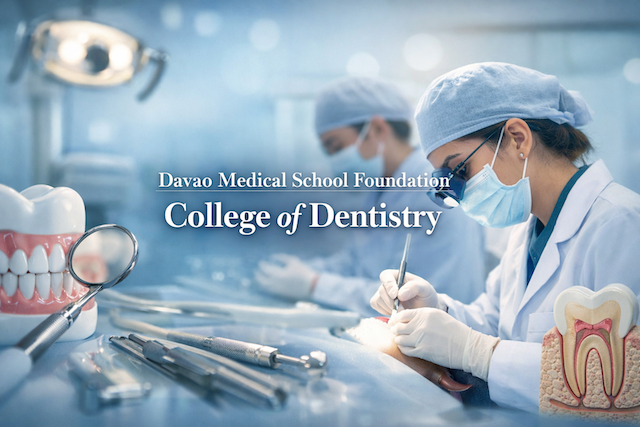
Davao Medical School Foundation – College of Dentistry: Program Guide for Future Dentists
Contents
- Davao Medical School Foundation – College of Dentistry: Program Guide for Future Dentists
- Overview of DMSF College of Dentistry
- Campus Location and Accessibility
- Degree Program Offered: Doctor of Dental Medicine (DMD)
- Curriculum Structure and Academic Progression
- Pre-Clinical Training: Building Core Dental Skills
- Clinical Training and Patient-Based Learning
- Facilities and Learning Environment
- Licensure Examination Preparation and Outcomes
- Admissions Process and Applicant Preparation
- Student Life and Daily Academic Reality
- Tuition, Fees, and Additional Expenses
- Career Opportunities After Graduation
- Is DMSF College of Dentistry the Right Choice for You?
- Final Thoughts for Aspiring Dentists
- FAQs (Frequently Asked Questions)
- Is Davao Medical School Foundation (DMSF) a good place to study dentistry in Mindanao?
- What degree do students earn at DMSF College of Dentistry?
- How long does dental school usually take in the Philippines?
- What is the difference between pre-clinical and clinical years?
- What subjects should I expect in a dentistry program like DMSF?
- Does DMSF provide hands-on clinical training with real patients?
- How can I know if a dental school has enough patients for student requirements?
- What costs should I prepare for besides tuition?
- Is dentistry at DMSF suitable for students who are not from Davao?
- What qualities should a student have to succeed in dental school?
- How should I prepare before enrolling in a dentistry program?
Davao Medical School Foundation – College of Dentistry: Program Guide for Future Dentists
Overview of DMSF College of Dentistry
Davao Medical School Foundation, Inc. (DMSF) is a health-sciences-focused institution based in Davao City, and its College of Dentistry plays a central role in the school’s mission of education, patient care, and community service. The program is designed to train future dentists with strong clinical competence, ethical responsibility, and a clear understanding of public health needs, particularly in Southern Mindanao.
For students who are considering dentistry outside Metro Manila or Cebu, DMSF offers an alternative that emphasizes healthcare integration and clinical exposure within a medical-school-centered environment. This setting allows dentistry students to develop a professional mindset aligned with broader healthcare practice.
Campus Location and Accessibility
The DMSF campus is located in Davao City, commonly associated with the Bajada area near major roads and commercial districts. This central location is practical for students, especially those in dentistry programs who often spend extended hours on campus due to laboratory and clinical requirements.
Accessibility matters greatly in dental education. Long commutes can significantly affect performance and well-being, especially during pre-clinical and clinical years when schedules are tightly packed. Being located in a well-connected part of the city helps students manage time more effectively and maintain consistent study and practice routines.
Degree Program Offered: Doctor of Dental Medicine (DMD)
The College of Dentistry at DMSF offers the Doctor of Dental Medicine (DMD) program, which is the standard professional degree for dentists in the Philippines. The program is structured as a straight, multi-year course that integrates general education, basic medical sciences, dental sciences, pre-clinical laboratory training, and supervised clinical practice.
The DMD program is designed not only to build theoretical knowledge but also to develop technical skills, clinical judgment, and professional behavior. Students gradually transition from classroom-based learning to hands-on training and patient care, ensuring that they are prepared for real-world dental practice.
Curriculum Structure and Academic Progression
Dentistry education follows a structured progression that reflects the increasing responsibility placed on students as they move through the program. Early years focus on foundational knowledge, while later years emphasize clinical competence and patient management.
- Foundational phase: General education and basic health sciences
- Pre-clinical phase: Dental sciences, laboratory simulations, and technical skill development
- Clinical phase: Supervised patient care, treatment planning, and competency assessment
This progression ensures that students are adequately prepared before advancing to more complex and demanding aspects of dental training.
Pre-Clinical Training: Building Core Dental Skills
The pre-clinical phase is one of the most demanding stages of dental education. During this period, students spend extensive time in laboratories and simulation environments where precision, consistency, and attention to detail are essential.
- Dental anatomy and tooth morphology
- Dental materials and biomaterials
- Simulation exercises for restorations and preparations
- Introduction to dental radiology
- Infection control and clinical protocols
Pre-clinical training focuses heavily on repetition and skill refinement. Students learn that dentistry is not only about knowledge but also about developing reliable hand skills and professional discipline.
Clinical Training and Patient-Based Learning
Clinical training marks a significant transition in the DMD program. Students begin treating real patients under close supervision from licensed dental faculty. This phase emphasizes diagnosis, treatment planning, procedural execution, and patient communication.
Clinical dentistry requires students to balance technical performance with professionalism. Time management, proper documentation, and adherence to ethical and safety standards are evaluated alongside clinical outcomes.
Facilities and Learning Environment
A strong dentistry program relies on well-equipped facilities, including skills laboratories, clinical operatories, sterilization areas, and radiology units. These facilities support both technical training and patient safety.
As part of a medical school environment, the College of Dentistry at DMSF benefits from a healthcare-oriented culture. This setting reinforces the importance of infection control, interdisciplinary awareness, and patient-centered care throughout the training process.
Licensure Examination Preparation and Outcomes
Preparation for the Dentistry Licensure Examination is a key goal of the DMD program. Academic coursework, laboratory exercises, and clinical requirements are all designed to align with the competencies tested in the licensure process.
Strong licensure performance is often associated with structured curriculum design, faculty mentorship, and consistent evaluation standards. While individual outcomes vary, schools that emphasize clinical readiness tend to produce graduates who are confident entering professional practice.
Admissions Process and Applicant Preparation
Applicants to the DMSF College of Dentistry are expected to meet academic and administrative requirements set by the institution. These typically include academic records, character references, and compliance with health and enrollment policies.
Prospective students are encouraged to prepare not only academically but also mentally and financially. Dentistry is a demanding program that requires long-term commitment, resilience, and effective time management.
Student Life and Daily Academic Reality
Life as a dentistry student is structured and intensive. Days often include lectures, laboratory sessions, clinical duties, and independent study. Unlike many other programs, dental students must also plan for materials, instruments, and patient coordination.
Success in dental school often depends on consistency rather than short-term effort. Students who develop stable routines and proactive planning habits tend to manage stress more effectively and perform better academically and clinically.
Tuition, Fees, and Additional Expenses
Dentistry programs involve higher costs compared to many other degrees due to equipment, materials, and clinical supplies. In addition to tuition and school fees, students should budget for instruments, consumables, uniforms, and other training-related expenses.
Financial planning is essential, especially during pre-clinical and clinical years when costs typically increase. Understanding the breakdown of expenses helps students and families prepare realistically for the duration of the program.
Career Opportunities After Graduation
Graduates of the Doctor of Dental Medicine program can pursue various career paths depending on their interests and goals:
- General dental practice
- Employment in private or group clinics
- Hospital or institutional dentistry
- Specialization and advanced training
- Public health, community dentistry, or academia
The clinical foundation built during dental school strongly influences long-term professional confidence and career flexibility.
Is DMSF College of Dentistry the Right Choice for You?
Choosing a dental school is a major decision that should be based on program structure, clinical exposure, faculty support, and personal fit. A healthcare-centered environment, structured training progression, and emphasis on patient care are important factors to consider.
DMSF’s College of Dentistry appeals to students who value a disciplined clinical approach and who are willing to commit fully to the demands of professional dental education.
Final Thoughts for Aspiring Dentists
Dental education is challenging, but it is also highly rewarding. Students who enter the program with clear expectations, strong motivation, and disciplined habits are more likely to succeed and grow into competent professionals.
If you are serious about becoming a dentist and are looking for a program rooted in healthcare values and clinical training, Davao Medical School Foundation – College of Dentistry is an option worth careful consideration.
FAQs (Frequently Asked Questions)
Is Davao Medical School Foundation (DMSF) a good place to study dentistry in Mindanao?
DMSF is often considered a strong option for students who want to pursue dentistry in Mindanao while studying in a campus environment that is strongly oriented toward healthcare education. A dentistry program’s quality is usually shaped by the structure of its pre-clinical training, the organization of its clinical system, and the consistency of faculty supervision. If you are evaluating DMSF, focus on practical factors such as access to simulation laboratories, how clinical requirements are implemented, and how students are guided during patient care. It is also helpful to ask about academic support systems, examination preparation, and how the college monitors student progress from year to year.
What degree do students earn at DMSF College of Dentistry?
Students typically earn a Doctor of Dental Medicine (DMD) degree, which is the standard professional dentistry degree in the Philippines. The program is usually designed as a multi-year course that moves from foundational subjects into pre-clinical laboratory training and then into supervised clinical practice. The DMD pathway is intended to produce graduates who can diagnose common oral health conditions, plan treatments responsibly, and perform essential dental procedures with proper infection control and professional ethics.
How long does dental school usually take in the Philippines?
In the Philippines, dentistry is generally completed through a multi-year straight program. The exact length can vary depending on curriculum design, academic policies, and individual student progression. Beyond the official number of years, students should remember that dentistry is highly performance-based. Progression is not only about passing written exams but also about meeting laboratory standards and clinical competencies. Because of this, time management and consistent performance are essential for finishing on schedule.
What is the difference between pre-clinical and clinical years?
Pre-clinical years focus on building knowledge and technical skills before students treat real patients. This includes learning dental anatomy, dental materials, and practicing procedures in simulation labs where precision is evaluated closely. Clinical years begin when students provide supervised patient care in the dental clinic. At that stage, students must combine technical ability with clinical judgment, patient communication, documentation skills, and strict infection control. Many students find that clinical years feel more demanding because performance is measured in real outcomes and professional responsibility.
What subjects should I expect in a dentistry program like DMSF?
While each school arranges its curriculum differently, dentistry students commonly study a mix of general education, basic medical sciences, and dental sciences. Over time, subjects become more clinically oriented, often including operative dentistry, prosthodontics, periodontics, orthodontics, oral surgery concepts, oral pathology, radiology, and related clinical disciplines. Students should also expect training in patient assessment, treatment planning, and ethics. The best way to confirm the exact sequence is to review the school’s curriculum outline or prospectus and compare it with your personal learning strengths.
Does DMSF provide hands-on clinical training with real patients?
In a DMD program, hands-on training is a core requirement, and clinical exposure typically increases as students advance. A key point to check is how the clinic is organized: how patients are scheduled, how many chairs are available, what the supervision ratio looks like, and how competency sign-offs are handled. You can also ask how the school supports patient access through community outreach, partnerships, or institutional programs. The overall clinical experience is shaped not only by having a clinic, but by having a system that allows students to complete procedures consistently and safely.
How can I know if a dental school has enough patients for student requirements?
Patient availability is one of the most practical concerns in dental education. You can evaluate this by asking how the school sources patients, whether community programs are conducted regularly, and whether the clinic has strong walk-in demand. Another useful question is how the program handles cases when patient flow is low. Some schools implement outreach clinics, referral systems, or structured patient recruitment initiatives to help students meet clinical requirements. It is also reasonable to ask current students how often they face delays in completing cases and what strategies they use.
What costs should I prepare for besides tuition?
Dentistry involves significant additional expenses because training requires instruments, consumables, and laboratory materials. Beyond tuition and standard school fees, students commonly budget for instrument kits, hand instruments, protective equipment, uniforms, laboratory consumables, and clinical consumables. Printing, documentation, and patient coordination can also add to costs. A helpful approach is to build a year-by-year budget because expenses typically rise during pre-clinical laboratory periods and again during clinical years. Planning early reduces stress and prevents last-minute purchasing that can be more expensive.
Is dentistry at DMSF suitable for students who are not from Davao?
Yes, many students study away from their home province, but success depends on adjustment and support systems. If you are relocating, consider housing options, commuting time, safety, and access to daily necessities near campus. Dentistry schedules can be long, so living arrangements that reduce travel time can make a real difference. It is also wise to ask about student services, advising support, and how the college communicates requirements and deadlines. Students who build stable routines early generally adapt faster, especially during demanding laboratory phases.
What qualities should a student have to succeed in dental school?
Successful dentistry students typically have consistency, patience, and a willingness to practice repeatedly. Dentistry is not only academic; it requires steady hand skills and comfort with detailed, step-by-step work. You should be prepared for frequent evaluations, strict standards, and long hours in labs or clinics. Communication skills also matter because patient care involves explaining procedures, managing expectations, and maintaining professionalism. Finally, resilience is important. Mistakes happen during training, and growth comes from feedback, repetition, and improving technique over time.
How should I prepare before enrolling in a dentistry program?
Before enrolling, strengthen your study habits, organize your finances, and develop realistic expectations about workload. If possible, review basic science fundamentals and learn about common dental instruments and procedures to build familiarity. You can also prepare by improving fine motor skills through activities that require precision and steady hands. Most importantly, prepare your schedule and lifestyle. Dentistry often demands consistent daily practice, and students who establish routines early find it easier to handle the transition from general coursework to intensive laboratory and clinical training.
Dentistry in the Philippines: Education System, Universities, and Career Path

How to Register for eTravel Philippines (2025 Guide)
Step-by-step guide to completing your eTravel registration before arriving in the Philippines, with images and tips.

Night Market in Cebu – Things You Don’t Know About Cebu Life
Discover the hidden charm of Cebu’s night markets, from street food stalls to local life tips you won’t find in tourist guides.

How to Use ChatGPT for IELTS Preparation: A Complete Guide
Learn how to prepare for IELTS using ChatGPT — including strategies for Writing, Reading, Listening, Speaking, and grammar support.

How to Build a Website Without Coding Using ChatGPT
Discover how to build your own website using AI—no coding skills needed. From structure planning to SEO and design, let ChatGPT guide you.