2026年1月23日
3D ACADEMY offers affordable English study programs in Cebu, Philippines – perfect for beginners, professionals, and exam takers.

3D UNIVERSAL ENGLISH INSTITUTE INC
info.3d-universal.com
8:00-17:00(Mon-Fri)
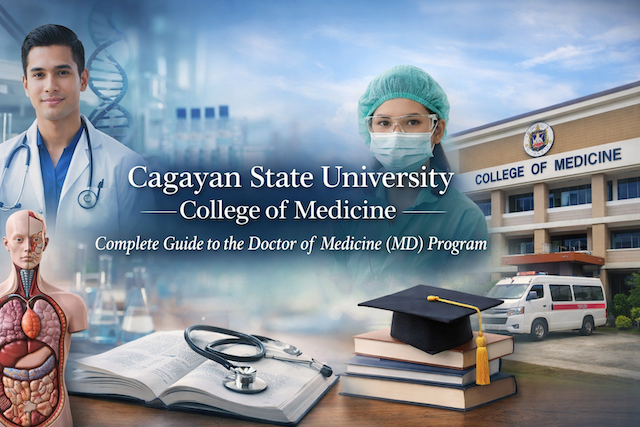
Cagayan State University College of Medicine: Complete Guide to the Doctor of Medicine (MD) Program
Contents
- Cagayan State University College of Medicine: Complete Guide to the Doctor of Medicine (MD) Program
- Overview: What CSU College of Medicine Is Known For
- Where the College Is Located: Campus Context and Daily Environment
- MD Program Structure in the Philippines: What to Expect
- Typical Pre-Clinical Learning: Labs, Anatomy, and Core Medical Sciences
- Clinical Training and Hospital Exposure: Rotations and Skills Development
- Community Medicine and Regional Health Focus
- Admissions: Common Requirements and How to Prepare
- Tuition and Living Costs: Building a Realistic Budget
- Student Life: Study Culture, Support Systems, and Balance
- Board Exam and Career Path: From MD to Licensure and Beyond
- How to Decide If CSU College of Medicine Is the Right Fit
- Practical Tips for Applicants: What to Do 3–6 Months Before Applying
- FAQs (Frequently Asked Questions)
- Where is Cagayan State University (CSU) College of Medicine located?
- Does CSU offer a Doctor of Medicine (MD) program, and how long is it?
- What are the usual admission requirements for CSU College of Medicine?
- Is CSU College of Medicine a good choice for students who want hands-on clinical exposure?
- What is student life like in Tuguegarao for medical students?
- How much does it cost to study medicine at CSU?
- Are scholarships or financial assistance available?
- What is the pathway from CSU MD graduate to becoming a licensed doctor in the Philippines?
- How can I know if CSU College of Medicine is the right fit for me?
Cagayan State University College of Medicine: Complete Guide to the Doctor of Medicine (MD) Program
Overview: What CSU College of Medicine Is Known For
Cagayan State University (CSU) is a public university system in Northern Luzon with multiple campuses across Cagayan Province. Within this system, the CSU College of Medicine and Surgery (often referred to as “CSU College of Medicine”) offers the Doctor of Medicine (MD) program designed to prepare students for medical practice in the Philippines and, depending on a graduate’s career plan and licensing requirements, potentially abroad.
Because it is part of a state university, many students consider CSU for its public-institution context, regional mission, and the opportunity to train closer to communities in Cagayan Valley. Studying medicine outside Metro Manila can also be a strategic choice for students who prefer a more focused learning environment, want to build clinical confidence in a high-patient-contact setting, or hope to serve in Northern Luzon after graduation.
This guide explains what prospective students typically want to know: where the program is based, how the MD curriculum is commonly structured in the Philippines, what clinical training can look like in the Tuguegarao/Cagayan Valley area, and how to approach admissions planning, budgeting, and student life preparation.
Where the College Is Located: Campus Context and Daily Environment
CSU’s main administrative center is in Tuguegarao City, which is the capital of Cagayan Province and the primary hub for transportation, healthcare, and services in the region. Tuguegarao is often described as a practical student city: it has the essentials (housing options, food choices, hospitals, government offices, and transport routes) while remaining more manageable than larger urban centers.
Within the CSU system, different programs are distributed across campuses. For medicine, it’s common to see the College of Medicine and Surgery associated with the Tuguegarao-area campuses (such as Andrews/Carig in many CSU references). In practical terms, applicants should always confirm the current campus location and the official address posted by CSU or the college itself before applying, renting housing, or making travel plans, since university units can reorganize facilities over time.
For students, location matters because it affects commute time, rotation logistics, cost of living, and access to partner hospitals. A program centered in Tuguegarao can be advantageous because it is near major regional healthcare facilities, which helps support clinical exposure during clerkship and internship phases.
MD Program Structure in the Philippines: What to Expect
Most Doctor of Medicine programs in the Philippines follow a structured pathway that includes pre-clinical training (classroom and laboratory-based learning) followed by clinical training (hospital-based exposure). While each medical school has its own academic calendar, policies, and course sequencing, the overall progression is usually recognizable:
- Pre-clinical phase (commonly Years 1–2): Foundational medical sciences, basic clinical skills, and early patient-facing experiences (depending on the school’s approach).
- Transition phase (varies by school): Integration of systems-based learning, case discussions, diagnostics, and more structured clinical exposure.
- Clinical phase / clerkship (commonly Year 3 or 4, depending on program design): Rotations across core hospital departments under supervision.
- Postgraduate internship: A required supervised practice year in accredited hospitals, typically completed after the MD proper and before full licensure.
In practice, you should expect a gradual shift from lecture-heavy weeks to hospital-based schedules, plus an increasing emphasis on professionalism, communication skills, and documentation—especially as you move into rotations where you present cases, do patient workups, and learn team-based clinical decision-making.
Typical Pre-Clinical Learning: Labs, Anatomy, and Core Medical Sciences
During the early phase of medical school, students generally focus on building the “language of medicine.” The goal is not only to memorize facts, but to understand mechanisms: how the body works, what goes wrong in disease, and why treatments work. While course titles differ, you can expect coverage in areas such as:
- Human Anatomy and Histology
- Physiology
- Biochemistry and Molecular Biology
- Microbiology and Parasitology
- Pathology (general and systemic)
- Pharmacology
- Preventive and Community Medicine / Public Health
- Introduction to Clinical Medicine (history taking, physical exam basics, clinical reasoning)
Pre-clinical years can be academically intense because you are learning high-volume material while also adjusting to medical-school style exams and practical requirements. Students who do well typically build reliable weekly systems: daily review, spaced repetition, small-group practice questions, and early mastery of anatomy and physiology—since those concepts return repeatedly in pathology and clinical subjects.
Clinical Training and Hospital Exposure: Rotations and Skills Development
Clinical training is where medical knowledge becomes “usable.” During rotations, you learn to approach patients systematically: take a history, perform an exam, develop differential diagnoses, interpret labs and imaging, and propose management plans aligned with local clinical guidelines and real-world constraints.
In a regional medical center environment (such as the major hospitals serving Cagayan Valley), students often encounter a broad mix of cases, including common infectious diseases, chronic conditions, maternal and child health issues, trauma, and emergencies. The volume and variety can be excellent for learning—especially if you take initiative, ask questions, and practice core tasks repeatedly until they become natural.
Core clerkship rotations in the Philippines often include:
- Internal Medicine
- Surgery
- Pediatrics
- Obstetrics and Gynecology
- Family and Community Medicine
- Psychiatry
- Emergency Medicine
- Anesthesiology (often as an elective or short rotation)
- Radiology and Pathology (often as integrative/short rotations)
Students should expect early mornings, rounds, charting practice, case presentations, and skill-building: IV insertion, blood draws (where permitted), suturing practice, basic procedures under supervision, and learning how to communicate with patients and families effectively.
Community Medicine and Regional Health Focus
Many state-university medical programs emphasize community-oriented training. This matters because health outcomes are shaped by factors beyond the hospital: access to primary care, public health programs, nutrition, maternal support, sanitation, and local disease patterns. In Northern Luzon, community medicine training can help students understand real constraints and develop practical, context-sensitive problem solving.
Community exposure may include rural health unit visits, public health campaigns, school health programs, epidemiology projects, or family case studies. If your long-term goal is to serve in provincial settings—or to become a clinician with strong public health awareness—this kind of training can be a meaningful advantage.
Admissions: Common Requirements and How to Prepare
Admissions policies can change year to year, so treat this section as a planning checklist rather than a final rulebook. Always confirm the latest requirements directly from CSU’s official announcements or admissions office.
That said, applicants to MD programs in the Philippines commonly prepare the following:
- Pre-med/undergraduate credentials: Transcript of records, diploma or proof of graduation, and minimum academic standards as specified by the school.
- Entrance exam results: Many medical schools require the NMAT (National Medical Admission Test). Some institutions may also have internal screening processes.
- Application documents: Birth certificate and other civil documents, ID photos, application forms, and sometimes a personal statement.
- Interview and screening: A panel interview, written assessment, or combined screening steps.
- Medical clearance: Basic health checks and documentation if requested.
To strengthen your application, focus on three areas: (1) competitive NMAT performance, (2) a consistent academic record, and (3) a clear reason for choosing CSU and studying medicine in Cagayan Valley. When interviewers sense that you understand the program’s environment and can articulate your goals, you come across as more prepared and more likely to persist through the demands of medical training.
Tuition and Living Costs: Building a Realistic Budget
Exact tuition figures and miscellaneous fees vary and should be confirmed using CSU’s official fee schedules for the relevant academic year. Instead of relying on third-party estimates, it’s smarter to build your budget in categories and then update numbers once the official schedule is released.
Common cost categories for an MD student include:
- Tuition and school fees: Tuition, laboratory fees, library and technology fees, and other mandatory charges.
- Learning materials: Textbooks (often optional), review books, online question banks, printing, and supplies.
- Clinical expenses: Uniforms, shoes, nameplates, basic tools (stethoscope, BP set), and potentially rotation-related transportation.
- Living costs: Rent, utilities, food, commuting, and mobile/data expenses.
- Health and emergency buffer: Clinic visits, medications, and an emergency fund for unexpected costs.
Tuguegarao’s cost of living is often more manageable than Metro Manila, but your personal budget will depend on housing choices and lifestyle. If you want stability during exam-heavy months, it can be worth paying slightly more for a quiet, safer rental near campus or near transport routes to your training hospitals.
Student Life: Study Culture, Support Systems, and Balance
Medical school performance is rarely just about intelligence. It’s about consistency, stress management, and building a support system that helps you recover quickly after difficult weeks. In a regional campus setting, students often form tighter peer networks because many spend most of their time around campus, hospitals, and a smaller set of study spaces.
Practical ways to thrive include:
- Form a study routine early: Daily review beats last-minute cramming.
- Use active learning: Practice questions, case discussions, and teaching others improve retention.
- Protect sleep when possible: Especially before major exams and during rotations with heavy duty schedules.
- Plan for recovery days: Even half-days matter when the semester is long.
- Find mentors: Upperclass students and supportive faculty can help you avoid common mistakes.
If you are relocating from another region, give yourself time to adapt. The first months can feel overwhelming: new city, new classmates, new academic standards. Once you settle into a routine, you’ll likely find that the environment becomes an asset rather than a distraction.
Board Exam and Career Path: From MD to Licensure and Beyond
In the Philippines, the general pathway after completing the MD proper includes graduating, completing a postgraduate internship (PGI) in an accredited training hospital, and taking the Physician Licensure Examination (PLE). After passing the PLE, new physicians can choose different directions: general practice, residency training, public health roles, hospital-based positions, or later specialization and subspecialization.
When evaluating any medical school—including CSU—students often look for signs of strong outcomes such as licensure exam performance and institutional support for review preparation. Schools may publish news updates about PLE results and milestones. However, it’s wise to interpret any single year’s results carefully and focus on long-term patterns, student support systems, and the learning environment that helps you personally perform well.
How to Decide If CSU College of Medicine Is the Right Fit
Choosing a medical school is both a career decision and a life decision. CSU College of Medicine can be a good match if you want:
- A public university setting and a program connected to regional development
- Training exposure in Northern Luzon and Cagayan Valley healthcare settings
- A more focused, less congested city environment compared to major metros
- An experience that builds strong clinical confidence through hands-on learning
On the other hand, you should consider potential challenges:
- Distance from Metro Manila (which can affect travel frequency and logistics)
- Adjustment to local climate and lifestyle if you are relocating
- Availability of specific specialty exposures depending on partner hospitals and rotations
The best approach is to compare your priorities (budget, location, learning style, clinical environment, and long-term practice plans) against what CSU can realistically offer. If possible, talk to current students or alumni, ask about rotation quality and scheduling, and confirm the latest admissions steps and deadlines directly with the university.
Practical Tips for Applicants: What to Do 3–6 Months Before Applying
- Confirm official requirements early: Save screenshots or PDFs of CSU announcements for your checklist.
- Plan your NMAT timeline: Choose a test date that gives you enough preparation time without colliding with finals.
- Prepare documents in advance: Request transcripts early; government documents can take time.
- Write a clear personal statement: Emphasize motivation, resilience, and fit for community-oriented training.
- Budget realistically: Include housing deposits, transportation, and an emergency buffer.
- Visit Tuguegarao if you can: Even a short trip helps you evaluate commute routes, housing, and the general environment.
Finally, remember that medical school is a marathon. The “best” school is often the one where you can study effectively, stay healthy enough to be consistent, and access the clinical experiences that align with your career goals. If CSU’s environment supports those needs, it can be a strong place to earn your MD and build a foundation for licensure and medical practice.
FAQs (Frequently Asked Questions)
Where is Cagayan State University (CSU) College of Medicine located?
Cagayan State University is a multi-campus public university system in Cagayan Province, Northern Luzon. The MD program is generally associated with CSU’s Tuguegarao-area campuses and partner health facilities in the region. Because campus assignments and office locations can change over time, the safest approach is to verify the current College of Medicine and Surgery address and the campus where classes are held through CSU’s official announcements or admissions office before you finalize housing or travel plans. Tuguegarao City is the main hub in the province and is typically the reference point for students when searching for accommodations, transport routes, and clinical training sites.
Does CSU offer a Doctor of Medicine (MD) program, and how long is it?
CSU’s College of Medicine offers the Doctor of Medicine program, which follows the standard Philippine medical education pathway. The MD proper is commonly completed over four academic years: early years emphasize foundational medical sciences and integrated clinical skills, while later years focus heavily on clinical clerkship rotations. After graduating from the MD proper, graduates usually complete a postgraduate internship (PGI) in an accredited hospital and then take the Physician Licensure Examination (PLE). Exact sequencing can vary by school, so applicants should review CSU’s current curriculum outline and academic calendar for the most accurate program structure.
What are the usual admission requirements for CSU College of Medicine?
Requirements can change, but applicants typically prepare an undergraduate transcript, proof of graduation, and other standard documents (IDs, photos, civil documents, and application forms). Many Philippine medical schools require the NMAT (National Medical Admission Test), and some also conduct interviews or additional screening. CSU may have its own minimum standards for grades, NMAT scores, and documentary requirements. If you are applying from another region or from overseas, plan ahead for document processing times. The best practice is to rely on CSU’s official admissions checklist for the specific intake year, then build your own step-by-step timeline.
Is CSU College of Medicine a good choice for students who want hands-on clinical exposure?
Many students choose regional medical schools because they can offer meaningful patient exposure through local hospitals and community health settings. During clerkship, students rotate through core departments such as Internal Medicine, Surgery, Pediatrics, Obstetrics and Gynecology, and others, where they build confidence in history taking, physical examination, case presentations, and clinical reasoning. The quality of hands-on learning depends on factors like hospital partners, patient volume, faculty supervision, and the student’s initiative. If hands-on training is important to you, ask about rotation sites, typical clerkship schedules, and how clinical skills are assessed.
What is student life like in Tuguegarao for medical students?
Tuguegarao City is a practical university city where many students can find housing, study spaces, transport, and daily necessities without the complexity of a major metro. Medical school life, however, is demanding anywhere. Expect long study hours in the pre-clinical phase and early mornings plus hospital duties during clerkship. Many students find that smaller-city living can reduce distractions and commuting stress, which helps with consistency. To do well, you’ll want a reliable weekly routine, a supportive peer network, and realistic self-care habits (sleep, nutrition, and scheduled breaks).
How much does it cost to study medicine at CSU?
Tuition and fees vary by academic year and by university policy, so you should confirm the latest fee schedule directly with CSU. Beyond tuition, students should budget for learning resources (books or digital tools), uniforms and clinical supplies (such as a stethoscope and basic diagnostic tools), and living costs (rent, utilities, food, and transportation). Even if tuition is more manageable compared with some private schools, medical training still involves ongoing expenses. It is wise to include an emergency buffer for unexpected costs like health needs, extra printing, or rotation-related transport.
Are scholarships or financial assistance available?
As a public university, CSU may have scholarship programs, tuition support schemes, or financial assistance opportunities through government initiatives or university-based aid. Availability and eligibility can change, and requirements may include academic performance, financial need documentation, or service commitments. If funding is a priority, contact CSU’s scholarship office (or the relevant student services unit) early and request a clear list of options, deadlines, and renewal conditions. Also ask whether any assistance applies specifically to medical students, since program costs and requirements can differ from other colleges.
What is the pathway from CSU MD graduate to becoming a licensed doctor in the Philippines?
After completing the MD proper, graduates typically proceed to a postgraduate internship (PGI) in an accredited training hospital. After the internship, they take the Physician Licensure Examination (PLE). Passing the PLE is required to practice as a licensed physician in the Philippines. Many graduates then enter residency training for specialization, while others pursue general practice, community medicine, or hospital-based roles. Because timelines and policies can change, students should stay updated through official announcements from relevant institutions and professional bodies as they approach graduation and internship matching.
How can I know if CSU College of Medicine is the right fit for me?
Fit depends on your learning style, budget, location preference, and long-term career goals. CSU can be a strong option if you want to train in Northern Luzon, prefer a regional environment, and value community-oriented exposure. You should evaluate practical factors such as campus location, clinical rotation sites, faculty support, student workload expectations, and living arrangements. If possible, speak with current students or alumni about their real experience—how exams are structured, how mentorship works, and what clerkship is like—so your decision is based on realistic expectations rather than assumptions.
Complete List of Medical Schools in the Philippines (All 78 MD Programs)
Best Medical Schools in the Philippines (Local & International Rankings)
Recommend
2026年1月23日
Sultan Kudarat State University College of Medicine: Complete Guide for Aspiring MD Students
2026年1月23日
University of Southern Mindanao College of Medicine: Complete Guide for Aspiring MD Students
2026年1月23日
Mindanao State University – General Santos College of Medicine: Complete Guide for Future MD Students

How to Register for eTravel Philippines (2025 Guide)
Step-by-step guide to completing your eTravel registration before arriving in the Philippines, with images and tips.

Night Market in Cebu – Things You Don’t Know About Cebu Life
Discover the hidden charm of Cebu’s night markets, from street food stalls to local life tips you won’t find in tourist guides.

How to Use ChatGPT for IELTS Preparation: A Complete Guide
Learn how to prepare for IELTS using ChatGPT — including strategies for Writing, Reading, Listening, Speaking, and grammar support.

How to Build a Website Without Coding Using ChatGPT
Discover how to build your own website using AI—no coding skills needed. From structure planning to SEO and design, let ChatGPT guide you.