2026年1月23日
3D ACADEMY offers affordable English study programs in Cebu, Philippines – perfect for beginners, professionals, and exam takers.

3D UNIVERSAL ENGLISH INSTITUTE INC
info.3d-universal.com
8:00-17:00(Mon-Fri)
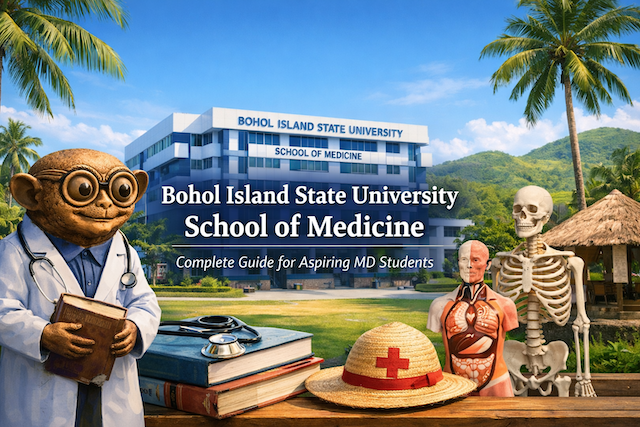
Bohol Island State University School of Medicine: Complete Guide for Aspiring MD Students
Contents
- Bohol Island State University School of Medicine: Complete Guide for Aspiring MD Students
- Overview: Why BISU School of Medicine Matters in Bohol
- Location and Campus Setting
- Program Focus and Mission: Community-Oriented Medical Education
- Doctor of Medicine (MD) Program Structure (What to Expect)
- Admissions: Typical Requirements and Practical Preparation
- Tuition, Affordability, and Public University Advantages
- Clinical Training: Hospitals, Patient Exposure, and Skills Development
- Student Life in Tagbilaran: Housing, Routine, and Study Environment
- Research, Community Work, and Public Health Engagement
- Who Should Consider BISU School of Medicine?
- How to Make Your Decision: A Practical Checklist
- Final Thoughts
- FAQs (Frequently Asked Questions)
- Is Bohol Island State University School of Medicine officially offering an MD program?
- What are the typical admission requirements for an MD program in the Philippines?
- What NMAT score do I need to apply?
- Can I apply if my bachelor’s degree is not in a traditional pre-med course?
- How long is the Doctor of Medicine program, and what is the usual structure?
- Where will clinical training happen, and what hospital exposure can I expect?
- Is BISU School of Medicine good for students who want to specialize later?
- How much does it cost to study medicine at a state university, and what expenses should I budget for?
- Is there a return-service requirement if I receive financial assistance?
- What is student life like in Tagbilaran for medical students?
- How should I prepare academically if I want to apply?
- What is the safest way to verify accurate information about BISU School of Medicine?
Bohol Island State University School of Medicine: Complete Guide for Aspiring MD Students
Overview: Why BISU School of Medicine Matters in Bohol
Bohol Island State University (BISU) is the lone state university in the province of Bohol, with its main campus in Tagbilaran City. In recent years, BISU expanded its academic offerings to include a School of Medicine—an important milestone for the island, because it helps create a more direct pathway for Boholanos (and students who want to serve Bohol) to become physicians without leaving the province for medical education.
The establishment of a public, university-based medical program in Bohol has been framed as a response to long-term healthcare workforce needs, with an emphasis on producing “home-grown” doctors who understand local realities—geography, referral systems, rural access challenges, and the public health priorities that are especially relevant for island communities. The initiative is also connected to lessons learned during the COVID-19 pandemic era, which highlighted the need for resilient local health systems and more medical practitioners distributed outside major metropolitan areas.
If you are considering the Doctor of Medicine (MD) path in the Philippines and want a program anchored in provincial service and community health, BISU School of Medicine is a school to place on your shortlist—especially if your goal is to study in (and eventually serve) Bohol and nearby areas of the Visayas.
Location and Campus Setting
BISU’s main campus is located in Tagbilaran City, Bohol. Tagbilaran is the provincial capital and a practical base for medical students because it has stronger transport links, access to government services, and a wider range of rentals, food options, and day-to-day conveniences compared to smaller municipalities.
For medical training, location matters. A School of Medicine needs reliable access to clinical exposure: patient encounters, diagnostic workflows, hospital systems, and community health environments. Studying in Tagbilaran can support that ecosystem by placing students close to the province’s key healthcare facilities and referral routes. While specific partner hospitals and clinical rotations can change over time, students can generally expect medical education in the province to focus on both hospital-based medicine and community health realities.
Program Focus and Mission: Community-Oriented Medical Education
A common theme in public medical schools—especially new provincial programs—is the goal of improving healthcare access by training doctors who are more likely to stay and practice in the region. BISU School of Medicine is frequently discussed in this context: developing physicians who can address Bohol’s needs in primary care, public health, and community-based practice, while also building a foundation for specialization later.
In practical terms, that mission often translates into:
- Community exposure early and consistently (public health fieldwork, barangay health systems, preventive care)
- Clinical skills development linked to local disease patterns (common infectious diseases, lifestyle-related conditions, maternal and child health, and emergency care realities)
- Service-minded professional formation (ethics, communication, and patient-centered care)
For students, this can be a major advantage. You learn medicine not only as academic knowledge, but as applied problem-solving in real-world health systems—especially in a province where medical resources may be more limited than in large cities. That experience can build strong clinical judgment and adaptability.
Doctor of Medicine (MD) Program Structure (What to Expect)
In the Philippines, the MD program is typically completed over several years and is commonly structured into:
- Pre-clinical phase: classroom and laboratory foundation (anatomy, physiology, biochemistry, pathology, pharmacology, microbiology, etc.), plus early clinical skills
- Clinical phase: more hospital exposure, patient encounters, case discussions, and clinical clerkship-style learning
- Internship: post-MD graduation requirements are usually completed in accredited hospitals as part of the pathway toward licensure
Because each medical school sets its own sequencing and emphasis, you should treat the outline above as a general model rather than a fixed map. Newer schools sometimes design their curriculum with stronger early clinical integration and community immersion, which can be especially relevant in a province-driven program.
What you can reasonably expect from a School of Medicine like BISU is a curriculum that aims to meet national standards while aligning training to local health needs—balancing core medical sciences, clinical reasoning, patient care skills, and public health/community medicine.
Admissions: Typical Requirements and Practical Preparation
Admissions details can change year to year, so the most important step is to verify the latest official announcements and application timelines. That said, most Doctor of Medicine programs in the Philippines commonly require:
- A bachelor’s degree (often in a pre-med related field, though many schools accept diverse academic backgrounds)
- NMAT (National Medical Admission Test) results meeting a minimum percentile rank requirement set by the school
- Academic records (transcript of records and related documents)
- Application forms and fees
- Interview and/or screening (varies by institution)
If you’re aiming to become a competitive applicant, focus on three areas:
- NMAT strategy: build a timeline for review (many students prepare 2–4 months depending on baseline)
- Science foundation: strengthen biology, chemistry, physics basics, plus reading comprehension and quantitative skills
- Clear motivation: be ready to explain why medicine, why Bohol, and how you handle pressure and long-term commitment
For a public university-based medical school, there can also be a strong emphasis on serving the community, scholarship obligations, or return-service expectations depending on funding sources and policy. Always confirm if any scholarship or subsidy program includes a required service period after graduation.
Tuition, Affordability, and Public University Advantages
One of the most practical reasons students consider a state university medical program is affordability. While medical education is expensive almost everywhere, public institutions can provide a more accessible route—especially for students from the province who may face high living costs if they relocate to Cebu City, Manila, or other major hubs.
Even when a school’s tuition is lower than private counterparts, you should still budget realistically for:
- Housing and utilities
- Food and transportation
- Books and subscriptions (some schools use digital resources heavily)
- Medical tools (stethoscope, sphygmomanometer, basic instruments)
- Uniforms, clinical attire, and rotation-related expenses
- Exam fees and administrative fees
If BISU School of Medicine offers scholarships or financial support, look carefully at eligibility criteria, required documents, grade retention rules, and any return-service conditions. For many students, a scholarship is not only about cost—it’s also about stability and the ability to focus.
Clinical Training: Hospitals, Patient Exposure, and Skills Development
Clinical training is where medical students move from “knowing” to “doing.” A quality medical program builds your ability to take histories, perform physical exams, interpret diagnostic findings, and propose safe management plans—always under supervision.
While specific partner hospitals and rotation sites should be verified directly with the school, you can expect the clinical experience in a provincial setting to emphasize:
- General medicine and primary care cases that reflect local disease patterns
- Emergency response realities, including referral decisions and stabilization
- Maternal and child health, which is often central in provincial healthcare delivery
- Public health integration (immunization programs, outbreak response, community health education)
A major advantage of training in a smaller setting is that students can sometimes gain more hands-on exposure and closer mentorship, simply because clinical teams are smaller and student-to-patient ratios may be more favorable than in very large metropolitan teaching hospitals.
Student Life in Tagbilaran: Housing, Routine, and Study Environment
Medical school is a marathon. Your environment matters because it influences your stress level, time management, and daily discipline. Tagbilaran City offers a balance: it’s urban enough for essentials and connectivity, but generally calmer than large cities—something many students appreciate during intense exam cycles.
As you plan, think in systems:
- Housing distance: prioritize commute reliability over “nice-to-have” amenities
- Study spaces: identify a quiet home setup plus backup options (libraries, cafés with stable internet)
- Meal routine: a predictable diet helps focus and energy; meal prep can save money and time
- Support network: classmates, mentors, family, and friends help you stay mentally steady
Medical students often underestimate how much daily friction (long commutes, unstable internet, noisy rentals) can drain performance. Solve those early if you can.
Research, Community Work, and Public Health Engagement
Modern medical training is not only about clinical competence—it also includes research literacy, evidence-based practice, and community engagement. A School of Medicine connected to provincial development priorities may encourage students to explore:
- Community health needs assessments
- Public health interventions and evaluation
- Clinical case studies and quality improvement projects
- Health education and preventive medicine programs
Even if you do not plan to become a full-time researcher, learning how to critically read medical literature, interpret data, and apply guidelines appropriately is essential for safe practice. The best outcome is to graduate with both hands-on clinical readiness and the mindset of a lifelong learner.
Who Should Consider BISU School of Medicine?
BISU School of Medicine can be a strong fit if you identify with at least one of the following:
- You want to study and practice in Bohol (or serve island/provincial communities)
- You value a mission-driven public institution with a community-oriented framework
- You prefer an environment that may offer closer mentorship and local clinical immersion
- You are looking for a potentially more affordable path compared to many private medical schools
It may be less ideal if you require a very large tertiary hospital ecosystem immediately adjacent to campus, or if your priority is exposure to highly sub-specialized cases early in training. However, keep in mind that specialization pathways can still be pursued later through residency and fellowship training—your MD foundation is the key first step.
How to Make Your Decision: A Practical Checklist
Before you commit, use this checklist to evaluate fit and readiness:
- Confirm the latest admissions requirements (NMAT cutoff, deadlines, documents, interview process)
- Ask about curriculum structure (community medicine integration, assessment style, remediation policies)
- Understand clinical rotation plans (key training hospitals, supervision model, skills milestones)
- Clarify costs (tuition, miscellaneous fees, expected living expenses in Tagbilaran)
- Check scholarship opportunities and any return-service obligations
- Plan your routine (housing, study schedule, mental health support, budgeting)
Finally, be honest about the commitment. Medical school requires consistent effort, emotional resilience, and a willingness to improve through feedback. If your motivation includes service and long-term impact in your community, a program like BISU School of Medicine can be an especially meaningful path.
Final Thoughts
Bohol Island State University School of Medicine represents an important development in Bohol’s education and healthcare landscape. For aspiring doctors who want to train closer to home, serve provincial communities, and study in a public university environment, BISU offers a compelling option—particularly as it grows and strengthens its clinical and academic systems over time.
Your next step is simple: verify the most current application announcements and requirements, map out your NMAT and document timeline, and evaluate whether Tagbilaran-based medical training aligns with your goals. With a clear plan and steady discipline, you can turn the ambition of becoming a physician into a realistic, structured journey—starting in Bohol.
FAQs (Frequently Asked Questions)
Is Bohol Island State University School of Medicine officially offering an MD program?
Bohol Island State University (BISU) has been associated with plans and initiatives to expand health-related education in Bohol, including medicine. However, medical programs can be newly established, restructured, or offered under evolving partnerships and approvals. If you are applying, do not rely only on secondary summaries. Confirm the current status of the Doctor of Medicine (MD) program directly through BISU’s official announcements, admissions office, and published application materials for the specific academic year you want to enter. Ask for clear details such as the program name, campus location, intake schedule, and the authority under which it operates.
What are the typical admission requirements for an MD program in the Philippines?
Most Philippine medical schools require a completed bachelor’s degree, a valid NMAT (National Medical Admission Test) score, and standard academic documents such as transcripts and certificates of graduation. Many schools also conduct interviews and screening to assess readiness for medical training. Some programs may request recommendation letters, personal statements, medical clearances, or proof of good moral character. Requirements can differ by institution, so your best approach is to prepare the common documents early while waiting for BISU’s official checklist.
What NMAT score do I need to apply?
NMAT cutoffs vary widely by school and may change per intake depending on demand, scholarship capacity, and institutional policy. Some schools publish a minimum percentile rank; others evaluate applicants competitively even if they meet a baseline. If BISU School of Medicine has a cutoff, it should be stated in the admissions announcement or application instructions. If it is not clearly published, contact the admissions office and ask for the minimum NMAT percentile rank accepted for the most recent intake and whether a higher score improves your chances.
Can I apply if my bachelor’s degree is not in a traditional pre-med course?
In many Philippine medical schools, applicants come from a range of undergraduate backgrounds, not only biology or nursing. What matters most is that you completed a bachelor’s degree, meet NMAT and academic standards, and can handle heavy science coursework. That said, students from non-traditional backgrounds should be prepared to strengthen foundational topics such as anatomy basics, physiology concepts, chemistry, and statistics. If BISU offers bridging modules or preparatory support, ask about it during admissions inquiries.
How long is the Doctor of Medicine program, and what is the usual structure?
The MD program in the Philippines commonly spans several years, starting with a pre-clinical phase focused on medical sciences and early clinical skills, followed by clinical years involving hospital exposure, case discussions, and supervised patient encounters. After earning the MD degree, graduates typically complete a post-graduate internship in an accredited hospital and then take the Physician Licensure Examination (PLE). Exact sequencing, assessment methods, and rotation schedules vary, so request the latest curriculum overview from BISU once available.
Where will clinical training happen, and what hospital exposure can I expect?
Clinical exposure depends on the school’s partner hospitals and training sites. In a provincial setting like Bohol, training often emphasizes common conditions seen in primary care and general hospital services, plus community and public health work. To evaluate suitability, ask BISU for information on clinical affiliations, rotation sites, clerkship structure, supervision policies, and the range of departments students rotate through (internal medicine, surgery, pediatrics, OB-GYN, family medicine, and others). Good programs can provide strong hands-on learning even outside major cities, especially if mentorship is consistent and case volume is adequate.
Is BISU School of Medicine good for students who want to specialize later?
An MD program’s main job is to build a strong foundation in clinical reasoning, professional ethics, patient safety, and core competencies. Specialization comes later through residency training. Graduates from provincial programs can still pursue residency in larger centers, provided they build solid fundamentals and perform well in evaluations and licensing requirements. If you are highly specialization-focused, ask about mentoring, research opportunities, exposure to referral systems, and whether students have pathways or guidance for residency applications after graduation.
How much does it cost to study medicine at a state university, and what expenses should I budget for?
Public universities are often perceived as more affordable than private medical schools, but costs can still be significant. Beyond tuition, budget for miscellaneous and laboratory fees, uniforms and clinical attire, medical tools (stethoscope, blood pressure apparatus), books or digital subscriptions, transportation to rotation sites, and daily living expenses such as rent, utilities, food, and internet. If BISU offers scholarships or subsidized education, clarify eligibility requirements, grade retention rules, and whether there is a return-service obligation after graduation.
Is there a return-service requirement if I receive financial assistance?
Some government-supported medical education programs include return-service agreements, especially when the goal is to address doctor shortages in underserved areas. These terms can differ by scholarship type and funding source. If BISU or an affiliated program offers scholarships, ask for the written conditions: required service duration, location, penalties for non-compliance, and whether you can defer service for residency training. Understanding these terms early helps you make a realistic long-term plan.
What is student life like in Tagbilaran for medical students?
Tagbilaran City can be a practical base because it typically offers easier access to rentals, food options, and transport compared to smaller municipalities. For medical students, the priority is a stable routine: housing near campus or rotation sites, reliable internet, quiet study space, and manageable commuting time. Medical school schedules can shift quickly during exam weeks and clinical duties, so choose an environment that reduces friction. Many students do best with simple systems: meal planning, fixed study blocks, and a support network for stress management.
How should I prepare academically if I want to apply?
Start with NMAT preparation and a realistic timeline. Build skills in reading comprehension, quantitative reasoning, and basic sciences. If you have been out of school for a while, review biology and chemistry fundamentals and practice time-bound tests. Next, collect documents early (transcripts, certificates, clearances) because processing can take time. Finally, prepare a clear motivation statement: why medicine, why you want to train in Bohol, and how you plan to handle the workload. Strong preparation is not only about passing admissions—it is about entering medical school ready to sustain consistent performance.
What is the safest way to verify accurate information about BISU School of Medicine?
Use primary sources. Check BISU’s official website and verified social media pages, read posted admissions announcements, and contact the admissions office for written confirmation of program details. When you speak with staff, ask specific questions and request official references: the program name, intake schedule, NMAT cutoff, tuition and fees, rotation sites, and accreditation or approval status. Keep copies of emails or documents you receive. This approach helps you avoid confusion that can happen when programs are new, expanding, or being updated.
Recommend
2026年1月23日
Sultan Kudarat State University College of Medicine: Complete Guide for Aspiring MD Students
2026年1月23日
University of Southern Mindanao College of Medicine: Complete Guide for Aspiring MD Students
2026年1月23日
Mindanao State University – General Santos College of Medicine: Complete Guide for Future MD Students

How to Register for eTravel Philippines (2025 Guide)
Step-by-step guide to completing your eTravel registration before arriving in the Philippines, with images and tips.

Night Market in Cebu – Things You Don’t Know About Cebu Life
Discover the hidden charm of Cebu’s night markets, from street food stalls to local life tips you won’t find in tourist guides.

How to Use ChatGPT for IELTS Preparation: A Complete Guide
Learn how to prepare for IELTS using ChatGPT — including strategies for Writing, Reading, Listening, Speaking, and grammar support.

How to Build a Website Without Coding Using ChatGPT
Discover how to build your own website using AI—no coding skills needed. From structure planning to SEO and design, let ChatGPT guide you.