2026年1月23日
3D ACADEMY offers affordable English study programs in Cebu, Philippines – perfect for beginners, professionals, and exam takers.

3D UNIVERSAL ENGLISH INSTITUTE INC
info.3d-universal.com
8:00-17:00(Mon-Fri)
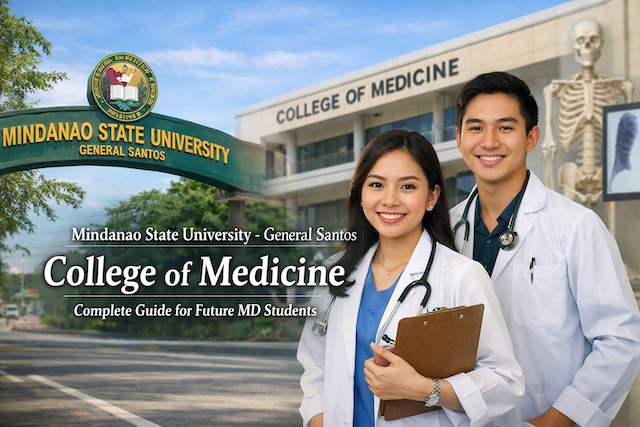
Mindanao State University – General Santos College of Medicine: Complete Guide for Future MD Students
Contents
- Mindanao State University – General Santos College of Medicine: Complete Guide for Future MD Students
- Quick Overview: What MSU–GenSan College of Medicine Offers
- Location and Campus Environment in General Santos City
- Why Choose a Public University Medical School
- Doctor of Medicine (MD) Program Structure in the Philippines
- Learning Style: What Medical School Will Expect From You
- Admissions: Typical Eligibility and Requirements
- How to Become a Competitive Applicant
- Tuition, Fees, and Budget Planning
- Clinical Training and Hospital Exposure
- Student Life, Wellness, and Support Systems
- Career Path After Graduation: Licensure and Training
- Who MSU–GenSan College of Medicine Is Best For
- Practical Next Steps for Interested Applicants
- FAQs (Frequently Asked Questions)
- Is Mindanao State University – General Santos College of Medicine a good choice for aspiring doctors in Mindanao?
- What degree will I earn after completing the program?
- Do I need to take the NMAT to apply?
- What are the usual admission requirements for medical school applicants?
- How competitive is admission, and how can I improve my chances?
- What is the typical structure of an MD program in the Philippines?
- Where will clinical training happen, and what should I ask about hospital exposure?
- What are the biggest expenses medical students should plan for?
- Is it possible to work part-time while studying medicine?
- What study habits are most important for succeeding in medical school?
- How does the school support student wellness and mental health?
- What happens after graduation from the MD program?
Mindanao State University – General Santos College of Medicine: Complete Guide for Future MD Students
Mindanao State University – General Santos (often called MSU–GenSan) has expanded its health and professional education offerings with the establishment of its College of Medicine. For aspiring doctors who want to study in Mindanao—especially in SOCCSKSARGEN and nearby regions—MSU–GenSan’s medical program is designed to develop future physicians who are clinically competent, community-oriented, and ready to serve diverse populations.
This guide explains what the MSU–GenSan College of Medicine is, what to expect from a Doctor of Medicine (MD) program in the Philippine context, how the admissions pathway typically works, and how to evaluate whether this school fits your goals. While exact policies can change from year to year, the sections below will help you understand the usual structure, requirements, and student life realities you should prepare for.
Quick Overview: What MSU–GenSan College of Medicine Offers
The MSU–GenSan College of Medicine is part of the Mindanao State University System, which is known for its mandate to support inclusive development in Mindanao through education. The medical program aims to train physicians who can deliver patient-centered care while understanding local health realities—such as public health gaps, geographic barriers to care, and the needs of multicultural communities.
In general, students choose MSU–GenSan for a mix of practical advantages: a public university setting, a mission aligned with public service, and the chance to build a medical career rooted in Mindanao. If you are committed to practicing in the region long-term—or you want medical training that keeps community service and real-world public health challenges in view—this school may be a strong match.
Location and Campus Environment in General Santos City
General Santos City (GenSan) is a major urban center in South Cotabato and the wider SOCCSKSARGEN region. It is known as a regional hub for education, healthcare, commerce, and transportation. For medical students, studying in a city hub can be beneficial because:
- There are more opportunities for clinical exposure in busy healthcare settings.
- Students can access essential services such as laboratories, pharmacies, housing options, and transportation routes.
- Community medicine and public health exposure can be diverse, spanning urban and nearby rural contexts.
Medical students should still plan for the realities of heavy workload and time constraints. Living closer to campus and clinical training sites is usually one of the most practical decisions you can make, even if it costs slightly more, because it reduces commuting time and stress.
Why Choose a Public University Medical School
Many students prefer a public university medical school for reasons that go beyond tuition. While cost can be a factor, a public institution often emphasizes service, accessibility, and long-term regional impact. For MSU–GenSan, that typically means a program culture that values:
- Community-oriented primary care, not only hospital-based specialization.
- Public health awareness, including prevention and health promotion.
- Serving diverse cultural communities and improving health equity.
If you want a medical education framed around building healthcare capacity in Mindanao, a program under the MSU system can align well with that mission.
Doctor of Medicine (MD) Program Structure in the Philippines
Most Philippine medical programs follow a similar structure: pre-clinical training followed by clinical training. Although each school has its own approach, you can generally expect the MD journey to include:
- Pre-clinical years: Foundational sciences (anatomy, physiology, biochemistry, pathology, pharmacology, microbiology) plus early clinical skills.
- Clinical years: Rotations in major departments such as internal medicine, surgery, pediatrics, obstetrics and gynecology, psychiatry, family and community medicine, and emergency/critical care exposure.
- Skills development: History taking, physical examination, clinical reasoning, patient communication, documentation, and professionalism.
Medical school is not only about knowledge. It’s about building habits and professional identity: how you study, how you work under pressure, how you collaborate, and how you prioritize patient safety.
Learning Style: What Medical School Will Expect From You
Medical education is dense and fast-paced. Many students underestimate how different it is from college. You will likely face multiple exams, practical assessments, case presentations, and skills checklists—sometimes all in the same week. A successful student usually builds a system around:
- Daily repetition: Short daily review beats cramming.
- Active recall: Practice questions and self-testing are essential.
- Clinical thinking: Memorization matters, but applying concepts to real patient problems matters more.
- Teamwork: Medicine is collaborative; your ability to work with classmates and clinical staff is part of your training.
One practical tip: before the semester begins, set up a consistent schedule for sleep, meals, and study blocks. Medical school can disrupt basic health routines, and once you fall behind, recovery is difficult. Stability is an academic strategy.
Admissions: Typical Eligibility and Requirements
Exact admissions requirements should always be confirmed directly with the College of Medicine, but aspiring applicants can prepare based on typical Philippine medical school expectations. In most cases, schools look for:
- A completed bachelor’s degree or required pre-med units (depending on school policy).
- Competitive academic performance and transcripts.
- Required entrance exams (commonly NMAT for many medical schools; some institutions may have additional screening or system-wide exams depending on the university).
- Interview and/or panel screening to assess motivation, communication skills, and readiness.
- Standard documents (birth certificate, certificates of good moral character, recommendation letters, and other forms).
Because MSU–GenSan is part of a university system, there may also be system admissions policies that interact with medical admissions procedures. If you are currently an MSU student or alumni, ask whether internal pathways or evaluation steps apply to you.
How to Become a Competitive Applicant
Even if your grades are solid, medical school admissions is about readiness. Here are practical ways to strengthen your application for MSU–GenSan College of Medicine (and medical schools in general):
- Get clinical exposure: Volunteer at a clinic, hospital, or community health initiative if possible.
- Build a clear motivation story: Why medicine? Why serve in Mindanao? Why MSU–GenSan?
- Strengthen science fundamentals: Anatomy and physiology basics will help you early.
- Practice interviews: Prepare to explain your goals, strengths, weaknesses, and coping strategies.
- Show service orientation: Community work can be a strong signal of mission fit.
In your personal statement or interview, avoid generic answers. Instead of “I want to help people,” describe the specific health issues you’ve seen, the communities you want to serve, and the type of doctor you aim to become.
Tuition, Fees, and Budget Planning
Medical school costs are not just tuition. Even in a public university context, students should plan for ongoing expenses such as:
- Uniforms, lab coats, and required clinical attire
- Books and digital resources (some are optional, many become necessary)
- Medical instruments (stethoscope, BP apparatus, diagnostic set)
- Transportation (especially during clinical years)
- Daily meals and housing
- Internet and device needs (laptop is strongly recommended)
Create a realistic monthly budget early. Medical school is hard enough without financial uncertainty. If you are exploring scholarships, ask specifically whether support covers only tuition or also living expenses and required materials.
Clinical Training and Hospital Exposure
Clinical training is where medicine becomes real. During clerkship-style learning, you move from classroom concepts to real patient care under supervision. The quality of your clinical training often depends on:
- The volume and variety of patients you encounter
- Supervision and teaching culture among consultants and residents
- Opportunities to practice clinical skills (not only observe)
- Assessment style (feedback-driven vs. purely exam-driven)
When you research MSU–GenSan College of Medicine, ask how clinical rotations are structured, what partner hospitals or training sites are used, and how students are evaluated in clinical settings. A strong program will have clear competency expectations and a consistent way to teach and assess skills.
Student Life, Wellness, and Support Systems
Medical school can be emotionally and mentally demanding. You will encounter high expectations, fatigue, and moments of self-doubt. The best students are not those who never struggle—they are the ones who build support systems early. Consider:
- Peer support: Study groups and cooperative learning reduce burnout.
- Faculty mentorship: Find advisers who can guide your development.
- Wellness habits: Sleep, nutrition, exercise, and boundaries are not optional.
- Stress management: Learn how to recover after exams and heavy rotations.
If the College of Medicine has counseling services, student organizations, or mentorship programs, make use of them early rather than waiting for a crisis moment.
Career Path After Graduation: Licensure and Training
After completing the MD program, graduates typically aim to become licensed physicians. In the Philippines, that usually involves preparing for the Physician Licensure Examination (PLE). Many graduates also proceed to postgraduate training, which may include:
- Residency training in a chosen specialty (internal medicine, pediatrics, surgery, OB-GYN, etc.)
- Further specialization or fellowship training
- Public health or community medicine pathways
- Academic medicine, research, and teaching roles
If your long-term goal is to practice in Mindanao, consider choosing clinical training sites and mentors that support that path. Networks matter in medicine—your relationships during medical school can shape your opportunities later.
Who MSU–GenSan College of Medicine Is Best For
This program may be a strong fit if you are:
- Committed to serving communities in Mindanao and nearby regions
- Looking for a medical education connected to public service and accessibility
- Comfortable studying in a regional hub city environment
- Ready for a rigorous academic and clinical workload
On the other hand, you should think carefully if you need a highly specialized research-heavy environment from the start, or if you strongly prefer a program with long-established clinical systems and decades of alumni networks. That doesn’t mean MSU–GenSan cannot be excellent—it simply means you should match your expectations to the program’s development stage and focus.
Practical Next Steps for Interested Applicants
If MSU–GenSan College of Medicine is on your shortlist, take these practical steps:
- Check official announcements: Look for the latest admissions timeline, eligibility, and document checklist.
- Prepare early: Start gathering documents before deadlines to avoid last-minute issues.
- Plan your finances: Estimate tuition, living costs, and equipment needs for the full program duration.
- Strengthen your fundamentals: Review basic biology, chemistry, anatomy concepts, and study habits.
- Talk to current students: If possible, learn about workload, teaching culture, and clinical exposure.
Medical school is a long-term commitment, so treat your school choice as a major life decision. The “best” school is not always the most famous—it is often the one that matches your mission, supports your learning style, and places you in the environment where you can grow into the kind of doctor you want to become.
FAQs (Frequently Asked Questions)
Is Mindanao State University – General Santos College of Medicine a good choice for aspiring doctors in Mindanao?
It can be a strong option if your goal is to study and eventually practice in Mindanao or nearby regions. Many students value a mission-driven public university environment, community-oriented training, and the opportunity to learn medicine in a regional hub like General Santos City. However, “good” depends on fit: compare the school’s curriculum design, clinical training sites, faculty support, and learning culture with your needs. If you prefer a program that emphasizes service, primary care perspectives, and regional health priorities, this institution may align well with your goals.
What degree will I earn after completing the program?
Medical schools in the Philippines generally award the Doctor of Medicine (MD) degree after students complete the required pre-clinical and clinical training components. The MD is a professional degree that prepares graduates for the Physician Licensure Examination (PLE) and subsequent postgraduate training such as residency. Your MD program will include classroom-based foundational sciences as well as hospital and community-based clinical exposure as you progress through the curriculum.
Do I need to take the NMAT to apply?
Many medical schools in the Philippines require the National Medical Admission Test (NMAT) as part of admissions screening, but specific requirements can vary by institution and may change over time. The safest approach is to confirm the current policy directly through official announcements from the College of Medicine or the university admissions office. Even when NMAT is required, it is usually only one part of the evaluation, alongside grades, documents, interviews, and overall readiness for medical training.
What are the usual admission requirements for medical school applicants?
While exact requirements can differ, applicants are commonly asked to submit academic transcripts, proof of bachelor’s degree completion (or required pre-med units), certificates of good moral character, recommendation letters, and other standard documents. Many schools also conduct an interview to evaluate motivation, communication skills, and professional maturity. Some institutions may include additional screening steps such as written exams or panel interviews. Because medical admissions are competitive, it’s wise to prepare your documents early and follow the checklist exactly as instructed.
How competitive is admission, and how can I improve my chances?
Competitiveness depends on the number of slots, applicant volume, and the school’s selection criteria for a given year. To strengthen your application, aim for strong academic performance, prepare thoroughly for required entrance exams, and develop a clear, specific reason for pursuing medicine. Clinical exposure—such as volunteering in health-related settings—can help you speak more realistically about your motivation. In interviews, demonstrate maturity, ethical reasoning, and a concrete plan for handling the workload and stress of medical training.
What is the typical structure of an MD program in the Philippines?
Most MD programs begin with pre-clinical training focused on foundational sciences and early clinical skills, then transition into clinical clerkship-style learning with hospital rotations. You can expect coursework in anatomy, physiology, biochemistry, pathology, pharmacology, microbiology, and related subjects, followed by rotations in internal medicine, surgery, pediatrics, obstetrics and gynecology, psychiatry, and community/family medicine. Assessments often include written exams, practical labs, case discussions, skills checklists, and performance evaluations during clinical duties.
Where will clinical training happen, and what should I ask about hospital exposure?
Clinical training typically involves partner hospitals and approved training sites where students learn under supervision. Because training arrangements can differ, ask the College of Medicine about its main clinical affiliates, the variety of cases students see, and how supervision is structured. Useful questions include: How early does patient exposure begin? How are rotations scheduled? Are there clear competency checklists? How is feedback provided? Strong clinical training is not only about observing—it also includes structured opportunities to practice skills safely.
What are the biggest expenses medical students should plan for?
Beyond tuition and standard school fees, students should budget for housing, daily meals, transportation, internet access, and learning resources. Medical instruments such as a stethoscope and blood pressure apparatus are common purchases, along with lab coats and clinical attire. Books and digital subscriptions may add up, and many students find a reliable laptop essential. Planning a realistic monthly budget early can reduce stress and help you focus on studies instead of finances.
Is it possible to work part-time while studying medicine?
For most students, part-time work is difficult once the MD program becomes intense. The volume of lectures, lab work, small-group activities, and frequent assessments can make consistent paid work challenging. During clinical years, schedules can be even more demanding due to hospital duties and rotation requirements. If you must work, consider limited, flexible options and be honest about your capacity. Many students instead focus on scholarships, family support, or careful budgeting to reduce the need for employment during training.
What study habits are most important for succeeding in medical school?
Consistency matters more than cramming. Successful students rely on daily review, active recall (self-testing and practice questions), and spaced repetition to retain information. They also learn to connect concepts to patient cases, not just memorize facts. Building a sustainable routine—sleep, meals, and planned study blocks—helps protect focus and mental health. Joining a supportive study group can also improve understanding and reduce isolation, as long as the group stays disciplined and goal-oriented.
How does the school support student wellness and mental health?
Support systems can include faculty mentorship, student organizations, guidance counseling, and peer networks, but availability varies by institution. It’s important to ask what formal wellness resources exist and how students access them. Regardless of what is offered, students should proactively build personal support: maintain regular communication with family or friends, develop healthy stress outlets, and seek help early when burnout signs appear. Medical training is a marathon, and long-term performance depends on sustainability.
What happens after graduation from the MD program?
After earning the MD degree, graduates typically prepare for the Physician Licensure Examination (PLE). Once licensed, many doctors pursue residency training in a specialty area, while others work in general practice, community medicine, public health, or other healthcare roles. Your long-term path may depend on your interests, performance, and the opportunities available in your region. If you aim to serve Mindanao communities, seek mentors and training experiences that support that goal early in your medical journey.
Complete List of Medical Schools in the Philippines (All 78 MD Programs)
Best Medical Schools in the Philippines (Local & International Rankings)
Recommend
2026年1月23日
Sultan Kudarat State University College of Medicine: Complete Guide for Aspiring MD Students
2026年1月23日
University of Southern Mindanao College of Medicine: Complete Guide for Aspiring MD Students
2026年1月23日
University of Southeastern Philippines School of Medicine: Complete Guide for Future MD Students

How to Register for eTravel Philippines (2025 Guide)
Step-by-step guide to completing your eTravel registration before arriving in the Philippines, with images and tips.

Night Market in Cebu – Things You Don’t Know About Cebu Life
Discover the hidden charm of Cebu’s night markets, from street food stalls to local life tips you won’t find in tourist guides.

How to Use ChatGPT for IELTS Preparation: A Complete Guide
Learn how to prepare for IELTS using ChatGPT — including strategies for Writing, Reading, Listening, Speaking, and grammar support.

How to Build a Website Without Coding Using ChatGPT
Discover how to build your own website using AI—no coding skills needed. From structure planning to SEO and design, let ChatGPT guide you.