2026年1月23日
3D ACADEMY offers affordable English study programs in Cebu, Philippines – perfect for beginners, professionals, and exam takers.

3D UNIVERSAL ENGLISH INSTITUTE INC
info.3d-universal.com
8:00-17:00(Mon-Fri)
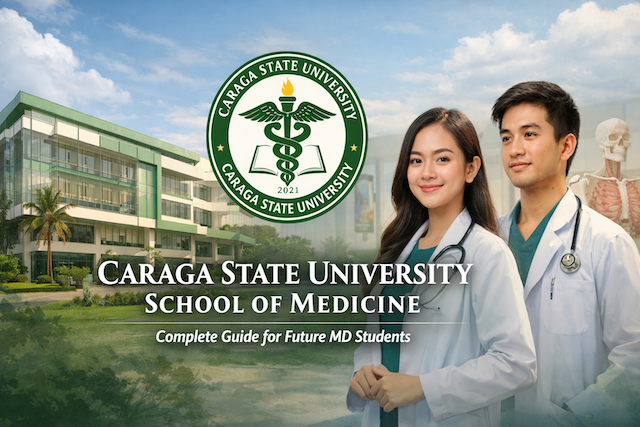
Caraga State University School of Medicine: Complete Guide for Future MD Students
Contents
- Caraga State University School of Medicine: Complete Guide for Future MD Students
- Overview: What Is Caraga State University School of Medicine?
- Why CSU-SOM Matters for Caraga and Mindanao
- Location and Campus Context
- MD Program Snapshot: What You Should Expect
- Curriculum Direction and Training Philosophy
- Admissions: Common Requirements and How to Prepare
- Tuition, Scholarships, and “Public Medical School” Expectations
- Student Life: What Medical School in Butuan Can Feel Like
- Facilities and Clinical Training Partnerships
- What Kind of Student Is CSU-SOM Best For?
- How to Evaluate a New Medical School Wisely
- Application Strategy: Steps You Can Take Now
- Conclusion
- FAQs (Frequently Asked Questions)
- Is Caraga State University School of Medicine already accepting MD students?
- Where is Caraga State University School of Medicine located?
- What degree does CSU School of Medicine offer?
- Do I need an NMAT score to apply?
- What undergraduate course should I take before applying to medicine?
- What documents are usually required for medical school applications?
- Does CSU School of Medicine offer scholarships or reduced tuition?
- What should I expect from the interview process?
- How is clinical training handled for a new medical school?
- Is it a disadvantage to enroll in a newly established School of Medicine?
- What qualities help students succeed in the MD program?
- How can I verify the latest admissions updates for CSU School of Medicine?
Caraga State University School of Medicine: Complete Guide for Future MD Students
Caraga State University (CSU) in Butuan City has entered a new chapter in higher education by opening the Caraga State University School of Medicine (CSU-SOM) and offering a Doctor of Medicine (MD) program designed to serve the healthcare needs of the Caraga Region. For students who want to become physicians while staying rooted in Mindanao—especially those who are motivated by public service, community health, and regional impact—CSU-SOM is positioned as a mission-driven option that aims to develop doctors who can thrive in both clinical and community settings.
This guide explains what CSU-SOM is, who it may be best for, how the MD program is generally structured in the Philippines, what to prepare for admissions, and how to evaluate fit before you apply. While policies and requirements can evolve, the goal here is to help you understand the landscape so you can plan your next steps with confidence.
Overview: What Is Caraga State University School of Medicine?
CSU-SOM is CSU’s dedicated medical education unit offering the Doctor of Medicine program. The school was launched as a landmark development for the region, with CSU presenting its pioneer MD students and formally opening the program for the 2025–2026 academic year. The initiative is widely described as a major step toward improving access to medical education in Caraga and addressing healthcare workforce gaps through locally trained physicians.
Beyond “opening a new program,” the bigger idea is regional transformation: training physicians who understand local realities—geography, health-seeking behavior, public health challenges, and resource constraints—while also meeting national medical education standards.
Why CSU-SOM Matters for Caraga and Mindanao
Medical education access often shapes where doctors eventually practice. When regions have limited local training opportunities, talented students may leave for school and later build careers elsewhere. CSU-SOM’s launch is meant to reduce that “pipeline leakage” by making the MD pathway more accessible within Caraga, while also emphasizing community-oriented practice.
In public statements around the program’s rollout, CSU and education stakeholders highlighted two key motivations:
- Regional access to medical education so aspiring doctors can train closer to home.
- Addressing physician shortages and improving long-term healthcare capacity through locally trained graduates.
For students, this matters because your clinical exposure and community immersion during medical school strongly influence your competence and your confidence in serving real-world patient needs—especially in areas with limited specialist coverage.
Location and Campus Context
Caraga State University’s main campus is located in Ampayon, Butuan City. Butuan functions as a regional hub for Caraga, with access to hospitals, government services, and transport connections to nearby provinces. For many students from Agusan del Norte, Agusan del Sur, Surigao del Norte, Surigao del Sur, and Dinagat Islands, Butuan is one of the more practical places to pursue a demanding program like medicine while maintaining family support systems.
If you are relocating from outside Butuan, treat your housing plan as part of your academic plan. Clinical years and exam seasons are intense, and stable living arrangements close to campus/clinical sites can reduce daily stress.
MD Program Snapshot: What You Should Expect
In the Philippines, the Doctor of Medicine degree typically follows a four-year medical curriculum after completion of a bachelor’s degree. While exact program design varies by school, most MD programs include:
- Year 1–2: Foundational medical sciences + early clinical skills + case discussions
- Year 3: Integrated clinical subjects + hospital exposure + more complex patient-based learning
- Year 4: Clinical clerkship rotations (major and minor departments)
After graduation, students proceed to post-graduate internship (PGI) and then the Physician Licensure Examination (PLE). Because CSU-SOM is newly launched, some operational details—like specific partner hospitals, rotation models, and scheduling—may be refined as cohorts progress. As an applicant, you should pay attention not just to the curriculum outline but also to the quality of skills training, assessment design, and clinical supervision structure.
Curriculum Direction and Training Philosophy
CSU-SOM describes its MD program as reflecting a shift from purely traditional models toward approaches that emphasize community relevance, leadership, and responsiveness. In practical terms, that usually translates into a few training priorities:
- Community-oriented learning: Linking classroom concepts to real population health needs
- Clinical reasoning: Case-based discussions that train you to think like a doctor early
- Professional identity formation: Ethics, communication, teamwork, and accountability
- Health systems awareness: Understanding referral pathways, resource limitations, and public health programs
If you thrive in mission-driven environments and you want training that treats “public service” as a core competency (not a marketing line), this type of framing can be a strong match.
Admissions: Common Requirements and How to Prepare
Medical school admissions in the Philippines typically consider a combination of academic readiness, standardized testing, documentation, and interview performance. While you must confirm CSU-SOM’s exact requirements from official channels, most applicants should be prepared for these common components:
- NMAT score: Many schools require a minimum percentile rank.
- Undergraduate records: Transcript of Records (TOR) and proof of bachelor’s degree completion.
- Recommendation letters: Often from professors or supervisors.
- Personal statement or essay: Explaining motivation and fit.
- Interview: Assessing communication, maturity, and mission alignment.
- Medical/physical requirements: Vaccination and health clearance policies may apply.
Practical preparation tips:
- Start NMAT planning early. A higher score gives you more options and scholarship leverage.
- Write a mission-aligned narrative. If the school emphasizes community service, show real examples (volunteering, rural exposure, public health projects).
- Strengthen science fundamentals. Anatomy/physiology familiarity isn’t required, but disciplined study habits are.
- Document readiness. Keep scanned copies of TOR, birth certificate, IDs, and other typical requirements.
If CSU-SOM is building a physician workforce for Caraga, they may also value applicants who can show long-term commitment to the region—either through personal background or credible intent.
Tuition, Scholarships, and “Public Medical School” Expectations
When people hear “public medical school,” they often assume tuition is automatically free. In reality, cost structures depend on national and university policies, scholarship programs, and eligibility conditions (such as service commitments or maintaining academic standing).
What you can do as an applicant is prepare a cost-and-support checklist:
- Direct school costs: tuition (if applicable), laboratory fees, uniforms, IDs
- Learning tools: laptop/tablet, stethoscope, diagnostic kit, printing
- Living costs: rent, food, transport, utilities
- Clinical year extras: rotations may require additional transport/time flexibility
Even when tuition support exists, living expenses can make or break your sustainability in medical school. Plan early and talk to current students (once cohorts grow) to estimate realistic monthly budgets in Butuan.
Student Life: What Medical School in Butuan Can Feel Like
Medical school is less about “campus life” and more about endurance, routines, and support systems. If you study in Butuan, you can expect a life rhythm that revolves around:
- Early mornings, long study blocks, and frequent assessments
- Small-group learning and skills practice
- Peer-based support (your batch becomes your primary community)
- Limited free time—so you learn to protect recovery time strategically
Many students underestimate how much environment matters. A calm, stable living situation, reliable internet, and a predictable daily routine can significantly improve your performance and mental health.
Facilities and Clinical Training Partnerships
For any medical school, one of the most important questions is: Where will I train? Clinical competence is built through patient contact, supervised procedures, structured feedback, and exposure to a broad range of cases.
As CSU-SOM is newly launched, clinical partnership details may continue to evolve. When evaluating the school, look for clarity on:
- Affiliated hospitals and clinical sites (public and/or private)
- Clerkship rotation structure (duration per department, evaluation methods)
- Student-to-preceptor ratios and supervision quality
- Skills lab access for simulated practice (BLS, suturing, IV insertion, etc.)
Ask these questions not as a skeptic, but as a serious future clinician. A transparent answer is a positive sign.
What Kind of Student Is CSU-SOM Best For?
Every medical school has a “best fit” student profile. CSU-SOM may be especially appealing if you are:
- Regionally committed: You want to serve Caraga or Mindanao long-term.
- Community-minded: You value public health, primary care, and service impact.
- Resilient and adaptable: You can handle a growing institution where systems are continuously improving.
- Motivated by mission: You want your training to have a clear social purpose.
On the other hand, if your top priority is a long-established hospital network with decades of alumni footprint and fully matured systems, you may prefer a more established medical school. New schools can be excellent—sometimes outstanding—but they require students who can stay flexible and constructive as the institution refines processes.
How to Evaluate a New Medical School Wisely
Choosing a newer medical school is not automatically risky, but it should be done thoughtfully. Here’s a practical evaluation framework you can use:
- Regulatory clarity: Confirm program authority/recognition and official announcements.
- Leadership and faculty: Look for credible academic and clinical educators.
- Clinical training plan: Hospitals, patient volume, supervision, rotation logistics.
- Assessment system: How are you evaluated—written exams, OSCEs, clinical performance?
- Student support: Counseling, mentoring, remediation pathways, fairness processes.
- Long-term vision: Research agenda, community partnerships, and health system integration.
CSU-SOM has presented itself as a school built around forming doctors who are not only clinically competent but also socially responsive. When you talk to admissions, ask questions that test whether that philosophy is operationalized (curriculum design, community exposure, evaluation standards), not just stated.
Application Strategy: Steps You Can Take Now
If you’re aiming for CSU-SOM, here is a simple action plan you can start immediately:
- Step 1: Map your timeline (NMAT date, document processing, interview season).
- Step 2: Strengthen your NMAT prep routine (diagnostic test → targeted review → timed practice).
- Step 3: Prepare your story of “why medicine” and “why Caraga/CSU.”
- Step 4: Build a document folder (TOR, certificates, IDs, recommendations).
- Step 5: Track official updates through CSU and CSU-SOM channels.
Because the school is in an early stage, official announcements and admissions details may be updated more frequently than in older institutions. Always treat official sources as your final reference point for deadlines and requirements.
Conclusion
Caraga State University School of Medicine represents a significant development in medical education access for the Caraga Region. For aspiring doctors who want to train closer to home, build competence grounded in community realities, and contribute to regional health outcomes, CSU-SOM can be a compelling option—especially if you value mission-driven training and are comfortable joining an institution in its formative years.
The smartest approach is to combine optimism with due diligence: understand the program’s direction, confirm admissions requirements from official channels, and evaluate clinical training plans carefully. If the school’s vision aligns with your personal goals and you’re ready for the demands of medical education, CSU-SOM could be a meaningful place to begin your journey toward becoming a physician.
FAQs (Frequently Asked Questions)
Is Caraga State University School of Medicine already accepting MD students?
Caraga State University has formally launched its School of Medicine and introduced its pioneer Doctor of Medicine (MD) students for the 2025–2026 academic year. This means the program has moved beyond the “proposal” stage and has started actual implementation. However, application timelines, intake size, and specific admissions mechanics can change as the school refines operations. The most reliable way to confirm the current application cycle is to check CSU’s official announcements or contact the university’s admissions or medicine office directly for the latest intake schedule and requirements.
Where is Caraga State University School of Medicine located?
The university’s main campus is in Ampayon, Butuan City, which serves as a regional hub in Caraga. In most medical schools, learning happens across multiple sites: classrooms and skills labs for early training, plus affiliated hospitals and community settings for clinical exposure. As the program matures, clinical training locations and schedules may evolve. Applicants should verify where on-campus learning is held and what partner hospitals or community sites are used for clerkship and supervised clinical activities.
What degree does CSU School of Medicine offer?
The core professional program is the Doctor of Medicine (MD), which is the standard medical degree in the Philippines that leads to clinical training and eventual licensure. The MD program typically spans four academic years, followed by a post-graduate internship and the Physician Licensure Examination (PLE). CSU-SOM’s structure may follow the national norm while adapting to regional priorities such as community health, primary care exposure, and health systems training relevant to Caraga.
Do I need an NMAT score to apply?
Most medical schools in the Philippines require the National Medical Admission Test (NMAT) as part of admissions, often with a minimum percentile requirement. Because policies can differ per institution and can be updated, you should treat NMAT as a likely requirement and plan for it early. Preparing well for the NMAT is beneficial even if the minimum requirement is modest because a stronger score can improve your competitiveness, scholarship chances, and confidence going into the academic workload.
What undergraduate course should I take before applying to medicine?
In the Philippines, applicants generally need a completed bachelor’s degree to enter the MD program. Many students come from science-related courses such as Biology, Nursing, Medical Technology, Pharmacy, Psychology, or Public Health, but non-traditional pre-med backgrounds can also be considered as long as the applicant meets required prerequisites and demonstrates readiness. If you are still in college, focus on building strong study habits, solid science fundamentals, and meaningful experiences that support your motivation for medicine.
What documents are usually required for medical school applications?
While exact checklists differ, common requirements include a Transcript of Records (TOR), proof of graduation, NMAT results, a birth certificate or valid identification, recommendation letters, and sometimes a personal statement or essay. Some schools also request a certificate of good moral character and medical clearance. To avoid last-minute delays, prepare digital and printed copies in advance and keep a clear record of expiration dates or processing times for official documents.
Does CSU School of Medicine offer scholarships or reduced tuition?
As a public university, CSU may have pathways for financial support through government programs, institutional scholarships, or region-focused assistance, but “public” does not always mean completely free when you consider miscellaneous fees and living costs. Scholarship eligibility may involve academic standing, financial need, service commitments, or region-based priorities. If you are budgeting, ask for an itemized estimate that includes tuition (if applicable), laboratory or miscellaneous fees, and expected costs for equipment, uniforms, and clinical requirements.
What should I expect from the interview process?
Medical school interviews typically assess communication skills, maturity, ethical reasoning, motivation, and fit with the school’s mission. For a mission-driven program like CSU-SOM, interviewers may also explore your interest in community service, willingness to train and practice in Caraga, and your understanding of healthcare realities in the region. Prepare by clarifying your reasons for pursuing medicine, reflecting on meaningful experiences, and practicing concise, honest answers that show both commitment and self-awareness.
How is clinical training handled for a new medical school?
Clinical training usually occurs through affiliations with hospitals and health facilities where students complete supervised rotations. For a newer program, partnerships and rotation structures may be developing and expanding as student cohorts progress. This is normal, but applicants should ask practical questions: which hospitals are currently used, what departments are covered, how supervision is arranged, and how students are assessed during clinical work. A clear, transparent plan is a strong indicator of readiness and program quality.
Is it a disadvantage to enroll in a newly established School of Medicine?
Not necessarily. New programs can offer focused attention, modern curriculum design, and a strong mission aligned with regional healthcare needs. The main difference is that some systems may still be improving, such as scheduling, clinical rotation logistics, and student services. Students who do well in such environments are typically resilient, adaptable, and proactive about communication. If you prefer a highly standardized system with long-established routines, you may compare CSU-SOM with more mature schools and decide based on your comfort level and priorities.
What qualities help students succeed in the MD program?
Success in medical school depends less on “genius” and more on consistency. Strong time management, disciplined study routines, and the ability to handle frequent assessments are critical. You also need communication skills, teamwork, and emotional resilience, especially during clinical exposure. For CSU-SOM, a genuine commitment to service and community health can be a major advantage because it aligns your motivation with the school’s purpose, making it easier to stay focused through demanding periods.
How can I verify the latest admissions updates for CSU School of Medicine?
The best approach is to follow official CSU communication channels and contact the university directly for admissions guidance. Because new programs can update requirements and timelines more frequently, rely on official announcements rather than third-party summaries. When you reach out, ask specific questions about deadlines, NMAT requirements, interview dates, fee structures, and any region-based priorities. Keeping a written record of responses can help you avoid confusion as you plan your application.
Complete List of Medical Schools in the Philippines (All 78 MD Programs)
Best Medical Schools in the Philippines (Local & International Rankings)
Recommend
2026年1月23日
University of Southern Mindanao College of Medicine: Complete Guide for Aspiring MD Students
2026年1月23日
Mindanao State University – General Santos College of Medicine: Complete Guide for Future MD Students
2026年1月23日
University of Southeastern Philippines School of Medicine: Complete Guide for Future MD Students

How to Register for eTravel Philippines (2025 Guide)
Step-by-step guide to completing your eTravel registration before arriving in the Philippines, with images and tips.

Night Market in Cebu – Things You Don’t Know About Cebu Life
Discover the hidden charm of Cebu’s night markets, from street food stalls to local life tips you won’t find in tourist guides.

How to Use ChatGPT for IELTS Preparation: A Complete Guide
Learn how to prepare for IELTS using ChatGPT — including strategies for Writing, Reading, Listening, Speaking, and grammar support.

How to Build a Website Without Coding Using ChatGPT
Discover how to build your own website using AI—no coding skills needed. From structure planning to SEO and design, let ChatGPT guide you.