2026年1月23日
3D ACADEMY offers affordable English study programs in Cebu, Philippines – perfect for beginners, professionals, and exam takers.

3D UNIVERSAL ENGLISH INSTITUTE INC
info.3d-universal.com
8:00-17:00(Mon-Fri)
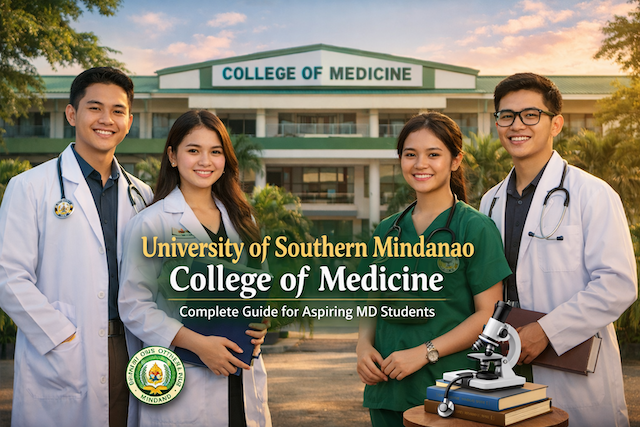
University of Southern Mindanao College of Medicine: Complete Guide for Aspiring MD Students
Contents
- University of Southern Mindanao College of Medicine: Complete Guide for Aspiring MD Students
- Quick Overview of USM and Its Location
- What Makes USM College of Medicine Distinct
- MD Program Goals and Graduate Outcomes
- Admission Requirements at a Glance
- Preferred Pre-Med Background and Bridging
- How to Write a Strong Letter of Intent for USM
- Interview Preparation: What to Expect and How to Stand Out
- Estimated Fees and Financial Planning
- Academic Experience: What Medical School Life Usually Feels Like
- Community Orientation and Service: Why It Matters
- Facilities, Learning Resources, and Support Systems
- Housing and Living in Kabacan as a Medical Student
- How to Apply: Practical Step-by-Step Checklist
- Who Is a Good Fit for USM College of Medicine?
- Final Tips Before You Decide
- FAQs (Frequently Asked Questions)
- Is the University of Southern Mindanao (USM) College of Medicine a good choice for students who want to study in Mindanao?
- What is the minimum NMAT score required for USM College of Medicine?
- Does USM accept applicants from non-traditional pre-med courses?
- What documents should I prepare for the application?
- How important is the letter of intent for USM College of Medicine?
- What types of questions are asked in the admissions interview?
- How much does it cost to study at USM College of Medicine?
- Is it better to live near campus in Kabacan while studying medicine?
- What is the academic workload like in the MD program?
- Does USM College of Medicine emphasize community medicine and public health?
- How can I improve my chances of getting accepted?
- Where can I confirm the latest application deadlines and policies?
University of Southern Mindanao College of Medicine: Complete Guide for Aspiring MD Students
The University of Southern Mindanao (USM) College of Medicine is one of the key public medical education options in Central Mindanao, created with a clear regional purpose: to help develop “homegrown” physicians who can serve communities where the doctor-to-patient gap remains a persistent challenge. Located in Kabacan, Cotabato, USM sits at a strategic junction of major Mindanao routes, making it accessible for students coming from nearby provinces and cities. If you are considering an MD program in Mindanao and want a campus-based medical education that emphasizes licensure alignment, community relevance, and practical preparation, USM College of Medicine is worth serious attention.
This guide explains what the USM MD program aims to produce, what kind of student tends to fit the school well, how admissions generally work (including NMAT expectations), what to prepare for interviews and documents, and how to plan your finances, housing, and study strategy once you are accepted. Because application periods and exact procedures can change year to year, you should always verify the latest announcements directly through USM’s official College of Medicine pages and campus offices before you submit.
Quick Overview of USM and Its Location
USM is a major state university in Central Mindanao located in Kabacan, Cotabato. The university is known for a large main campus and a long institutional history, and it serves students from a wide surrounding region. Kabacan’s location is often described as strategically placed along the Davao–Cotabato–Bukidnon junction, which matters in real life: it can be easier to travel home during breaks, attend regional events, or access partner institutions and hospitals compared to more isolated campuses. If you are coming from General Santos City, Cagayan de Oro, Davao Region, or nearby Cotabato municipalities, you’ll want to evaluate your typical travel route, bus availability, and how often you plan to go home during the semester.
From a lifestyle standpoint, studying medicine in Kabacan typically means a quieter environment than major metro centers. Many students prefer this because medicine demands long study hours and consistent routines. Others may find the pace challenging if they prefer the constant activity of a big city. Before you commit, it helps to consider your ideal learning environment: do you perform better in calm, campus-focused settings, or do you need the energy and conveniences of an urban hub?
What Makes USM College of Medicine Distinct
USM College of Medicine describes its academic delivery as “program-based,” with an approach aligned to the Philippine Regulation Commission (PRC) Licensure Examination expectations. In practical terms, this signals a strong focus on ensuring students build the knowledge base and clinical thinking needed not only to complete the MD program, but to transition into internship and board exam preparation with fewer gaps. For many students, licensure alignment matters because it reduces the feeling that you are studying “two separate curriculums”—one for school and another for the boards.
USM also states a regional mission: producing medical doctors from the area who are more likely to understand local health realities, language contexts, and community needs. This matters if you already see yourself practicing in Mindanao—whether in a provincial hospital, a community-based practice, a public health setting, or a multi-disciplinary clinical environment that serves diverse populations. Students who want a deeply community-relevant medical education often find this kind of institutional mission motivating, especially during demanding pre-clinical years.
MD Program Goals and Graduate Outcomes
USM outlines several pathways its MD graduates are expected to be capable of pursuing. These include becoming a practicing physician, a community doctor, a clinical doctor, a corporate doctor, a medical academician, or a medical researcher, among other medical-related professional roles. This is useful to think about early because it can shape how you approach electives, research opportunities, and service programs. For example:
- If you are drawn to community medicine, you may prioritize experiences that involve rural health units, community immersion, preventive health programs, and patient education work.
- If you want a hospital-based clinical path, you may focus on building strong clinical reasoning, exam skills, and early exposure to case discussions and clerkship readiness.
- If you are interested in research, it helps to start strengthening your writing, statistics basics, ethics familiarity, and literature review skills early—even before formal research requirements peak.
- If you think you may teach in the future, look for chances to mentor junior students, join academic activities, or develop presentation and facilitation skills.
Medical school often changes students’ interests over time. Still, having a “first direction” can help you choose the right study strategy and extra activities without spreading yourself too thin.
Admission Requirements at a Glance
USM College of Medicine publishes a list of initial requirements that typically includes an application form, transcript of records, proof of graduation (diploma or certificate), certificates of good moral character, a letter of intent addressed to the Dean, and recent photos. Importantly, the school lists an NMAT requirement of at least a 40% score (percentile rank) and notes that the NMAT should generally be taken within a specified validity window (commonly within two years prior to application, as indicated in USM’s posted guidance). Because NMAT policies and cutoffs can be updated, treat published requirements as the baseline and confirm the current year’s memo or announcement.
USM also notes that applicants who meet Phase 1 requirements may be called for an interview. The admissions process may include ranking components such as NMAT, general weighted average (GWA), and interview performance, with a stated preference for strong academic standing. In planning terms, this means you should prepare not only your documents and NMAT score, but also your narrative: why medicine, why USM, and how your background connects to the program’s regional mission.
Preferred Pre-Med Background and Bridging
USM lists common preferred pre-med programs (for example, Biology and related life sciences, Nursing, Medical Technology, Pharmacy, Public Health, Nutrition-related programs, Psychology, and other health sciences), while also noting that other courses may be considered if required academic units are met. This is an important detail for applicants coming from non-traditional backgrounds.
If you are not from a typical pre-med program, your best move is to review your transcript and identify gaps in foundational units such as biology, chemistry, physics, math, and social sciences (as the school’s guidance commonly mentions). Where gaps exist, applicants may be asked to complete bridging or prerequisite units through relevant university programs. If you are in this situation, plan early: bridging can affect timelines, budgets, and your ability to start with your intended cohort.
How to Write a Strong Letter of Intent for USM
Many applicants treat the letter of intent as a formality. For medical school, it is more than that. A strong letter of intent for USM should connect three things: (1) your personal motivation and readiness for medicine, (2) your understanding of USM College of Medicine’s mission, and (3) your realistic plan for growth and service.
Practical tips:
- Be specific about your “why.” A short story is fine, but keep it focused on what it taught you and how it shaped your decision.
- Show regional alignment. If you are from Mindanao (or plan to practice there), explain what health challenges you have observed and how you hope to contribute.
- Demonstrate readiness. Mention your study discipline, relevant academic strengths, research exposure (if any), or leadership/service experience.
- Stay honest and grounded. Avoid dramatic claims. Admissions committees can sense exaggeration quickly.
Keep the letter clear, professional, and easy to read. Even if you have a powerful story, structure and clarity matter because medicine is full of documentation, precision, and responsible communication.
Interview Preparation: What to Expect and How to Stand Out
If you are invited for an interview, treat it as a key evaluation of your maturity and fit—not a casual conversation. USM’s admissions process indicates that interviews can be part of the ranking and selection approach. Interviewers commonly look for:
- Motivation with realism: You understand the demands of medicine and are prepared to persist through pressure.
- Ethical thinking: You can reason through basic dilemmas: confidentiality, patient autonomy, fairness, and professionalism.
- Communication skills: You can explain ideas clearly without arrogance, and you can listen carefully.
- Community mindset: You can connect your goals to service, public health awareness, or regional medical needs.
Practice answering questions out loud. Many applicants “know” what they want to say, but freeze because they have never spoken it. Record yourself once or twice and check if you sound rushed, defensive, or unclear. Also prepare for practical questions: how you plan to finance your studies, how you handle stress, and what you will do if you encounter academic difficulty.
Estimated Fees and Financial Planning
USM College of Medicine provides an indicative estimate for fees, commonly described as around “more or less 50,000 per semester.” Treat this as an approximate baseline rather than a guaranteed figure, because tuition and miscellaneous fees can change, and additional costs can appear depending on laboratory requirements, learning materials, uniform policies, clinical necessities, or updated university guidelines.
When planning your real budget, include:
- Tuition and miscellaneous fees: semester-based payments, potential lab or institutional fees.
- Housing and utilities: rent, electricity, water, internet, and basic furnishings if needed.
- Daily living: food, transportation, and routine personal expenses.
- Study costs: textbooks, digital subscriptions, printing, group materials, and board-style review resources later on.
- Medical requirements: physical exams, vaccinations, laboratory tests (these may be part of admissions or clinical readiness).
- Emergency buffer: unexpected health needs, family events, device replacement, or sudden academic expenses.
If you are relying on family support, have the financial discussion early and in detail. If you are exploring scholarships, ask about availability, eligibility, and deadlines. Even when scholarships exist, competition can be high, and requirements may include maintaining a specific grade standing.
Academic Experience: What Medical School Life Usually Feels Like
Even without listing every course, it is helpful to understand what medical education typically demands. In the early years (pre-clinical), your schedule often includes heavy classroom learning, lab components, small-group activities, and frequent assessments. The challenge is less about “intelligence” and more about consistency: can you study every day, manage fatigue, recover from setbacks quickly, and maintain focus when the volume of content feels endless?
By the time students reach clinical exposure, the workload shifts. You begin to apply knowledge to real cases, improve your patient communication, and develop clinical reasoning: not just what a disease is, but how it presents, how to confirm it, how to rule out dangerous alternatives, and how to plan initial management safely. Clinical years often bring different stressors: long hours, unpredictability, and the emotional weight of patient care.
Students who do well usually build habits early: spaced repetition, efficient note systems, consistent practice questions, and collaborative learning that does not become distracting. If you plan to enter USM College of Medicine, it helps to start building these habits before day one.
Community Orientation and Service: Why It Matters
Because USM emphasizes producing doctors who can help address regional healthcare gaps, students should expect that community-oriented learning will be valued. In practical terms, this can mean participating in activities connected to public health, preventive medicine, health education, and exposure to the realities of healthcare delivery beyond major tertiary centers. Community medicine is not “less medical” than hospital medicine; it is often where basic healthcare access, early detection, and long-term outcomes are decided.
If you hope to serve in Mindanao after graduation, these experiences can become part of your professional identity. They can also help you decide what kind of doctor you want to be: someone who focuses on primary care, someone who pursues a specialty but remains rooted in community needs, or someone who combines clinical work with research or education.
Facilities, Learning Resources, and Support Systems
Prospective students commonly ask about facilities, laboratories, library access, and learning spaces. The best way to evaluate this is through campus visits, official college updates, and student feedback from credible sources. However, regardless of the specific facility list, medical students should plan to rely on a combination of university resources and self-managed tools: a dependable laptop or tablet, stable internet, and an organized digital workflow for notes and references.
Support systems matter just as much as facilities. Ask yourself:
- Do you have people you can talk to when you feel overwhelmed?
- Can you create a weekly routine that includes rest?
- Will you seek help early if you struggle academically?
Medicine can isolate students if they are not careful. Having a small circle of supportive peers and a healthy routine often improves performance more than studying longer hours with poor focus.
Housing and Living in Kabacan as a Medical Student
Choosing where to live is a major decision. Many medical students prefer to live close enough to campus to reduce commute stress and protect study time. When evaluating rentals, prioritize safety, water reliability, electricity stability, and internet quality. Quiet surroundings can be a big advantage, but do not sacrifice basic security and convenience.
Common student strategies include:
- Room-sharing with trusted classmates to reduce costs and improve accountability (but set clear rules).
- Living solo for focus and privacy (more expensive, but sometimes worth it for productivity).
- Choosing a place with a study-friendly setup (desk space, lighting, ventilation).
Also plan for practical life needs: laundry access, food availability, and a simple routine for groceries and meals. The more you reduce daily friction, the more energy you can put into learning.
How to Apply: Practical Step-by-Step Checklist
While exact timelines vary, a practical application workflow often looks like this:
- Check the latest application announcement on USM College of Medicine official pages and note all deadlines.
- Confirm NMAT validity and ensure your score meets or exceeds the published requirement.
- Prepare documents early: transcript requests can take time; good moral certificates may require processing.
- Write and revise your letter of intent: keep it professional and aligned to USM’s mission.
- Submit requirements through the accepted method (hard copy and/or soft copy, depending on current guidance).
- Prepare for interview once acknowledged; do not wait until an invitation arrives to start practicing.
- Plan medical/physical requirements if asked (vaccinations, tests, documentation).
Keep digital copies of everything. Use clear file names, and store them in at least two places (for example, a local folder and a secure cloud backup). Medical admissions can involve multiple forms, receipts, and proofs, and you want to avoid last-minute stress.
Who Is a Good Fit for USM College of Medicine?
You may be a strong fit if you:
- Want to study medicine in a public university setting in Central Mindanao.
- Are motivated by community impact and regional healthcare needs.
- Prefer a campus environment where focus and routine are easier to maintain.
- Are prepared to meet NMAT and academic standing expectations and to commit to disciplined daily study.
You may struggle if you:
- Need constant city-level entertainment and convenience to stay motivated.
- Have not yet built study habits and expect to “figure it out later.”
- Are uncomfortable with community-oriented learning and prefer purely hospital-based identity from the start.
None of these points are absolute, but they are useful for honest self-assessment. Fit matters in medical school because you will spend years in an intense environment. Choosing a school that matches your learning style and values can improve both performance and well-being.
Final Tips Before You Decide
First, rely on official information for requirements and deadlines. Medical school admissions can be strict, and small mistakes (missing documents, wrong formats, late submission) can cost you a slot. Second, invest in your NMAT strategy if you have time: even if the minimum is achievable, a higher score can improve competitiveness if ranking is used. Third, consider your long-term goal: if you want to practice in Mindanao, a school that understands and prioritizes Mindanao’s health landscape can be a powerful foundation.
Finally, remember that the MD journey is not only academic. It tests your discipline, ethics, communication, and resilience. If you decide to pursue USM College of Medicine, start preparing now: strengthen your study habits, organize your documents early, and build a support system that will carry you through the hardest months.
FAQs (Frequently Asked Questions)
Is the University of Southern Mindanao (USM) College of Medicine a good choice for students who want to study in Mindanao?
Yes—USM College of Medicine can be a strong choice if you want a medical education rooted in the realities of Mindanao. Studying in Kabacan, Cotabato places you closer to the communities and healthcare settings you may eventually serve, and many students value the quieter, more routine-friendly environment compared with larger metro campuses. If your long-term plan includes practicing in Mindanao, training in the region can also help you build local familiarity, networks, and cultural awareness. That said, “good choice” depends on your learning style, budget, and expectations for campus life, so it is still important to review the most recent official requirements and speak with current students or staff when possible.
What is the minimum NMAT score required for USM College of Medicine?
USM College of Medicine has commonly published a minimum NMAT percentile requirement (for example, at least 40) as part of its initial screening. However, minimum requirements can change from year to year depending on policy updates and the number of applicants. Also, meeting the minimum does not necessarily mean you are competitive. If the school uses ranking based on NMAT, grades, and interviews, a higher NMAT score may improve your chances. The safest approach is to verify the current year’s cutoff and NMAT validity window through USM’s official announcements before you apply.
Does USM accept applicants from non-traditional pre-med courses?
In many Philippine medical schools, non-traditional applicants may be accepted as long as they meet required academic units (often in sciences and related foundational subjects). USM generally lists common health and life-science pre-med backgrounds, but applicants from other degree programs may still be considered if they have completed the necessary prerequisites. If your transcript lacks key units, you may be asked to take bridging or prerequisite subjects before enrollment or early in the program. To avoid delays, request a copy of your transcript early and compare your completed units with the school’s published requirements.
What documents should I prepare for the application?
Applicants are typically expected to submit an application form and supporting documents such as a transcript of records, proof of graduation, certificates of good moral character, recent photos, and a letter of intent addressed to the Dean. Some applicants may also need additional documents depending on their academic background or personal circumstances. Because processing time can be slow for transcripts and certifications, it is wise to request documents weeks ahead of the deadline. Keep both printed copies and clear scanned files, and use consistent file naming so you can easily resubmit if needed.
How important is the letter of intent for USM College of Medicine?
The letter of intent matters because it helps the admissions committee understand your motivation, maturity, and alignment with the school’s mission. A strong letter is specific and realistic. It should explain why you want to become a doctor, why you want to study at USM, and how your background connects to the kind of physician you hope to become. Avoid overly dramatic claims and focus instead on concrete experiences, values, and goals. Clear writing and professional tone also matter, since medicine demands careful communication.
What types of questions are asked in the admissions interview?
Interview questions often explore your reasons for pursuing medicine, your ability to handle pressure, your communication style, and your ethical judgment. You may be asked about your study habits, how you handle failure, how you plan to finance your education, or what kind of doctor you hope to become. Some interviews include situational or ethical prompts to see how you think under uncertainty. The best preparation is to practice answering out loud, keep your responses structured, and show honesty and self-awareness rather than trying to deliver “perfect” answers.
How much does it cost to study at USM College of Medicine?
USM has posted indicative estimates for fees that are often described per semester, but the exact amount can vary due to tuition adjustments and miscellaneous university charges. Beyond tuition, you should also plan for housing, utilities, food, transportation, learning materials, and clinical-related expenses as you progress. Many students underestimate the cost of printing, supplies, internet reliability, and review resources. A practical budget includes an emergency buffer, because medical school schedules can create unexpected costs.
Is it better to live near campus in Kabacan while studying medicine?
For most medical students, living closer to campus reduces daily stress and protects study time. Medicine often requires long hours and frequent assessments, so long commutes can quickly become exhausting. When choosing housing, prioritize safety, stable water and electricity, and dependable internet. Some students prefer living with roommates to reduce costs and gain social support, while others study better alone. Either option can work if you set clear rules and build a consistent routine.
What is the academic workload like in the MD program?
The workload is typically heavy and continuous. In pre-clinical years, students manage large volumes of reading, lectures, lab work, and frequent tests. In clinical phases, the learning becomes more applied: you are expected to reason through patient cases, communicate clearly, and perform well under time pressure. Success usually depends on consistent daily study rather than last-minute cramming. Strong students use efficient note systems, spaced repetition, and practice questions, and they seek help early if they fall behind.
Does USM College of Medicine emphasize community medicine and public health?
USM’s regional role and stated direction commonly highlight producing physicians who understand local health needs. That often aligns with community-oriented learning, preventive health perspectives, and exposure to healthcare delivery outside major metro centers. Even if you later pursue a hospital-based specialty, community exposure can strengthen your understanding of real-world barriers such as access, follow-up care, patient education, and resource limitations. Students who appreciate this orientation often find the training more meaningful and motivating.
How can I improve my chances of getting accepted?
Start with the basics: meet the published requirements, submit complete documents on time, and ensure your NMAT score is valid. If you still have time, aim higher than the minimum NMAT cutoff to strengthen competitiveness. Present a clear academic record, a thoughtful letter of intent, and an interview performance that shows maturity and realism. Also, demonstrate alignment with USM’s mission by explaining how you hope to contribute to healthcare in Mindanao or similar underserved settings. Finally, avoid last-minute preparation—organized applicants often perform better because they reduce stress and improve clarity.
Where can I confirm the latest application deadlines and policies?
The most reliable source is USM’s official communications for the College of Medicine, including official pages, announcements, and campus offices handling admissions. Because dates and procedures can change, do not rely only on older posts or unofficial summaries. If anything is unclear—such as submission format, NMAT validity, or interview schedules—contact the official admissions or college office directly so you can follow the correct process for the current intake.
Complete List of Medical Schools in the Philippines (All 78 MD Programs)
Best Medical Schools in the Philippines (Local & International Rankings)
Recommend
2026年1月23日
Sultan Kudarat State University College of Medicine: Complete Guide for Aspiring MD Students
2026年1月23日
Mindanao State University – General Santos College of Medicine: Complete Guide for Future MD Students
2026年1月23日
University of Southeastern Philippines School of Medicine: Complete Guide for Future MD Students

How to Register for eTravel Philippines (2025 Guide)
Step-by-step guide to completing your eTravel registration before arriving in the Philippines, with images and tips.

Night Market in Cebu – Things You Don’t Know About Cebu Life
Discover the hidden charm of Cebu’s night markets, from street food stalls to local life tips you won’t find in tourist guides.

How to Use ChatGPT for IELTS Preparation: A Complete Guide
Learn how to prepare for IELTS using ChatGPT — including strategies for Writing, Reading, Listening, Speaking, and grammar support.

How to Build a Website Without Coding Using ChatGPT
Discover how to build your own website using AI—no coding skills needed. From structure planning to SEO and design, let ChatGPT guide you.