2025年12月18日
3D ACADEMY offers affordable English study programs in Cebu, Philippines – perfect for beginners, professionals, and exam takers.

3D UNIVERSAL ENGLISH INSTITUTE INC
info.3d-universal.com
8:00-17:00(Mon-Fri)
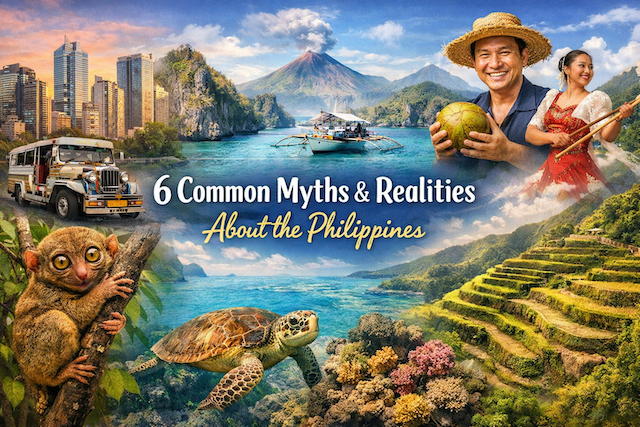
6 Common Myths and Realities About the Philippines
Contents
- 6 Common Myths and Realities About the Philippines
- Myth 1: The Philippines Is Unsafe and Dangerous Everywhere
- Myth 2: Filipinos Are Poorly Educated and Unskilled
- Myth 3: The Philippines Is Always Hot and Miserable
- Myth 4: All Filipinos Live in Poverty
- Myth 5: The Philippines Has Nothing to Offer Beyond Beaches
- Myth 6: Life in the Philippines Is Chaotic and Disorganized
- Why These Myths Persist
- Final Thoughts: Seeing the Philippines Clearly
6 Common Myths and Realities About the Philippines
The Philippines is one of Southeast Asia’s most talked-about destinations, yet it is also one of the most misunderstood. From sensational news headlines to outdated stereotypes, many people form opinions about the country without ever setting foot on its islands. These misconceptions can discourage travelers, students, digital nomads, and even investors from exploring what the Philippines truly has to offer.
In reality, the Philippines is a complex, diverse, and dynamic country made up of more than 7,000 islands, hundreds of cultures, and a rapidly evolving society. This article breaks down six of the most common myths about the Philippines and contrasts them with the realities you’ll actually experience on the ground.
Whether you’re planning a short trip, studying abroad, relocating, or simply curious, understanding these myths will help you see the Philippines in a more accurate and balanced way.
Myth 1: The Philippines Is Unsafe and Dangerous Everywhere
One of the most widespread myths about the Philippines is that it is inherently dangerous. News stories often focus on crime, political unrest, or isolated security incidents, creating the impression that the entire country is unsafe for foreigners and locals alike.
Reality: Safety Depends on Location, Just Like Anywhere Else
The reality is far more nuanced. Like any country, safety in the Philippines depends heavily on where you are, what time it is, and how you behave. Major cities such as Cebu City, Makati, Bonifacio Global City (BGC), and Iloilo have neighborhoods that are clean, well-policed, and highly livable. Many foreigners live in these areas for years without experiencing serious safety issues.
Violent crime against tourists is relatively rare, and most common problems involve petty theft such as pickpocketing or phone snatching—issues also common in cities like Paris, Rome, or New York. With basic street awareness, avoiding poorly lit areas late at night, and using trusted transportation options like Grab, most visitors feel comfortable and safe.
It’s also worth noting that Filipinos are generally protective of guests, and communities often look out for foreigners, especially in smaller towns and islands.
Myth 2: Filipinos Are Poorly Educated and Unskilled
Another damaging stereotype is that Filipinos lack education or professional skills. This misconception often stems from the country’s association with low-cost labor or overseas work.
Reality: The Philippines Produces Highly Educated, English-Speaking Professionals
In reality, the Philippines has a strong education culture, and higher education is highly valued. The country produces large numbers of college graduates every year in fields such as nursing, engineering, IT, accounting, hospitality, and education.
The Philippines is also one of the largest English-speaking countries in the world. English is an official language and the primary medium of instruction in schools, universities, and business. This is why Filipino professionals are in high demand globally, particularly in healthcare, customer service, maritime industries, and education.
Many Filipinos are multilingual, often speaking English, Filipino, and a regional language fluently. The rise of the BPO (Business Process Outsourcing) and tech sectors further highlights the country’s skilled workforce and adaptability.
Myth 3: The Philippines Is Always Hot and Miserable
Some people assume that the Philippines is unbearably hot all year round, making it uncomfortable or even unhealthy to live or travel there.
Reality: The Climate Is Tropical but Manageable
Yes, the Philippines has a tropical climate, but it is not uniformly oppressive. The year is generally divided into dry and wet seasons, with temperatures typically ranging from the mid-20s to low-30s Celsius (mid-70s to mid-80s Fahrenheit).
Coastal areas benefit from sea breezes, and mountainous regions like Baguio, Tagaytay, and parts of Mindanao offer significantly cooler weather. Air conditioning is widely available in homes, malls, offices, and public transport, making daily life comfortable even during warmer months.
For many visitors, the climate is actually a major advantage, especially those escaping colder countries. The ability to enjoy beaches, outdoor dining, and year-round sunshine is a key reason people fall in love with the Philippines.
Myth 4: All Filipinos Live in Poverty
Images of informal settlements and poverty are often used to represent the Philippines internationally, leading to the assumption that most Filipinos live in extreme hardship.
Reality: The Philippines Has a Growing Middle Class
While poverty does exist and remains a serious issue, it is misleading to believe that it defines the entire country. The Philippines has a large and growing middle class, particularly in urban centers. Shopping malls, high-rise condominiums, international restaurants, and modern infrastructure are common sights in major cities.
Many Filipinos enjoy lifestyles similar to those in other middle-income countries, with access to smartphones, cars, travel, private education, and healthcare. Cities like Cebu, Davao, and Metro Manila are hubs of commerce, entrepreneurship, and innovation.
Understanding this economic diversity is crucial. The Philippines is a country of contrasts, where traditional life and modern development exist side by side.
Myth 5: The Philippines Has Nothing to Offer Beyond Beaches
The Philippines is famous for its white-sand beaches, and while they are undeniably stunning, this reputation sometimes overshadows everything else the country has to offer.
Reality: The Philippines Offers Culture, History, Nature, and Urban Life
Beyond beaches, the Philippines boasts rich cultural heritage, historical landmarks, and diverse natural attractions. Spanish colonial architecture, centuries-old churches, and UNESCO World Heritage Sites can be found across the country.
Nature lovers can explore rice terraces, volcanoes, waterfalls, caves, coral reefs, and marine sanctuaries. Adventure activities include diving, snorkeling, hiking, surfing, canyoneering, and whale shark watching.
Urban experiences are equally compelling. Cities offer vibrant nightlife, food scenes influenced by Asian and Western cuisines, modern malls, coworking spaces, and active arts communities. Whether you are a backpacker, luxury traveler, digital nomad, or family visitor, the Philippines has far more depth than its postcard beaches suggest.
Myth 6: Life in the Philippines Is Chaotic and Disorganized
Another common belief is that daily life in the Philippines is chaotic, inefficient, and frustrating, especially for foreigners used to strict systems and schedules.
Reality: Life Operates on Relationships, Not Just Rules
It’s true that the Philippines does not always function with the rigid efficiency seen in countries like Japan or Germany. However, this does not mean life is unmanageable. Instead, the country operates on a relationship-based system, where flexibility, communication, and personal connections play a major role.
Many foreigners initially find this adjustment challenging but later appreciate the relaxed pace and human-centered approach. Bureaucracy can be slow, but people are often willing to help if approached politely. Businesses adapt quickly, and informal solutions are common.
For long-term residents, learning to navigate this system becomes second nature. What may appear chaotic at first often reveals itself as a different, more personal way of organizing society.
Why These Myths Persist
These myths continue largely because of selective media coverage, outdated travel advice, and lack of firsthand experience. The Philippines is rarely represented in a balanced way internationally, and stories that highlight extremes tend to attract more attention than everyday reality.
Social media has improved this somewhat, as travelers and expats share real-life experiences, but misconceptions still linger, especially among those who have never visited Southeast Asia.
Final Thoughts: Seeing the Philippines Clearly
The Philippines is not perfect, but no country is. What sets it apart is its warm people, cultural richness, adaptability, and resilience. By separating myths from reality, you gain a clearer picture of what life and travel in the Philippines are truly like.
For travelers, this understanding leads to more meaningful experiences. For students and professionals, it opens doors to opportunities that are often overlooked. And for anyone curious about the world, it serves as a reminder that countries are far more complex than the stereotypes attached to them.
If you approach the Philippines with an open mind rather than preconceived myths, you’ll likely discover a country that surprises you—in the best possible way.

How to Register for eTravel Philippines (2025 Guide)
Step-by-step guide to completing your eTravel registration before arriving in the Philippines, with images and tips.

Night Market in Cebu – Things You Don’t Know About Cebu Life
Discover the hidden charm of Cebu’s night markets, from street food stalls to local life tips you won’t find in tourist guides.

How to Use ChatGPT for IELTS Preparation: A Complete Guide
Learn how to prepare for IELTS using ChatGPT — including strategies for Writing, Reading, Listening, Speaking, and grammar support.

How to Build a Website Without Coding Using ChatGPT
Discover how to build your own website using AI—no coding skills needed. From structure planning to SEO and design, let ChatGPT guide you.