2025年9月6日
3D ACADEMY offers affordable English study programs in Cebu, Philippines – perfect for beginners, professionals, and exam takers.

3D UNIVERSAL ENGLISH INSTITUTE INC
info.3d-universal.com
8:00-17:00(Mon-Fri)
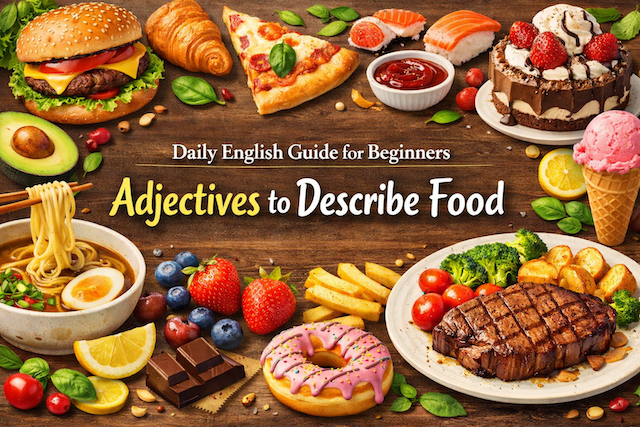
Daily English Guide for Beginners: Adjectives to Describe Food
Contents
- Daily English Guide for Beginners: Adjectives to Describe Food
- Why Learning Food Adjectives Is Important
- Adjectives to Describe Taste
- Adjectives to Describe Texture
- Adjectives to Describe Temperature
- Adjectives to Describe Appearance
- Adjectives to Describe Smell
- Adjectives to Describe Quality
- Common Sentence Patterns for Beginners
- Practice Tips for Daily Use
- Final Thoughts
- FAQs (Frequently Asked Questions)
- What are “food adjectives” in English?
- What are the most important food adjectives for beginners to learn first?
- What is the difference between “crispy” and “crunchy”?
- How can I describe food taste if I don’t know many words?
- What is the difference between “delicious” and “tasty”?
- How do I talk about food texture in simple English?
- How can I describe food temperature politely?
- What does “savory” mean, and when should I use it?
- How do I combine adjectives to sound more natural?
- What are polite ways to say I don’t like a food?
- How can I practice food adjectives every day?
Daily English Guide for Beginners: Adjectives to Describe Food
Learning how to describe food is one of the most practical and enjoyable parts of studying English. Whether you are eating at a restaurant, shopping at a market, talking with friends, or writing a simple review, food adjectives help you express your experience clearly and naturally.
This guide is designed for English beginners. It explains common adjectives used to describe food in clear, simple language, with examples you can use in daily conversation. By the end of this article, you will be able to talk about taste, texture, temperature, appearance, smell, and overall quality with confidence.
Why Learning Food Adjectives Is Important
Food is a universal topic. People talk about meals every day, and food-related conversations are common in English-speaking environments.
Learning food adjectives helps you:
-
Order food correctly at restaurants
-
Explain what you like or dislike
-
Describe meals to friends or coworkers
-
Understand menus, reviews, and recipes
-
Sound more natural when speaking English
Instead of saying only “This food is good,” you will be able to say “This food is spicy and crispy” or “The soup is warm and flavorful.”
Adjectives to Describe Taste
Taste adjectives describe how food tastes in your mouth. These are some of the most commonly used food adjectives in English.
Sweet
Sweet food contains sugar or tastes like sugar.
Examples:
-
Cake is sweet.
-
Mangoes are sweet and juicy.
-
I like sweet desserts.
Common sweet foods: chocolate, candy, ice cream, fruit
Salty
Salty food contains a lot of salt.
Examples:
-
Potato chips are salty.
-
The soup is too salty.
-
I prefer salty snacks.
Common salty foods: fries, popcorn, nuts
Sour
Sour food has a sharp, acidic taste.
Examples:
-
Lemons are sour.
-
This yogurt tastes sour.
-
I do not like sour drinks.
Common sour foods: lemon, vinegar, yogurt
Bitter
Bitter food has a strong, sharp taste that is often not sweet.
Examples:
-
Coffee can taste bitter.
-
This vegetable is bitter.
-
Dark chocolate is slightly bitter.
Common bitter foods: coffee, some vegetables, dark chocolate
Spicy
Spicy food is hot because of chili or pepper.
Examples:
-
This curry is spicy.
-
I cannot eat very spicy food.
-
She likes spicy noodles.
Common spicy foods: chili dishes, hot sauce, spicy soup
Savory
Savory food has a rich, pleasant flavor that is not sweet.
Examples:
-
This soup is savory and warm.
-
Meat dishes are often savory.
-
I like savory food more than sweet food.
Common savory foods: meat, soup, cheese
Adjectives to Describe Texture
Texture adjectives describe how food feels when you eat it.
Soft
Soft food is easy to chew.
Examples:
-
Bread is soft.
-
The cake is very soft.
-
I like soft noodles.
Hard
Hard food is difficult to chew.
Examples:
-
This candy is hard.
-
The bread is too hard.
-
Nuts can be hard.
Crispy
Crispy food makes a light, sharp sound when you bite it.
Examples:
-
Fried chicken is crispy.
-
The fries are crispy.
-
I like crispy snacks.
Crunchy
Crunchy food is hard and makes a loud sound when you chew.
Examples:
-
Apples are crunchy.
-
The cookies are crunchy.
-
I enjoy crunchy vegetables.
Chewy
Chewy food needs a lot of chewing.
Examples:
-
This meat is chewy.
-
Chewing gum is chewy.
-
The bread is too chewy.
Creamy
Creamy food is smooth and thick.
Examples:
-
This pasta sauce is creamy.
-
The soup is creamy and warm.
-
I like creamy desserts.
Adjectives to Describe Temperature
Temperature adjectives describe how hot or cold food is.
Hot
Hot food has a high temperature.
Examples:
-
The soup is hot.
-
Be careful, the coffee is hot.
-
I like hot meals.
Warm
Warm food is not very hot but comfortable.
Examples:
-
The rice is warm.
-
I prefer warm tea.
-
The bread is warm and soft.
Cold
Cold food has a low temperature.
Examples:
-
Ice cream is cold.
-
The drink is cold.
-
I like cold desserts.
Cool
Cool food is slightly cold and refreshing.
Examples:
-
This juice is cool and refreshing.
-
The salad tastes cool.
-
I want a cool drink.
Adjectives to Describe Appearance
Appearance adjectives describe how food looks.
Fresh
Fresh food is new and good quality.
Examples:
-
The vegetables are fresh.
-
I want fresh fish.
-
This fruit looks fresh.
Colorful
Colorful food has many bright colors.
Examples:
-
The salad is colorful.
-
This dish looks colorful and healthy.
-
I like colorful food.
Greasy
Greasy food contains a lot of oil.
Examples:
-
This pizza is greasy.
-
The fries are too greasy.
-
I do not like greasy food.
Dry
Dry food does not have enough moisture.
Examples:
-
The chicken is dry.
-
This bread is dry.
-
The cake tastes dry.
Adjectives to Describe Smell
Smell adjectives describe how food smells.
Good-smelling
Food that smells pleasant.
Examples:
-
The food smells good.
-
This soup smells very good.
-
Dinner smells good tonight.
Bad-smelling
Food that smells unpleasant.
Examples:
-
The fish smells bad.
-
This food smells strange.
-
I think the milk smells bad.
Fragrant
Fragrant food has a nice, strong smell.
Examples:
-
The rice is fragrant.
-
This curry is fragrant.
-
The bread smells fragrant.
Adjectives to Describe Quality
These adjectives describe overall food quality.
Delicious
Delicious means very good to eat.
Examples:
-
This food is delicious.
-
The cake is delicious.
-
Dinner was delicious.
Tasty
Tasty means having a good flavor.
Examples:
-
The soup is tasty.
-
This dish is very tasty.
-
I like tasty food.
Bland
Bland food has very little flavor.
Examples:
-
The food is bland.
-
This rice tastes bland.
-
I do not like bland food.
Healthy
Healthy food is good for your body.
Examples:
-
Vegetables are healthy.
-
This meal is healthy.
-
I try to eat healthy food.
Unhealthy
Unhealthy food is not good for your body.
Examples:
-
Fast food is unhealthy.
-
This snack is unhealthy.
-
I eat unhealthy food sometimes.
Common Sentence Patterns for Beginners
Here are simple sentence patterns you can use daily.
-
This food is adjective.
-
The soup is hot and tasty.
-
I like adjective food.
-
I do not like adjective food.
-
The food tastes adjective.
Examples:
-
This cake is sweet and soft.
-
The noodles are spicy and delicious.
-
I like crispy chicken.
-
The soup tastes salty.
Practice Tips for Daily Use
To improve faster, try these methods:
-
Describe your meals every day in English
-
Use two adjectives in one sentence
-
Practice speaking aloud, not only reading
-
Write short food descriptions in a notebook
-
Read menus and food reviews in English
Daily practice helps you remember words naturally.
Final Thoughts
Adjectives to describe food are essential for beginners learning English. They allow you to communicate clearly, express opinions, and enjoy everyday conversations more confidently. Start with basic taste and texture adjectives, then slowly add more words as you practice.
Food is part of daily life, so use these adjectives every day. The more you use them, the more natural your English will become.
FAQs (Frequently Asked Questions)
What are “food adjectives” in English?
Food adjectives are descriptive words that help you explain food in a clear and natural way. They describe taste, texture, temperature, smell, appearance, and overall quality. For example, you can say “sweet,” “spicy,” “crispy,” “creamy,” or “fresh.” Learning these adjectives is useful because food is a common daily topic. When you know more adjectives, you can move beyond simple sentences like “It’s good” and say something more specific such as “It’s warm and savory” or “It’s cold and refreshing.” This makes your English more accurate and helps other people understand what you mean.
What are the most important food adjectives for beginners to learn first?
Beginners should start with the most common, high-use adjectives that appear in daily conversations and menus. A good starting list includes: sweet, salty, sour, bitter, spicy, and savory for taste; soft, hard, crispy, crunchy, chewy, and creamy for texture; hot, warm, cold, and cool for temperature; fresh, greasy, and dry for appearance and condition; and delicious, tasty, and bland for overall quality. These words cover many real-life situations and can be combined easily. Once you feel comfortable with them, you can add more specific adjectives like “tender,” “juicy,” “rich,” or “mild.”
What is the difference between “crispy” and “crunchy”?
Both “crispy” and “crunchy” describe foods that make a sound when you bite them, but they are used a little differently. “Crispy” often describes something light and thin that breaks easily, such as fried chicken skin, potato chips, or thin fries. “Crunchy” often describes something harder or thicker that takes more force to chew, such as nuts, raw carrots, or crunchy cookies. In real conversation, the two words can sometimes overlap, and many people may use either one depending on preference. However, using “crispy” for light fried foods and “crunchy” for harder foods is a helpful beginner rule.
How can I describe food taste if I don’t know many words?
If you do not know many adjectives, you can still describe taste by using a few basic words and simple patterns. Start with “sweet,” “salty,” “sour,” “bitter,” and “spicy.” Then add “very,” “a little,” or “too” to show strength. For example: “It’s very spicy,” “It’s a little salty,” or “It’s too sweet for me.” You can also compare: “This one is sweeter than that one.” If you cannot find the perfect word, you can describe what you notice: “It tastes like lemon,” “It has a lot of pepper,” or “It has sugar.” Simple descriptions are still useful and natural.
What is the difference between “delicious” and “tasty”?
“Delicious” and “tasty” are both positive adjectives, but “delicious” is usually stronger. “Tasty” means the food has a good flavor. “Delicious” means the food is very enjoyable and often sounds more excited or impressed. For example, you might say “The soup is tasty” when it is good, but you might say “The soup is delicious” when it is excellent and you really love it. In many situations, both words are acceptable. If you want to sound polite in a restaurant, “delicious” is a common compliment. If you want a simpler, casual word, “tasty” also works well.
How do I talk about food texture in simple English?
Texture describes how food feels in your mouth when you chew it. Beginners can use a short list of texture adjectives and combine them with easy sentence patterns. For example: “It’s soft,” “It’s crispy,” “It’s chewy,” or “It’s creamy.” You can also combine two textures: “It’s crispy outside and soft inside,” which is very common for fried foods. If something is unpleasant, you can say “It’s too hard,” “It’s too chewy,” or “It’s dry.” Texture words help you explain why you like or dislike a dish, even when the taste is fine. This makes your English more detailed and realistic.
How can I describe food temperature politely?
To describe temperature politely, use simple statements without sounding angry. For example: “This soup is a little cold,” “My coffee is not hot,” or “Could you warm this up, please?” If food is too hot, you can say: “It’s very hot, I need to wait,” or “It’s too hot for me right now.” In restaurants, polite phrases are helpful. You can use “Could I have…” or “Would it be possible to…” For example: “Would it be possible to heat this more?” These phrases sound respectful and are easy to remember. Adding “please” also makes your request polite.
What does “savory” mean, and when should I use it?
“Savory” describes food that is rich, flavorful, and not sweet. Many meat dishes, soups, stews, sauces, and cheese-based foods are savory. For example, you can say: “This ramen is savory,” “The sauce is savory,” or “I prefer savory snacks.” Beginners sometimes avoid “savory” because it feels less familiar than “sweet” or “spicy,” but it is a very useful word. It helps you describe foods that taste good because of salt, herbs, spices, meat, or umami flavor. If you like food that is not dessert and not sugary, “savory” is a great adjective.
How do I combine adjectives to sound more natural?
Combining adjectives is a simple way to sound more fluent. Start by using two adjectives with “and,” such as “sweet and creamy” or “hot and spicy.” You can also use a common structure like “crispy outside and tender inside.” Another natural pattern is “It tastes…” plus an adjective: “It tastes salty,” “It tastes sweet,” or “It tastes a little bitter.” When you combine adjectives, keep it simple and choose words that match. For example, “fresh and healthy” works well for salads, while “greasy but delicious” might describe pizza or fried food. Practice with your own meals to build confidence.
What are polite ways to say I don’t like a food?
It is okay to dislike food, but polite language helps avoid hurting someone’s feelings. Instead of saying “This is bad,” you can say: “It’s not my favorite,” “It’s a little too spicy for me,” or “I prefer something sweeter.” If the flavor is weak, you can say: “It’s a bit bland,” or “It needs more seasoning.” If you want to be very gentle, you can blame your personal taste: “I’m not used to this flavor,” or “I usually don’t eat bitter food.” These phrases are common in English and help you express your opinion respectfully.
How can I practice food adjectives every day?
Daily practice is the fastest way to remember new words. After each meal, choose two adjectives and make one short sentence in English. For example: “The chicken was crispy and salty,” or “The fruit is sweet and fresh.” You can also practice while shopping: “These tomatoes look fresh,” “This bread is soft,” or “This snack seems spicy.” Another method is to read menus or food reviews online and underline adjectives you see often. Keep a small list of your favorite adjectives and try to use them in conversation. Even five minutes a day will make a big difference over time.
Daily English Guide for Beginners: Speak with Confidence Every Day

How to Register for eTravel Philippines (2025 Guide)
Step-by-step guide to completing your eTravel registration before arriving in the Philippines, with images and tips.

Night Market in Cebu – Things You Don’t Know About Cebu Life
Discover the hidden charm of Cebu’s night markets, from street food stalls to local life tips you won’t find in tourist guides.

How to Use ChatGPT for IELTS Preparation: A Complete Guide
Learn how to prepare for IELTS using ChatGPT — including strategies for Writing, Reading, Listening, Speaking, and grammar support.

How to Build a Website Without Coding Using ChatGPT
Discover how to build your own website using AI—no coding skills needed. From structure planning to SEO and design, let ChatGPT guide you.