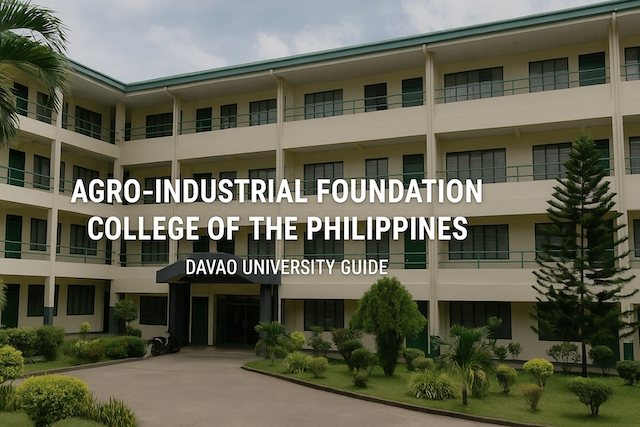
Agro-Industrial Foundation College of the Philippines: Davao University Guide
The Agro-Industrial Foundation College of the Philippines (AIFCP) is a well-established educational institution in Davao known for its strong competency-based programs, practical training systems, and industry-aligned curriculum. It has become a popular choice for students seeking high-quality education in fields such as fisheries, maritime studies, agriculture, criminology, education, and business. This guide provides a comprehensive overview of what AIFCP offers, including its academic programs, campus life, facilities, admission process, and tips for prospective students.
Overview of Agro-Industrial Foundation College of the Philippines
AIFCP was founded to promote community development and rural transformation through relevant education. Over the years, it has evolved into a multi-disciplinary institution with campuses and training centers across Mindanao. The college is particularly recognized for its fisheries and marine-related courses, producing graduates who excel both locally and internationally.
The institution emphasizes hands-on learning, ensuring students gain real-world experience alongside academic instruction. This approach has helped AIFCP build strong partnerships with government agencies, private companies, and international organizations.
Academic Programs Offered
AIFCP offers a variety of undergraduate and technical-vocational programs designed to develop skilled professionals in different fields. Below are some of the key academic offerings.
Fisheries and Marine Studies
AIFCP is best known for its fisheries and marine programs. These include:
-
Bachelor of Science in Fisheries
-
Bachelor of Science in Marine Biology
-
Fishery Technology courses
-
Seafaring and maritime training programs
These programs integrate both classroom instruction and practical fieldwork, preparing students for careers in fisheries management, marine conservation, and commercial aquaculture.
Agriculture and Allied Courses
The school also offers programs focused on agricultural development:
Students receive training in modern farming techniques, agronomy, crop science, and livestock management.
Business and Management
AIFCP provides business-related programs, such as:
-
BS in Business Administration
-
BS in Office Administration
-
Associate degrees in business technologies
These courses help students develop managerial skills and entrepreneurial knowledge needed in various industries.
Criminology and Public Safety
The Bachelor of Science in Criminology program is another popular track at AIFCP. It includes:
Many graduates pursue careers in the police force, corrections, and security services.
Teacher Education Programs
For aspiring educators, AIFCP offers:
These programs are aligned with national education standards and include both theoretical and practicum components.
Technical-Vocational Courses
The school also operates TESDA-accredited programs, such as:
These are ideal for students seeking short-term, skills-based training.
Campus Life and Student Experience
AIFCP fosters a learning environment that encourages both academic growth and personal development. Students can expect a balance of classroom learning, field training, and extracurricular activities.
Student Organizations
There are various student-led groups designed to develop leadership, teamwork, and community involvement. These include:
These organizations help students gain confidence and expand their network.
Hands-On Training and Field Exposure
One of the strongest aspects of AIFCP is its emphasis on real-world application. Fisheries and agriculture students, for example, frequently go on:
-
Fieldwork trips
-
Practical laboratory sessions
-
Community immersion projects
-
Research-based activities
This experience enhances their understanding of industry practices, making them job-ready upon graduation.
Campus Facilities
The college provides essential facilities to support learning, such as:
-
Science and computer laboratories
-
Library and research center
-
Fisheries and agricultural training sites
-
Audio-visual rooms
-
Gymnasium and open spaces for sports
While facilities vary by campus, the institution continuously updates its learning environment to meet modern educational standards.
Admission Requirements and Process
AIFCP maintains an accessible admission process to welcome students from diverse backgrounds.
Basic Requirements
Applicants typically need to submit:
-
High school report card (Form 138)
-
Certificate of Good Moral Character
-
Birth certificate (PSA)
-
2–4 ID photos
-
Admission form provided by the school
For transferees:
For TESDA programs, additional requirements may apply depending on the course.
Entrance Examination and Interview
Some programs may require:
-
Placement tests
-
Skills assessment
-
Admissions interview
This ensures that students are matched with the right academic track.
Enrollment Procedure
The general steps include:
-
Visit the admissions office or official Facebook page for announcements.
-
Submit requirements and accomplish necessary forms.
-
Attend orientation and program briefings.
-
Pay the enrollment fees.
-
Receive class schedule and start of classes information.
Tuition Fees and Financial Assistance
AIFCP offers budget-friendly tuition, making it accessible to many students in Mindanao. Although fees vary by program, the college is known for being more affordable than most private institutions.
Financial Aid Options
The school participates in:
-
TESDA scholarship programs
-
Government subsidies (CHED, LGU grants)
-
Private sponsorships and training programs
Students are encouraged to inquire early since slots for scholarships are often limited.
Career Opportunities After Graduation
Graduates of AIFCP enjoy strong employability, especially in fields such as fisheries, agriculture, business, and criminology.
Fisheries and Marine Graduates
Career paths include:
-
Marine biologist
-
Fisheries technician
-
Aquaculture specialist
-
Hatchery manager
-
Environmental researcher
Agriculture Graduates
They often work as:
Criminology Graduates
Common professions include:
-
Police officer
-
Forensic investigator
-
Probation officer
-
Security personnel
Business Graduates
Job opportunities include:
-
Administrative assistant
-
Entrepreneur
-
Office manager
-
Marketing associate
AIFCP programs are designed to equip students with both theoretical knowledge and practical skills, making them competitive in today’s job market.
Why Choose Agro-Industrial Foundation College of the Philippines?
Students select AIFCP for several reasons:
1. Industry-Relevant Programs
The courses focus on practical skills that match local and global labor market needs.
2. Hands-On Training
Students gain valuable field experience, especially in fisheries, agriculture, and technical fields.
3. Affordable Tuition
AIFCP provides accessible education, making it an ideal choice for families seeking quality yet affordable schooling.
The institution fosters a friendly and collaborative environment that supports both academic and personal development.
5. Proven Track Record
Decades of producing competent graduates across various industries proves the institution’s credibility.
Tips for Incoming Students
If you’re planning to enroll at AIFCP, keep the following tips in mind:
Prepare Necessary Documents Early
Enrollment can be competitive, especially for popular programs.
Explore Scholarship Opportunities
TESDA grants and government subsidies can significantly reduce your educational costs.
Join Student Organizations
These groups provide networking opportunities and help develop skills beyond the classroom.
Embrace Field Activities
Hands-on training is a major part of AIFCP education—take full advantage of it.
Connect with Professors
AIFCP instructors are approachable and experienced; building good relationships enhances your learning experience.
FAQs (Frequently Asked Questions)
Where is Agro-Industrial Foundation College of the Philippines located?
Agro-Industrial Foundation College of the Philippines (AIFCP) is based in Davao and has campuses and training centers in selected areas in Mindanao.
The main campus is generally accessible from central Davao City by public transportation such as jeepneys, multicabs, or tricycles depending on your exact starting point.
For the most accurate directions, students are advised to check the official school page or contact the registrar or information office before their visit.
What courses are offered at AIFCP?
AIFCP offers a mix of degree and technical-vocational programs.
Common offerings include Fisheries-related courses, Agriculture, Business Administration, Office Administration, Criminology, and Teacher Education programs such as Elementary and Secondary Education.
In addition, the college also provides TESDA-accredited short courses in areas like welding, electronics, computer systems servicing, and other skills-based programs.
Specific available programs may change over time, so applicants should confirm the latest list directly with the school.
Is AIFCP a good choice for fisheries and marine-related studies?
Yes, AIFCP is widely recognized for its strong focus on fisheries and marine-related fields.
Many students choose the school because of its competency-based training in aquaculture, fisheries management, and marine resource studies.
The combination of classroom lectures, laboratory work, and field exposure helps prepare graduates for employment in fishery operations, marine research, aquaculture production, and related industries locally and abroad.
What is the admission process for new students?
The admission process usually starts with securing and filling out an application or admission form from the school.
Applicants then submit basic requirements such as their Form 138 or senior high school report card, Certificate of Good Moral Character, PSA birth certificate, and ID photos.
Some programs may require an entrance exam, interview, or additional documents.
After evaluation, qualified applicants proceed to enrollment, which includes payment of fees and confirmation of class schedules.
What are the basic requirements for transferees?
Transferee applicants typically need to submit a Transcript of Records (TOR) or certified copy of grades from their previous school, along with an Honorable Dismissal.
They may also be asked for a Certificate of Good Moral Character, a valid ID or birth certificate, and recent ID photos.
The college will evaluate credited subjects based on its own curriculum, so not all completed subjects from the previous institution may be fully credited.
It is best to consult the registrar’s office early to know which courses will be recognized.
How much is the tuition fee at AIFCP?
Tuition and other school fees at AIFCP are generally considered more affordable compared to many private colleges.
However, the exact amount varies depending on the program, number of units, and whether the student is enrolled in a degree course or a short-term technical program.
There may also be separate payments for laboratory fees, uniforms, and miscellaneous charges.
Because fees can change from year to year, students should always request the latest fee schedule directly from the school’s accounting or registrar’s office.
Are there scholarships or financial assistance programs available?
Yes, AIFCP often participates in government-funded financial assistance programs and scholarships, such as TESDA training subsidies and selected CHED or LGU (local government unit) grants.
Some private organizations and partner industries may also sponsor specific training programs or provide stipends for qualified students.
Slots for scholarships are usually limited and may require maintaining a certain grade or performance level.
Interested students should inquire early at the guidance office, scholarship office, or TESDA coordinator for updated opportunities.
What is student life like at AIFCP?
Student life at AIFCP combines academic work with practical training and extracurricular activities.
Learners can join academic organizations, sports teams, cultural groups, and community outreach activities that help them build confidence and leadership skills.
For fisheries, agriculture, and technical students, a significant part of their experience involves hands-on workshops, fieldwork, and immersion in real-world settings.
This balanced environment supports both professional development and personal growth.
What facilities are available on campus?
Facilities vary by campus but commonly include classrooms, basic science and computer laboratories, libraries or reading centers, and dedicated spaces for fisheries and agricultural training.
Some campuses provide simulation rooms, workshops for technical-vocational courses, and open fields or training ponds for agriculture and fisheries programs.
There may also be function halls, audio-visual rooms, and sports areas for student events and physical activities.
Prospective students should visit the campus they plan to enroll in to see the actual facilities.
What career opportunities can graduates expect?
Career paths depend on the chosen program.
Fisheries and marine graduates may work as aquaculture technicians, fisheries officers, hatchery managers, marine resource staff, or pursue further specialization in marine sciences.
Agriculture graduates often become farm supervisors, agricultural technicians, or agribusiness entrepreneurs.
Those from criminology may enter law enforcement, security services, or corrections, while business and office administration graduates can work in offices, sales, customer service, or start their own small businesses.
The practical training at AIFCP helps make students more employable in their chosen fields.
Does AIFCP offer on-the-job training (OJT) or internships?
Yes, most degree and technical programs at AIFCP include on-the-job training (OJT) or internship components.
Through partnerships with companies, government agencies, farms, fisheries, and other institutions, students gain supervised real-world experience.
This exposure allows them to apply what they have learned in class, build professional networks, and better understand actual workplace expectations.
Successful OJT performance can sometimes lead to job offers after graduation.
How can I get more information or contact the school?
For updated information on programs, schedules, and requirements, it is best to contact AIFCP through its official communication channels.
Many campuses maintain an official Facebook page or website where they post announcements about enrollment, entrance exams, and scholarship opportunities.
You may also call the campus registrar or administration office during office hours.
Always rely on official channels for the most accurate and current details about admission and course offerings.