2025年12月15日
3D ACADEMY offers affordable English study programs in Cebu, Philippines – perfect for beginners, professionals, and exam takers.

3D UNIVERSAL ENGLISH INSTITUTE INC
info.3d-universal.com
8:00-17:00(Mon-Fri)
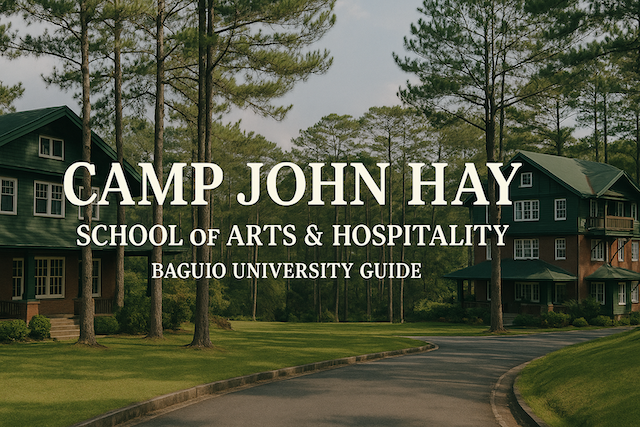
Camp John Hay School of Arts & Hospitality: Baguio University Guide
Contents
- Camp John Hay School of Arts & Hospitality: Baguio University Guide
- Introduction
- About Camp John Hay School of Arts & Hospitality
- Location and Campus Environment
- Academic Programs Offered
- Learning Approach and Industry Partnerships
- Campus Facilities
- Student Life
- Admission Requirements
- Tuition Fees and Financial Assistance
- Career Opportunities for Graduates
- Why Choose Camp John Hay School of Arts & Hospitality?
- Conclusion
- FAQs (Frequently Asked Questions)
- What types of programs does Camp John Hay School of Arts & Hospitality offer?
- Where is the school located and how do I get there?
- What makes this school different from other hospitality and tourism schools in Baguio?
- Does the school provide hands-on or practical training?
- What facilities are available for hospitality and culinary students?
- What are the general admission requirements for new students?
- How much is the tuition fee and what other costs should I expect?
- Are there scholarships or financial assistance options available?
- What career opportunities can graduates expect after finishing their program?
- Is English used as the main medium of instruction?
- Does the school help students find internships and job placements?
- How can I get more detailed and updated information about the school?
Camp John Hay School of Arts & Hospitality: Baguio University Guide
Introduction
The Camp John Hay School of Arts & Hospitality (CJH-SAH) is one of Baguio’s most distinctive institutions for aspiring professionals in hospitality, tourism, culinary arts, and creative service industries. Located within the iconic Camp John Hay area, the school benefits from a premier learning environment surrounded by pine forests, high-end hotels, restaurants, and leisure establishments. This unique placement allows students to merge academic learning with real-world industry exposure from day one.
This guide provides a comprehensive overview of the programs, campus culture, facilities, admission process, career pathways, and what makes the Camp John Hay School of Arts & Hospitality a standout institution for learners in Northern Luzon.
About Camp John Hay School of Arts & Hospitality
The Camp John Hay School of Arts & Hospitality was founded with the purpose of elevating hospitality education in the Cordillera region. It offers industry-aligned programs designed to meet the demand for skilled workers in tourism, hotel management, culinary services, events management, and creative arts. The institution adopts hands-on training models and collaborates closely with partner establishments inside Camp John Hay, giving students exclusive access to internships and workshops.
The school is known for its modern approach, combining theoretical foundations with experiential learning through hotel simulations, culinary laboratories, and hospitality internships in nearby resort facilities.
Location and Campus Environment
Situated inside the Camp John Hay Special Economic Zone, the campus provides a peaceful and upscale environment ideal for focused learning. Students study near notable landmarks such as The Manor at Camp John Hay, The Forest Lodge, Bistro restaurants, shopping complexes, and corporate spaces.
Key Campus Features
-
Eco-friendly campus with fresh mountain air and quiet surroundings
-
Direct access to hospitality-related businesses within Camp John Hay
-
Safe and secure location with controlled entry points
-
Accessible via jeepney, taxi, and private transport
-
Close to dining, recreation, and lodging establishments
The location itself acts as a living laboratory, enabling students to observe real hotel operations and customer service scenarios daily.
Academic Programs Offered
The Camp John Hay School of Arts & Hospitality focuses on job-ready programs that cater to industries experiencing continuous global growth. While offerings may vary over time, the school typically features the following programs:
Bachelor’s Degree Programs
-
BS Hospitality Management
Focuses on hotel operations, front office management, housekeeping, food and beverage service, bar operations, and hospitality leadership. -
BS Tourism Management
Covers travel and tour operations, tourism marketing, event management, international tourism trends, and destination planning.
Diploma and Certificate Programs
-
Culinary Arts Certificate
Includes fundamental cooking techniques, menu planning, baking and pastry, and professional kitchen operations. -
Barista & Bartending Training
Offers hands-on courses in beverage preparation, alcohol service, bar management, and customer engagement. -
Front Office & Housekeeping Operations
Teaches operational skills needed in hotel reception, reservations, cleaning services, and guest relations. -
Events Management Program
Provides training in planning, organizing, and executing corporate, social, and cultural events.
These programs emphasize competency-based training aligned with employment standards both in the Philippines and abroad.
Learning Approach and Industry Partnerships
One of the signature strengths of CJH-SAH is its immersive learning method. Students do not simply sit in classrooms—they participate in simulations, role-playing exercises, industry tours, and internships.
Experiential Learning Highlights
-
Hotel and restaurant simulations within the campus
-
Culinary labs and commercial-grade kitchens
-
Regular industry seminars featuring top hotel and tourism professionals
-
On-the-job training (OJT) with hotels and food establishments inside Camp John Hay
-
Partnerships with event organizers and tourism offices
-
Real client service through student-run events and pop-up restaurants
Because Camp John Hay is a fully operational hospitality zone, students gain hands-on exposure to real customers and professionals long before graduation.
Campus Facilities
The school’s facilities are designed to mimic professional environments in hospitality and tourism.
Major Facilities
-
Culinary Arts Laboratory with professional equipment
-
Training restaurant for food service and fine dining practice
-
Front Office simulation room
-
Housekeeping laboratory
-
Fully equipped classrooms with audiovisual tools
-
Multipurpose halls for workshops and events
-
Computer laboratories for tourism and hospitality software training
Access to nearby hotels like The Manor and The Forest Lodge further enhances practical learning.
Student Life
Student life at CJH-SAH emphasizes creativity, professionalism, and teamwork.
Student Culture
-
Supportive and collaborative learning environment
-
Frequent practice-based activities
-
School events such as hospitality showcases, culinary competitions, and cultural celebrations
-
Opportunities for leadership roles in academic organizations
The school encourages discipline and confidence, preparing students to interact with clients and professionals in real-world situations.
Admission Requirements
While admission requirements may be updated each academic year, applicants typically need to submit:
Basic Requirements
-
Completed application form
-
Original and photocopy of Form 138 or high school report card
-
PSA birth certificate
-
Good moral certificate
-
Two to four passport-size photos
-
Entrance exam results (if applicable)
For Transferees
-
Transcript of Records or copy of grades
-
Honorable dismissal
-
Course descriptions for credit evaluation
For International Students
-
Passport copy
-
Student visa or Special Study Permit
-
English proficiency certification (if required)
Applicants are encouraged to apply early, especially for programs with limited laboratory slots.
Tuition Fees and Financial Assistance
Tuition fees vary by program and level because of differing laboratory requirements. Hospitality and culinary courses often have additional costs for uniforms, tools, and materials.
Possible Expenses
-
Tuition and miscellaneous fees
-
Culinary toolkits
-
Laboratory fees
-
Internship fees
-
Chef or hospitality uniforms
Financial Aid
Some students may qualify for:
-
School-based scholarships
-
Government educational subsidies
-
TESDA funding (for short programs)
-
Corporate sponsorships for top-performing students
Prospective students should inquire directly with the admissions office for updated figures.
Career Opportunities for Graduates
Graduates from Camp John Hay School of Arts & Hospitality enter careers in local and international sectors. The school’s partnerships with hotels, tourism agencies, and restaurants help students secure internships and job placements.
Possible Career Paths
-
Hotel front office associate
-
Housekeeping supervisor
-
Food and beverage staff
-
Culinary chef or pastry chef
-
Barista or bartender
-
Restaurant manager
-
Tour guide or travel coordinator
-
Events planner
-
Tourism marketing specialist
-
Resort operations staff
Baguio’s tourism scene and Camp John Hay’s premium establishments offer valuable employment and internship opportunities.
Why Choose Camp John Hay School of Arts & Hospitality?
Students choose CJH-SAH for several compelling reasons:
Key Advantages
-
Prime location inside Camp John Hay
-
Strong industry connections
-
Modern, hands-on training facilities
-
Highly practical, experience-based curriculum
-
Ideal environment for hospitality and tourism students
-
Professional campus culture that prepares learners for global careers
Whether you aim to become a hotel manager, chef, tourism professional, or events organizer, this institution provides a strong foundation for your future.
Conclusion
The Camp John Hay School of Arts & Hospitality stands out as a dynamic, industry-driven educational institution in Baguio City. With its strategic location, experiential learning environment, and close industry collaboration, it equips students with the skills and confidence needed to succeed in the competitive fields of hospitality, tourism, and the culinary arts.
This guide serves as a detailed overview for prospective students considering this unique and opportunity-rich institution in the heart of Camp John Hay.
FAQs (Frequently Asked Questions)
What types of programs does Camp John Hay School of Arts & Hospitality offer?
Camp John Hay School of Arts & Hospitality typically offers programs focused on hospitality, tourism, culinary arts, events management, and related service industries. These may include bachelor’s degree programs such as Hospitality Management and Tourism Management, as well as shorter certificate or diploma courses in culinary arts, barista and bartending, front office operations, housekeeping, and events planning. Specific offerings can change, so it is best to check directly with the school for the latest list.
Where is the school located and how do I get there?
The school is located inside the Camp John Hay area in Baguio City, a well-known eco-tourism and leisure zone surrounded by pine trees, hotels, restaurants, and recreational facilities. You can usually access the campus by jeepney routes that pass near Camp John Hay, by taxi from central Baguio, or by private vehicle. Because transport routes and traffic conditions may change, new students should confirm directions and recommended drop-off points before visiting.
What makes this school different from other hospitality and tourism schools in Baguio?
One of the main advantages of Camp John Hay School of Arts & Hospitality is its location inside an active hospitality and tourism hub. Students learn in an environment surrounded by hotels, restaurants, cafes, and event venues, which makes it easier to observe real operations and gain hands-on experience. The school also emphasizes practical training through simulations, laboratory work, and internships, helping students build job-ready skills before graduation.
Does the school provide hands-on or practical training?
Yes. The school’s programs typically combine classroom lectures with practical training in laboratories and simulated work environments. Students may practice in culinary kitchens, front office simulation rooms, housekeeping labs, and training restaurants. Many courses also include on-the-job training or internships in partner hotels and establishments within Camp John Hay and around Baguio, giving students the opportunity to interact with real guests and staff under supervision.
What facilities are available for hospitality and culinary students?
The campus usually includes specialized facilities designed to mirror professional workplaces. These may include a culinary arts laboratory equipped with commercial-grade kitchen tools, a training restaurant for food service practice, a front office simulation area, a housekeeping lab, multimedia classrooms, and computer labs. Some learning activities may also take place in partner hotels and restaurants nearby, further enhancing the practical learning experience.
What are the general admission requirements for new students?
Admission requirements often include a completed application form, high school report card or Form 138, birth certificate, certificate of good moral character, and recent ID photos. Some programs may require an entrance examination, interview, or additional documents, especially for degree-level courses. Transferees and international students usually need to submit extra papers such as transcripts, honorable dismissal, passport copies, or proof of English proficiency, depending on school policy.
How much is the tuition fee and what other costs should I expect?
Tuition fees vary depending on the program, year level, and laboratory requirements. In addition to tuition, students should budget for uniforms, culinary toolkits, laboratory fees, school supplies, and possible internship-related expenses. Because rates can change each academic year, it is important to request the latest tuition and fee schedule directly from the admissions or finance office to plan your budget accurately.
Are there scholarships or financial assistance options available?
Some students may be able to access financial assistance such as academic scholarships, need-based discounts, government educational subsidies, or support from partner agencies. Availability and qualifications depend on school policies and external funding programs. Interested applicants should inquire early about scholarship criteria, grade requirements, and application deadlines to increase their chances of receiving financial support.
What career opportunities can graduates expect after finishing their program?
Graduates from Camp John Hay School of Arts & Hospitality can pursue careers in various sectors of the hospitality and tourism industry. Common roles include hotel front office associate, housekeeping staff or supervisor, food and beverage attendant, barista, bartender, restaurant staff, events coordinator, tour guide, travel consultant, and resort operations staff. With experience and further training, some graduates advance into supervisory and managerial positions locally or abroad.
Is English used as the main medium of instruction?
In most hospitality and tourism programs in the Philippines, English is widely used as a medium of instruction, especially for technical subjects, textbooks, and industry communications. Local languages may still be used in informal settings or for clarification in class, but students are generally expected to develop strong English communication skills to interact with international guests, supervisors, and colleagues in future workplaces.
Does the school help students find internships and job placements?
The school typically coordinates with hotels, restaurants, and tourism-related establishments to place students in internships or on-the-job training programs. Career offices or practicum coordinators may assist in matching students with partner companies, preparing them for interviews, and monitoring their performance. While job placement after graduation cannot be guaranteed, strong industry linkages and good performance during internships can increase employment opportunities.
How can I get more detailed and updated information about the school?
Because program offerings, tuition fees, and policies can change over time, the most reliable way to get updated information is to contact the school directly through its official phone numbers, email address, or social media pages. You may also visit the campus, attend orientations, or join online information sessions if available. When inquiring, it is helpful to prepare specific questions about your preferred program, budget, and target intake semester.
Baguio University Guide
Baguio Province All Universities Lists
Philippines University Guide

How to Register for eTravel Philippines (2025 Guide)
Step-by-step guide to completing your eTravel registration before arriving in the Philippines, with images and tips.

Night Market in Cebu – Things You Don’t Know About Cebu Life
Discover the hidden charm of Cebu’s night markets, from street food stalls to local life tips you won’t find in tourist guides.

How to Use ChatGPT for IELTS Preparation: A Complete Guide
Learn how to prepare for IELTS using ChatGPT — including strategies for Writing, Reading, Listening, Speaking, and grammar support.

How to Build a Website Without Coding Using ChatGPT
Discover how to build your own website using AI—no coding skills needed. From structure planning to SEO and design, let ChatGPT guide you.