2026年1月9日
3D ACADEMY offers affordable English study programs in Cebu, Philippines – perfect for beginners, professionals, and exam takers.

3D UNIVERSAL ENGLISH INSTITUTE INC
info.3d-universal.com
8:00-17:00(Mon-Fri)
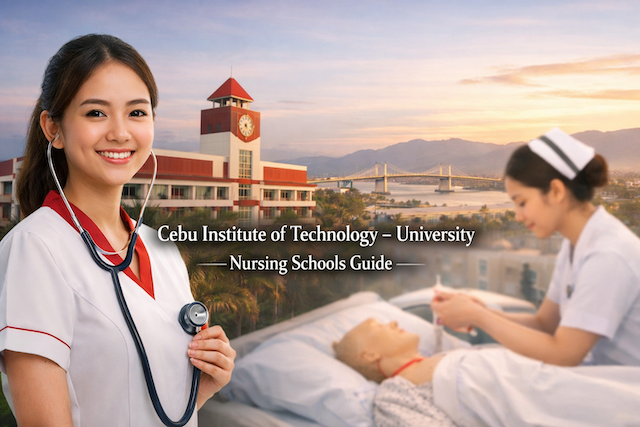
Cebu Institute of Technology – University (CIT-U): Nursing Schools Guide
Contents
- Cebu Institute of Technology – University (CIT-U): Nursing Schools Guide
- Overview of CIT-U as a Nursing School in Cebu
- The College of Nursing and Allied Health Sciences (CNAHS)
- BS Nursing Program Structure and What You Study
- Clinical Training and RLE: What to Expect
- Skills Lab, Simulation, and Competency Checks
- Admission and Enrollment: Requirements and Practical Notes
- Tuition, Fees, and Budget Planning
- Scholarships and Financial Support
- Campus Location and Student Experience in Cebu City
- Outcomes: Licensure Preparation and Career Paths
- Who CIT-U Nursing Is a Good Fit For
- How to Evaluate CIT-U Before You Commit
- Final Thoughts
- Frequently Asked Questions (FAQs)
- Does Cebu Institute of Technology – University (CIT-U) offer a nursing program?
- How long is the BS Nursing program at CIT-U?
- What is the difference between nursing lectures, laboratory sessions, and clinical duty?
- Does CIT-U provide hospital exposure and clinical training for nursing students?
- Is CIT-U a good choice if my goal is to pass the Nurse Licensure Examination (NLE)?
- What admission requirements should I prepare for CIT-U nursing?
- How competitive is the nursing program at CIT-U?
- What costs should I expect aside from tuition?
- Does CIT-U nursing require a lot of hands-on assessments?
- Is CIT-U nursing suitable for international career plans?
- What should I do to increase my chances of succeeding in CIT-U nursing?
Cebu Institute of Technology – University (CIT-U): Nursing Schools Guide
Cebu Institute of Technology – University (often called CIT-U, and also branded as CIT University) is widely recognized in Cebu for its strong board-exam culture and industry-focused training. While the school is famous for engineering and technology programs, it also runs a dedicated health sciences unit: the College of Nursing and Allied Health Sciences (CNAHS), which offers BS Nursing along with other allied health programs.
If you are considering nursing in Cebu and want a school that emphasizes outcomes, clinical readiness, and structured skills training, CIT-U is one of the names worth checking closely. This guide walks you through what to expect—from the program structure and practical training to admissions and how to decide if it matches your goals.
Overview of CIT-U as a Nursing School in Cebu
CIT-U is a private, non-sectarian university in Cebu City that positions itself around “applied” education—programs that are meant to translate directly into real-world competence. For nursing applicants, that matters because BS Nursing is not just lecture-based. The school must help you develop clinical judgment, communication skills, and safe patient care practices under pressure.
CIT-U’s nursing program is housed under CNAHS, and the university also highlights its broader academic track record, including board topnotchers across multiple licensure fields (the university’s own FAQ page mentions totals and first placers across programs including nursing). This “board culture” typically affects how schools handle exams, remediation, and competency checks—meaning you may experience a more structured approach to assessments compared with schools that lean more loosely academic.
In practical terms, students usually choose CIT-U Nursing for one or more of these reasons:
-
They want a traditional BSN path with strong emphasis on competency-based training.
-
They prefer a campus environment where performance metrics (skills check-offs, exams, evaluations) are taken seriously.
-
They’re planning for the Nurse Licensure Examination (NLE) and want a program that clearly aligns training toward licensure outcomes.
-
They’re aiming for hospital work in the Philippines first, then exploring international pathways later.
The College of Nursing and Allied Health Sciences (CNAHS)
CIT-U organizes its health programs under CNAHS. This is important because students often benefit when nursing is part of a larger health cluster: you tend to see more deliberate investment in labs, practical simulations, and cross-disciplinary standards.
CNAHS at CIT-U offers:
-
Bachelor of Science in Nursing (BSN)
-
(Also offered under the same college: BS Pharmacy and BS Medical Technology, depending on the year and catalog)
For nursing students, this structure can be a plus because it encourages consistent institutional standards for safety, patient handling, and professional behavior—core expectations across health fields.
BS Nursing Program Structure and What You Study
A four-year BSN program
CIT-U’s BS Nursing is a four-year program. Like most Philippine nursing programs, it combines:
-
General education and foundation courses
-
Core nursing theory and professional subjects
-
Skills lab and simulation work
-
Clinical duties and rotations (often referred to as RLE: Related Learning Experiences)
One detail the university itself emphasizes is that professional nursing courses are threaded from first year to fourth year, rather than being heavily delayed into later years. This usually means students enter foundational nursing concepts earlier and then build complexity as they advance.
What “threaded professional courses” feels like
In schools with this approach, you can expect:
-
Early exposure to nursing identity and professional standards
-
Progressive skills development (vital signs → basic procedures → more complex patient care)
-
Repeated emphasis on documentation, patient communication, ethics, and safety
This is helpful if you learn best by practicing and revisiting concepts, not just memorizing them once.
Clinical Training and RLE: What to Expect
Clinical training is the centerpiece of a serious nursing education. A school can have great lectures, but if students don’t get enough structured exposure to patient care realities—workflows, documentation, teamwork, time management—it becomes harder to transition into real hospital work after graduation.
At CIT-U, the BSN description highlights intensive nursing practicum designed to refine competencies and ensure graduates meet outcomes expected of entry-level nurses.
In a typical Cebu-based BSN structure, clinical training commonly includes exposure to:
-
Medical-surgical nursing
-
Maternal and child nursing
-
Pediatrics
-
Psychiatric and mental health nursing
-
Community health nursing
-
Emergency concepts and critical care foundations
-
Leadership and management rotations (often senior-year heavy)
Your experience can vary based on your assigned rotation schedule and partner hospitals/clinical sites during your academic year, but as a student, your focus should be consistent: track your competencies, take your duty seriously, and treat each rotation as a professional audition.
Skills Lab, Simulation, and Competency Checks
Modern nursing schools increasingly lean on simulation—partly because patient safety expectations are higher and partly because simulations let students practice rare/high-risk scenarios in a controlled space.
For a school like CIT-U, which emphasizes outcomes and licensure performance, you should expect:
-
Skills check-offs (you must demonstrate correct technique to pass)
-
Return demonstrations with rubrics
-
Scenario-based simulations (communication + clinical judgment)
-
Documentation practice (charts, notes, care plans)
If you thrive in structured environments, this is a good sign. If you dislike frequent evaluations, you should be honest with yourself—nursing is full of evaluations anyway, including in real employment.
Admission and Enrollment: Requirements and Practical Notes
Admission requirements can change by year, but CIT-U publicly shares a clear enrollment checklist for college applicants. For many students, the process is straightforward: prepare documents early, meet grade thresholds, and be ready for examinations or interviews if required.
Commonly listed requirements for new college students include items such as:
-
Report card / Form 138
-
Certificate of good moral character
-
PSA birth certificate
-
Other school-specific forms and enrollment steps
CIT-U also notes grade-average expectations depending on the program category, and nursing is typically treated as one of the more selective programs (along with architecture, engineering, accountancy, and certain computing fields). The practical takeaway is simple: if your grades are strong and your documents are complete, your process becomes smoother. If you are borderline, expect additional steps such as entrance exams, interviews, or guidance toward bridging requirements.
Tips to strengthen a nursing application
Even when the requirements are basic, competitive nursing programs tend to favor applicants who look ready for the workload.
-
Keep your documents complete and organized.
-
Be prepared to explain why you chose nursing (not a vague answer).
-
Demonstrate seriousness: punctuality, professional communication, and follow-through matter.
-
If asked about career plans, show that you understand nursing is both academic and deeply practical.
Tuition, Fees, and Budget Planning
Exact tuition can change and is often dependent on unit load, lab fees, and clinical-related costs. Rather than relying on one number you saw online, treat tuition planning as a budgeting project.
When budgeting for BS Nursing, include:
-
Tuition per semester + miscellaneous fees
-
Laboratory fees (skills/simulation)
-
Uniforms and shoes
-
Clinical duty requirements (supplies, transport, meals during duty)
-
Books or digital resources
-
Possible extra costs during intensive clinical terms
If you are comparing schools, do not compare tuition alone. Compare the total cost of completing the program, including the hidden costs and the risk of delays if you fail subjects or miss competency requirements.
Scholarships and Financial Support
Most universities offer some form of scholarship or financial assistance—often academic merit, needs-based support, and sometimes program-specific grants. CIT-U’s official resources include scholarship and enrollment-related links, so applicants should check the current options during the intake season.
As a practical strategy:
-
Apply early (scholarship slots can be limited).
-
Keep grades high from the start—many scholarships have retention standards.
-
Avoid scheduling chaos: poor time management can threaten scholarship retention more than difficulty of content.
Campus Location and Student Experience in Cebu City
CIT-U is located along N. Bacalso Avenue, Cebu City, a corridor that makes it accessible from several parts of the city. For nursing students, commute and time discipline matter more than people expect. Hospital duties often start early, run long, and can be physically draining.
When choosing housing or planning your schedule, consider:
-
Commute time during peak Cebu traffic
-
Reliable transport options
-
Safety for early/late travel
-
Budget for daily meals and duty-related transport
A nursing student’s life is heavily schedule-driven. The less friction you have outside school, the easier it is to perform inside school.
Outcomes: Licensure Preparation and Career Paths
A BS Nursing program should prepare you for two immediate realities:
-
Passing the Nurse Licensure Examination (NLE)
-
Being safe and effective in real patient care settings
CIT-U publicly positions itself as a school with a strong board-exam tradition across multiple licensure programs. For you, that usually translates into a culture where:
-
exams are frequent and serious
-
remediation may be structured
-
discipline and accountability are expected
After graduation and licensure, typical early-career paths include:
-
Staff nurse roles in hospitals (private or public)
-
Community health and public health programs
-
Clinics and outpatient care settings
-
Corporate/occupational health roles (depending on opportunities)
-
Specialized training tracks later (critical care, OR, dialysis, etc.)
For students thinking internationally: many graduates first build local experience, strengthen English communication, and later pursue overseas pathways depending on country requirements.
Who CIT-U Nursing Is a Good Fit For
CIT-U nursing may be a strong match if you:
-
want a structured, performance-based environment
-
value skills competence, not just theory
-
handle frequent assessments without losing motivation
-
are serious about licensure and professional standards
You may struggle if you:
-
avoid strict deadlines and competency rubrics
-
expect nursing to be mostly classroom-based
-
are not ready for physically demanding clinical schedules
-
dislike feedback and performance monitoring
This is not meant to discourage you—just a realistic lens. Nursing programs are demanding everywhere, but some schools make the “accountability layer” more visible and consistent.
How to Evaluate CIT-U Before You Commit
If you are choosing among nursing schools in Cebu, use a decision checklist that goes beyond reputation.
What to verify
-
Current BSN program details on the university site (curriculum overview, structure)
-
Enrollment and grade requirements for nursing applicants
-
Clinical training structure (how RLE is scheduled, what expectations look like)
-
Skills lab/simulation setup and how competency is assessed
-
Student support systems (advising, remediation, mental health support)
What to ask yourself
-
Can I handle the workload consistently for 4 years?
-
Is my commute sustainable during duty days?
-
Do I prefer a strict environment or a flexible one?
-
Am I prepared financially for tuition plus clinical expenses?
A nursing program is not just a school choice—it’s a lifestyle choice for several years.
Final Thoughts
Cebu Institute of Technology – University (CIT-U) is not only an engineering-focused institution; it also has a clearly defined College of Nursing and Allied Health Sciences and a formal BS Nursing program built around progressive training and intensive practicum. For students who want structure, discipline, and a skills-driven approach to nursing education in Cebu City, CIT-U belongs on the shortlist.
Frequently Asked Questions (FAQs)
Does Cebu Institute of Technology – University (CIT-U) offer a nursing program?
Yes. Cebu Institute of Technology – University (CIT-U) offers a Bachelor of Science in Nursing (BSN) under its College of Nursing and Allied Health Sciences. Nursing is designed as a professional degree with a strong blend of classroom learning, skills laboratory training, and supervised clinical exposure. Because program offerings and policies can change over time, applicants should confirm the latest BSN details, admission requirements, and enrollment procedures through CIT-U’s official channels before applying.
How long is the BS Nursing program at CIT-U?
The BS Nursing program in the Philippines is typically completed in four years, and CIT-U follows this general structure. Across these years, students progress from foundational nursing concepts and basic health sciences toward more advanced nursing care, leadership, and intensive clinical practice. Some students may take longer depending on academic load, clinical requirements, or personal circumstances. It is best to plan with an academic adviser early so you can map out your subjects, skills requirements, and clinical rotations in a manageable way.
What is the difference between nursing lectures, laboratory sessions, and clinical duty?
Lectures focus on concepts, theories, and clinical reasoning—such as assessment frameworks, disease processes, nursing interventions, and patient safety principles. Laboratory sessions (skills lab or simulation) are structured practice sessions where you learn procedures and demonstrate competencies using mannequins, task trainers, and scenario-based simulations. Clinical duty (often part of Related Learning Experiences or RLE) places students in real healthcare settings under supervision to apply what they learned, follow protocols, document care, and communicate with patients and healthcare teams. Strong nursing programs balance all three areas consistently.
Does CIT-U provide hospital exposure and clinical training for nursing students?
Yes. Nursing programs require supervised clinical training, and CIT-U’s BSN includes practicum and clinical exposure as part of the curriculum. Clinical learning typically involves rotations across key nursing areas such as medical-surgical nursing, maternal and child health, pediatrics, mental health nursing, and community health nursing. Specific clinical sites and schedules may vary by academic year and partnership arrangements. Students should ask the nursing office about the expected number of clinical hours, how rotations are arranged, and what duty requirements (uniforms, documentation, safety policies) are strictly enforced.
Is CIT-U a good choice if my goal is to pass the Nurse Licensure Examination (NLE)?
CIT-U is known as a performance-driven university, and many students prefer schools with structured assessment systems and strong exam preparation culture. However, passing the NLE depends on both the program’s training and the student’s consistency in studying and practicing clinical thinking over time. If you want an environment with clear competency standards, regular evaluations, and a focus on professional readiness, CIT-U can be a suitable option. To evaluate fit, ask about review support, remediation policies, and how the program tracks student progress toward licensure-level competencies.
What admission requirements should I prepare for CIT-U nursing?
Requirements can differ by intake period, but most applicants should prepare standard documents such as academic records (e.g., Form 138 or equivalent), proof of identity (such as a PSA birth certificate), and a certificate of good moral character, along with any university-specific forms. Nursing programs may also apply additional screening steps such as entrance testing, interviews, or minimum grade standards. The best approach is to prepare your documents early, keep digital copies, and confirm the most current list directly from CIT-U so you do not miss deadlines or program-specific requirements.
How competitive is the nursing program at CIT-U?
Nursing is generally considered a competitive program because it is regulated, clinically intensive, and closely tied to licensure outcomes. At schools with strong board-focused culture, students may encounter higher expectations for exams, skills check-offs, attendance, and professional conduct. Competitiveness does not only mean “getting in”; it also means “staying in” and progressing smoothly through clinical requirements. To understand competitiveness, ask about retention standards, grading policies in professional nursing subjects, and the process for remediation if a student fails a major requirement.
What costs should I expect aside from tuition?
Beyond tuition and miscellaneous fees, nursing students often budget for uniforms, white shoes, clinical supplies, medical instruments (such as a stethoscope or penlight), skills lab materials, and transportation to clinical sites. Some terms may be more expensive due to higher lab or clinical-related fees. Daily expenses during clinical duty—meals, commuting, and occasional printing or documentation needs—also add up. A practical strategy is to estimate a semester budget that includes both school fees and “clinical lifestyle” costs so you can avoid surprises once rotations become heavier.
Does CIT-U nursing require a lot of hands-on assessments?
Yes. Hands-on competency checks are a normal part of BSN programs, and students should expect return demonstrations, checklists, and scenario-based evaluations. These assessments verify that you can perform procedures safely, communicate effectively, and follow infection control and patient safety standards. Many students find this helpful because it builds confidence before clinical exposure, but it also requires steady preparation. If you prefer clear standards and practical learning, frequent skills assessments can be an advantage. If you struggle with performance pressure, building a consistent practice routine early can help.
Is CIT-U nursing suitable for international career plans?
It can be, especially if you plan your pathway early. Many international nursing routes require local licensure, clinical experience, English proficiency, and country-specific exams or credential evaluation. A solid BSN foundation plus strong clinical discipline will support any long-term plan. Still, “international readiness” depends heavily on the student’s choices after graduation—such as gaining hospital experience, pursuing specialized training, and preparing for required tests. If you are considering working abroad, ask faculty advisers about realistic timelines and what steps past graduates typically take after obtaining their Philippine nursing license.
What should I do to increase my chances of succeeding in CIT-U nursing?
Success in nursing comes from consistency, not last-minute effort. Start by building strong study habits for anatomy, physiology, and fundamentals, then treat skills lab sessions seriously by practicing procedures until they become routine. During clinical duty, focus on safety, communication, and documentation—these are the areas that often separate average students from excellent ones. Use feedback as a tool, not a threat. Also, manage your schedule and health: sleep, nutrition, and stress control matter because clinical training is physically demanding. If you stay organized and proactive, nursing becomes challenging but manageable.
Cebu Universities: Nursing Degree – Top Nursing Schools, Tuition, and Board Exam Pass Rates

How to Register for eTravel Philippines (2025 Guide)
Step-by-step guide to completing your eTravel registration before arriving in the Philippines, with images and tips.

Night Market in Cebu – Things You Don’t Know About Cebu Life
Discover the hidden charm of Cebu’s night markets, from street food stalls to local life tips you won’t find in tourist guides.

How to Use ChatGPT for IELTS Preparation: A Complete Guide
Learn how to prepare for IELTS using ChatGPT — including strategies for Writing, Reading, Listening, Speaking, and grammar support.

How to Build a Website Without Coding Using ChatGPT
Discover how to build your own website using AI—no coding skills needed. From structure planning to SEO and design, let ChatGPT guide you.